What just happened
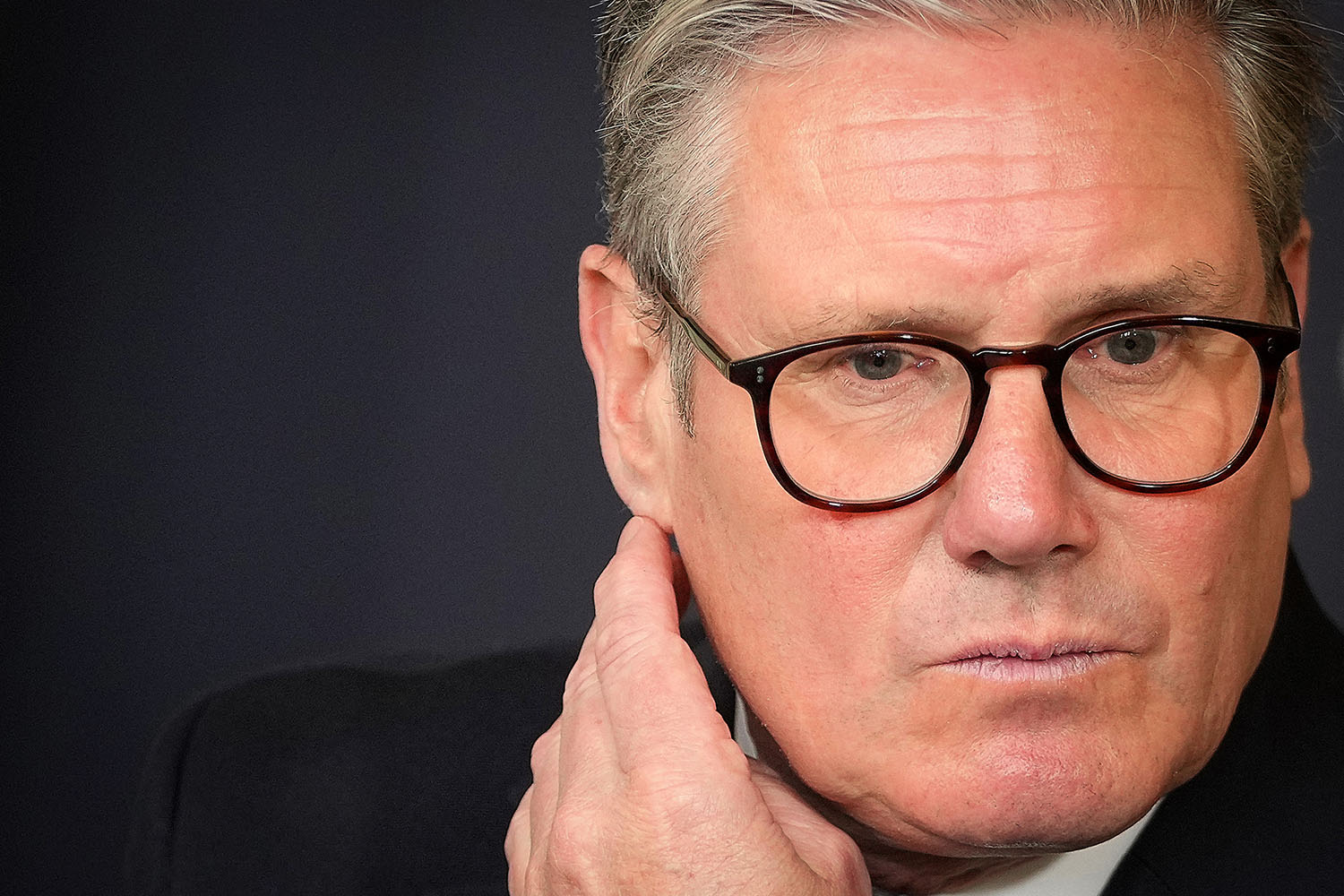
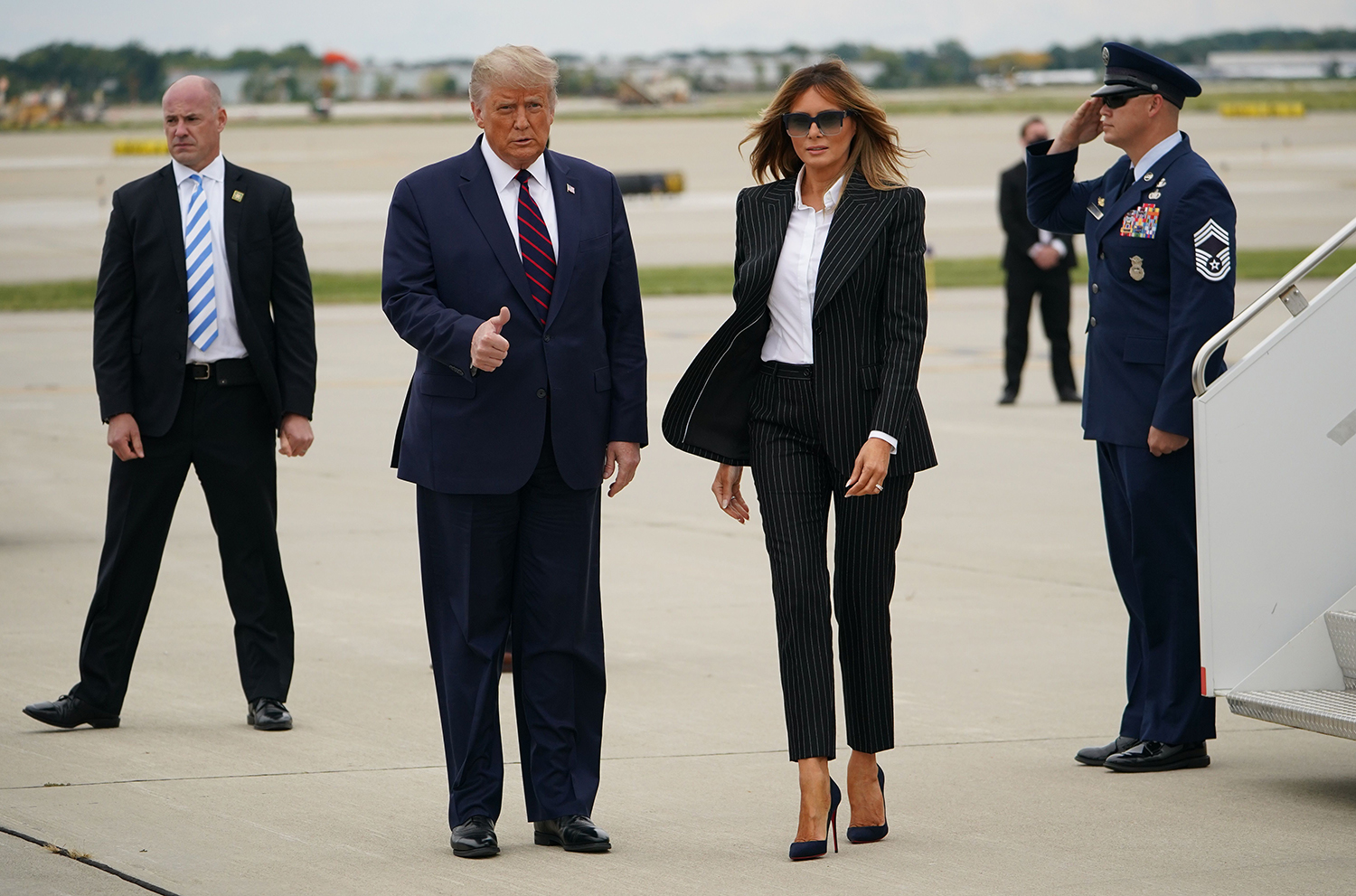
- Donald Trump tested positive for coronavirus, upending his campaign and possibly the race for the White House (more below).
- France accused Turkey of sending “jihadists” to Azerbaijan to join its fight with Armenia over Nagorno-Karabakh.
- A UK parliamentary committee urged the legalisation of electric scooters to help get people out of cars.
At a stroke, Trump’s positive Covid diagnosis deprives him of at least 10 days’ worth of rallies and in-person fundraising, and then only if he’s very lucky. But it also serves as the mother of all distractions – from his taxes, his wife’s newly-disclosed indiscretions on children separated from their parents (“Give me a fucking break”), and from a debate performance that even loyalists are anxious to leave in the rear view mirror.
The news broke after midnight in a tweet. The betting odds on a Biden win shortened dramatically and futures markets swooned. Beyond that what we don’t know about the implications of Trump’s test is a much bigger category than what we do, but some important questions come quickly into focus:
- Will Trump get a Johnson-style sympathy bounce? Johnson enjoyed a brief 20-point boost to his job approval ratings as measured by YouGov between mid-March and mid-April, when he was diagnosed and then hospitalised with Covid. His rating slumped quickly after that but an equivalent uptick for Trump now could prove well-timed; the election is 33 days away.
- Is this, conversely, the moment Trump’s rejection of much emerging Covid science and most of the attendant warnings comes back to bite him? For months he has mocked masks, prioritised reopenings over social distancing and promised without evidence that the virus would simply disappear. “The end of the pandemic is in sight,” he told donors in New Jersey a few hours before his diagnosis. He was lying and should pay a price at the polls even if he’s not well. Then again, his whole presidency has been an object lesson in the gulf between what should be and what is.
- Did he and his entourage infect Joe Biden on Tuesday night? They were separated but in the same space for two hours, unmasked. Trump is obese but otherwise in apparently robust health for his age. Biden, at 77, is the frailer of the two. Even with the world’s best healthcare a serious bout of Covid would be life-threatening for either man.
- What happens if Trump is seriously incapacitated or not making an obvious and full recovery by 3 November? The 25th Amendment to the US constitution allows the vice president to take over if the president cannot fulfil his duties. That could happen between now and the election were Trump to be sedated for ventilation, for example. But if he’s not on the mend by the final straight of the campaign his party could, the NYT reports, remove him from the ballot.
- And then? Lord knows.
To note:
- The Trump campaign is short of cash. It’s still raising money, but slower than Biden’s, and has been cutting back on TV ad spending in swing states while shoring up defences in places like Texas and Georgia that were never considered in play in 2016.
- But Republicans have signed up more registered voters than Democrats since 2016, not least by continuing going door to door recruiting them during the pandemic while Democrat party workers have largely stayed at home. NBC says the GOP is winning the ground game, at least in this respect, in Florida, Pennsylvania, Arizona and North Carolina.
In the app today… Listen out for James’s voicemail on the blurred line between the public and private lives of Boris Johnson and Donald Trump, victims both now of Covid and whatever reality checks it may administer. Sign up for our lunchtime Sensemaker Live ThinkIn today on egg freezing, the fast-growing but controversial fertility extension technique.
Cambridge divests
Cambridge University said it will divest from fossil fuels by 2030 and aim to have only net zero companies in its portfolio – now worth £3.5 billion – by 2038. Vice-chancellor Stephen Toope said he wanted the university to be “leading not following” broader moves to cut carbon emissions. Activists welcomed the announcement but said it came five years too late. They also urged Cambridge to stop accepting money from oil and gas firms including Shell and BP. Last year it accepted £6 million from Shell for research into magnetic resonance imaging, which the university said would focus on clean energy tech but which can also analyse fossil fuel deposits. Next up: individual colleges’ endowments, worth another £3.5 billion.
Electric buses
China has 99 per cent of the world’s battery electric buses. As of last year it had more than 400,000 including 16,000 in Shenzhen alone. They’re starting to catch on elsewhere, including some of the smoggier parts of California – and now, at last, in the UK. Hats off to Ember, which at 5.30 am yesterday launched what it says is the country’s first all-electric intercity coach service between Dundee and Edinburgh. Tickets are £7.50 one-way with wifi, extended legroom and the good vibes that come with zero fumes, compared with £18.60 on a diesel Citylink bus. “Our business model is built on the premise this is possible if you go all in to be an electric only company,” Ember’s co-founder Keith Bradbury emailed me from the bus. “If car users knew they had a simple, well-priced, comfortable option that was also zero emissions then I think they would take it.”
Ember’s two Chinese-built buses cost £300,000 each and can do the 120-mile round trip on a single charge. Raising the money was a challenge. “Hardly anyone is interested in making it easy for bus/coach/hgv [heavy goods vehicles] to transition to battery electric,” Bradbury said. Note to government: isn’t that something we should fix?
Measuring Everest
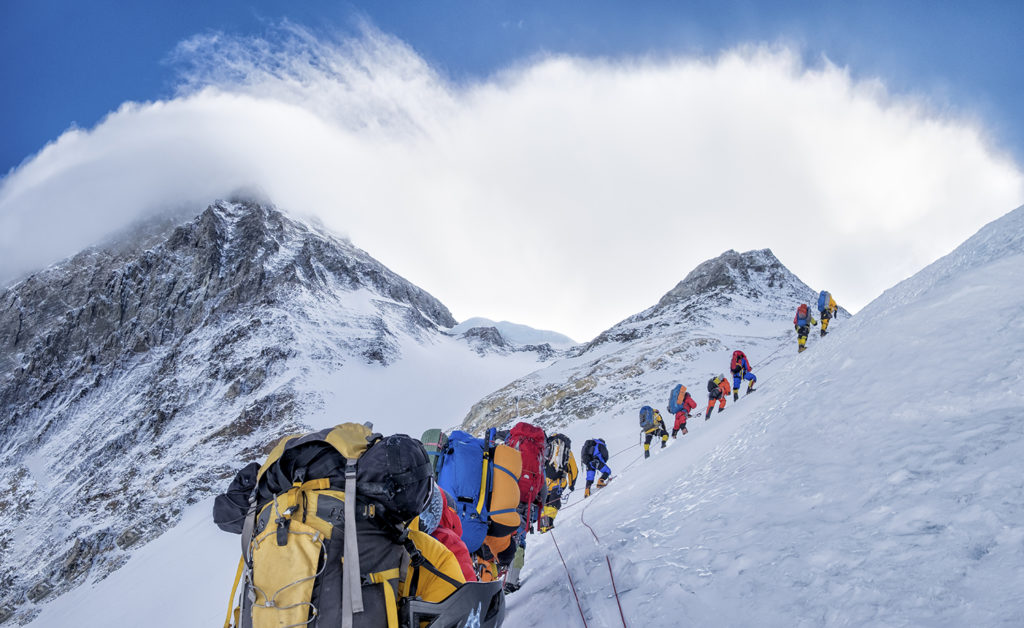
Did a 2015 earthquake change the height of Everest? Last year a Nepalese expedition planted a GPS antenna on its summit to find out. This year a Chinese team followed suit. Results are due soon. In the meantime National Geographic has produced a completely fascinating piece on how hard it is to measure Everest in a way everyone can agree on. You have to get consensus on whether to measure the snow and ice on top and – harder – on where sea level is. As for that quake, it could have really shaken things up. Geologists reckon an earlier one, in 1934, lowered Everest by two feet.
Fast tests in Italy
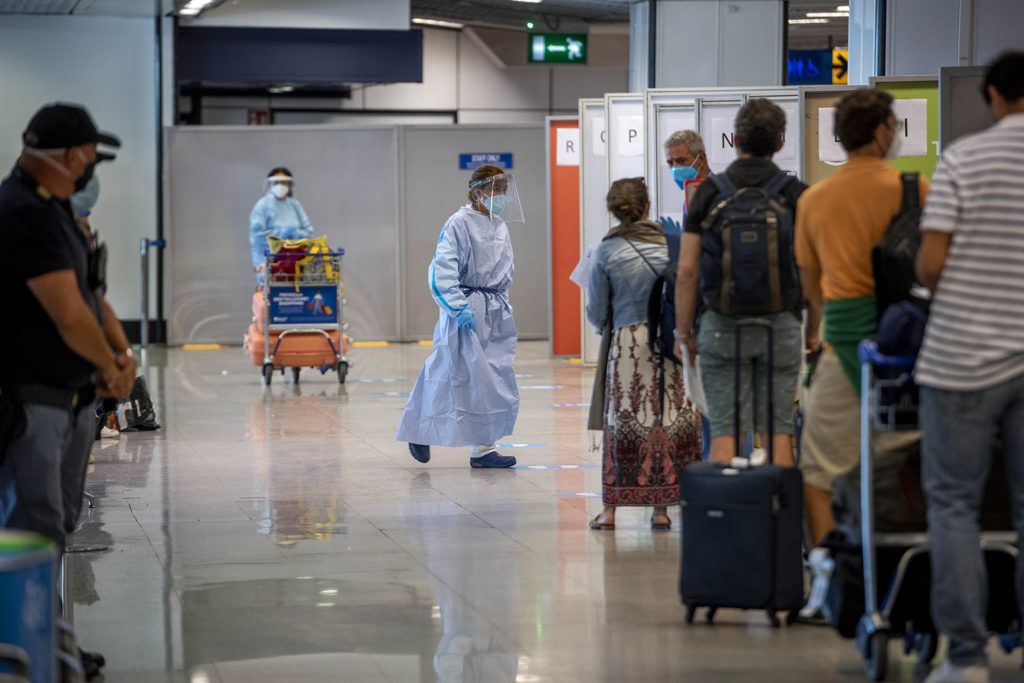
Covid testing machines at Italian airports that give results in half an hour are going to be rolled out to schools, officials said this week. The technology (from South Korea) is not quite as reliable as the system in use in the UK that requires swabs to be sent to remote labs for molecular analysis, but Italy has decided to accept the risk of a small increase in false negatives in return for results in minutes rather than days. This is close to what Boris Johnson has called a moonshot plan for the future. Italy has it now, and its infection rate is one of the lowest in Europe.
French Muslim fears
Leaders of France’s six million-strong Muslim community, the biggest in western Europe, fear that a drive by President Macron to protect French values and eliminate separatist threats will target them unfairly. Macron will make a speech on his “anti-separatisms” initiative today and introduce legislation to back it up soon. There’s plenty of evidence that he is a genuine evangelist for secularism as part of a distinct French culture. He’s also up for re-election in 2022, when, as ever, the most formidable challenge to centrism will come from the hard right.
Thanks for reading, and do share this around.
Giles Whittell
@GWhittell