What just happened
- UK government advisors called for “urgent and drastic action” on Covid after deaths and new case numbers doubled in 11 days.
- Sir Roger Penrose was “stark naked in the shower” when phoned yesterday to be told he’d won a Nobel prize for his work on black holes half a century ago.
- Eddie van Halen, the “Mozart of rock guitar”, has died aged 65.
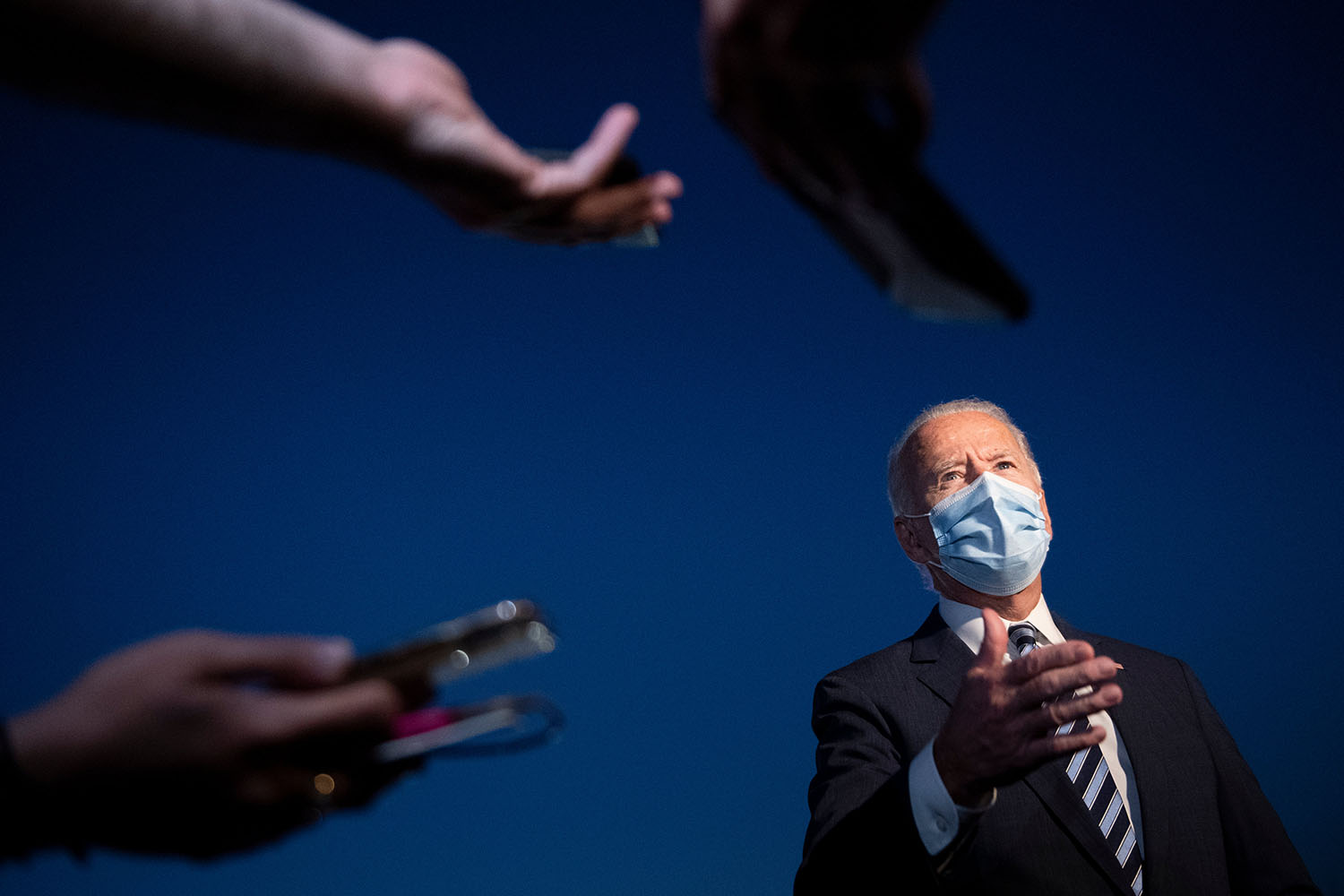
What would a Biden presidency mean? Democrat voters may worry that thinking too hard about what their man would do in office could hex the election. In fact this is what voters are supposed to do. It’s only because the race so far has been a rolling referendum on Trump that, to a large extent, they haven’t.
This might be a good time to fix that. All the usual caveats apply but the Real Clear Politics national average of polls has Biden 9 points ahead overall and 4.4 ahead in the top six battlegrounds (see our Newslist on the app for more on them). RCP’s rolling average of betting odds shows a 28.8 point spread – the widest of the campaign so far. So…
- On healthcare: Biden says he’d spend $850 billion over ten years on a “public option”, mainly for those on low incomes, and on subsidising health premiums for those not insured through their work. Remember: the threat of a public option (a state-run insurance scheme) is what turned Senate Republicans permanently and unconditionally against everything Obama touched. Biden would need the Senate onside to make this happen but it would be a big step closer to universal healthcare for the one rich country that still lacks it.
- On climate: the pull of the Left has persuaded Biden to pledge $2 trillion over four years for green upgrades to America’s energy and transport grids, the idea being that the investments do double duty as a grand Covid recovery plan. More significant for the planet: on day one in office Biden would scrap Trump’s bid to bail on the Paris Agreement. Without the US the agreement means little. With the US, the entire developed world is on the same climate page and Bolsonaro-style denial is suddenly on the fringe where it belongs.
- On trade: Antony Blinken, Biden’s top foreign policy advisor, wants to end Trump’s “artificial trade war” with Europe. There would still be pressure to go easy on Big Tech in terms of tax, but Trump’s self-defeating obsession with trade deficits in things like car parts would be gone.
Three more thoughts:
- If Biden wins he’ll have a choice: hold the centre ground or indulge the Left. Too much of the latter and he’ll get what Obama got in his first set of midterms – a shellacking.
- You can vote out Trump but you can’t uninvent Trumpism. If Trump loses the search will begin at once for his next incarnation.
- And so the 2024 race has more or less begun. Who would Kamala Harris fear more – Nikki Haley or Ivanka?
In the app today… Read part three of our file on test and trace. It’s a profile of Dido Harding, the Tory peer who’s supposed to make the system work. The trouble is she seems to specialise in failure. Also: sign up for tonight’s ThinkIn on hidden homicides, which is to say murders that go unreported, and for a feast of events on Thursday including ThinkIns with Flo Simpson and Nels Abbey. We’ve got our Responsible Business Summit coming up next week, which coincides with the autumn update of the Tortoise Responsibility 100 Index.
Loans for what
If you’re having trouble sorting your CBILS from your CLBILS, this might help: they’re both coronavirus business interruption loan schemes backed by UK taxpayers for the purpose of saving jobs, only CLBILS are for large businesses – like two metals trading businesses linked to the steel magnate Sanjeev Gupta which, the FT reports, have received tens of millions of pounds in CLBILS between them. They are certainly large in terms of revenues – $588 million and $493 million respectively – but they employ a total of 11 people. Exactly how much they’ve received from the Treasury isn’t clear. Greensill Capital, which arranged the loans, won’t say, and nor will the British Business Bank, which underwrote them. But it’s our money. We should know.
More windmills
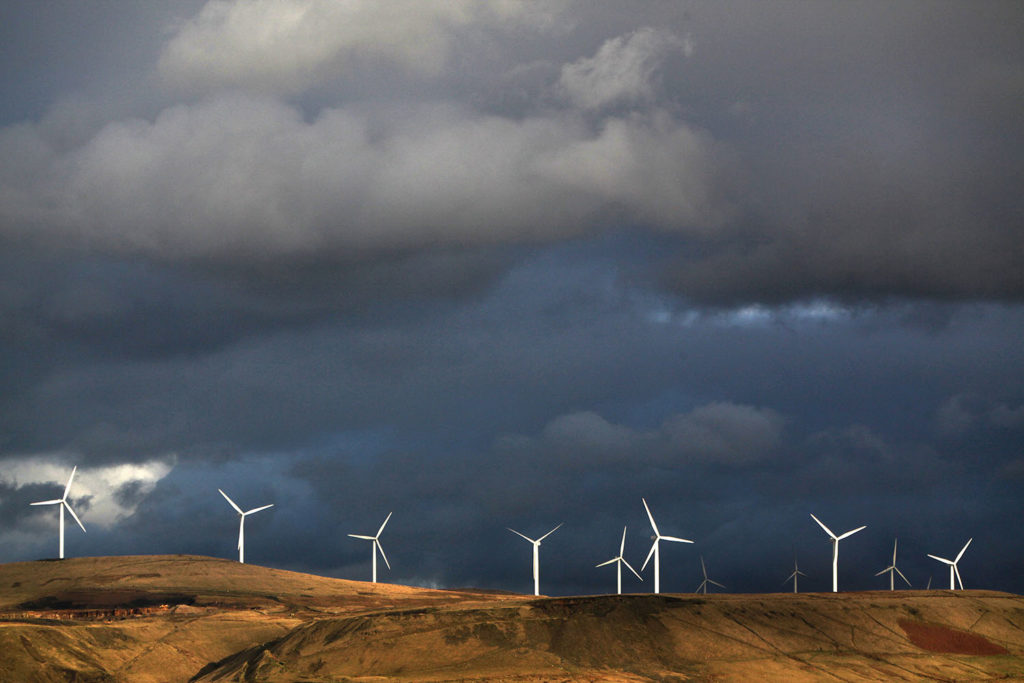
Boris Johnson devoted a large part of his speech to the virtual Tory conference to the idea of Brits getting all their power from wind by 2030. He was variously accused of building wind farms in the sky and trying to distract voters from the miserable present. But he’s right to look to 2030, and he’s right to look to wind, at least until the UK’s climate starts to resemble Spain’s. This isn’t a repeat of the Boris island airport fantasy. It’s a perfectly sensible way to realise an extremely urgent policy priority. Give him a break.
Kamchatka death zone
Something terrible has happened on the ocean floor off the east coast of Russia’s Kamchatka peninsula. Ninety-five per cent of marine life on the sea bed has died. Crabs, fish, molluscs, octopi and sea urchins have washed up dead in their tens of thousands. No one knows why. It could be something natural, like a subsea seismic event, but pollution looks more likely. The deaths all happened in Avancha Bay, near Petropavlovsk-Kamchatsky, the region’s biggest settlement, and kite surfers there have been complaining of sore eyes for weeks. Greenpeace says petroleum levels at a nearby beach are four times normal.
Melbourne reopens
They do certain things differently in Australia, Covid-containment among them. The country’s worst hotspot by far has been Melbourne, currently under strict lockdown because of a second wave of infections and deaths. That lockdown could be eased soon, though, because for the first time since the wave arrived the city’s two-week rolling average of deaths has fallen below 10. Victoria state has recorded more than 800 Covid deaths in all. For context, the whole country has recorded 897. Total.
Free Kyrgyzstan
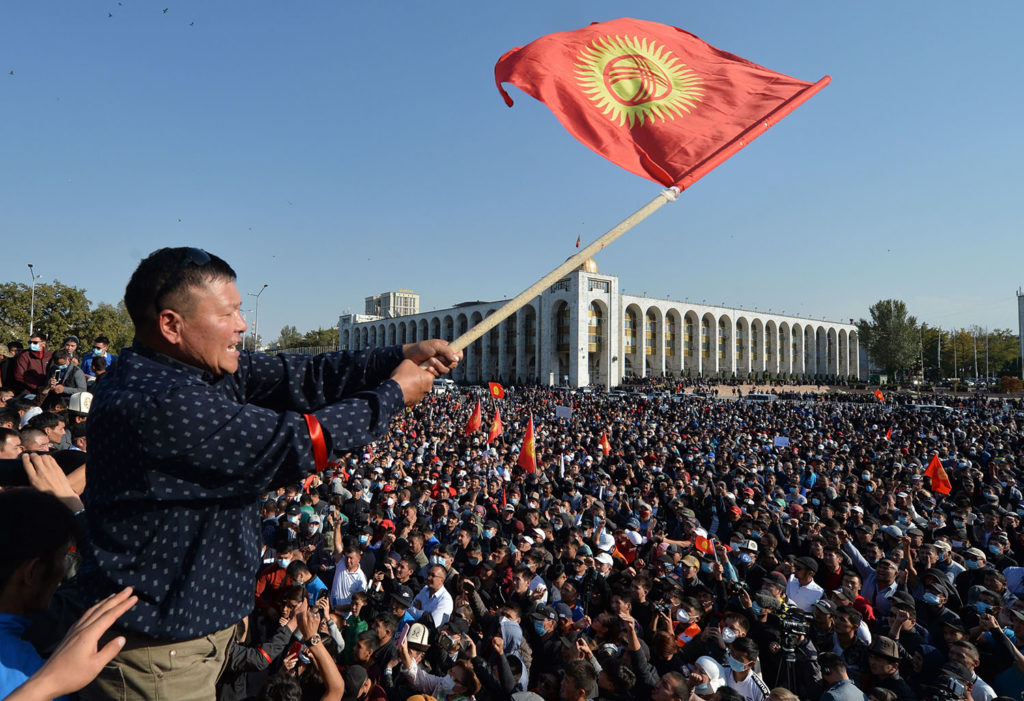
My favourite country in the world is having quite a week of it. First, crowds surged through the capital on Monday after allegations of vote buying by two prime-ministerial candidates in Sunday’s election. Hundreds were injured and one young man was killed. Then the electoral commission annulled the election. The incumbent PM and the speaker of Kyrgyzstan’s parliament have both stood down and now the president says he’s ready to as well. Power has passed, for now, to Sadyr Zhaparov, an opposition leader freed from prison by supporters.
To note: this is not a mini-Belarusian uprising on the far side of the old Soviet empire. Of all the Stans, Kyrgyzstan has always had the liveliest appetite for democracy and for more violent means of turfing leaders out when democracy fails, as, to be honest, it usually does. But that is not to say there aren’t echoes of Minsk in Bishkek. Putin has been trying to re-establish a measure of control over Kyrgyzstan for the past decade, not least by attaching it to Russia’s improved road and power grids. From across the mountains, China bids for influence too. Can Kyrgyzstan retain a distinct identity in the middle of all this? You bet. The more urgent question is whether Zhaparov can prevent a descent into chaos over the next few weeks.
Thanks for reading, and do share this around.
Giles Whittell@GWhittell
Additional reporting by Ella Hill, Ellen Halliday and Luke Gbedemah