Sensemaker Daily


What just happened
- In simultaneous but separate TV town halls, Trump wouldn’t disavow the QAnon conspiracy theory and Biden wouldn’t rule out packing the US Supreme Court (more below).
- Convoys of Turkish nationalists blocked streets in Istanbul’s Armenian district as the death toll from fighting in Nagorno-Karabakh rose above 300.
- Russia pulled out of talks with Austria and the Netherlands over responsibility for the shooting down of flight MH17.
Covid and trust. Can European governments walk and chew gum at the same time? Can they fight the virus and at the same time make a proper study of why their efforts to stop its spread are failing?
The question matters because confirmed case numbers for the continent as a whole have been rising at more than 100,000 a day for the past week. Europe now accounts for a third of all new infections. The Czech Republic and Slovakia, which handled the first wave with minimal spread, are drowning under the second. Germany recorded more than 5,000 new cases on Wednesday – more than on any day since the spring. Italy recorded 7,332 – a record for the pandemic.
How to respond? Britain and France (9,908 and 12,535 cases per million respectively) offer an interesting comparison:
- The UK government this week introduced a three-tiered system of restrictions as an alternative to another national lockdown, and immediately found itself bargaining with mayors and local authorities over the balance between the health of people and the health of the economy. Boris Johnson’s position on a public inquiry is: “at the appropriate time.”
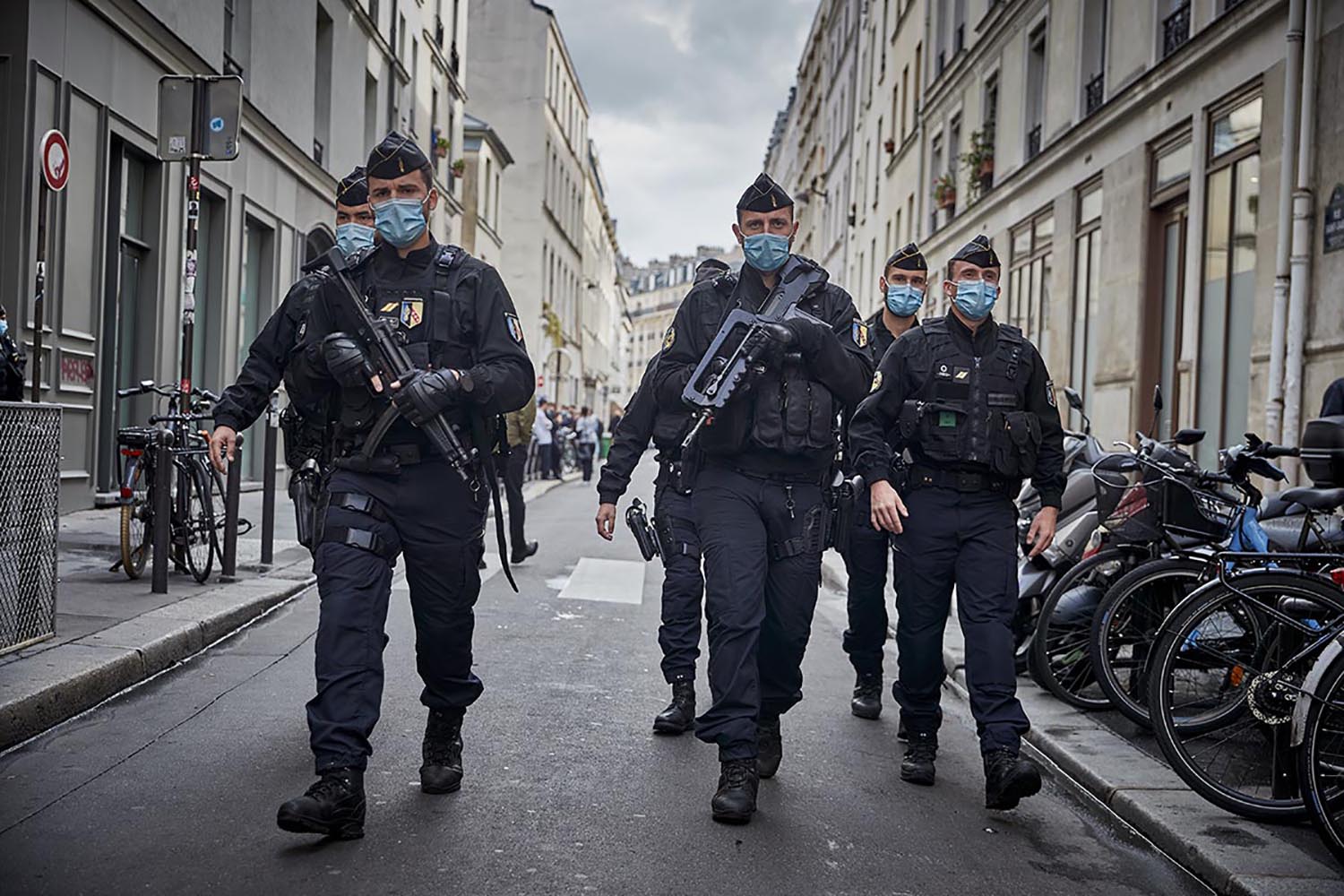
- In France, Emmanuel Macron declared a curfew for up to six weeks for Paris and eight other cities and at the same time police searched the homes of the former prime minister and current health minister as part of a court-ordered investigation of the government’s generally poor handling of the crisis. The current PM, Jean Castex, is also being investigated.
It’s hard to imagine police searching the home of Matt Hancock, the UK’s health secretary, or sitting down to question Johnson on his Covid strategy. It’s not hard to see in Johnson’s sliding approval numbers a collapse of trust in his government. France, like the UK, failed to create an effective test and trace system over the summer and its restaurateurs are confused and angry about new rules on when they can open. But the French broadly back the “state of health emergency” Macron has declared.
The lesson may be that you build trust by accepting scrutiny, and lose it at your peril. Starting next month, Tortoise is holding its own inquiry into the UK government’s Covid response, because someone has to.
In the app today… In the final installment of our file on Happy the elephant and animal rights, Sharon Redrobe of Twycross Zoo makes the case for treating animals as animals, but better. Sign up for our lunchtime Sensemaker Live ThinkIn on America and the world, with Anne Applebaum, Greg Swenson, Ian Buruma and Julian Borger; and for our members’ open house on Monday.
The price of failure
Yesterday we brought you a story of well-remunerated consultants being paid £10 million by the UK government to work on test and trace. Today the FT looks more closely at the £10 billion-worth of no-bid contracts handed out in all by the same government in the rush to cope with Covid. It focuses on one for £280,000 for “leadership support”, awarded with no competition to the former CEO of a bankrupt outsourcing firm. Debbie White’s smart move after stepping away from the remnants of that firm seems to have been to take an unpaid role at the Department for Health and Social Care helping to set up a network of testing centres. Right place, right time, may be putting it too charitably.
Drone wars
China is testing suicide drones, a swarm of munitions which loiter in the air before attacking a target, according to a video published yesterday in the Times. Drone swarms, although still in their infancy, are seen by many armed forces across the world as the future of warfare, or, as we put it earlier this year, as the Kalashnikovs of tomorrow. Including by Britain: the MOD’s recent Integrated Operating Report stated that armed forces will be “increasingly vulnerable to swarms of self-coordinating smart munitions perhaps arriving at hypersonic speeds or ballistically from space”. And in a speech last week Tony Radakin, the head of the Royal Navy, declared that he was “confident enough to swap ships for drones”. War is hell. It’s also changing.
Wild about carbon
A study in Nature says restoring – or rewilding – 15 per cent of land that humans have degraded could remove from the atmosphere nearly a third of all the excess carbon emitted since the start of the industrial revolution, and boost biodiversity. This recalls the controversial paper on the carbon sequestration potential of planting a trillion trees, led by Thomas Crowther, who we interviewed at the start of this year, and whose critics said he exaggerated that potential and neglected biodiversity. What the studies have in common is a planetary-scale approach to mapping land available for carbon storage, multiplying hectares by tonnes of CO2 equivalent and producing enormous numbers (in this case 299 gigatonnes of CO2e). Both are great exercises in conception. Just add enlightened world government.
Ebola breakthrough
Six years after a major Ebola outbreak in West Africa killed more than 11,000 people, and more than four decades after the virus was first discovered, the US Food and Drug Administration has finally approved the world’s first treatment for the disease. The drug, Inmazeb, is produced by Regeneron, whose experimental antibody cocktail formed part of Trump’s recent treatment for the coronavirus. It’s good news for the Democratic Republic of Congo, currently in the midst of its eleventh Ebola outbreak. It could also be good news for the fight against Covid-19. The PALM trial in which the drug was tested was the first major attempt to conduct a rigorous, safe, clinical trial while dealing with an active epidemic. It succeeded. And the drug itself uses the same monoclonal antibody technology as the treatment given to Trump for Covid-19. If Bill Gates is hopeful for the prospect of monoclonal antibodies, we should be too.
“You ain’t Black”
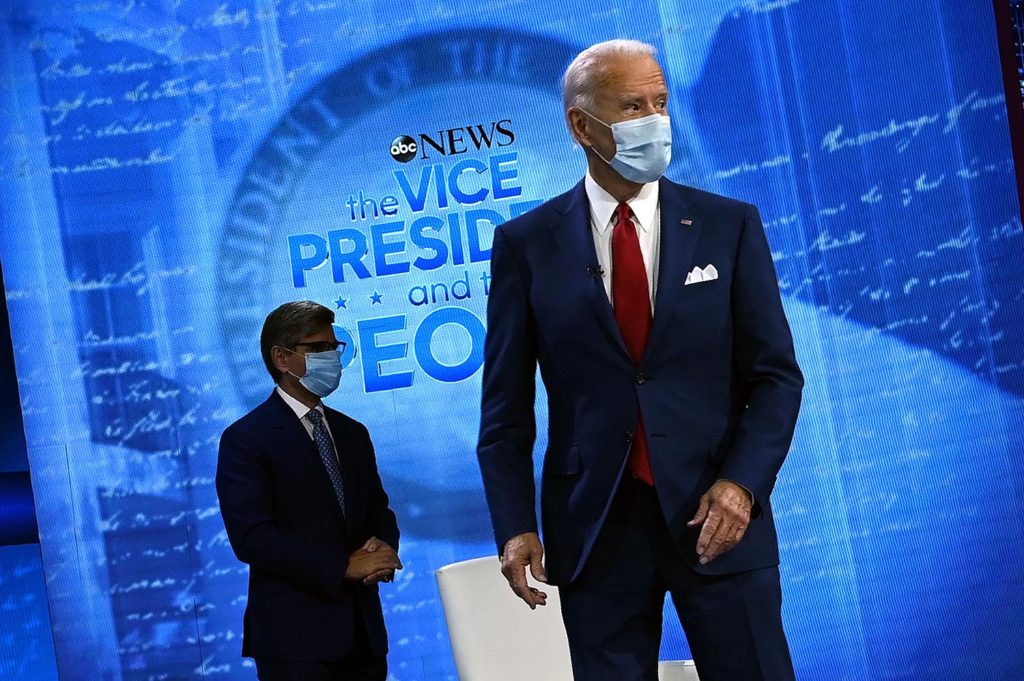
Joe Biden apologised for those words after uttering them earlier in his campaign as part of a riff on whether he or Trump had done more to earn the Black vote. (“If you’ve got a problem figuring out whether you’re for me or Trump, then you ain’t Black.”) In last night’s town hall in Pennsylvania he was given a chance to apologise again. He didn’t take it. Instead he invoked the memory of “my buddy John Lewis”, the civil rights leader who died this year, and pledged to focus on helping Black people accumulate wealth should he become president.
Nothing about last night’s parallel town halls cut through like NBC’s Savannah Guthrie reminding Trump he was president of the US, not “someone’s crazy uncle”. But whether Biden can persuade young Black voters he’s a genuine reformer rather than an ageing legislator complicit in the mass incarceration of young Black men could swing a swing state or two on 3 November.
Thanks for reading, and do share this around.
Giles Whittell
@GWhittell
Xavier Greenwood
@XAMGreenwood