Sensemaker Daily



What just happened
Sensemaker special: Building back better
If, like us, you’re keen to discover what “build back better” really means, join us in early November at the CBI’s annual conference. The focus will be on the UK’s role in the global recovery, the future of our economy and how young people can drive change. Tortoise co-founder James Harding is hosting the event, which was attended last year by Boris Johnson and Sir Keir Starmer among many others. Tortoise members can claim their free ticket, usually £550, here.
Twelve years ago Rahm Emanuel, then White House chief of staff, said of the crash: “You never want to let a serious crisis go to waste.” He took some flak for it but it had the merit of being honest. Now the UK government – and others – are promising to “build back better” from the pandemic. It’s optimistic, but carries the built-in risk of over-promising and under-delivering. Does it actually mean anything? What will it cost? And who will build back best?
By the numbers:
The UK’s “New Deal for Britain” promises to “rebuild Britain and fuel economic recovery” by investing £640 billion in “future prosperity” over the next five years. Spending on construction takes centre stage: £1.5 billion for hospitals, £100 million for roads, £1 billion for schools, and £900 million for “shovel ready” local growth projects. There are a few catches:
- None of this is new money. It was all announced in March as part of a budget that was hastily rewritten because of Covid but always had a big capital investment component.
- Some of the funds are being spent earlier than planned – but not much. As of June only £5 billion in infrastructure spending had been brought forward.
- A clean, green recovery is a UK priority, and so is reaching net zero emissions by 2050, but only £350 million has been earmarked specifically for green recovery projects. That’s less than one day’s spending for the NHS.
- The UK government has always struggled to fast-track capital spending, as with the Regional Growth Fund to hasten recovery. The Public Accounts Committee criticised the fund for failing to protect jobs cost-effectively or fast enough.
The EU’s “Next Generation EU Recovery Plan” promises €672 billion to stimulate recovery via “digital transformation” and “climate neutrality”. This plan follows the European Commission’s €1.04 trillion budget announcement for the next seven years, and is in principle the largest “build back better” package in the world. €550 billion of the seven-year budget is for green projects and the €672 billion is new money allocated since the pandemic hit.
The catch:
- Much of the funding is to be disbursed as loans, rather than grants, which could leave already cash-poor and vulnerable member states worse off.
The US
- If Trump wins: as of July, the main ingredient of Trump’s recovery planning was a pledge of $100 billion for schools within a bigger package of $1 trillion in cash payments for households. There’s no focus yet on infrastructure, health care or any of the other trappings of a conventional “build back better” plan.
- If Biden wins: he has promised $700 billion of investment in procurement, research and development of green tech, clean energy and artificial intelligence, as part of a recovery plan costed at $2 trillion overall. It’s intended to stimulate US production, create jobs, secure incomes and, as his campaign puts it, “invest in all of America”.
The build back better slogan may date back to a 2017 plan from the UN’s Office for Disaster Risk Reduction titled “Build Back Better; in recovery, rehabilitation and reconstruction”. The report doesn’t mention viruses or pandemics but it does lay out “an all stake-holder, national-level disaster recovery framework”. The now-familiar ingredients are there – developing human capital, climate and development-focused recovery goals, strong infrastructure and job creation. Covid has clearly been a disaster, but at least the UK won’t be alone in trying to seize what opportunities it presents. Do use your free ticket to the CBI conference to find out how.
long stories short
- Two children and two adults died when the inflatable in which they were trying to reach England from France capsized.
- Qatar Airlines issued a partial apology for strip-searching 18 women in Doha in search of the mother of an abandoned baby.
- Protesters took to the streets of Philadelphia for a second night after police shot and killed Walter Wallace Jr, a 27 year-old Black man.
In the app today… Read a remarkable and stirring argument by the Reverend Gregory Seal Livingston that far from being sidelined by the Black Lives Matter movement, America’s Black churches are simply evolving, as they have been for 400 years. This is the latest installment of our file on evangelicals and the 2020 race for the White House. Also, sign up for tonight’s ThinkIn on climate change and the Middle East; and for tomorrow’s on how to start a movement (this is a Network event, free for students and apprentices) and the world according to LBC’s James O’Brien – in conversation with Matt d’Ancona.
Sensemaker special: Building back better
If, like us, you’re keen to discover what “build back better” really means, join us in early November at the CBI’s annual conference. The focus will be on the UK’s role in the global recovery, the future of our economy and how young people can drive change. Tortoise co-founder James Harding is hosting the event, which was attended last year by Boris Johnson and Sir Keir Starmer among many others. Tortoise members can claim their free ticket, usually £550, here.
Twelve years ago Rahm Emanuel, then White House chief of staff, said of the crash: “You never want to let a serious crisis go to waste.” He took some flak for it but it had the merit of being honest. Now the UK government – and others – are promising to “build back better” from the pandemic. It’s optimistic, but carries the built-in risk of over-promising and under-delivering. Does it actually mean anything? What will it cost? And who will build back best?
By the numbers:
The UK’s “New Deal for Britain” promises to “rebuild Britain and fuel economic recovery” by investing £640 billion in “future prosperity” over the next five years. Spending on construction takes centre stage: £1.5 billion for hospitals, £100 million for roads, £1 billion for schools, and £900 million for “shovel ready” local growth projects. There are a few catches:
- None of this is new money. It was all announced in March as part of a budget that was hastily rewritten because of Covid but always had a big capital investment component.
- Some of the funds are being spent earlier than planned – but not much. As of June only £5 billion in infrastructure spending had been brought forward.
- A clean, green recovery is a UK priority, and so is reaching net zero emissions by 2050, but only £350 million has been earmarked specifically for green recovery projects. That’s less than one day’s spending for the NHS.
- The UK government has always struggled to fast-track capital spending, as with the Regional Growth Fund to hasten recovery. The Public Accounts Committee criticised the fund for failing to protect jobs cost-effectively or fast enough.
The EU’s “Next Generation EU Recovery Plan” promises €672 billion to stimulate recovery via “digital transformation” and “climate neutrality”. This plan follows the European Commission’s €1.04 trillion budget announcement for the next seven years, and is in principle the largest “build back better” package in the world. €550 billion of the seven-year budget is for green projects and the €672 billion is new money allocated since the pandemic hit.
The catch:
- Much of the funding is to be disbursed as loans, rather than grants, which could leave already cash-poor and vulnerable member states worse off.
The US
- If Trump wins: as of July, the main ingredient of Trump’s recovery planning was a pledge of $100 billion for schools within a bigger package of $1 trillion in cash payments for households. There’s no focus yet on infrastructure, health care or any of the other trappings of a conventional “build back better” plan.
- If Biden wins: he has promised $700 billion of investment in procurement, research and development of green tech, clean energy and artificial intelligence, as part of a recovery plan costed at $2 trillion overall. It’s intended to stimulate US production, create jobs, secure incomes and, as his campaign puts it, “invest in all of America”.
The build back better slogan may date back to a 2017 plan from the UN’s Office for Disaster Risk Reduction titled “Build Back Better; in recovery, rehabilitation and reconstruction”. The report doesn’t mention viruses or pandemics but it does lay out “an all stake-holder, national-level disaster recovery framework”. The now-familiar ingredients are there – developing human capital, climate and development-focused recovery goals, strong infrastructure and job creation. Covid has clearly been a disaster, but at least the UK won’t be alone in trying to seize what opportunities it presents. Do use your free ticket to the CBI conference to find out how.
long stories short
- Two children and two adults died when the inflatable in which they were trying to reach England from France capsized.
- Qatar Airlines issued a partial apology for strip-searching 18 women in Doha in search of the mother of an abandoned baby.
- Protesters took to the streets of Philadelphia for a second night after police shot and killed Walter Wallace Jr, a 27 year-old Black man.
In the app today… Read a remarkable and stirring argument by the Reverend Gregory Seal Livingston that far from being sidelined by the Black Lives Matter movement, America’s Black churches are simply evolving, as they have been for 400 years. This is the latest installment of our file on evangelicals and the 2020 race for the White House. Also, sign up for tonight’s ThinkIn on climate change and the Middle East; and for tomorrow’s on how to start a movement (this is a Network event, free for students and apprentices) and the world according to LBC’s James O’Brien – in conversation with Matt d’Ancona.
Please share this Sensemaker with your friends and colleagues.
Consultants ahoy
First Covid, now Brexit. The current UK government has faced stern challenges, some of its own making, but at least it has plenty of real-world superheroes on speed dial. Unbothered by the eyebrows they’ve raised by paying consultants up to £7,000 a day to (fail to) sort out test and trace, ministers are now paying £30 million to each of McKinsey, Bain, Deloitte, KPMG, Accenture and PwC to help with Brexit. That’s £180 million in all, which of course is chicken feed by these firms’ standards but they can think of it as a taster: there’s £3.6 billion more work to bid for over the next two years. What sort of work? Well, the Times says (£) the most urgent needs include expertise on healthcare supply chains, international trade comparisons and immigration policies. It would have been nice if these had been sorted at leisure and at normal civil servant wage rates over the past four years. But apparently they haven’t been.
Apple search
Apple is gearing up to offer customers its own search engine on its phones in the event that the US Department of Justice forces it to stop using Google’s. At present, Google pays billions to Apple to be the default web search tool on iPhones, but the FT reports (£) that this arrangement could be a target of the DoJ’s antitrust lawsuit against Google. If you thought it was easy to set up a new search engine apparently you thought wrong. You need at least 20-50 billion pages in your “active index” just to compete, and neither the pages nor the web crawlers that scour them come cheap. Apple can contemplate getting into this arena only because it has more than $80 billion cash on hand.

Feedback loops part II
We worried last week about the artificial global warming feedback loop caused by energy intensive air-conditioning. Back now to perhaps the most ominous natural feedback loop: frozen methane released from the sea bed into a warming Arctic Ocean. An international team on a Russian research ship claims to have measured dissolved methane levels four to eight times higher than expected near the surface of the Laptev Sea off north-eastern Siberia. None of this has been peer-reviewed yet – and we should remember that even though methane is up to 80 times more potent as a greenhouse gas than CO2 it doesn’t linger in the atmosphere as long, so averaged over 100 years it’s only 28 times as potent. Still…
Cop cleared
This is about a life cut short. A Dorset policeman who broke his lover’s neck after she texted his wife on his phone has been cleared of murder. Timothy Brehmer had multiple affairs before meeting Claire Parry, who died of “unsurvivable brain injuries” after what he called a “kerfuffle” in which he said he “fell on top of her by accident, more than anything”. A jury in Salisbury took less than three hours to acquit him of murder and he now faces sentencing for manslaughter of one form or another – the judge has to decide which. One option is “owing to loss of control”. Parry’s widower said Brehmer had left a “gaping chasm” in her family’s lives.
Voter subtraction
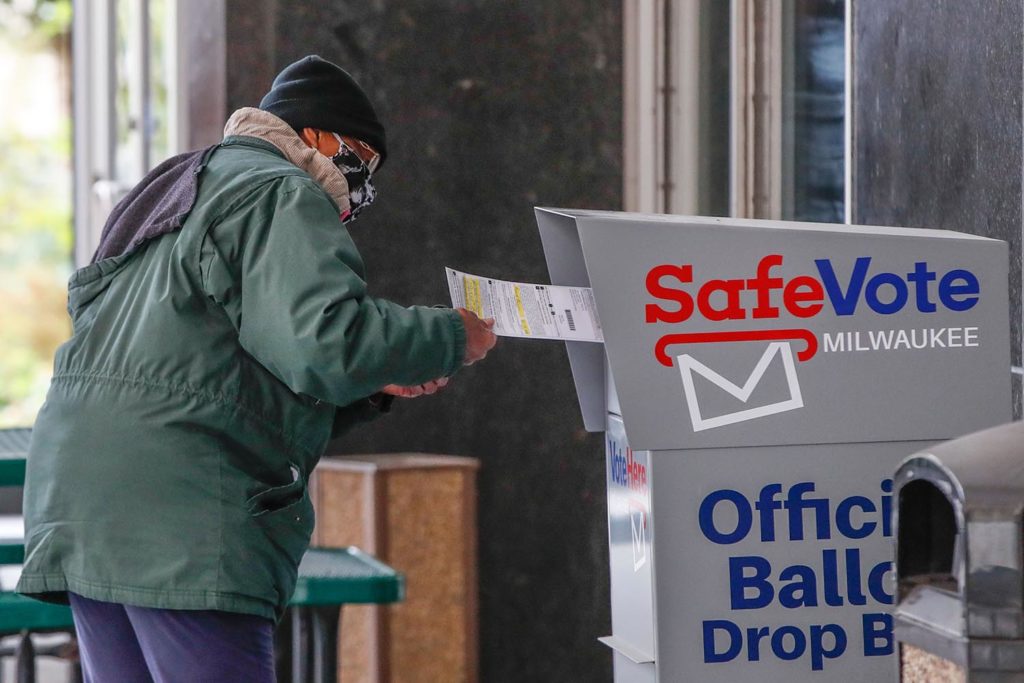
In the US, the Republican-majority Supreme Court has divided along partisan lines to rule that Wisconsin can’t count postal ballots that arrive after election day. For context: 1) In 2016 Trump won Wisconsin by fewer than 23,000 votes. 2) More than 700,000 ($) of the mail-in ballots sent to Wisconsinites have yet to make it back to election offices. 3) Last month delivery of a first-class letter in the state took an average of 10 days. 4) The election is now six days away. Perhaps the ruling will not affect the final result: Biden holds a commanding lead in Wisconsin. But it speaks to a ludicrously under-discussed element of polling as a whole (especially in a year when Covid has put a huge spanner in the voting process). Can the polls correctly account for those who intend to vote but are not, in the end, able to do so? As Ibram X. Kendi asks of the 2016 election: “What if the polls did not get it wrong? What if the Republican game of voter subtraction got it right?” What if the game gets it right again this year?
Thanks for reading, and do share this around.
Giles Whittell
@GWhittell
Luke Gbedemah
@LukeGbedemah
Additional reporting by Xavier Greenwood
Photographs by Getty Images and Markus Rex/Alfred-Wegener-Institut