Sensemaker Daily


What just happened
- The UK announced plans to get students home for Christmas, and to vaccinate a million people a week when the Pfizer vaccine arrives.
- A US postal worker retracted a claim of ballot fraud that was the basis of several Republican claims that last week’s election was stolen.
- Peru’s popular president was removed from office in what his supporters said was a coup.
Half a century ago the New York Times reported on what could have been a special day: the opening of a tunnel under Place de l’Étoile. The idea was to ease the heavy traffic around the Arc de Triomphe.
It didn’t work. L’Étoile and the endless snarl of cars around it remain the cynosure of a city which the European Commission last month referred to the EU Court of Justice for its “systematic failure” to meet rules on air pollution for over a decade.
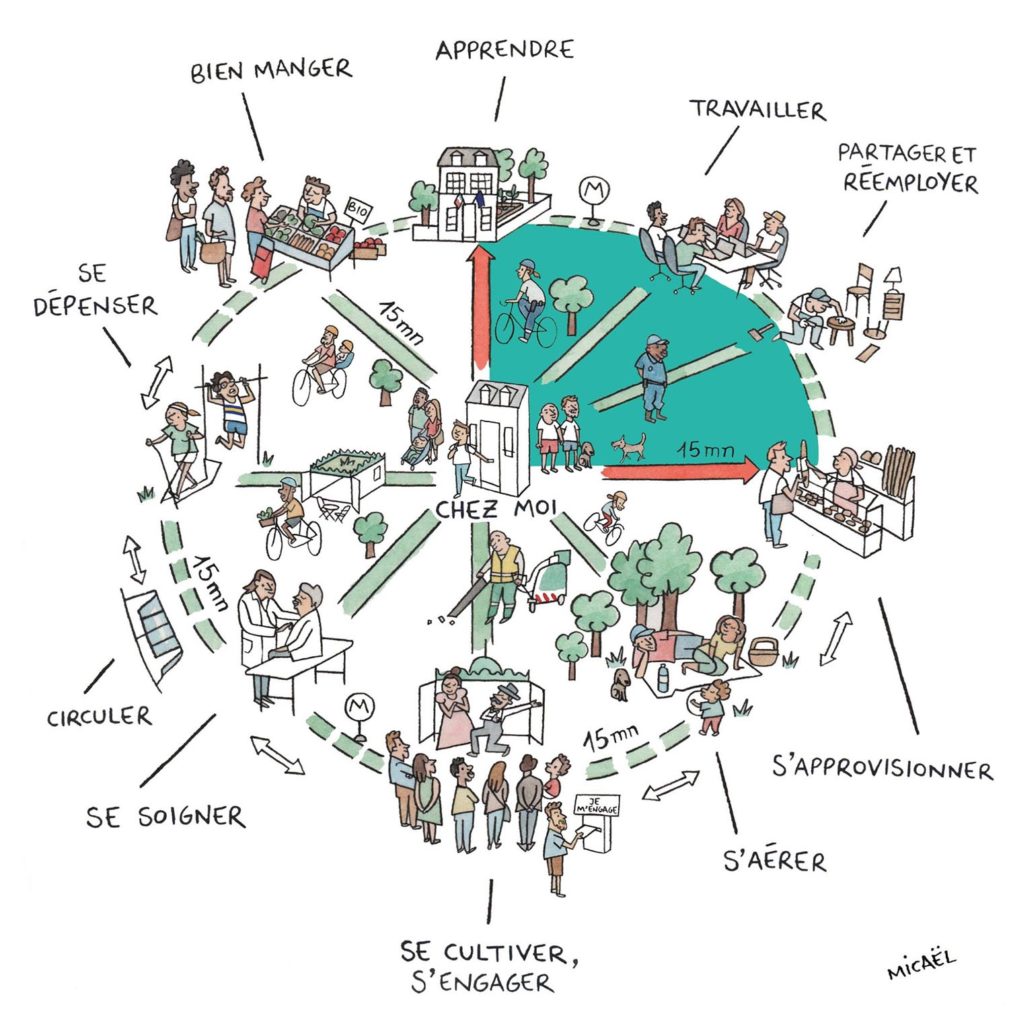
That might be changing. In June Anne Hidalgo won re-election as mayor of Paris vowing to build the ville du quart d’heure, or the 15-minute city, in which nothing you need as a citizen is more than 15 zero-carbon minutes away.
The idea of a 15-minute city divides urban planners and boosters. Some see it as regressive and a drag on megacities’ efforts to compete as agglomerations of scale. But it’s certain to spark debate at our Future of Cities summit next week (sign up for free here) and it could be transformative for Paris.
Hidalgo’s plan? To build in each arrondissement a self-sufficient neighbourhood with all amenities a short walk or cycle away. This ambition is enabled in part by the city’s compactness: Paris has more than 21,000 residents per square kilometre, compared with 5,700 in London. The mayor says the ville du quart d’heure could reduce pollution, expand green spaces, minimise stressful commutes and build closer communities.
The details include
- making main roads through Paris inaccessible to motor vehicles;
- creating child-friendly school streets, closed to traffic at the start and end of the day;
- removing half of the surface-level parking spaces in Paris;
- putting a bike path on every street.
Hidalgo has already
- created 870 miles of bike lanes across the city;
- eliminated thousands of parking spaces and shut several key roads to traffic including the one that runs along the north bank of the Seine;
- relaxed building codes to allow green-fingered Parisians to plant trees on the streets;
- banned diesel cars from the city, effective from 2024.
The people are with her. Between 2018 and 2019, the number of Parisians using bikes rose by more than half. And starting from before Hidalgo’s tenure, car ownership in the city fell from 60 per cent of households in 2001, to 35 per cent in 2019.
These changes could be accelerated by Covid. “We could breathe. We heard birds,” the mayor told Time earlier this year, reflecting on the spring lockdown, when air pollution in Paris fell by 60 per cent.
A major theme of our cities summit, in partnership with Canada’s Globe and Mail, will be the question of whether Covid will change cities forever. Speakers include Andy Burnham, mayor of Greater Manchester; Nick Hytner, former aartistic director of the National; and Hazel Chu, mayor of Dublin.
Other questions we’ll be asking:
- Will Covid take more from some cities than others? Bars, restaurants and cinemas are being hit hardest and Lisbon has more than 1,300 per 100,000 people (for comparison: Toronto has 300, and London has 250).
- Will there be a suburban office boom? Nearly 90 per cent of US surveyors expect demand for commercial suburban space to increase over the next couple of years, compared with around 60 per cent in the UK and 50 in Canada.
- Will working from home only be the future for some? An estimated 39 per cent of Canadian workers and 38 per cent of UK workers can work from home, but in emerging economies this figure stands at just 24 per cent.
- What difference will the Elizabeth Line make to London? For dozens of communities the city could shrink in a good way when at last you can cross it, east to west, in under half an hour.
- Could Toronto perfect the 15-minute city? Neighbourhoods like leafy Leaside which were planned before cars were the norm could be a ready-made blueprint.
But back to Paris – and some caution before you cross the boulevard without looking.
In the 7th and 15th arrondissements: mayors have resisted Hidalgo’s proposals; so too taxi drivers who after her recent re-election formed a honking convoy along the Left Bank in protest. And on Monday markets rebounded on the hopeful vaccine news from Pfizer – a sign perhaps that people want to return quickly to their old polluting ways.
Still, Hidalgo won more than half of the ballot. Her dreams for Paris have a mandate.
Thanks a (couple of) trillion
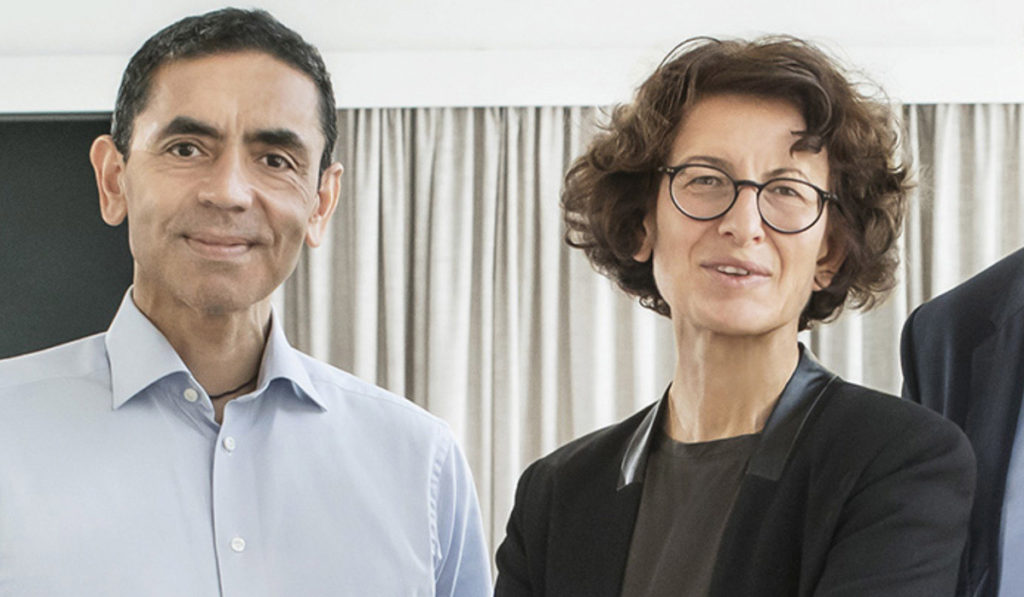
Rand Europe, the eastern outpost of the US think tank, reckons an effective vaccine could cut the annual global loss of output due to Covid by $2.2 trillion. Thank you, Dr Özlem Türeci of BioNTech (see also the 100-year life), and others. To note: Rand still foresees a $1.2 trillion hit to global output even in the event of a swift vaccine roll-out to the US, China, Europe, India and Russia. That’s a monthly loss of $103 billion, or about two thirds of the annual budget of the NHS. Big numbers – although the WSJ’s report ($) includes the Congressional Budget Office’s pre-Pfizer breakthrough forecast for the US economy’s return to pre-Covid size and growth. The CBO thinks it’ll take two years. Two years flat.
EU v Amazon
Brussels has formally charged Amazon over its alleged use of its own data to promote Amazon products over those of third-party sellers who use its platform. This goes back to whistleblower claims that Amazon decides how to price its own products, and which to push and withdraw, on the basis of the sneak peek it gets at rivals’ data by hosting their online operations. We’re talking about things like e-readers, batteries, furniture, speakers and doorbell cameras. In each case Amazon has allegedly seen an opening and pushed its own products at compelling prices because of its unbeatable view of the market. The EU’s competition commissioner, Margrethe Vestager, says this is anti-competitive. Amazon says it enables 150,000 EU merchants to trade online. Do not expect a quick verdict, but Amazon could face a $19 billion fine if found to be a bully.
Cars and Covid
Covid is not doing much for public transport. Given the choice, a lot of people would rather drive, especially in countries where the virus has hit hard and public transport was shambolic anyway. Take Brazil. The buses in Curitiba are legendary but they are the exception. Overall, 60 per cent of Brazilians say they’ll use their cars more because of Covid and only 12 per cent say they’ll use them less. The trend is similar in all 25 countries surveyed for a new YouGov report. Another reason to hope against hope that vaccines make people feel safe again.
Two cool women
The brains behind the Pfizer / BioNTech vaccine appear to be those of Dr Özlem Türeci, the German-born child of Turkish immigrants to Germany and the partner-in-life-and-science of BioNTech’s CEO. The competence behind the roll-out of the vaccine, assuming it goes to plan, appears to be that of Tanya Alcorn, Pfizer’s vice president of supply chain. She’s in charge of keeping hundreds of millions of doses at minus 70C as they’re distributed across the US from a manufacturing base in Kalamazoo, Michigan, and across Europe from another in Puurs, in Belgium. It may feel unnecessary to highlight their gender, but we did when women turned out to be doing the best job of national leadership during the first wave of the pandemic, so it seems unfair not to do so now.
Cancun clash
Mexican police opened fire on a femicide protest in the resort city of Cancun, injuring four journalists. The demonstration was called after the murder of 20 year-old Bianca Lorenzana, the most recent victim of Mexico’s long epidemic of violence against women and girls. According to the local state governor, police received direct orders to use live ammunition to disperse the crowd. On average about 10 women are murdered in Mexico every day, and those demanding better protection from the state aren’t getting it. President Andrés Manuel López Obrador has a record of not taking the issue seriously, and another group of protesters, on Monday, were teargassed for their trouble. The women of Cancun aren’t backing down. One told the Guardian: “Our fear is rage now.”
Thanks for reading, and do share this around.
Xavier Greenwood
@XAMGreenwood
Giles Whittell
@GWhittell
Additional reporting by Nimo Omer