What just happened
- The giant Arecibo radio telescope in Puerto Rico is to be demolished after 57 years.
- Trump invited two Republican legislators from Michigan to the White House to discuss overturning their state’s presidential election result.
- Shuggie Bain, the debut novel by Douglas Stuart about a benighted Glasgow childhood, won the Booker after being turned down by 32 publishers.
There are times when policy announcements send you to sleep and times, like yesterday, when they wake you up. “We will establish… a new RAF Space Command,” Boris Johnson told the House of Commons, “launching British satellites and our first rocket from Scotland in 2022”.
Really? Yes. At least, he really said it, in the middle of a pandemic. The idea of an RAF Space Command launching British rockets from Scotland may sound like Top Gear on dexamethasone but as of yesterday it’s officially part of Britain’s new defence posture. Plans are in fact well advanced.
Where? Five spaceport sites in Scotland, plus one in Cornwall, are racing to be the first to launch commercial satellites in Europe. On 21 October, the site initially favoured by the UK Space Agency in Sutherland lost its key funding to another on the remote island of Unst in the Shetland archipelago. In total, three sites in the Highlands and Islands are pursuing vertical launches – the most common way of launching satellites. Those further south are developing horizontal launches, involving planes and runways.
What? The sites hope to launch small commercial satellites, mostly for Earth observation. For example, a two stage vertical launch rocket designed by a firm called Orbex will be 17 metres long and 1.3 metres wide and can carry up to 180kg into a low Earth orbit (compared with 41 tonnes for a Saturn V). In September, the Ferret website reported that the Ministry of Defence also wants to launch surveillance and intelligence-gathering satellites from Sutherland and Shetland. They said that arms firms like BAE Systems, Leonardo, Raytheon and Chemring, hope to use the sites.
Why? Developing domestic space launch sites is one of four components of the UK’s current space strategy. The UK Space sector is already worth £14.8 billion a year, with nearly 40 new companies added to the country’s space sector every year since 2012. In 2018, the Space Industry Act allowed private involvement in spaceflight in the UK for the first time. The government is now putting money behind its goal of capturing 10 per cent of the global space market by 2030. In 2019, the UK Space Agency began investing £374 million per year with the European Space Agency (ESA) to deliver international space programmes, including satellite development.
Why are sites in Scotland favoured? They’re cheaper and safer than the alternatives. Scotland’s sparsely populated northern and coastal landscape makes it well suited for satellites to launch into low Earth orbits without the risk of debris hitting people. Its high latitude is suitable for launching into polar and so-called sun synchronous orbits, which are good for spy and weather satellites. Also, Glasgow manufactures more satellites than anywhere else in Europe.
The sites
- Shetland Space Centre (vertical launch) is aiming for a fully functional satellite launch site by late 2021. One company, Skyrora, tested a rocket here in June 2020. In October it secured £24 million of funding when the US aerospace and arms manufacturer Lockheed Martin switched its allegiance from Sutherland to Shetland.
- Sutherland Space Hub (vertical launch): Once the favoured site, the A’Mhoine spaceport was delayed by a small but effective group of local opponents, concerned about the location of the site at the edge of the carbon-sequestering Caithness and Sutherland peatlands, which include the environmentally significant Flow Country. Construction is going ahead even so, planned to start early next year for a 2022 launch. The Danish billionaire couple who are Scotland’s biggest landowners are against it.
- Spaceport 1 Scolpaig, North Uist (vertical launch): This site also faces local opposition on environmental grounds. It is still aiming for a 2022 launch.
- Prestwick Spaceport (horizontal launch): the existing airport is trying to gain a spaceport operator’s license. It claims to be leading the race to be the first horizontal launch.
- Machrihanish (Campbeltown) Spaceport (horizontal launch): Machrihanish Airbase Community Company (MACC), which owns the former RAF airbase plans to create a joint venture with London-based UK Launch Services Ltd (UKLSL), to establish a small rocketry, research and development and training. On 2 September they launched a Raptor Aerospace Kestrel-100LD rocket.
- Newquay Spaceport (horizontal launch): Cornwall and Virgin Orbit aim for a horizontal launch by 2021. Construction work with a budget of £22m began last month.
Mark Naird, eat your heart out.
Seller X
Here’s a new way to get rich: scan Amazon for third party sellers who are doing well, buy them, and then go out and raise money to enable you to buy more of them. That’s what Berlin-based Seller X has done, and it’s raised a cool $100 million in debt and equity investments over the course of the pandemic. This is seed money; a nine-figure first round. Sifted, the new fintech newsletter, has the scoop. Seller X focuses on “evergreen” items like pet and beauty products that get good reviews. It wants to be “the digital Procter & Gamble”, and come to think of it don’t we all? Presumably the next iteration of this trend is to be the person who scans the people scanning Amazon, and get investors interested in that.
Kiwi splashdown
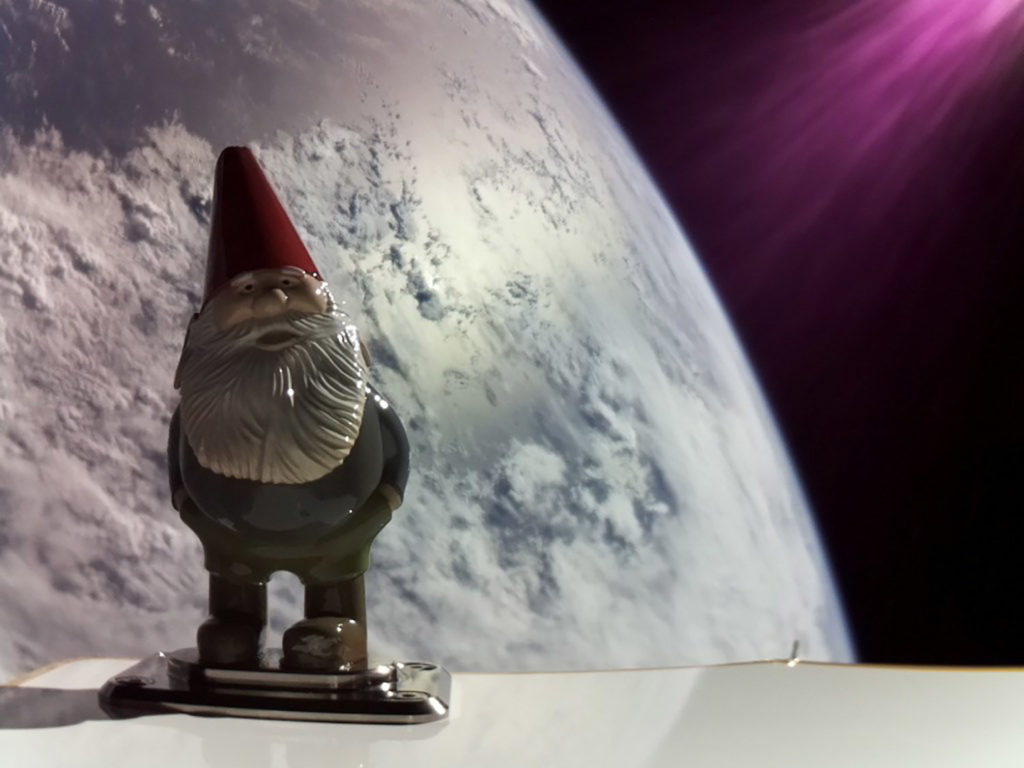
Galling as it may be for Scotland’s space entrepreneurs (see above), others have got there first, and this is not about SpaceX. Rocket Lab, which already has more than a dozen successful launches of its Electron rocket under its belt, recovered a first-stage booster from the Pacific Ocean for the first time yesterday after it blasted off from the east coast of New Zealand’s North Island. The booster reached orbit, released 30 small satellites and a 3D-printed gnome, and splashed down under a parachute. The idea is eventually to use a helicopter to snag it before it hits the water.