What just happened
- The EU agreed a €1.8 trillion budget designed to curb authoritarianism in Poland and Hungary and fund post-Covid recovery.
- Israel and Morocco normalised relations against the objections of separatists in Western Sahara.
- Barbara Windsor, star of EastEnders and the Carry On films, died from Alzheimer’s at 83.
(“Endgame” is probably misleading. 2021 will probably be as full of Brexit talks as 2020 has been but there’s a place for shorthands even in slow news. And it’s Friday.)
So what is going on with Brexit? Talks are stalled. Both sides say brace for no deal. We’re not going to the wire. We’re at the wire.
The EU wants a legally binding level playing field on labour, environmental and other standards. Determined Brexiteers say Europe doesn’t understand sovereignty and their desire for it, and no one’s budging.
A country club analogy may help Team Brexit see the other point of view. Britain is the boisterous ex-member who wants to go on using the pool for free, wearing shorts – or nothing at all – even though the club insists on Speedos. He reckons the club, with an eye on bar takings, will cave in the end. He drinks a lot and lives next door, but some people on the membership committee are damned if they’re going to cut him a deal that others will demand. Also, he hasn’t ruled out offering cut-price mini-golf in his garden to lure business away from the club. To the committee, that looks like blackmail.
Back in the real world, here are some of the things that will happen if neither side gives ground on the level playing field argument and talks are shelved on Sunday:
- The pound will fall – some say to parity with the dollar, some to around $1.20.
- Food prices will rise immediately because 45 per cent of food consumed in the UK is imported. Shortages because of truck queues and tariffs (from 1 January) would fuel the same trend.
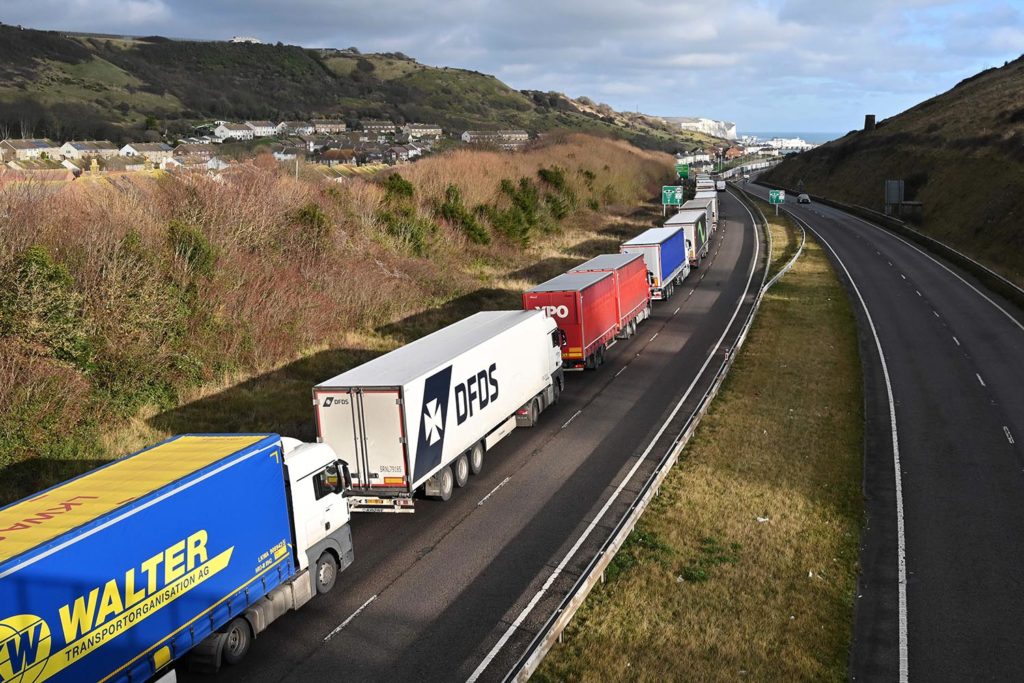
- Those truck queues, already building up because of stockpiling, will get longer. Portaloos will appear along the M20 for stranded drivers. It’s not clear if the two giant truck parks being built near Ashford under emergency planning rules with no environmental impact assessment will be put into use before 1 January – but they aren’t finished yet.
- A slow exodus of people and assets from the City will continue and may pick up speed. EY says 7,500 financial services jobs and £1.2 trillion in assets have been moved so far from London to Frankfurt, Paris and elsewhere.
Two non-British voices worth listening to at this febrile time are those of Malcolm Turnbull and Mette Frederiksen.
Turnbull, the centre-right former Australian prime minister, says of Boris Johnson’s frequent references to an Australian-style relationship with the EU: “Be careful what you wish for.” Australia doesn’t have any sort of free trade deal with the EU – although it wants one and is trying to get one. In the meantime “there are very large barriers to Australian trade with Europe [and] Australians would not regard our trading relationship with Europe as being a satisfactory one”. (Note: EU-Australian trade in 2019 was worth about €80 billion. EU-UK trade in 2019 was worth about £680 billion. Sydney is 10,400 miles from Brussels. Dover is 22 miles from Calais.)
Frederiksen is Denmark’s prime minister. Yesterday she said the EU would not make a deal “that undermines companies in Denmark, Sweden or Germany”. One company on her mind will be Ørsted, formerly Danish Oil and Natural Gas, now divested of fossil fuels and one of the world’s largest wind power specialists. An unlevel playing field that poured British subsidies into British wind power firms would be a) a serious threat to Ørsted and b) entirely plausible without a mechanism to make the UK play by agreed rules.
Remember Johnson’s promise of a green industrial revolution? The boisterous ex-member’s instincts are not all malign.
Airbnb bonanza
Airbnb has gone public and investors have gone bananas for it. Its shares were initially priced at $68 but they started trading on the Nasdaq yesterday at $146 and closed at just under $145. The company is now worth around $100 billion, which is more than the world’s four biggest hotel groups combined. You might have thought this was because Airbnb is making a lot of money, but it lost $697 million in the first nine months of this year. You might have thought that was just because of Covid, but it lost $323 million in the same period last year. So why all the excitement? Resilience, which is to say the Airbnb model has proved relatively pandemic-proof. As soon as they could, people started booking stays in other people’s flats, rather than in hotels. Marriott’s third quarter revenue fell three times more than Airbnb’s. On such differences are billionaires’ fortunes made. Airbnb’s Brian Chesky says he’s “humbled”.
Hydrogen planes
This week’s Economist has a big piece on hydrogen-powered flight. Airbus and a British start-up called ZeroAvia are working on prototypes that would use hydrogen-powered fuel cells, hydrogen combustion or a combination of the two. On the plus side, hydrogen packs more energy per kilo than even kerosene and emits no carbon, and it’s good that people are trying. On the minus side fuel cells are almost as heavy as batteries and no one has really cracked the hydrogen storage conundrum, which is particularly problematic where space is at a premium – in an aeroplane, for instance.