What just happened
- John Le Carré, who mined the Cold War for faultlines in human nature, has died aged 89.
- Troops stormed a school in northern Nigeria where Boko Haram terrorists had kidnapped students, only to find them missing.
- Russian hackers reportedly broke into several federal computer networks via software that is also used by the UK government (more below).
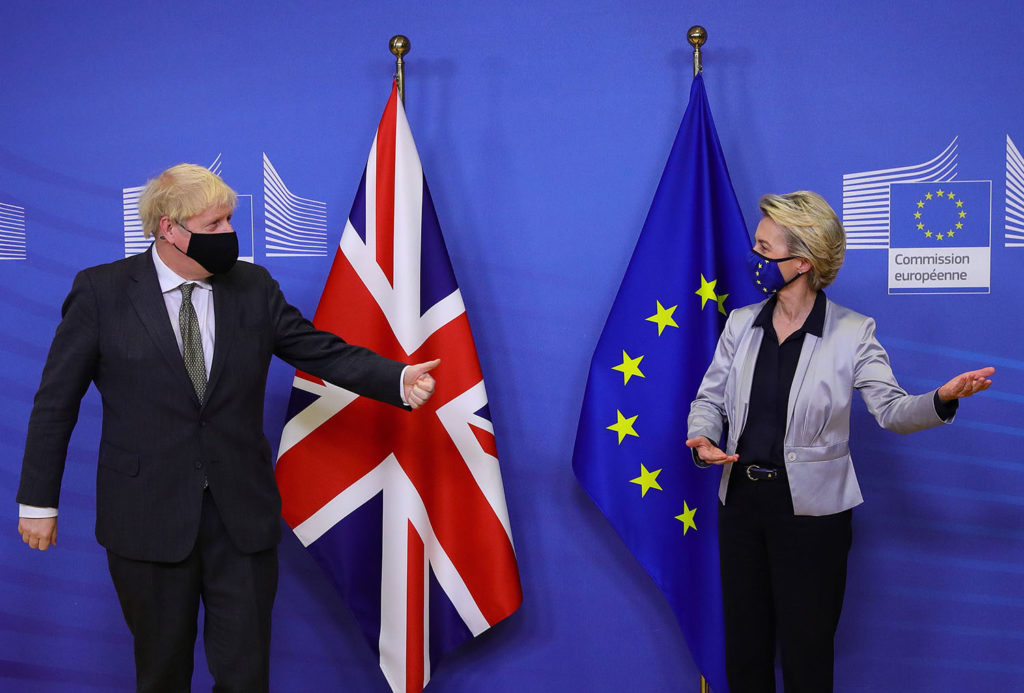
Whisper it, but the EU may slowly, wearily be blinking. Brexit talks are back on after a rough patch and could go to 31 December. Overnight mutterings from Brussels indicate that after a weekend of careful expectation management and crazy talk of navy gunboats, the team led by Michel Barnier may now be willing to:
- drop its insistence on a formal regulator to police UK adherence to level playing field rules;
- accept a mechanism by which tariffs or other sanctions imposed by either side would be negotiated rather than automatic;
- assess the UK’s rules on labour, environmental and other standards by their outcomes rather than how closely they mirror the EU’s.
Remainers may wish the EU had never been put in the position of having to consider cake-and-eat-it demands from an English nationalist government wanting access to the Single Market on its own terms, but there we all are. It’s hard to know what’s bluff and what’s real without being in the room, and it might be hard even then, but lessons from the past 72 hours seem to include:
- The only deadline that matters now is 11pm UK time – midnight in Brussels – on New Year’s Eve. That is when the transition period legally ends, and British MPs have been told to be available to ratify a deal.
- Barnier, Boris Johnson and Ursula von der Leyen are negotiating and not to be taken at face value. A better commentator might be Simon Coveney, the Irish foreign minister, who suggested yesterday that Johnson is busy “managing domestic political considerations, divisions within his own party, [and] sending strong signals to the EU that the U.K. isn’t going to offer too much flexibility at the last minute to get a deal”.
- Last Wednesday’s Johnson-von der Leyen dinner in Brussels was clearly a bust diplomatically but may have served as a useful reality check for any negotiators hoping to get away for Christmas.
- If Johnson still thinks he can slide a cigarette paper between von der Leyen / Barnier and Angela Merkel or Emmanuel Macron, he should think again. He offered yet again yesterday to go to Berlin if that would help. Merkel said not to bother.
- Barnier’s playbook seems to be to hold out for what the EU27 considers essential protections for the Single Market, then give ground (water?) on fish.
The pound was up about one per cent overnight. Expect bookies’ odds on a deal to shorten slightly. If it comes it will be threadbare and fudged, but better than chaos.
Soriot’s wild fortnight
You might have thought Pascal Soriot, CEO of AstraZeneca, had spent the past two weeks fretting over his company’s confusing Covid vaccine announcements. Not so, or not only that. He’s been holed up in a Sydney hotel room negotiating the $39 billion purchase of Alexion Pharmaceuticals to turn his company into one of the world’s top ten drugs giants. Alexion makes drugs for rare blood disorders. The Sydney stay was forced on Soriot by Covid: he was quarantining en route to a family reunion. The ironies are many and overlapping – even though AstraZeneca has stumbled with the rollout of its vaccine, it was only in a position to go looking for a big acquisition because of a 25 per cent stock price increase since March, thanks to Covid.
Russian hack
Trump administration officials have admitted several federal government departments including the US Treasury have had their networks hacked by “Russian state-sponsored actors”. The hack has been going on since at least the spring and gave the hackers free access to government email accounts. Unlike the hacks that let Russian foreign and military intelligence into Democratic party email servers in 2016, these did not apparently rely on hoodwinking humans. The NYT says they’ve been traced to the same Russian intelligence units but were much more sophisticated, using digital tokens that persuaded the servers hosting the networks they were genuine. The hackers seem to have exploited regular updates in network management software provided by a Texas firm called SolarWinds that also does work for the UK government. According to the company’s website it helps “central government departments manage complex IT environments to ensure UK government IT security”. We trust GCHQ is across this.