What just happened
- The first doses of the Oxford Covid vaccine were administered in the UK while France faced criticism for one of the slowest vaccine rollouts in the world (more below).
- A judge said Julian Assange will not be extradited to the US to face spying charges for his Wikileaks data dumps of 2010 and 2011.
- Rebel primary school heads in parts of England defied government orders to reopen despite surging Covid infection and hospitalisation rates.
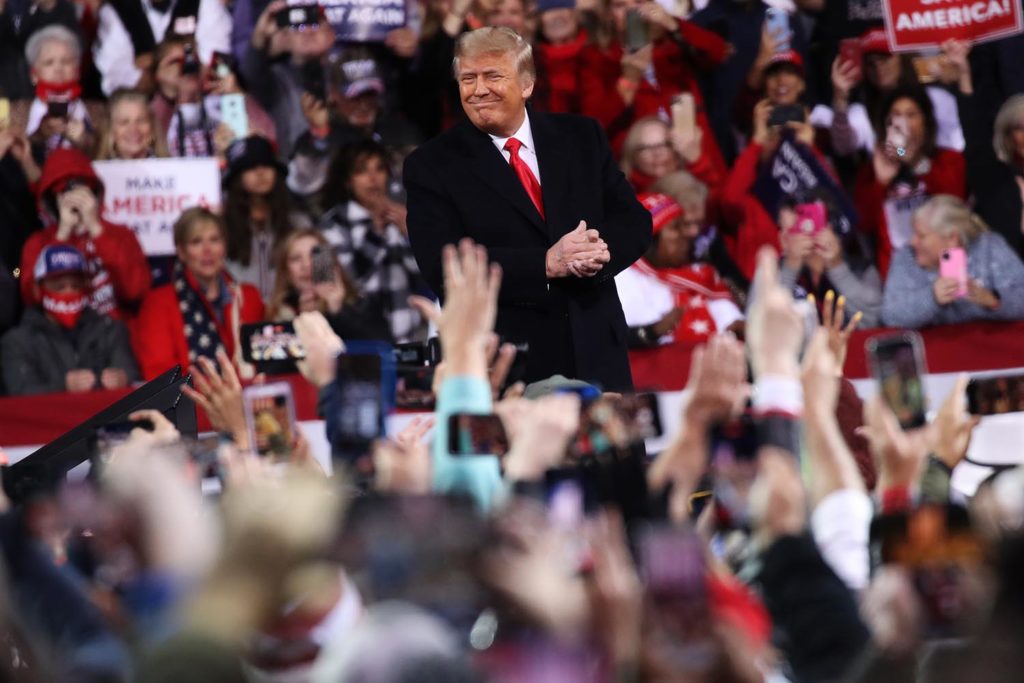
On Saturday the outgoing US president spent an hour on the phone with Georgia’s top election official begging and badgering him to “find” the 11,780 votes it would take to flip the state to his column from Biden’s in an election held two months ago. Yesterday the Washington Post released the recording. Sensemaker has listened to the whole thing so you don’t have to – although don’t let me stop you; it’s extraordinary, and possibly criminal.
The call showed how Trump works when his back’s to the wall: by confecting an alternative reality from lies, rubbishing the truth and threatening opponents in the manner of Tony Soprano. We knew that, of course. What’s extraordinary is a) to hear it in a private setting and b) that Trump should still have been at it four days before Congress was due to certify his defeat, targeting a state that would not have changed the overall result of the 2020 election even if it were flipped. The question is: why?
Follow the money. Trump has raised more than $200 million since his defeat by promoting baseless theories that he won, and the smallprint attached to the donations says they can be used for future campaigns and legal bills as well as fighting to overturn the 2020 result.
The 2022 midterms have begun. There were frequent references in the call to tomorrow’s two Senate run-off elections in Georgia, which will determine the fate of the Biden presidency by deciding which party controls the Senate. But Wednesday preoccupies Trump even more because that is when he will be taking the names of senators and congressmen and women who support his plan to contest the electoral college vote count even though it’s a formality. A dozen Republican senators and more than 100 members of the lower House will do just that, not because it will bring Trump another term (it won’t; it will just force a two-hour debate) but because they face re-election in 2022 and are running scared of Trump’s base. It’s a loyalty test for each of them and a gauge more broadly of the enduring strength of Trumpism.
Bottom line: This call has cut-through in a way that Trump’s calls to Ukraine about Hunter Biden never did. The 60 million-odd Trump voters who still mistrust the election result will listen and applaud, but elected Republicans supporting Trump now are playing with fire. With their support he could split the party over the next four years and hand the 2024 election to a Democrat. In the meantime they are strengthening Democrats’ arguments for reform of the electoral college that generally gives their party a head start in presidential elections. As a study in institutional self-harm, this rivals Brexit.
Chinese tech
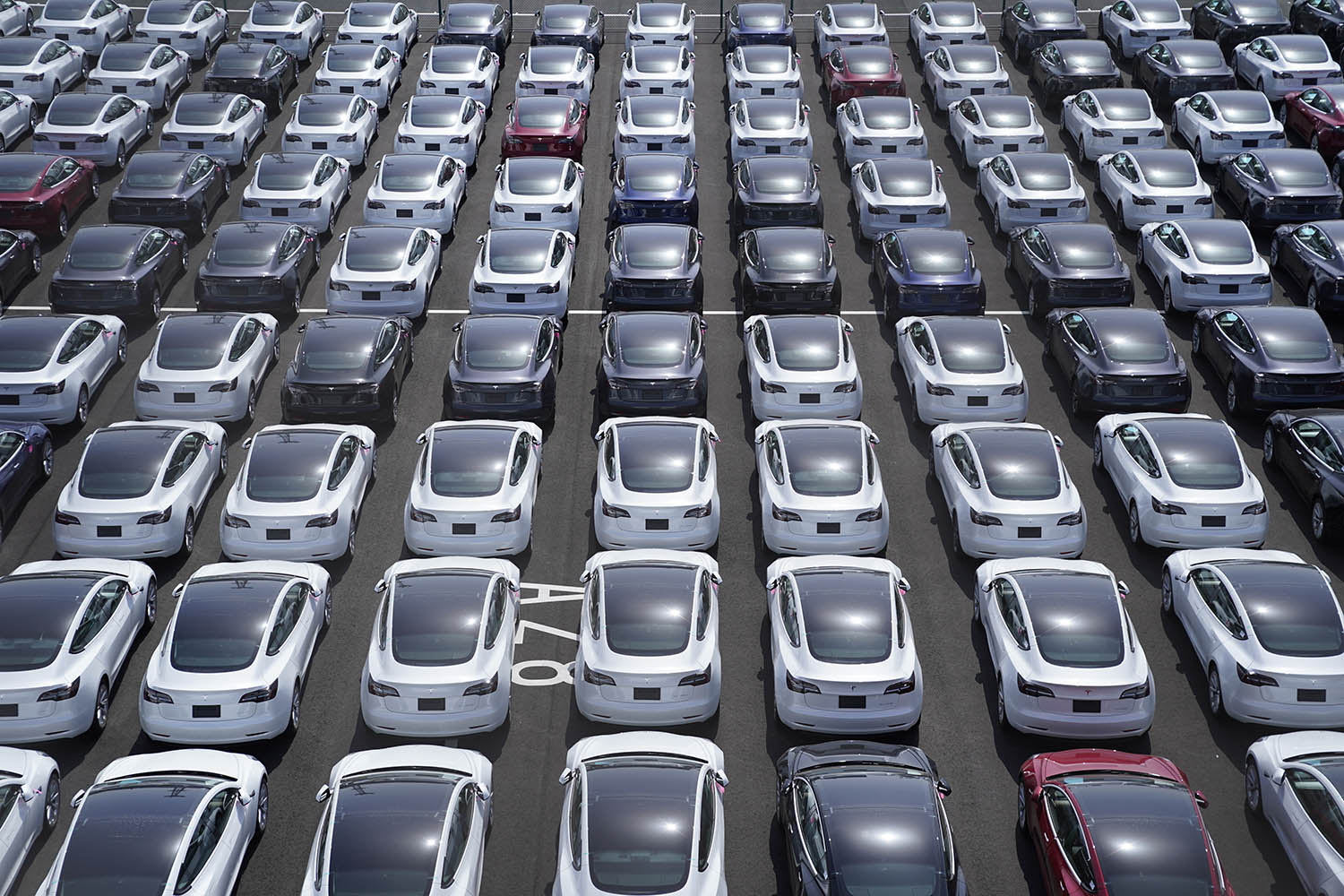
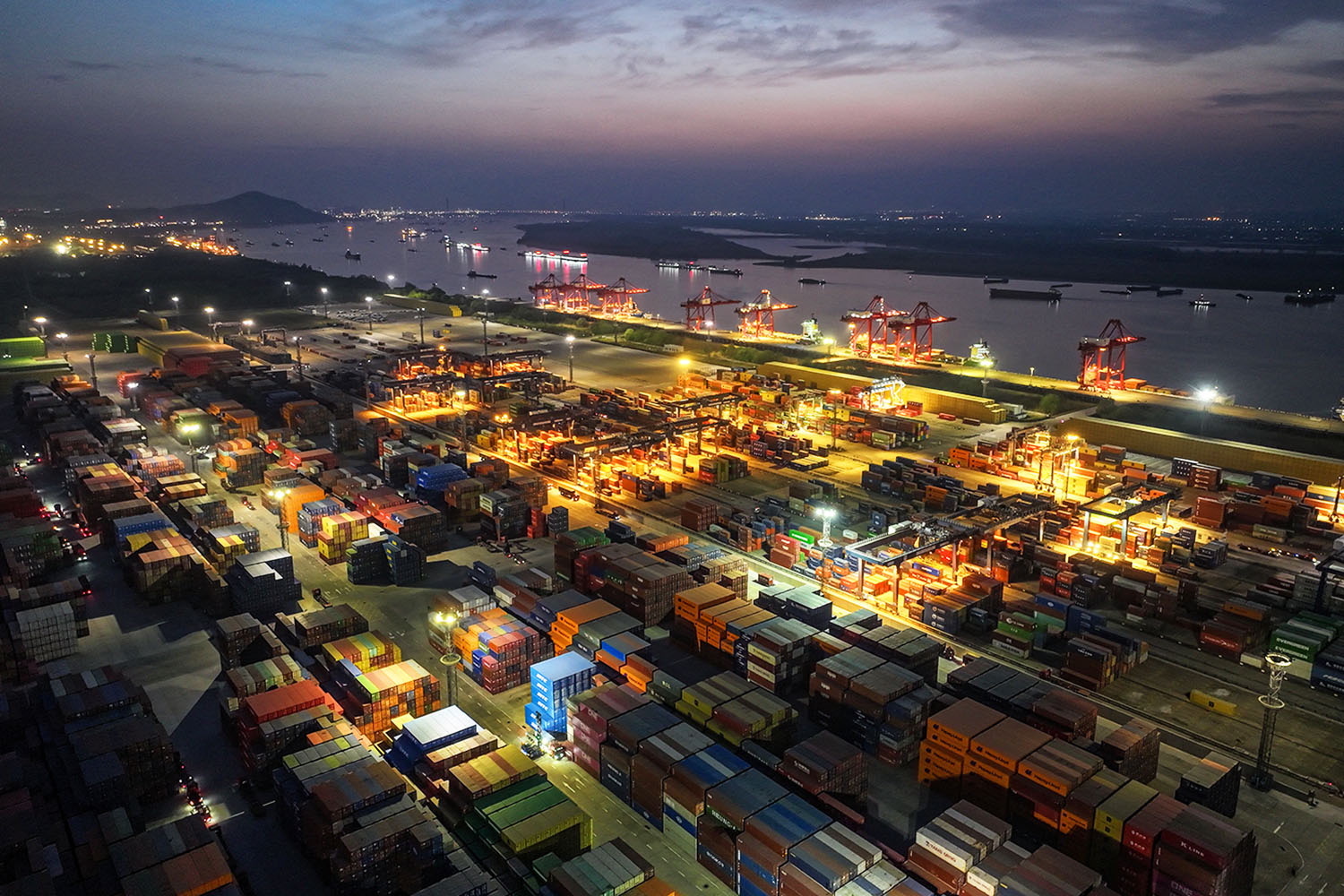
On Saturday the FT filled two pages with thumbnails of the world’s 100 most successful companies in the year of Covid. It’s unsurprisingly a tech-heavy list, with Tesla so far out in front that short sellers expecting it to deflate as a car company may at last feel the time has come to re-categorise it as a tech company. But the real headline is China’s arrival as a tech superpower with 25 firms on the list to match 25 from the US. Yes, Alibaba’s there (or at least an Alibaba healthcare subsidiary) but so are two dozen other huge Chinese corporate success stories, some of which – like Pinduoduo, an e-commerce platform – you may have heard of but most of which – like WuXi Biologics and LONGi Green Energy Technology – you probably haven’t. South Korea has four names on the list. Germany has three. France, Denmark, Sweden, Japan, Spain and Brazil each have two. The UK has one – Ocado. If Covid has accelerated changes that were going to happen anyway, Britain has a way to go to “prosper mightily”.
Nasa’s new space suit
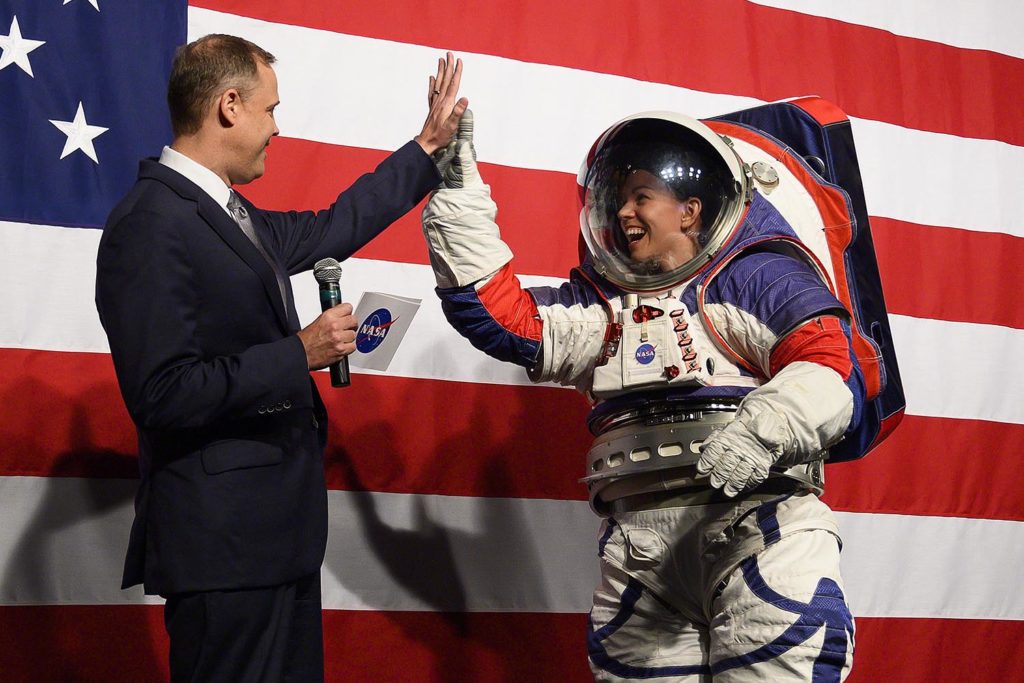
The history of space suits begins in a Massachusetts bra factory, where seamstresses expert in stitching elasticated fabrics were sworn to secrecy in the 1950s and put to work custom-building the first pressure suits for U-2 pilots. 70 years on Nasa is still working on some very basic challenges including how to enable astronauts to kneel and pick things up when they go back to the moon. The result is the xEMU (Exploration Extravehicular Mobility Unit), because Nasa loves acronyms and because a spacesuit is nowadays best understood as a mini spacecraft. The MIT Technology Review took a good look at it over the Christmas break and found that even though it looks if anything even more bulky than Shuttle-era suits, it should make walking, talking and generally getting stuff done on the moon much easier than it used to be. Which might just make it worth going back there.