Sensemaker Daily


What just happened
- The UK introduced a requirement for negative Covid tests for everyone arriving from abroad as more than 1,100 deaths in one day were recorded for the first time since April.
- The US threatened sanctions against individuals involved in the arrests of more than 50 pro-democracy activists in Hong Kong.
- Donald Trump called for reconciliation and denounced those who stormed the Capitol on Wednesday, a day after telling them he loved them.
- Neil Sheehan, who broke the story of the Pentagon Papers in 1971, died aged 85, five years after revealing how he did it in an interview published for the first time today.
What to do with a president who incites insurrection? The question consumes Washington because the whole town knows that doing nothing leaves the rule of law on life support.
The options:
- Invoke the 25th amendment to the constitution and have Mike Pence replace Trump for the last 13 days of his term. This would require a cabinet majority, which looks implausible given that two members who might have supported the move – transportation secretary Elaine Chao and education secretary Betsy de Vos – have resigned. More importantly, Pence is reported to have ruled it out.
- Impeach and convict. A much more convincing case for high crimes and misdemeanours on Trump’s part could be drawn up now than last time the Democrats tried it, and now that they control both houses of Congress the process could move quickly to a Senate trial. A conviction would also bar Trump from ever running for federal office again, which would be as much of a relief to many Republicans as to Democrats. But conviction requires a two-thirds Senate majority that remains implausible.
- Get him to resign – the Nixon option, championed today by the conservative editorial page of the WSJ. This would rid the world of a liability while leaving him some agency over his post-presidency. It might also be the preferred option of Pence, who after four years as a monotonic Trump enabler is suddenly a pivotal figure in the Trump endgame. But voluntary resignation by the man himself? Dream on.
A more likely scenario is one in which Trump leaves the White House a day early and skips the inauguration. That might reduce the likelihood of more unrest involving his supporters, although law enforcement tends to cut them an awful lot of slack.
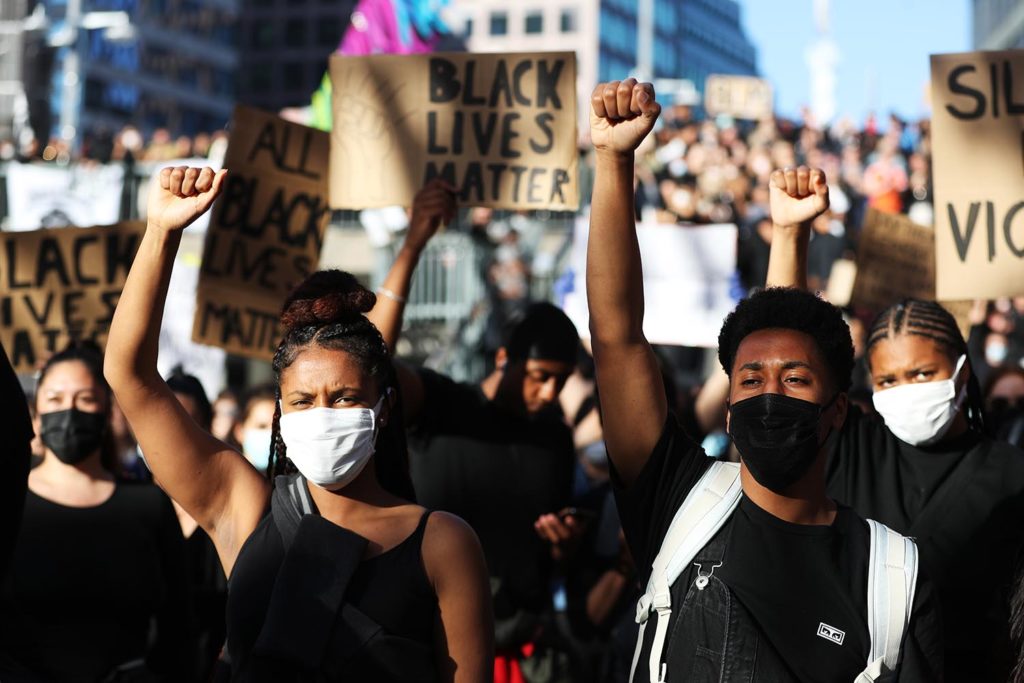
Here’s Biden: “No one can tell me that if that had been a group of Black Lives Matter protesting yesterday they wouldn’t have been treated very, very differently than the mob of thugs that stormed the Capitol”. Or, as Tracey Dent, a Black community activist from Milwaukee, put it: “If that was us they’d be throwing us down the steps”.
In any other week a story that unfolded a few miles down the Lake Michigan shore from Milwaukee would have dominated headlines there and across America. This was the decision not to bring criminal charges against a white police officer who shot a Black man seven times in the back at point-blank range last summer – a prelude to deadly rioting in Kenosha and enduring anguish in the Black Lives Matter movement.
What happened? On 23 August last year, police were called to an incident involving Jacob Blake and his fiancée Laquisha Booker in Kenosha. Booker claimed Blake had taken the keys to her rental car and was refusing to return them.
Officers arrived at what they’d been told was a possible domestic abuse scenario. After an altercation Blake was shot seven times in the back, in front of his children, as he reached into a car despite officers insisting he “get down” and comply with further requests.
This week Michael Graveley, the Kenosha County district attorney, said that after a “dramatically exhaustive investigation” he’d decided there was no ethical or practical basis on which to bring charges against Officer Rusten Sheskey, the seven-year police veteran who pulled the trigger.
Why won’t the state prosecute? Graveley said he felt “in many ways completely inadequate for this moment”, never having experienced racial bias himself. Even so he said he saw no controversy in the facts of the shooting, nor in the evidence that the officers or Blake himself – who survived the incident with life-changing injuries – might have offered as witnesses.
Blake admits disobeying police commands, arming himself with a knife and resisting efforts to arrest him. And in Wisconsin the burden on prosecutors in cases like this is to disprove the appropriateness of police use of self-defence, rather than to prove its appropriateness.
The case was “about Officer Sheskey’s perspective, his knowledge at each moment, and what a reasonable officer would do, at each decision point”, Graveley said. He stated that nothing could be done to discredit Sheskey’s claim that he was on the verge of being stabbed at the very point when he fired the shots.
What happens now? Blake can seek civil damages but, without sufficient evidence to convince a jury beyond reasonable doubt that Sheskey shot him unlawfully, his pursuit of justice in Wisconsin is coming to an end.
On the federal level the US Attorney’s office is still pursuing a civil rights investigation which Graveley said was “getting to a point of making a charging decision”. This investigation covers the shooting and the protests, violence and arson that shook Kenosha in the days that followed and has echoed across the country ever since.
Graveley believes his hands were tied, and that may be the problem. In the words of Blake’s uncle, the decision not to charge Sheskey “is going to weigh on this city and this state for years to come”.