What just happened
- Donald Trump was said to have yelled at his TV during his own lawyer’s rambling opening statement at his impeachment trial.
- The UK government introduced mandatory ten-day hotel quarantine for visitors from 33 countries at their own expense, at £1,750 a head.
- Lucile Randon, a 116 year-old French nun, survived Covid without symptoms and will celebrate her 117th birthday this week at home.
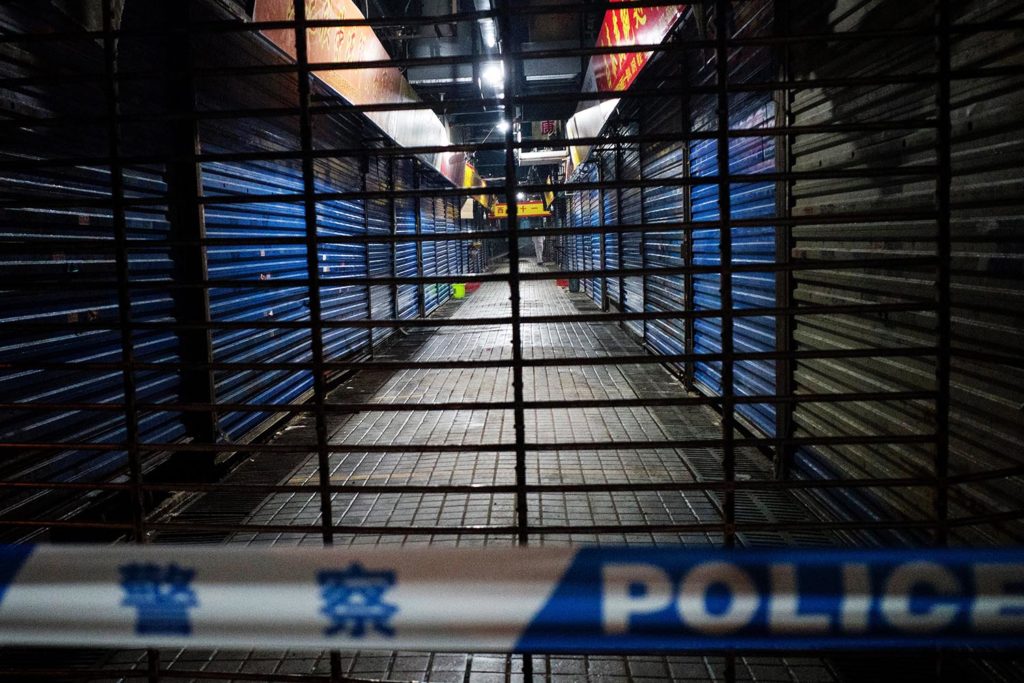
The World Health Organisation team that spent the past four weeks in Wuhan says it’s “extremely unlikely” the pandemic originated from a virology lab there.
Is that it, then? If only.
The mystery of how Covid got started endures, for at least three reasons:
- Chinese authorities prevented the WHO team doing its own research, giving it access only to official Chinese data. They also sought to limit journalists’ access to WHO experts at a press conference yesterday, although in the end Dr Peter Daszak, a British zoologist and member of the team who has worked for many years with the Wuhan Institute of Virology, stayed behind to answer questions.
- Daszak said the Chinese data – including from more than 900 swabs taken in January 2020 from food and sewage samples at the Huanan wet market linked to many early Covid cases – was high quality. But it was inconclusive and the team said no reservoir of the virus in an animal population in China has been firmly linked to the original “spillover event” to humans.
- Instead it offered only theories. Among them: that ferret-badgers, widely eaten in southeast Asia, could have helped transfer the virus from bats to humans; that people rather than animals could have brought it to the wet market; and that the virus could have got there in frozen food from anywhere in China, or abroad.
Why does it matter? Because there are thousands more animal-borne viruses that could jump to humans, and the more we know about the origins of this pandemic the better equipped we are to prevent the next one. Also: until there’s a plausible origin story for Covid-19 conspiracy theorists will continue to promote the lab leak theory that Trump was so fond of as president.
Not for the first time, Daszak rejected that theory. He raised the possibility that the virus could have come to Wuhan from overseas not once but three times. The credibility of the WHO’s investigation wasn’t notably enhanced, but its hosts will have been delighted. Will China ever allow unfettered independent study of the origins of Covid? Not on present evidence.
Prince Moneybags
The Guardian’s series on the royal family’s use of Queen’s consent to vet legislation before it gets to parliament is well worth reading. The latest installment makes the case that Prince Charles or his lawyers screened and in some cases altered leasehold reform bills in 1967, 1993 and 2002 to make sure residents of properties on the Duchy of Cornwall’s estate cannot buy their homes outright and therefore have to go on paying rent or at least ground rent. In all the prince has used Queen’s consent to vet more than 275 bills since the 70s. The duchy, which says it’s never drafted legislation, gives him a private income of about £22 million a year. Separately he stands to gain millions if not billions from the latest sales of offshore wind power leases by the Crown Estate, up to a quarter of whose income goes towards the Sovereign Grant. This is all beginning to feel a little retro.
Hope on Mars
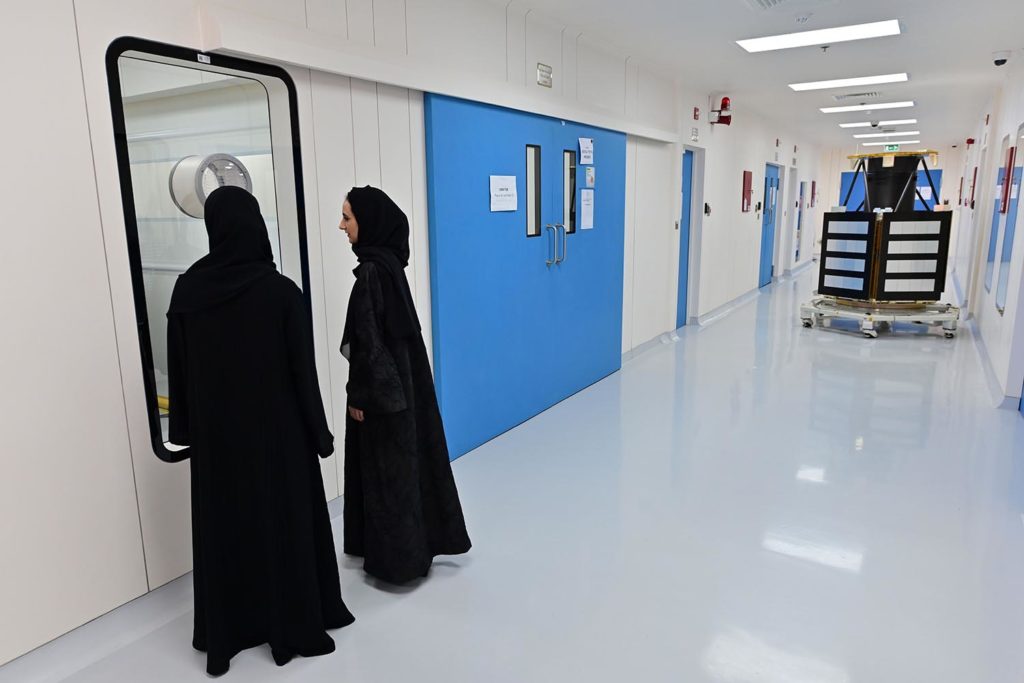
Say what you like about plural government and women’s rights in the UAE, its Mars mission is a landmark. The Emirates’ Hope probe slid elegantly into an elliptical Mars orbit yesterday after blasting off from Japan last July. When close to the planet it will take close-ups of key features on its surface. When further back it will study the planet and its atmosphere in the round. The claim is that women make up 34 per cent of the Emirati engineers on the project, and 80 per cent of the home-grown science team. Not that all the science has been done in the UAE. The probe was built in Colorado, but 200 of 450 people who have worked on it are from the Emirates and Sarah al Amiri, chair of the UAE Space Agency, hopes it’ll inspire more young women in her country to study science.
Pablo’s hippos
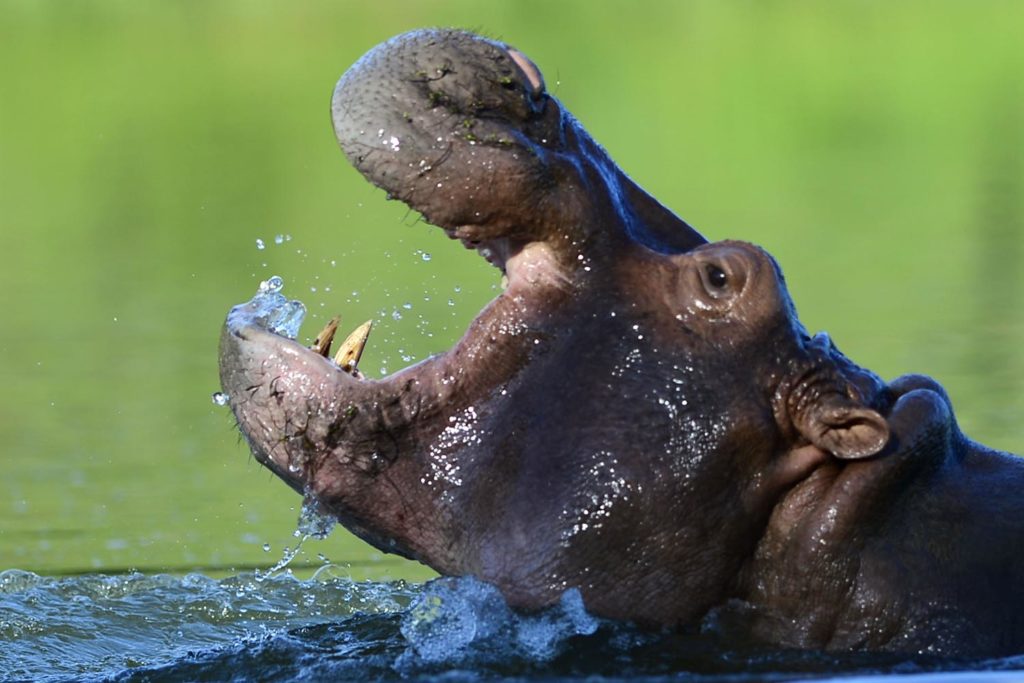
Hippopotami imported to Colombia by Pablo Escobar are breeding out of control. Their population has roughly doubled in the last eight years to somewhere between 65 and 80 and scientists worry it could reach 1,500 by 2035 without culling or some other intervention. The problem is, local people living near the former cocaine kingpin’s hacienda in the highlands between Bogota and Medellin love the hippos – not least as a tourist attraction – and don’t want them disturbed. The other problem is they have no natural predators in South America. Time to import some crocs? The AP has the story.
One vaccine?
Scientists at Walter Reed hospital in Washington – better known for rebuilding wounded US combat veterans – are working on a vaccine that could prevent infection by all coronaviruses, not just one of them. Ditto scientists in Massachusetts, California and Texas. So far they’ve only tested multi-virus vaccines on mice, but early signs are good. Prototype vaccines studied by the NYT focus on the viruses’ now-familiar spike proteins. One vaccine with spike proteins from three different coronaviruses on a synthetic shell prompted immune responses to all three viruses. Another used just the spike proteins’ tips, but it used eight of them, prompting production of distinct antibodies for each one, and to four more coronaviruses that weren’t even in the vaccine. This will take time, but could be worth the wait.
Poland’s past
Two Polish historians have been ordered to apologise to the elderly niece of a wartime mayor whom they accuse of guiding Nazis to Jews hiding outside his village during World War Two. The claim features in a major new history of the Holocaust in Poland by Professor Barbara Engelking, chair of Poland’s International Auschwitz Council, and Professor Jan Grabowski of the University of Ottawa. Both were sued by 81-year-old Filomena Leszczynska for allegedly depriving her of her right to pride and national identity by accusing her uncle of complicity in the murder of Jews. Poland’s ruling Law and Justice Party has made a heroic version of the country’s wartime history a key part of its ideology. Yad Vashem, the Holocaust memorial centre, called the lawsuit an attack on efforts to achieve a balanced picture of the Holocaust in Poland. The professors say they will appeal.
Thanks for reading, and do share this around.
Giles Whittell
@GWhittell
Photographs by Getty Images