What just happened
- Benjamin Netanyahu missed a deadline to form a new government, leaving Israel’s president to decide whether to ask the centrist Yair Lapid to try.
- France’s maritime affairs minister said she was “revolted” by Britain’s behaviour in a Channel Islands fishing rights dispute in which France has threatened to cut power to Jersey.
- Christie’s said it expected a bottle of Petrus 2000 that spent 14 months in space to fetch up to $1 million at auction.
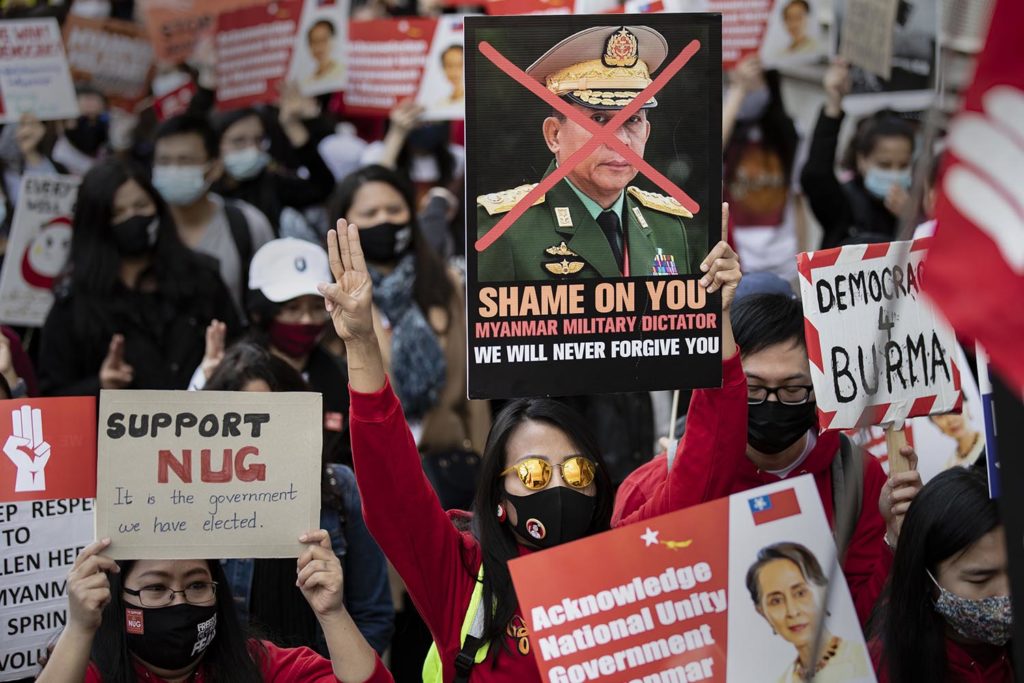
Three months after Myanmar’s coup, it turns out the world’s champions of democracy are powerless to defend it in a pinch. The UN’s special envoy has been told she cannot visit. The UN Security Council cannot agree a statement condemning violence that could escalate into civil war. Aung San Suu Kyi remains under house arrest. Western investors are writing off large sums or quietly siding with the generals, and the death toll of protesters is close to 760, many of them killed by sniper shots to the head and chest.
China has a 1300-mile border with Myanmar and says it’s “in communication with all parties… to play the role of promoting peace and… stability”. Translation: the Junta has Beijing’s tacit backing as long as it can contain the protests and is content to run the country as a client state. The American “pivot to Asia” under President Obama is ancient history.
So what? Consider:
- the broken dreams of 50 million people who supported Myanmar’s experiment with democracy even though it came at an appalling cost for the Rohingya Muslims;
- the atrocities being committed by the generals now;
- the likelihood of a humanitarian crisis in the north and east, where the Kachin and Karen minorities are fighting government forces.
But even if this was only about geopolitics, western leaders should be paying more attention. First there was Hong Kong. Now another nascent democracy on the fringe of China is on death watch. Russia and China did not even have to use a formal veto to prevent the UN issuing a boilerplate statement urging military restraint last weekend. And western insights as to the internal dynamics of the pro-democracy are distinctly lacking. Even before her arrest, when Team Biden wanted to make contact with ASSK they didn’t have her phone number.
Do what? Changing the facts on the ground in Myanmar looks difficult, but suggestions for shaking up the global chessboard on which Myanmar is a piece are two a penny. They include:
- a “reverse Nixon” by Biden, by which he would cosy up to Putin’s Russia to weaken the global Sino-Russian threat to democracy (not tenable while Russian troops are in Crimea and Alexei Navalny is in jail);
- pour grit into the Russia-China relationship by means of cooperation between the US and Russia on issues where China would rather the two countries remained at odds, for instance in the Arctic and on nuclear arms control;
- revive the concept of the Free World.
G7 foreign ministers are having a go at the last of these in London today, joined by counterparts from Australia, India, South Africa and South Korea. Dominic Raab, the UK’s foreign secretary, has talked up the idea of “clusters of like-minded countries agile enough to work together”.
A bit more agility might have come in handy for Myanmar’s democrats three months ago. Meanwhile a team of lawyers is trying to have the coup ruled unlawful in a British court so that Myanmar’s ambassador to London, who came out against the generals, can stay in his official residence. Every little helps.
Wizard of Oz
Amanda Lacaze, an Australian mining millionaire, is poised to make more millions with the world’s largest new neodymium mine outside China. Neodymium is a rare earth needed in cell phones, EVs, wind turbines and most modern weapons systems. China’s had a lock on the world’s rare earth supplies since Deng Xiaoping started a drive to mine and stockpile them in the 1980s. But Western Australia has plenty of them underground. Lacaze’s firm has a contract with the US Department of Defense to boost its non-Chinese supply, and the WSJ has a great short film explaining, among other things, that rare earths tend to come out of the ground together; a whole section of the periodic table in one hugely lucrative seam of ore.
Melinda French Gates latest
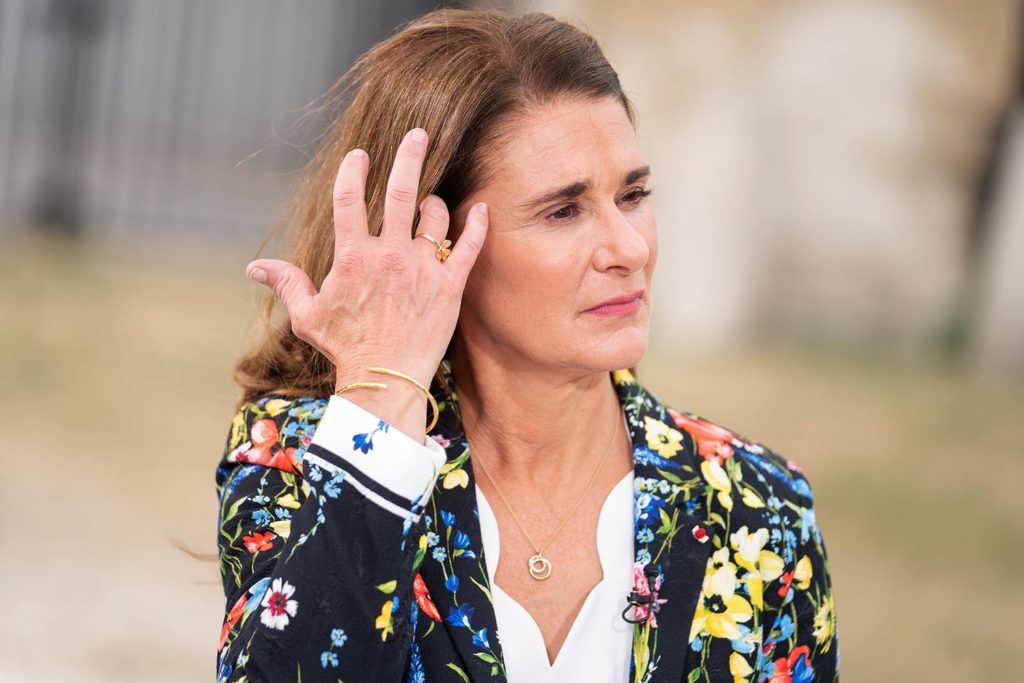
Staying with lucrativity, the Guardian’s wealth correspondent reckons the younger co-founder of the Bill and Melinda Gates Foundation could emerge very rich from her divorce thanks to Washington state law’s stipulation of a 50:50 split of marital assets in the absence of a prenup. And there was no prenup. So Ms French Gates should be due assets worth north of $70 billion, making her the world’s second richest woman after Françoise Bettencourt Meyers, owner of L’Oreal. Her own foundation, Pivotal Ventures, already focuses on women’s rights and gender equality. She and MacKenzie Scott, who divorced Jeff Bezos, sunk $30 million between them last year into the Equality Can’t Wait Challenge, which aims to boost women’s power and influence in the US. (Fun to note, btw, that the Guardian is not at all immune from the charms of west coast tech mogul property porn. Who will get the big house on Lake Washington?)
No carbon plans
The UK ministry responsible for the environment has no net zero plans. The Johnson government has required all departments to show how they will achieve a net zero carbon footprint by 2050, but the Department for Environment, Food and Rural Affairs (Defra), hasn’t. “Defra is currently not on track to deliver against its greenhouse gas emission reduction targets,” says an internal memo seen by the Times. Critics say the minister, George Eustice, is too close to the farming lobby, and those critics seem to include Carrie Symonds, the PM’s partner. Watch this space.
Palm oil ethics
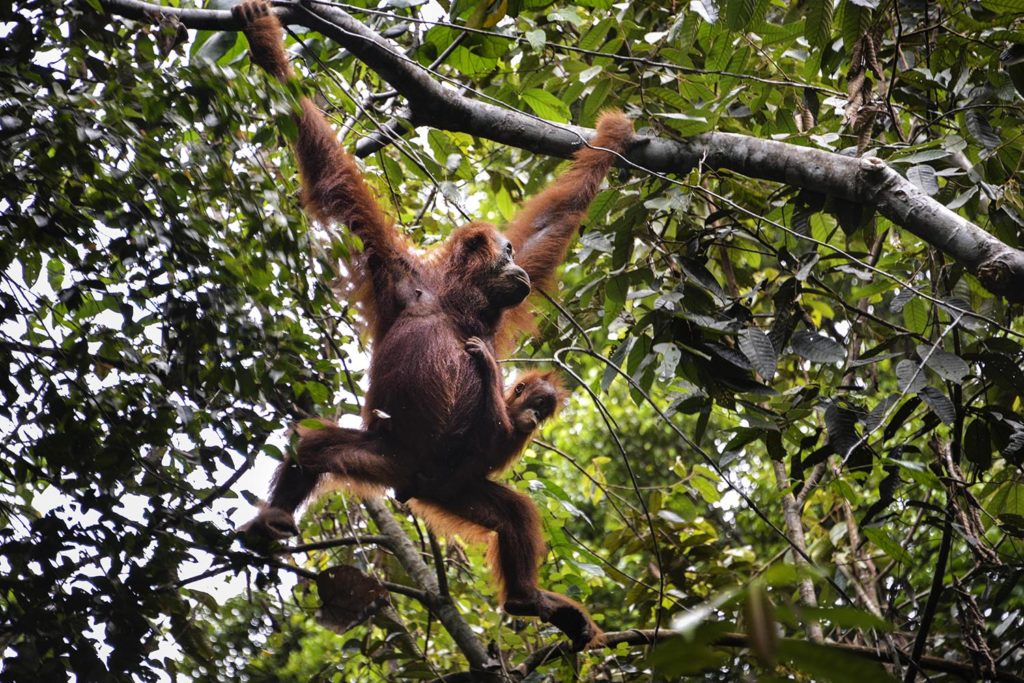
The huge and expanding ethical investment industry is tying itself in knots. For instance: BlackRock, the world’s biggest asset manager, joined a shareholder rebellion against P&G last year to protest the company’s sourcing of palm oil from Astra Agro Lestari in Indonesia. Now it turns out BlackRock has stakes worth over $350 million in both Astra and its parent company. Busted (by the FT (£))! It’s easy to forget in all this that what’s really at stake is not the reputation of an $8.7 trillion investor, or of so-called ESG investing, but the habitat of Indonesia’s orang-utangs. They live, among other places, on the island of Sulawesi, where Astra is accused of land grabs.
Holiday in Dagestan
A generation ago Dagestan was one of the scariest places in the Russian Federation. Now it’s welcoming tourists. Given its natural beauty between the Caspian Sea and the Western Caucasus this should not be surprising. Thanks to Covid restrictions on foreign travel for Russian citizens there is no shortage of potential customers. But to choose Dagestan over, say, Sochi, is to make a high-stakes judgment that the extremism that once stalked its mountain villages has faded and a once-booming kidnapping industry that used to nab unsuspecting visitors has been tamed. “Demand is through the roof,” one guest house owner tells the Moscow Times. Time passes. Things change, and not all for the worse. Putin stays in power.
Thanks for reading, and please share this around.
Giles Whittell
@GWhittell
Photographs by Getty Images