What just happened
- A coroner said ten people killed after a British army operation in west Belfast 50 years ago were “entirely innocent” (more below).
- The WHO said the Indian Covid variant has been found in 44 countries.
- A scientist said the Cerne Giant’s outsized chalk phallus, previously thought to be at least 1,000 years old, may have been added in the 1600s.
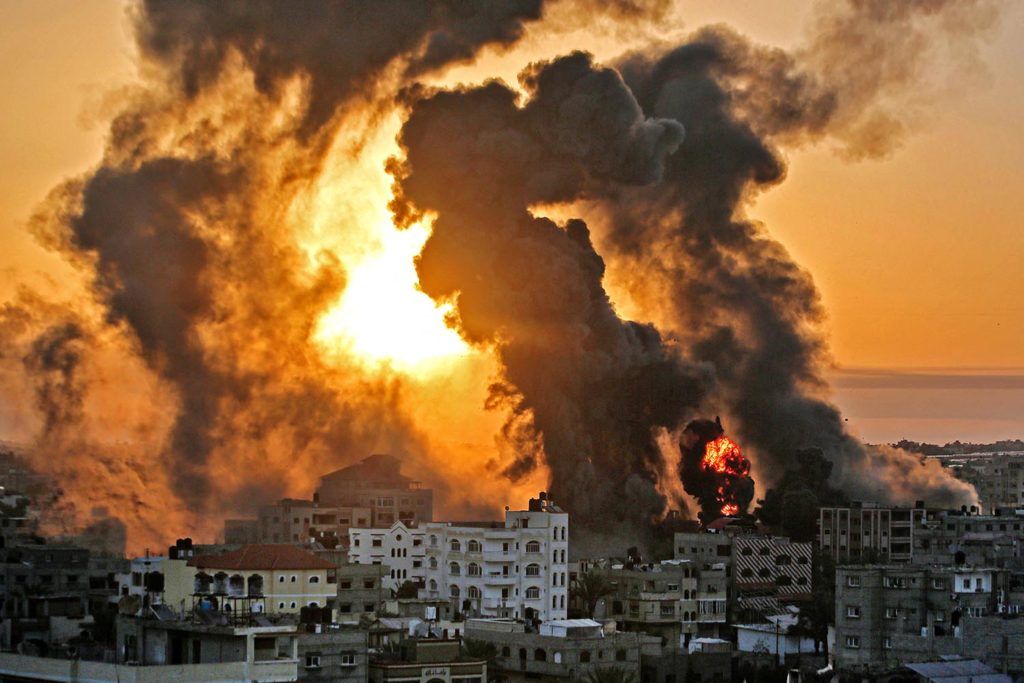
When a 13-storey building collapses in Gaza City after an Israeli airstrike and hundreds of Hamas rockets are fired at Tel Aviv, all bets are off. At least 30 Palestinians and three Israelis have died since Monday. Skirmishes between police and Palestinians continue in East Jerusalem. Arab Israelis have taken to the streets across the country in solidarity. Israeli reservists have been called up. Victims of the violence on both sides are calling it a third intifada. So what is it?
A tense stand-off has given way to full military confrontation so quickly that anything is possible, including Israel moving troops into Gaza. But there are grounds to hope this eruption subsides sooner rather than later:
- The Palestinians are united in anger (see ‘why now?’ below), but not as a political or military force. In 2000 at the start of the Second Intifada, Yasser Arafat’s Fatah was a unifying force. It’s now in direct competition with Hamas. While rockets launched from Gaza fly north into Israel’s Iron Dome defences, the West Bank is largely quiet.
- Biden is not Trump. The new president won’t want to be cast as soft on terrorism, but unlike his predecessor he’s committed in principle to a two-state solution and to an honest broker role for the US. His team has been working the phones to express concerns about Israeli policing in Jerusalem and moves to evict Palestinian families from homes near Temple Mount. Israel’s response has been to tell the US to mind its own business, and then to step back.
- Iran is no idle bystander either. Last week its supreme leader praised the “pure blood of resistance martyrs” in the Palestinian territories, but Tehran wants a revived nuclear deal with the US. It may hope renewed aggression from Hamas – and Houthi rebels in Yemen – can play to its advantage in that negotiation. Equally, Israeli-Palestinian conflict is not an auspicious backdrop for a new nuclear deal.
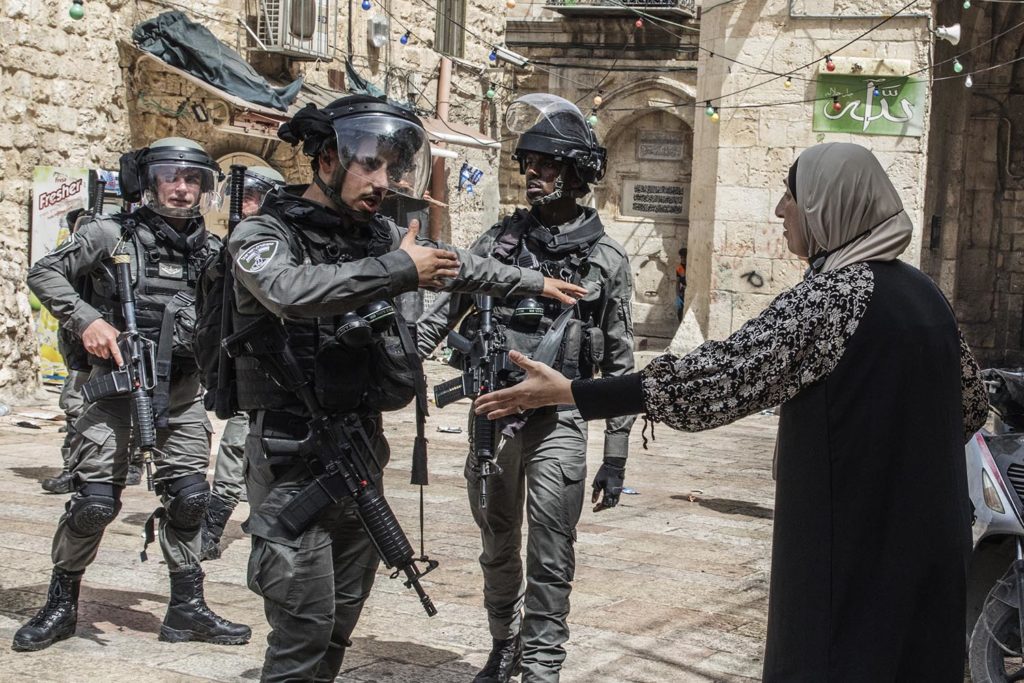
So why now? Palestinian frustrations and factionalism are boiling over:
- A supreme court ruling was due on Monday in the long-running Israeli effort to evict Palestinian families from homes in East Jerusalem’s Sheikh Jarrah neighbourhood – homes assigned to them as refugees by Jordan in the 1950s, and to which Jewish families have claims predating 1948.
- This long disputed history has made Sheikh Jarrah a flashpoint for violence before, including in 2009 and 2013.
- Mahmoud Abbas, the Fatah leader facing defeat by Hamas in elections later this month, postponed them and appeared to encourage street confrontations instead.
- Monday was also Jerusalem Day, when Israelis traditionally march through the city celebrating victory in the Six-Day War. Palestinians stockpiled stones in the al-Aqsa mosque. Police raided the mosque. The rest is already history.
The upshot: efforts to form a new Israeli coalition government are on hold. When they resume it will be with the extra difficulty of trying to persuade Arab parties to join the coalition after the worst Arab-Israeli violence in years. Netanyahu, pro tem, remains in power.
Amazon in China
Amazon has suspended several high-profile accounts of Chinese third-party sellers on its platform. There appear to be two reasons, neither of them political. One is fake reviews, of which Amazon purports to take a dim view. The other is clever links installed by the sellers to lure buyers off Amazon onto their own platforms. That hurts Bezos’ bottom line. TechCrunch reports that Chinese businesses accounted for three quarters of new sellers on Amazon in January, up from less than half the year before. And the suspended accounts alone steered more than $1 billion in gross revenue to Amazon. No wonder the sellers wanted to keep more of it.
Junk food ad ban
TV ads for junk food face a total pre 9pm ban in the UK. There is already an official British junk food definition based on sugar, salt and fat content, although it was unclear from the Queen’s Speech whether this is the one Johnson’s government plans to use as it goes full nanny on the nation’s diet. The arguments in favour of the ad ban are compelling on public health and healthcare cost grounds. But the swift repositioning of the Conservatives as the party of high spending, high taxes and unrestrained social intervention is pretty compelling too.
Japan v coal
Japan’s second-largest bank says it will no longer fund coal-fired power projects. This matters because coal use for electricity rose sharply in Japan after the 2011 Fukushima disaster soured the country on nuclear power. It’s been falling again since 2013 and Japan has now pledged to cut overall carbon emissions by nearly half by 2030 compared with 2013. Japanese power utilities have been flirting with what they call ultra-supercritical coal plants that are supposed to burn coal cleanly. But in climate terms they do no such thing. The Sumitomo Mitsui Financial Group now accepts they do little to cut emissions. (Look out for a ThinkIn later this year with the Judith Neilson Institute and multiple Asian newsrooms on coal use in Asia, arguably the single biggest contributor to climate change on the planet.)
DC’s texts
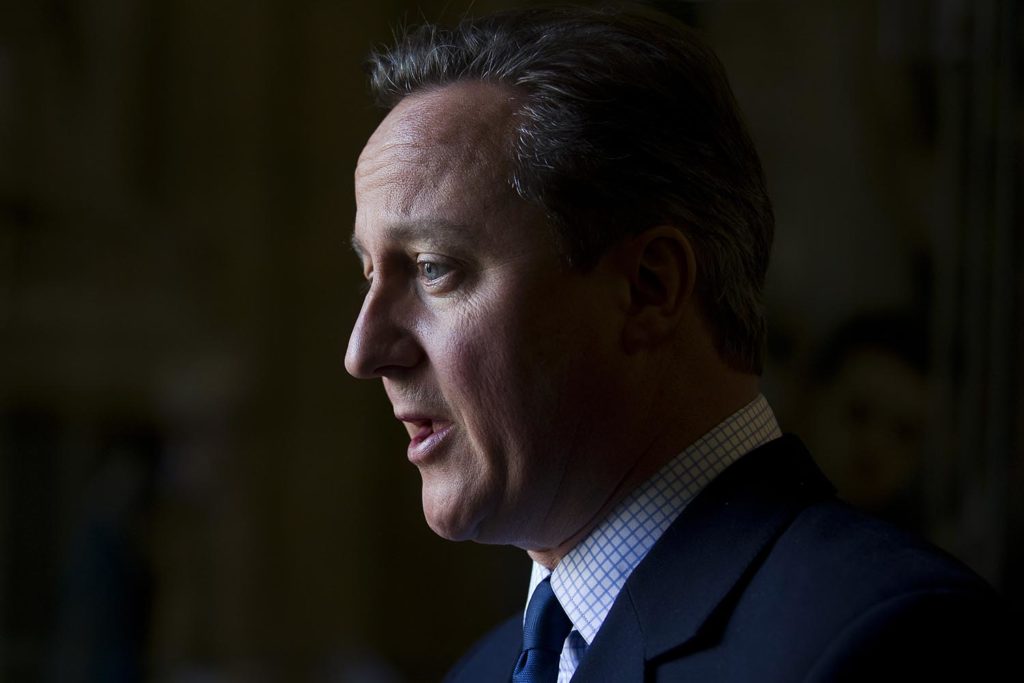
Ugh. David Cameron sent 50 messages to ministers and senior civil servants at the height of the Covid crisis last year, lobbying for Greensill Capital when his interlocutors had vastly more important things to do than wonder how to respond to an ex-PM promoting something that looked like a scam and turns out to have been just that. Of course there is no suggestion that Cameron did anything illegal – any more than there was when his texts to the chancellor, Rishi Sunak, were first leaked earlier this year. But still. The extent and shamelessness of his pleading is astonishing. “I am riding to the rescue with supply chain finance…” (one of 12 texts to Sir Tom Scholar, permanent secretary at the Treasury). “I know you are manically busy… but do you have a moment for a word?” (to Michael Gove, the mate-turned-“foam-flecked-Faragist” he blamed for Brexit). It seems Gove didn’t.
Ballymurphy inquest
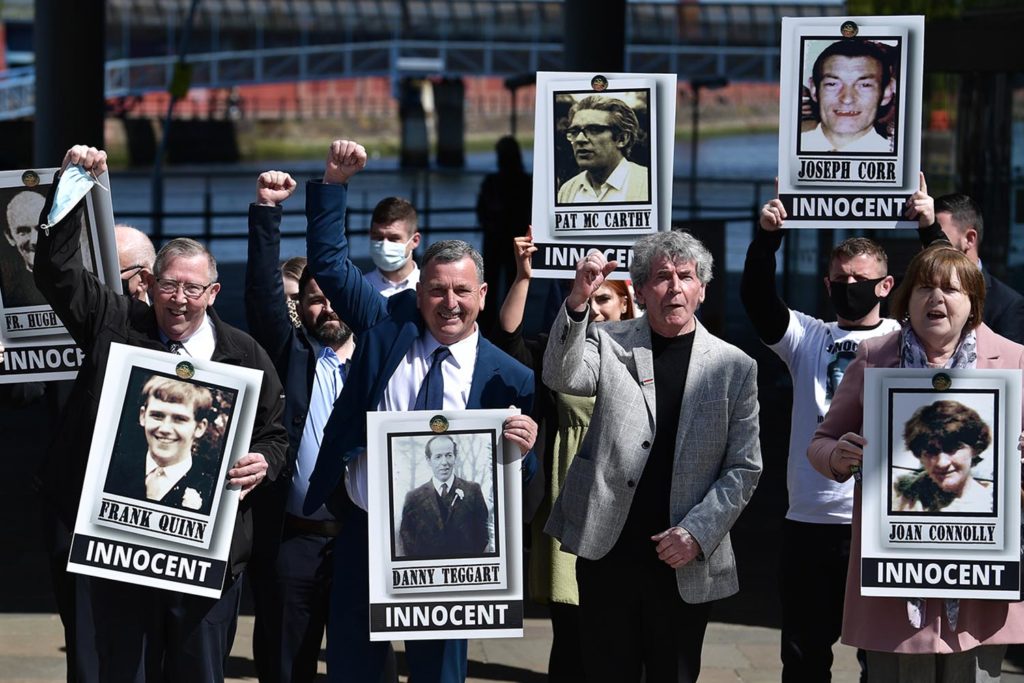
Relatives cheered and wept after a coroner ruled that ten people killed in west Belfast in the early days of the Troubles were “entirely innocent of any wrongdoing on the day in question”. Nine were shot by the army. In the case of the tenth, Mrs Justice Keegan said she could not be sure. The verdict came 50 years after the shootings and three since the inquest began. It was the first to investigate the killings collectively, after separate inquests for each one in 1972 returned open verdicts. Joan Connolly was one of the dead, killed aged 44. Yesterday her daughter said the army had lied that her mother posed a threat, and the government covered it up. The (current) government said it noted the findings and would carefully consider them. A response in less than half a century would be in order.
Thanks for reading, and please share this around.
Giles Whittell
@GWhittell
Photographs by Getty Images