What just happened

- US Senate Republicans were hopeful a police reform bill could be passed, after relatives of George Floyd met Biden in the White House.
- Cockpit recordings showed the pilot of Ryanair flight 4978 repeatedly questioned Belarusian instructions to divert to Minsk.
- Dominic Cummings told parliament it’s “crackers” that Boris Johnson is PM, and that health secretary Matt Hancock should have been sacked for lying about the UK’s pandemic preparedness.
We’ll bring you the details that matter from Cummings’ evidence tomorrow. In the meantime, because the world is bigger than SW1, here is a…
The perennial hunt for enviable cities tends to gravitate to Scandinavia; sometimes Canada. Vienna’s nice too. But Brazil does urban innovation in a more daring way. In the 1990s it was Curitiba, west of São Paulo, stunning visitors with its interlinked parks and saturation bus system. Now the much smaller municipality of Maricá, east of Rio, gets a close-up from Der Spiegel as a “socialist utopia” with lessons for the world.
- The highlights. If you lose your job in Maricá, the city gives you an unconditional basic income of 900 reals a month. That’s about $170, but you also get a discount on power and water bills and access to zero-interest loans for household essentials. Healthcare is free. Public transport is free. So are bikes to borrow, and bike paths are everywhere.
- Is this Brazil in microcosm? Not yet. It’s an island in Bolsonaro’s populist fever-dream, and money paid out by the city is in a local digital currency you can’t use elsewhere. BUT, Maricá is a Labour Party stronghold, and its former mayor insists “we are a laboratory for all Brazil”. The former Labour leader Luis Inácio Lula da Silva hinted this week he would run against Bolsonaro next year.
- Is Maricá too good to be true? In a way. The funds for its largesse come from offshore oil royalties which are unsustainable in the literal sense that they’ll probably run dry within 20 years. BUT the current mayor has a plan to diversify that includes a new port and a film and TV production centre.
The bigger picture is that Bolsonaro’s disastrous non-response to Covid has left him sinking in polls and acutely vulnerable to a Lula comeback. That would shift Brazil’s political battleground from left v right to an equally tough fight within the left between those willing and unwilling to pay a steep environmental price for growth.
As president from 2003-10 Lula oversaw an 80 per cent decline in Amazon deforestation, but others in his party prioritise oil and industry over forests and beaches. Bottom line: if you want to offer an unconditional / universal basic income, you have to fund it somehow.
Blind man sees, kind of
A 58-year-old man who has been blind for nearly 40 years was able to see things placed in front of him after a light-sensing gene from a single-celled algae was injected into his retina. He had to wear special goggles and was only able to distinguish simple-shaped objects on a table in front of him, but Swiss and US scientists running the project called it the first successful use of “optogenetics” on a human. Their research, published in Nature Medicine and written up in the MIT Technology Review, used a gene called ChrimsonR to reactivate retinal ganglion cells damaged by retinitis pigmentosa, which affects two million people worldwide.
NHS data scrape
The NHS in England plans to share the anonymised medical histories of its 55 million patients with third parties, unless they (the patients) opt out, the FT reports (£). Cue protests from privacy and digital rights campaigners who say the plan hasn’t been adequately publicised and doesn’t give patients enough time to think about it. They may be right on both counts but given the information is anonymised, aren’t the benefits of such a massive dataset being widely available – to researchers, for instance – likely to outweigh the costs? The deadline for opting out is 23 June.
Cool servers
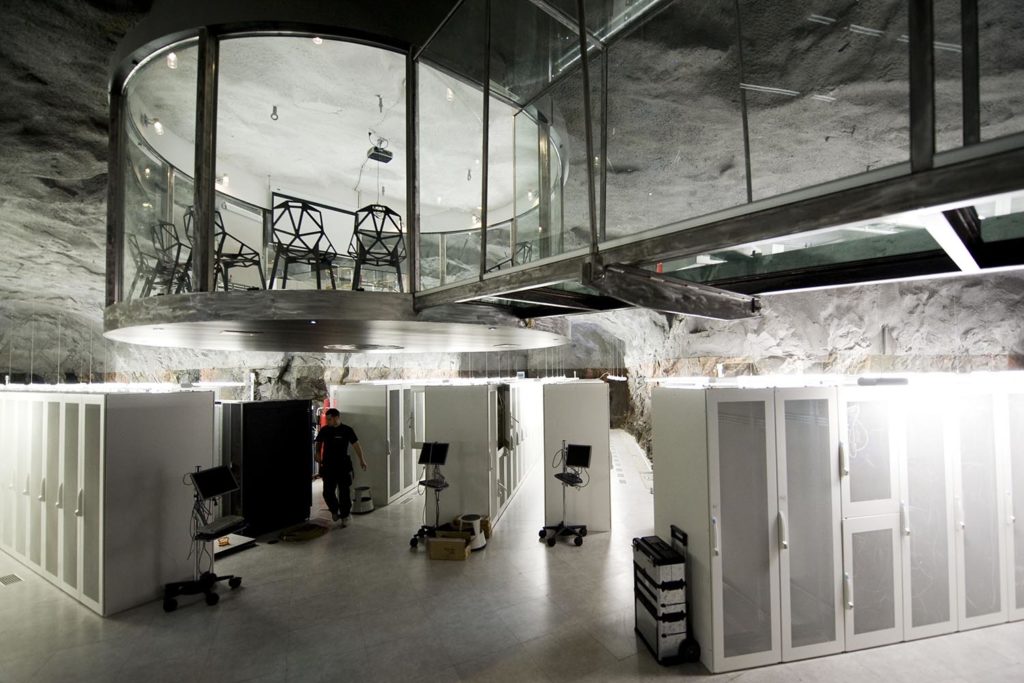
The power needed to keep servers cool in data centres is becoming an environmental millstone round the web’s neck. To keep their electricity bills down, tech companies have spent millions installing data centres in, for example, giant caves reached from Norwegian fjords where the temperature is a year-round 8 degrees C. Three years ago Microsoft experimented with lowering a mini data centre into the sea. Now the island Chinese province of Hainan is teaming up with a local firm to do the same on a larger scale. Question: doesn’t GCSE physics say this will just warm up the sea? And if so, what good does that do?
Exxon v history
In 2010 BP’s Deepwater Horizon rig blew up in the Gulf of Mexico and the world’s oil CEOs were summoned before Congress to explain how they would prevent anything similar happening again. It was a career nadir for BP’s Tony Hayward – but a moment of supremacy for Exxon’s Rex Tillerson; proud, confident, unapologetic (despite the 1989 Exxon Valdez disaster) and unchallenged as head of the biggest company on the Dow Jones Industrial Index. What a difference a decade makes. Exxon is no longer even on the index and – as flagged in this week’s Net Zero Sensemaker – is trying today to fight off activist investors at Engine No. 1 who’ve spent more than $30 million on a campaign to get the company to face up to the reality of climate change. Engine No. 1’s immediate aim is to get four nominees elected to the board who know something about the energy transition. Longer-term, it wants to save Exxon from the fate of Kodak.
Orbán comes to London
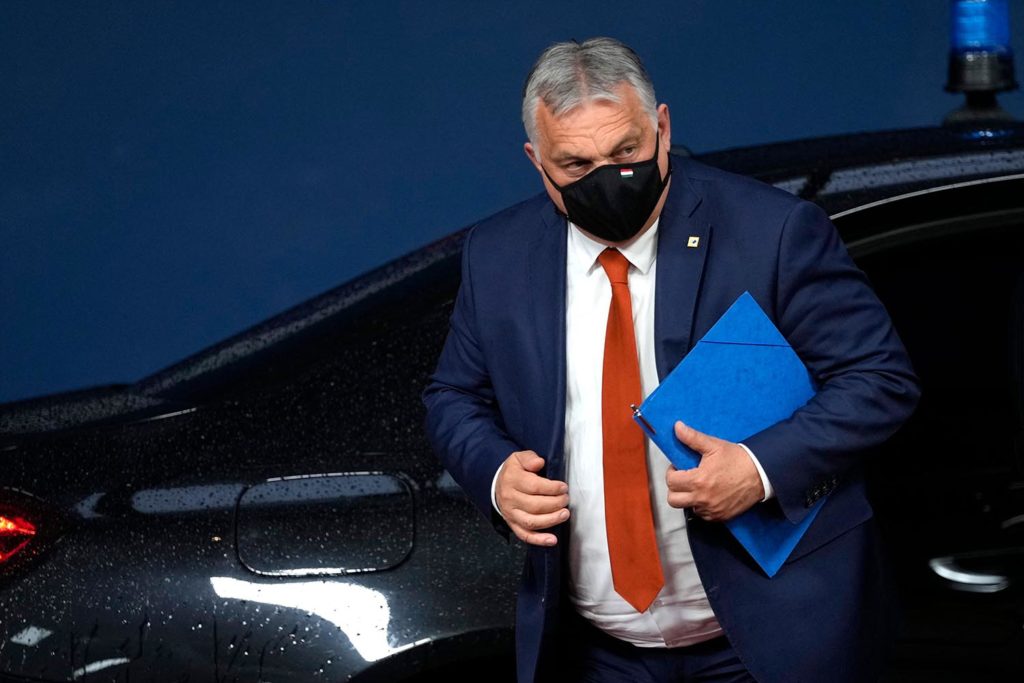
Hungary’s Viktor Orbán will meet Boris Johnson in Downing Street on Friday. Orbán is the elected leader of an EU member state and a key member of the Visegrad Four, aka the EU’s eastern awkward squad, so there is no question that his status warrants a call on Number Ten. He’s also visiting Dublin, Lisbon and Madrid this week, so he hasn’t singled out Brexit Britain for his attentions. But he remains the man who called refugees “poison” and Muslims “invaders”, and who drove George Soros’s Central European University from Budapest because its staff dared to stand up for free speech. This week he joined the rest of the EU in condemning the Belarusian skyjacking, but in the past he has defended Lukashenko. Which Orbán is coming to London?
Thanks for reading, and please share this around.
Giles Whittell
@GWhittell
Photographs by Getty Images