What just happened
- MPs in the UK voted to cut the foreign aid budget to 0.5 per cent of national income, breaking a Conservative manifesto pledge to keep it at 0.7 per cent.
- Texas Democrats flew en masse to Washington to deny Republicans a quorum in the state assembly and thereby foil – for now – plans for voting restrictions seen as targeting minorities.
- Cruise ships were banned from the Venice lagoon.
Two countries. Two revolutionary struggles. Two very different outcomes, and now a pandemic. Does Covid help explain what’s going on in South Africa and Cuba? Up to a point.
What is happening?
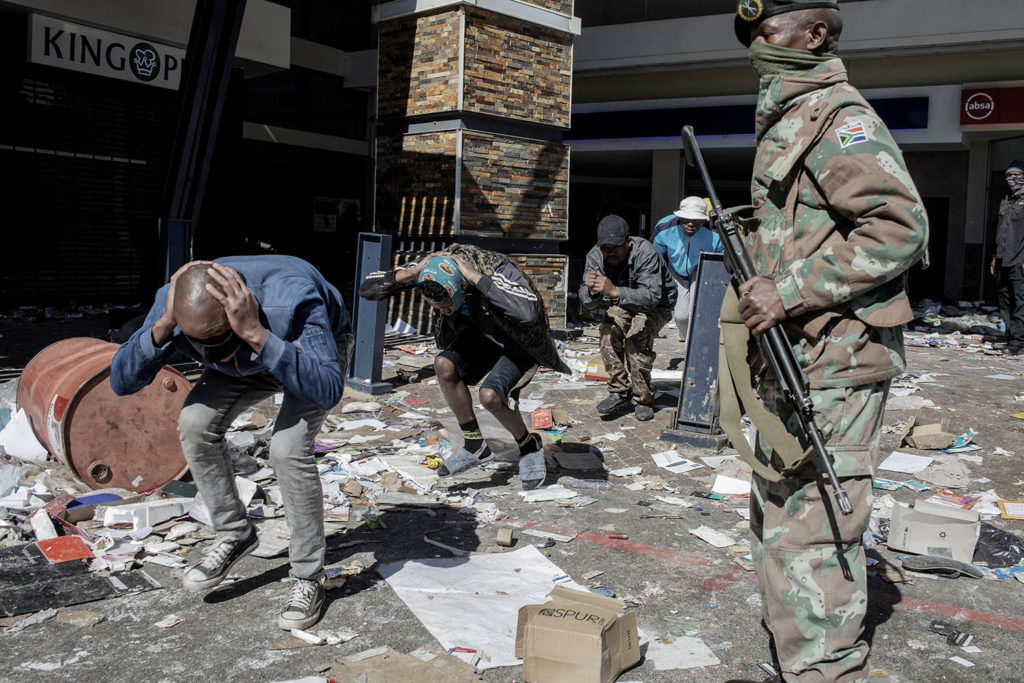
- In South Africa hundreds of shopping malls have been looted, thousands of livelihoods destroyed and more than 70 lives lost in violence triggered by the jailing of former president Jacob Zuma – and encouraged by his family – for contempt of court. There’s been nothing like it since the 1990s. The worst of the unrest is in Zuma’s home province of KwaZulu-Natal, and the brunt of the economic damage is being borne by black-owned businesses there.
- In Cuba, the biggest protests against the regime in its six decades started near Havana on Sunday and spread the length of the country despite immediate efforts by police to stamp them out. More than 100 protesters have been detained or gone missing and one is reported dead. Their demands are for basic services, an end to crippling shortages – and the kicker, libertad. Order has returned to the streets in most of Cuba but Cuban Americans have staged demonstrations in support across the US.
Why?
- In SA: Zuma’s family and foundation have endorsed the looting as “the righteous anger of the people”. They intend this to mean anger over the courts’ long and justified pursuit of Zuma for corruption, but there is real anger and despair over the world’s highest official unemployment rate, the deepest recession on record and a 350 rand ($24) monthly pandemic support payment that expired in May, all of which have left elites largely untouched while deepening already desperate inequality.
- In Cuba, Covid’s impact is more direct and obvious: it has crushed the tourism on which the economy depends and which was already hurting because of restrictions imposed by the US under Trump. Also, despite the regime’s pride in Cuban medicine, only 16 per cent of adults are vaccinated and home-grown vaccines have yet to be rolled out. An important enabler of the protests is the web and social media, vastly more accessible to Cubans since 2018. Access to Facebook and other platforms was interrupted as protests spread on Sunday, but the ban is unlikely to be permanent because web access fees have become another vital source of state revenue.
What’s at stake?
- In SA: the rule of law; the fate of thousands of businesses built over the past 30 years by the black middle class especially in KwaZulu-Natal; living conditions in the poorest townships.
- In Cuba: the ability of the regime to continue to flirt with the trappings of capitalism while denying personal and political freedoms and blaming the US for hardships.
Would these upheavals have happened in the absence of Covid? Probably. Has Covid hastened and intensified them? Probably.
In their own words:
- “I am the closest I have ever been to losing hope.” Des Erasmus in Durban for The Daily Maverick.
- “The spark has been lit, ladies and gentlemen. There’s no turning back.” Yoani Sánchez, Cuban journalist, quoted in the NYT.
South whose Sea?
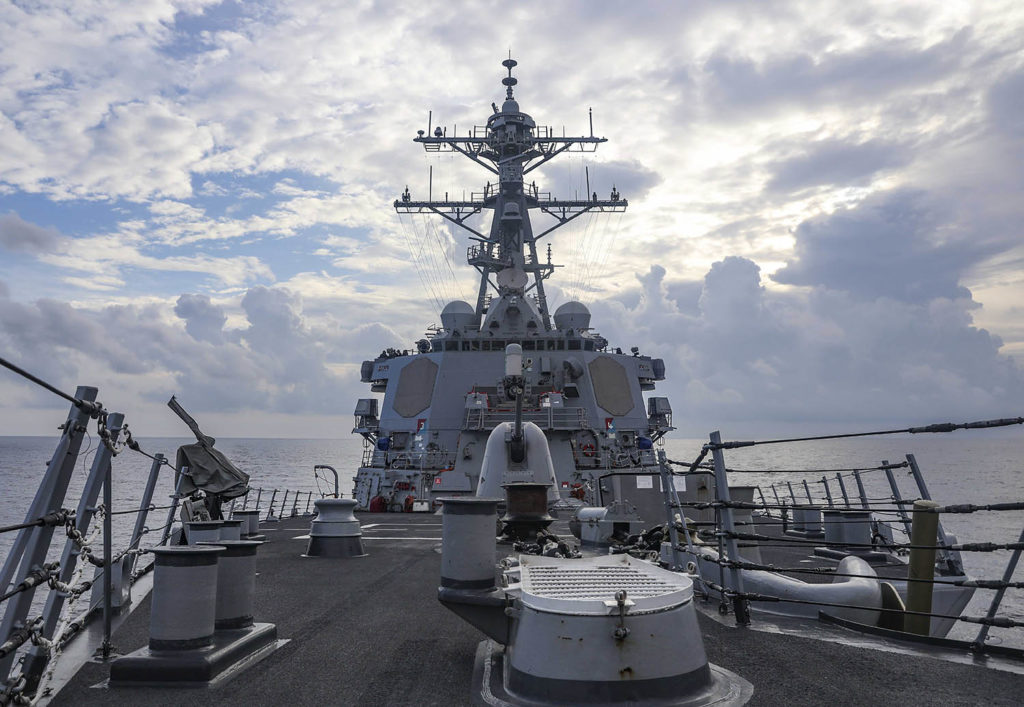
It’s getting tense again in the South China Sea. On Monday Beijing claimed to have chased away the USS Benfold, a US destroyer which China said entered the area without its approval, violated its sovereignty and undermined the stability of the region. The US says the Benfold had navigational rights and freedoms in the vicinity of the Paracel Islands consistent with international law. The Biden administration has upheld a Trump-administration rejection of nearly all of China’s claims in the South China Sea and says it will defend the Philippines against attack by China. Why so tense just now? Five years ago this week an international tribunal upheld the Philippines’ claims in the region and rejected China’s. China naturally rejected the tribunal’s decision but Vietnam, Malaysia, Brunei and Taiwan also claim some of the hundreds of islands, reefs and shoals in the area and, the argument goes, it’s not too late for them to join forces and press their case. Especially if the US holds firm.
REvil goes dark
The Russian ransomware outfit that demanded $70 million last week to unfreeze hundreds of corporate computer networks from the US to Australia has suddenly gone dark. It was already to be found only on the dark web, but its pages there have disappeared. It’s no longer demanding money – but it’s no longer negotiating with the businesses it paralysed either. There are three possible explanations, according to the NYT: the US shut REvil down as an act of cyber defence; Putin ordered it to shut down after a tense phone call with Biden last week; or it shut itself down, possibly temporarily, hoping tempers will cool and it can return in due course to the lucrative business of wrecking other people’s business. Tony Blinken, the US secretary of state, has said explicitly that if countries that host these hackers don’t shut them down, the US will. Maybe he wasn’t bluffing.
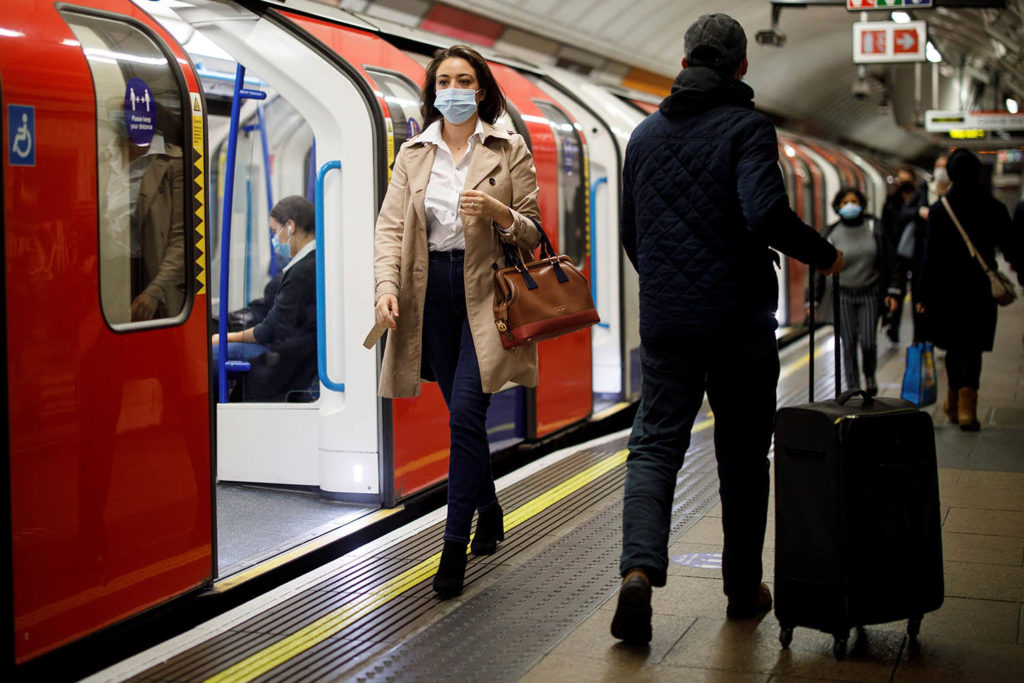
Facemasks on the Tube
They’re still compulsory. The UK government said this week it would leave it up to individual operators whether to continue to require masks on public transport, and the big daddy of British public transport has backed caution over recklessness. Sadiq Khan, London’s mayor, says masks will still be required to travel on the Tube after 19 July. Khan cited the WHO and the government’s own advisors in support of the view, aka the fact, that masks reduce Covid transmission. Separately, 1,200 scientists signed a letter to the government imploring it to halt the lifting of remaining restrictions next Monday. 36,216 new infections were recorded in the UK on Tuesday.
EU climate rules
The EU publishes its most ambitious set of climate regulations ever today. They include: tighter emissions standards to force manufacturers to stop selling petrol and diesel cars by 2035; reforms of the existing EU emissions trading system to bring shipping under its purview and force all polluters including construction firms to pay more for the privilege; and tax on jet fuel for intra-European flights. Sweden’s Jytte Guteland, an MEP, told Reuters “everyone has to accept something new”. Poorer countries on the EU’s eastern fringe, still dependent on coal for power, may have something to say about that.
Inflation’s back
The US consumer price index rose 0.9 per cent in June alone. Prices in the States are up 5.4 per cent compared with a year ago. The UK’s Consumer Prices Index rose from 2.1 to 2.5 per cent last month and is at its highest level in three years. You don’t have to be an economist to know this kind of thing can happen when all the world’s big economies print money heedless of inflationary risk to get out of a short-term hole. This is not to say a little inflation is unwelcome. It has been below the US Federal Reserve’s 2 per cent sweet spot for most of this decade and Jerome Powell, the Fed chairman, had said he wanted it to pick back up. As the WSJ notes ($), he’s got what he wanted, and called it “transitory”. If transitory means more than a month or two, it will get expensive.
Thanks for reading and please share this with your friends.
Giles Whittell
@GWhittell
Sophia Sun
@sophiaasun
Photographs Virgin Galactic, Getty Images