
What just happened
- At least 90 people died in flooding in Germany and Belgium attributed in part to climate change.
- A House of Lords report warned the UK government about the inflationary risks of quantitative easing (more below).
- A Hong Kong study said Pfizer’s Covid vaccine produces ten times more antibodies than China’s Sinovac.
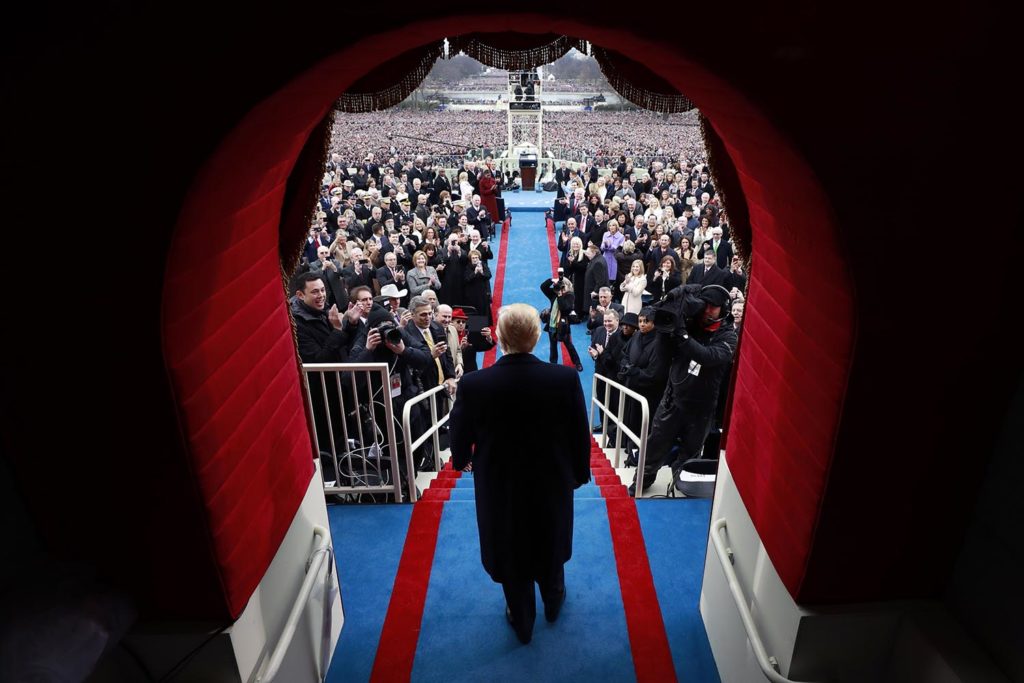
Late yesterday morning the Guardian pressed send on what looked like a sensational scoop: a story about a leaked Kremlin memo from January 2016 setting out a detailed, multi-agency plan to use “all possible force” to help get Trump into the White House. The memo could be fake, part-fake or real. If the latter it could have been leaked by a nobody or Putin himself. Whatever the truth, the story serves as an important reminder that collusion was never necessary for Russia to interfere in American elections. The point about meddlers is that they can meddle all by themselves.
There are three things to know about the story if taken at face value:
- It says the bid to sway the election was formally ordered and signed off by Putin after a Kremlin meeting known to have taken place on 22 January 2016. Multiple US intelligence assessments have said Putin ordered the interference, but the date is new.
- The memo, reportedly discussed at the meeting, describes Trump as an “impulsive, mentally unstable and unbalanced individual who suffers from an inferiority complex” – and whose victory would “definitely lead to the destabilisation of the US’s sociopolitical system”.
- It also appears to confirm the Kremlin had/has so-called kompromat to use against Trump, collected on previous “non-official” visits to Russia. It says the allegedly compromising material is described in an (unleaked) appendix. Trump has denied a claim in Chris Steele’s 2016 dossier that he once consorted with prostitutes in a Moscow hotel.
Health warnings to bear in mind when reading this story include:
- There is no verification or corroboration of the memo.
- The Guardian itself doesn’t stand foursquare behind it, saying only that it’s “assessed to be” genuine by independent experts.
- It could easily have been written ex post facto to match known events rather than attempt to influence them.
- The Kremlin doesn’t generally leak without good reason, and if deliberate it’s not clear what Russia gains from this now.
- Spokespeople for Trump and Putin have rejected the story outright.
So why bother with it? There are a number of reasons.
- The independent experts consulted by the Guardian, Andrei Soldatov and Sir Andrew Wood, are not easily over-excited. Soldatov is the author of The Red Web and an unrivalled source on the Kremlin’s weaponisation of social media. Wood, who calls the memo “spellbinding”, was UK ambassador to Moscow from 1995-2000. He notes that it plausibly reflects Putin’s failure to see how he might have erred invading Ukraine.
- The document could have come from a former senior US source in the Kremlin known to have been exfiltrated from Russia in 2017.
- Unilateral action by the Kremlin to distract and if possible derail American democracy was always more plausible than collusion, especially where Trump was concerned. If Russian intelligence knew anything about him in 2016 it was that any operation that depended on cooperation with his overstretched and inexperienced campaign team would likely be doomed.
The purported memo is titled No. 32-04 / vd. The kompromat information is reportedly in appendix 5, paragraph 5. If anyone has a copy we’d be happy to take a look.
How they see us
Europe is not thrilled about England’s plan to lift all remaining Covid restrictions on Monday. A German official calls it “a highly risky experiment”. The Netherlands, France, Greece and Spain announced new restrictions rather than an end to restrictions from Monday to curb the spread of the Delta variant. Italy, Portugal and Spain tightened their entry requirements for visitors from the UK two weeks ago, since then the UK’s seven-day rolling average of new cases has risen from 22,186 to more than 36,000. 42,302 new cases were reported yesterday. What happened to stoical and pragmatic? That is exactly what Britain’s neighbours are wondering.
It is much more heartening to read Bukayo Saka’s profession of faith in human goodness. The England and Arsenal forward called out social media platforms for not doing enough to curb online racism, but he ended with: “Love always wins.”
Join us at 1pm for a Sensemaker Live ThinkIn on whether to ditch social media altogether.
Delhivery grows
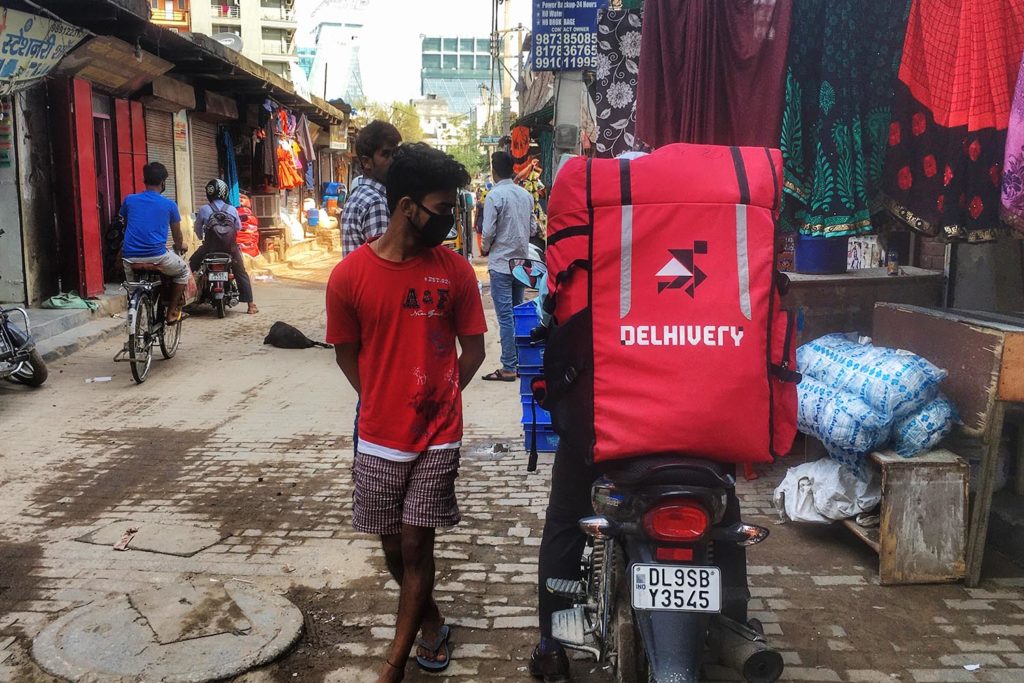
India’s most brilliantly-named logistics and distribution company has landed a $100 million investment from FedEx. Delhivery started as a food delivery firm but now delivers more or less anything, anywhere in India. It doesn’t own all its own trucks or planes – yet. It’s mainly a digital hub linking customers to third-party logistics firms. But it has been valued at $3 billion ahead of a stock market flotation planned for later this year, and it has plans for a drone-based joint venture with SpiceExpress, an air cargo firm, to leapfrog traffic jams and deliver drugs, goods and “critical medical services” by air. Will delivery drones take off in developing countries faster than in richer ones?
Pingdemic
Alerts sent to UK residents by the NHS Covid app are rising exponentially along with infections, creating the risk that the workforce will grind to a halt if people do as they’re told. More than 500,000 pings were sent last week, and those receiving them are in most cases supposed to self-isolate. The CEO of one homecare company told the BBC a quarter of his staff are off work after being pinged. The obvious solution, especially for those who no longer see the virus itself as much of a threat, is to recalibrate the app so that it pings fewer people. The Department for Health and Social Care says it’s thinking about it. No recalibration will mean more people simply delete or ignore the app. Either way, soaring infections and a diminished ability to map them both look inevitable.

German floods
Deutsche Welle says 93 people have died and more than 1,300 are missing after catastrophic flooding in western Germany that has collapsed bridges, inundated large areas of farmland and brought the army onto the streets to help with search, rescue and the clean-up. Torrential rains that smashed previous records in Rhineland-Palatinate and North Rhine-Westphalia have been attributed in part to climate change. And of course it’s true that warmer air holds more water vapour. The Clausius Clapeyron equation says that for every degree of average sea surface temperature increase the atmosphere’s water content should rise by 7 per cent. That means the atmosphere currently holds at least 500 cubic kilometres more water than it did in the 1970s. All the signs are this trend is only getting started, and what goes up must come down.
Beware addictive QE
A House of Lords committee is worried that the Bank of England is worsening inequality and eroding its own independence by printing too much money. A heavyweight report by the Lords’ economic affairs committee also warns that QE – quantitative easing – may already have become an addiction for the government that could be hard to pay for if interest rates have to rise. QE rode to the rescue of the world economy at the time of the 2008-9 crash but “has been deployed in various circumstances quite different from those of 2009” since, including especially the pandemic. The report points to a ratchet effect that has driven QE up but never reversed it, so that the Bank’s balance sheet is now equivalent to 40 per cent of GDP. Is the Bank just funding Boris Johnson’s deficit spending in an environment that benefits, for example, homeowners but not renters? If so, is it truly independent? Doubts are growing.
Thanks for reading and please share this with your friends.
Giles Whittell
@GWhittell
Sophia Sun
@sophiaasun
Photographs Getty Images