What just happened
- Vitaly Shishov, an exiled Belarusian activist, was found hanged in Kiev as the country’s opposition leader called for more sanctions against the Lukashenko regime.
- The media company behind Big Little Lies, founded by Reese Witherspoon, was valued at $900 million before its sale to investors.
- New Zealand’s Laurel Hubbard became the first openly trans woman athlete to compete at the Olympics, although she finished last in her weightlifting event.
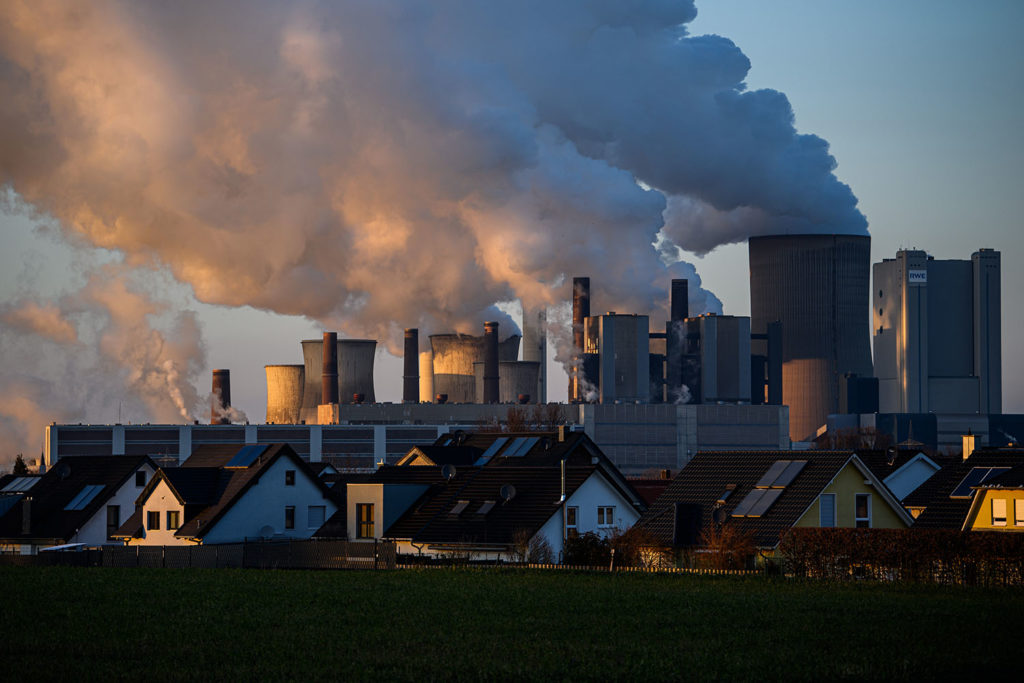
For some fossil fuel energy companies, the best defence against the ravages of climate change is attack. Worried about stranded assets and falling profits, they’re suing governments for taking climate action.
How so? Provisions for investor-state dispute settlement (ISDS), written into thousands of investment treaties, allow firms to sue governments for any action that could harm their future profits. That includes phasing out coal or banning the exploitation of oil reserves. ISDS has existed for years and not all cases relate to environmental laws, but plenty do, and they look especially retrograde three months out from Cop 26.
Already this year…
- RWE, a Germany energy company and Europe’s biggest emitter of CO2, has sued the Netherlands for €1.4 billion for phasing out coal;
- Shell is suing Nigeria after it was ordered to pay compensation for a decades-old oil spill.
- TC Energy is suing the US for $15 billion for cancelling the Keystone XL oil pipeline.
Britain’s Rockhopper Exploration is also seeking – and expecting – “very significant monetary damages” this year from the Italian government for banning drilling off its Adriatic coast, where Rockhopper bought a licence in 2014.
This sort of litigation threatens to raise the cost of the race to net zero, especially for developing countries, which are hit with ISDS cases much more regularly than wealthy ones.
It’s hard to prove governments hold back from taking climate action for fear of being sued, but there are parallels with the tobacco industry. When Marlboro-owner Philip Morris sued Australia under ISDS for bringing in plain packaging for cigarettes, developed countries delayed laws to rein in the tobacco industry until the case was resolved more than four years later. In developing countries the impact was greater and – even though the tribunal ruled against Philip Morris – many have still not introduced measures to curb smoking.
That could be catastrophic in the context of the climate crisis. “Anything like the ISDS mechanism that might make countries think twice is a delay that can’t be afforded,” says Liz McKean of the campaign group War on Want.
There are other perverse consequences of these lawsuits:
- They may actually be encouraging investment in fossil fuels. Lise Johnson, a scholar at Columbia University’s Earth Institute, says the prospect of ISDS payouts may be “incentivising over-investment in projects that really should be deemed risky”.
- There’s wide agreement that to keep warming under 1.5 degrees most of the world’s remaining fossil fuel reserves must be left in the ground, meaning the assets under dispute could essentially be worthless. Companies that have continued to invest in them long after they knew about their impact on the climate are using ISDS to shift the cost of those business decisions onto taxpayers.
The UK is particularly exposed to potential ISDS costs, with billions of pounds’ worth of North Sea fossil fuel infrastructure owned by foreign companies that could sue under a system the government shows little desire to reform. It is, as McKean says, a completely contradictory position. “We’ve got the UK government claiming to be a leader on climate change but at the same time turning a blind eye to this mechanism that enables governments to be punished if they choose ambitious climate policies.”
Note to Alok Sharma: it might be smart to raise this with Number 10 before November.

Afghan threat
Taliban forces have taken parts of Lashkar Gah in Afghanistan’s Helmand province and if allowed to seize whole cities could pose a “devastating” threat to global security, a senior Afghan general tells the BBC. Three cities are under siege: Lashkar Gah, Herat and Kandahar. President Ashraf Ghani blames last month’s abrupt withdrawal by most remaining US forces for the Taliban’s swift advance. General Sami Sadat, in charge of Afghan forces in Helmand, said he didn’t think the Taliban would take the whole of Lashkar Gah but that Islamist groups were joining forces in Taliban-held territory and could encourage others to mobilise in Europe and the US. That is precisely what Biden hopes won’t happen. Watch his approval ratings tumble if it does.

Speed climbing
This doesn’t have much to do with science or tech, but it is new, at least in the Olympics. Speed climbing makes its Olympic debut this week as part of a hybrid climbing event that includes bouldering and more conventional climbing up a slightly overhanging wall. The hybrid is controversial, especially for the world’s top competition climber, Adam Ondra of the Czech Republic, because it gives equal weight to all three components and Ondra thinks speed climbing is meaningless. This could be pre-fight sour grapes. He’s just not nearly as fast as the fastest. Check out Indonesia’s Veddriq Leonardo making him look slow in this extremely fun scroller from the NYT.
Groundhog day in Wuhan
Covid’s ground zero is getting tested again. All 11 million Wuhan residents are being tested for Covid after seven cases were reported among migrant workers in the city. Millions more are being tested and told to stay at home in large areas of Beijing, Nanjing and Yangzhou because of Delta variant outbreaks reportedly linked to a flight from Russia to Nanjing. China reported a total of 61 cases in 14 provinces on Tuesday. For reference, 21,952 cases were reported on Monday in the UK, where testing is largely voluntary except for people travelling abroad.
Burning offsets
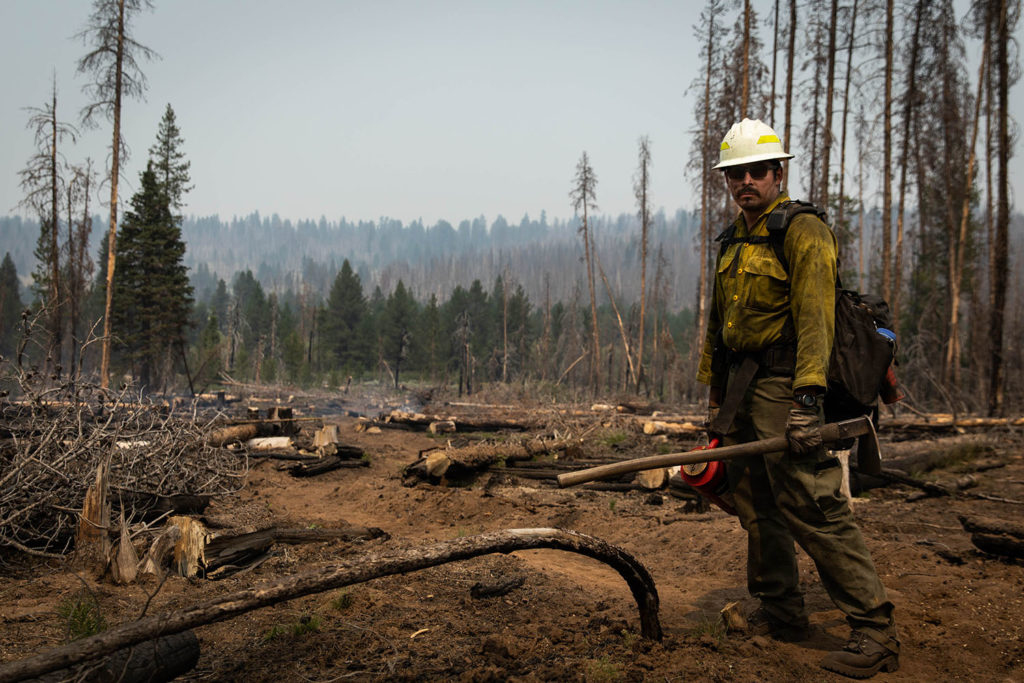
The idea that you can meet net zero targets by buying offsets is obviously attractive to carbon-intensive businesses like airlines that can’t meet them any other way until someone invents a miraculously light and energy-dense battery. But that idea literally goes up in smoke if the offsets are afforestation or reforestation projects and the forests are burning to the ground. That’s what’s happening to BP, Microsoft and others in wildfires burning across the American northwest. “We’ve bought forest offsets that are now burning,” a Microsoft manager told a gathering of carbon removal experts, according to the FT. BP says it’s working closely with partners to gauge the damage to forests in the Colville Indian Reservation in Washington State, where it’s bought offsets valued at $100 million. This will put even more pressure on carbon capture and storage (CCS) to prove its offsetting credentials, which haven’t been proved yet.
American roads
In policy terms, the $550 billion US infrastructure bill now in the Senate with bipartisan support is a disappointment for Democrats who wanted more money for public transport, more money to tear up old highways blighting poor and largely non-white neighbourhoods, and less money for new highways, period. In political terms it’s a big win for Biden because of the three words in italics above. It shows he can do something Obama never did – get a few Republicans on board. That was of course because the Senate’s Republican leadership in the Obama years opposed everything he backed in a forlorn effort to make him a one-term president. But still, this bill is better than gridlock, and Biden can still use his forthcoming and much bigger budget bill to placate the Left with spending pledges that won’t need a filibuster-proof majority. VP Harris’s casting vote will do just fine. The whole plan could still go horribly wrong, but for now it looks like Harris and Grandpa Joe are getting stuff done.
Multiple sapling medals awarded today, in one of the oldest sports of the Olympics movement. It was a rocky start, however, for sailing at the games. While the 1896 games planned to hold a regatta, it was cancelled thanks to a combination of awful weather (in this case, too strong winds) and lack of competitors. In 1904 in St Louis it wasn’t held at all (not a particularly brilliant games all round in 1904 – barely any athletes showed up). So Paris 1900 saw its debut. A regatta famous for a certain Hélène de Pourtalès winning gold in the first race of the 1-2 Ton Class (each race in that games saw medals awarded!), thus becoming the first ever Olympic female gold medallist. The most successful Olympic sailor remains Sir Ben Ainslie, who followed up silver in Atlanta with four consecutive golds.
Thanks for reading, and please share this around.
Josephine Moulds
@jomoulds
Giles Whittell
@GWhittell
Photographs by Getty Images