
What just happened
- Italy required a “green pass” proving Covid vaccination or recovery for access to restaurants, cinemas, museums and indoor sports venues.
- Yulia Navalnaya spent three days with her husband, Alexei Navalny, at his penal camp east of Moscow, and said he was skinny but smiling.
- FC Barcelona announced that Lionel Messi would be leaving the club after 21 years, blaming wage rules imposed by the Spanish football league.
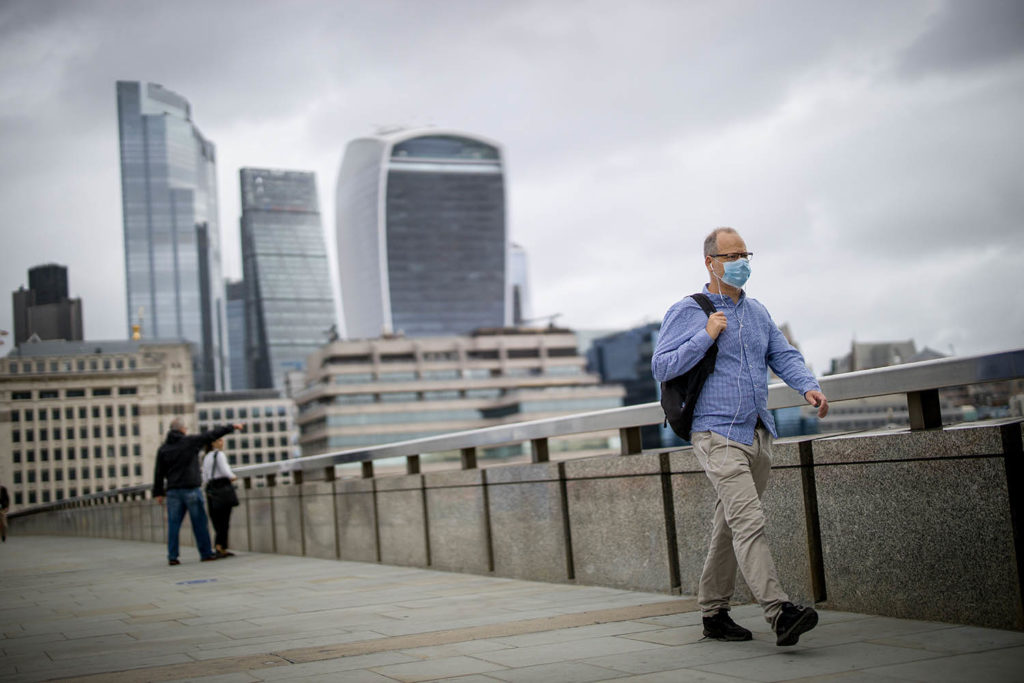
The big HR news this week is that Amazon is delaying its return to the office for corporate staff from next month to January. But it’s not just Amazon. In the US, Apple, Google, Twitter and Lyft are delaying too. So are BlackRock, the investment firm, and Wells Fargo, the bank.
In Japan, Australia, South Africa and South Korea, large majorities think it’ll be at least another year before they go back to pre-Covid work patterns, if they ever do.
And it’s not just about HR. When and how we go back to the office reveals a lot about what makes people feel safe and businesses keep functioning in the new age of permanent incipient pandemic.
Reasons to delay aren’t hard to find:
- The Delta variant is spiking, especially in US states where vaccine resistance is high including Louisiana, Florida, Arkansas, Missouri and parts of the northwest.
- Some employers are reluctant to force staff to get vaccinated as a condition of coming to work, though this is changing. The US government declared in May that it was legal for employers to require workers to be vaccinated, and dozens have – although Amazon hasn’t.
- In the UK, “no jab, no job” policies haven’t been legally tested and the Equality and Human Rights Commission says employers’ vaccination requirements should be “proportionate, non-discriminatory and make provision for those who cannot be vaccinated for medical reasons”. Which leaves employers open to wrongful dismissal lawsuits if they sack people for not being vaccinated, as CNN has in the States.
- Workers like flexibility. Two thirds of people worldwide told Ipsos-Mori last month they wanted more of it when the pandemic was over.
There’s a philosophical tussle here between those who see Covid as a catalyst for long-delayed progress on flexible working, especially for women, and those who see office life as a kind of alchemy.
In the flex corner: Labour’s Angela Rayner tells chancellor Rishi Sunak to “check the manifesto he was elected on” before urging younger workers to get back to the office for the sake of their careers. The Conservatives promised flexible working as the new default before Covid was even heard of, and Rayner says it’s time to let people “make up their own minds about what works for them so that work fits around our lives instead of dictating our lives”.
In the alchemy corner: Jamie Dimon, CEO of JP Morgan, in the Sioux Falls branch of his bank last week: “This branch has to be staffed. The Zoom land, Zoom world, does not work as well for apprenticeships, for teaching, for creative combustion, for management, for idea generation, for learning a lot. It just doesn’t.”
And then there’s France – which stands out in the Ipsos-Mori poll as more confident than any other that office life will come roaring back within six months. Is this the Call My Agent effect?
Tutoring slump
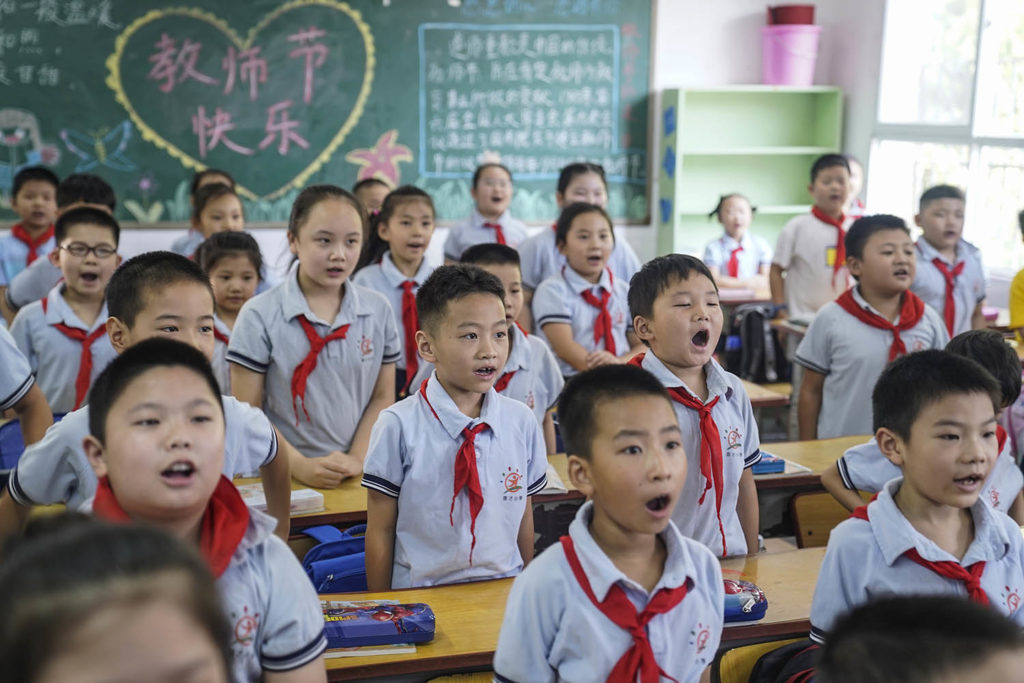
Overseas investors are trying to get their money back after sinking billions into Chinese tutoring companies only to find that Xi has turned against tutoring. He is doing so ostensibly to help striving families by easing the financial burden and anxiety suffered by Chinese parents trying to give their kids a leg up. But there’s more to it than that. The less Chinese families spend on education the more they have to boost domestic demand in other sectors, the thinking goes, and the more likely they are to have children in the first place, boosting a birth rate that’s been falling since 2013 and well below replacement levels for most of the past 70 years. Last but not least, the crackdown is meant to strengthen the Communist Party’s ideological control in line with Xi’s view that when it comes to “government, military, society and schools – the party is leader of all.”(£)
Anti-CSAM software
Apple says the latest versions of its iPhone and iPad operating systems will incorporate software that can spot child sex abuse imagery with an annual error rate lower than one in a trillion. That big number is supposed to reassure innocent users of the company’s devices that they’re not going to be reported to law enforcement for something they didn’t look at when even the mere suspicion of it could ruin their lives. But nothing will reassure privacy activists that the same software won’t be used by authoritarian regimes to monitor any sort of content on their phones for any reason. As Matthew Green of John Hopkins University tells the BBC, Apple is sending an influential signal that “it is safe to build systems that scan users’ phones for prohibited content”. Question: don’t authoritarian regimes already have all the scanning software they need, and if so isn’t Apple right to be prioritising children’s safety?
Flu shots help with Covid
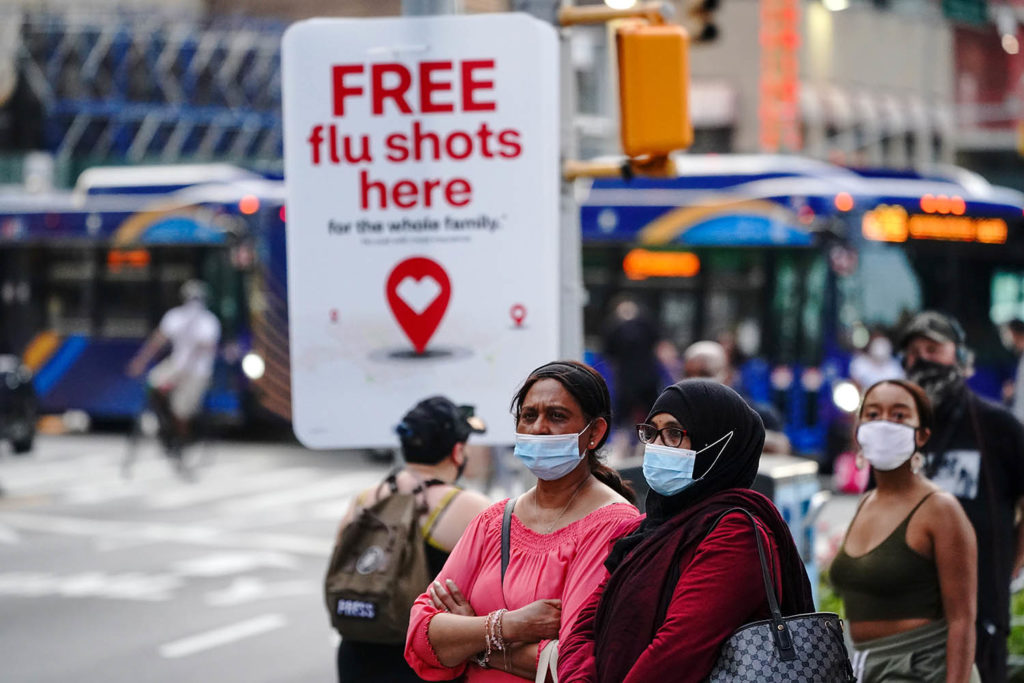
If you were in the habit of having flu shots and then got Covid but didn’t get severely ill, the flu shots may have helped. Researchers at the University of Miami have looked back at more than 70,000 anonymised patient records drawn from a data bank of more than 70 million and found a correlation between standard flu vaccination and increased protection from sepsis, stroke and deep vein thrombosis as a result of Covid. The flu shots were also associated with a 20 per cent reduction in needing to be admitted to intensive care. Caveats: there’s no correlation between flu shots and reduced Covid mortality, and a lot of people have to have them to make a significant dent in numbers needing intensive care. But this is another reason to get the flu shot if in doubt, and another piece of evidence to suggest that anything that beefs up immune systems generally helps keep Covid at bay.
Happy whales
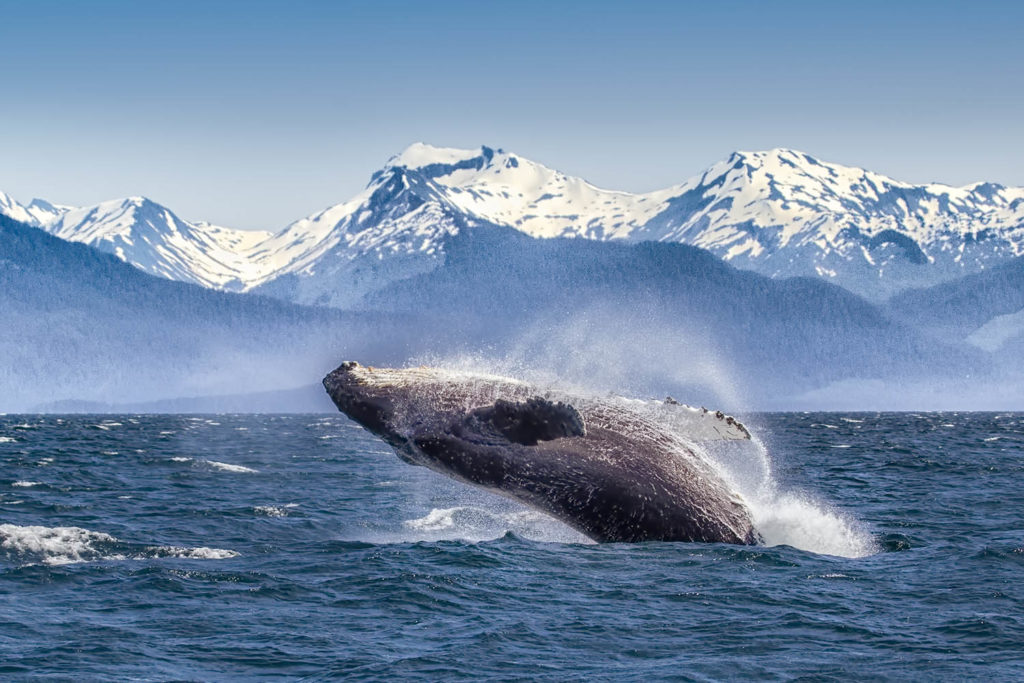
Humpback whales in Alaska’s Glacier Bay seem to have done more singing, chatting and napping last year than the year before. Parent whales were also more relaxed about leaving their calves to play in the relatively shallow waters of the bay while they went off looking for food. Why? There were almost no tourist boats to shatter their underwater calm. In the presence of non-pandemic levels of motor boats, researchers tell the BBC’s Anthony Zurcher, the whales have to huddle together, talk louder and keep the conversation simple. There may not be much appetite for this in the world capital of rugged individualism, but how about sticking with oars, sails and electric motors?
Separately, the Mail has had a go at Alok Sharma for flying round the world in his role as minister for Cop 26. Yes, there’s a carbon cost to flying, but Sharma’s job is about knocking heads together and you can’t do that on Zoom.
Goliath, meet David
A family-run farm in Cambridgeshire has fought off a trademark lawsuit brought by a Swedish oat milk giant for the right to market its own oat drink under its own name. PureOaty, launched two years ago by Rebecca Rayner and her brother Philip, was accused by the £7.9 billion Oatly brand of five trademark breaches, all of which Judge Nicholas Caddick ruled yesterday in the High Court weren’t breaches at all. He said he thought it unlikely that customers drinking a PureOaty drink would think they were drinking an Oatly one. It may seem a small fight, but the Rayners reckon it shows that “corporate might does not make right”. In this case that appears to be true. Oatly won’t be appealing.
The closing ceremony of the Olympics will take place on Sunday 8th. Before that, on Saturday, 34 gold medal events will take place (the most of any day in these games). It will include the men’s modern pentathlon, which follows the women’s contest taking place today.
The modern pentathlon was introduced in 1912 by Baron De Coubertin (women followed in 2000), an admirer of the pentathlon held in the Ancient Greek Olympic Games. Here’s how the IOC describes its origins: “According to a 19th-century story, a young French cavalry officer was sent on horseback to deliver a message. To complete his mission, he had to ride, fight with a sword, shoot, swim and run. These are the five disciplines that face competitors in modern pentathlon – all in a single day”. De Coubertin himself said the event would test “a man’s moral qualities as much as his physical resources and skills, producing thereby the ideal, complete athlete”.
The most amazing thing is the athletes meet their horses just 20 minutes before the showjumping round. Talk about pot luck.
Thanks so much for reading these Olympic facts, and I hope you’ve been enjoying the greatest show on earth. I’ll see you at the Paralympics!
Interpreters update: In response to the letter we mentioned yesterday from 23 news organisations including Tortoise, Dominic Raab has said Afghan interpreters at risk from having worked with western journalists will be eligible for sanctuary in the UK. This represents an extension of a relocation scheme previously open only to those who had worked for diplomats, the armed forces or other officials.
Thanks for reading, and please share this around.
Giles Whittell
@GWhittell
Sophia Sun
@sophiaasun