
What just happened
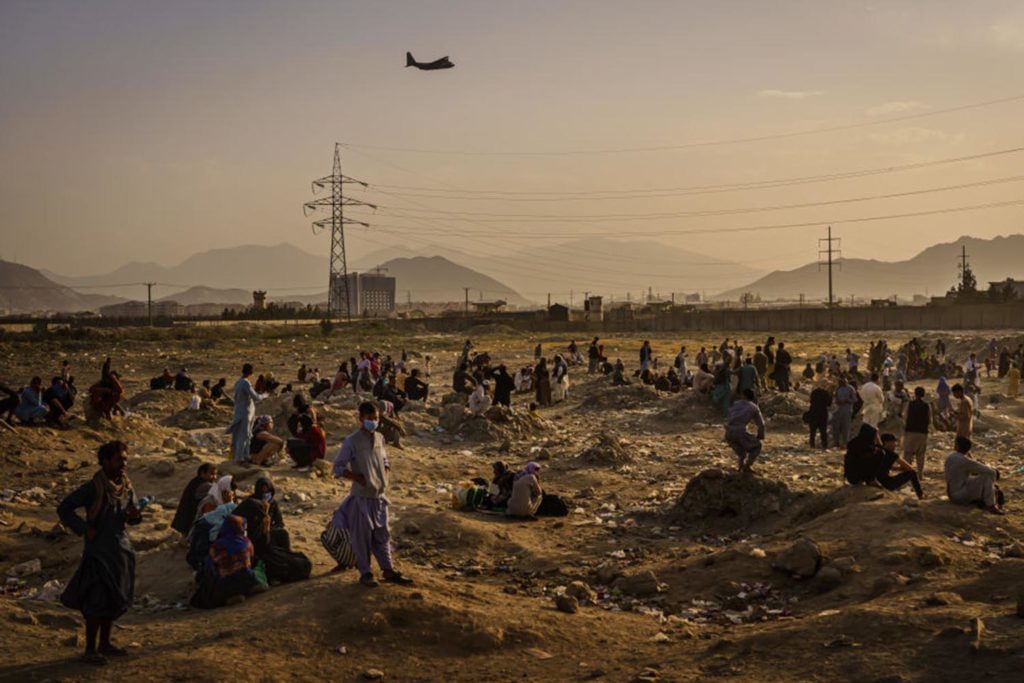
- Huge crowds tried to get into Kabul’s airport as the US started pulling out its own remaining troops (more below).
- Australia recorded its highest number of new Covid infections for a single day – 963.
- Charlie Watts, drummer for the Rolling Stones, died aged 80.
So Joe Biden plans to stick with his 31 August deadline for withdrawing from Kabul. That’s six days away. How many times did America’s allies have to be shown it was determined to get out of Afghanistan? Four if you include Trump’s original deal with the Taliban; three if not.
First, Biden affirmed on taking office that he would honour the Trump deal of February 2020. Then the Pentagon withdrew most of its remaining Kabul personnel without warning in the middle of the night. And yesterday the White House responded to a plea for more time from the whole of the rest of the G7 with a “sorry, but no”.
It has taken a long time for the rest of the West to get the message. Trump got it down to two words: America first. Biden put it yesterday in terms of process (“I’m determined to ensure that we complete our mission”) and protection (every day’s delay means more risk to US and allied forces and civilians). But the abandonment of those civilians who will not get out is still the abandonment of a certain type of American leadership – the type that can bring a measure of security and even hope to a failed state if it really wants to.
This is not entirely irrational. It underlines four things:
- Biden’s desire not to be the fourth president to bequeath an Afghan war to his successor;
- his desire not to be seen to be pushed around by events even as they spin out of control;
- European countries’ need to step up and act without American leadership – but with other allies, notably Turkey – if they want to reimpose any control on those events;
- the Taliban’s power on the ground.
How has it come to this?
- The Trump deal was clear there would be repercussions if the deadline for withdrawal wasn’t met, and it has already been pushed back four months.
- The Taliban can end the evacuation at will because flying large jets full of civilians out of anywhere needs a guarantee of security – which would be shattered by one stray rocket-propelled grenade.
- Neither the UK nor its other Nato allies has the capacity to deliver that security without the US.
Who’ll be left behind? Roughly 70,000 people have been evacuated since 14 August but of those still in Kabul wanting to get out only single-passport US and UK citizens are currently being let into the airport. For most remaining dual nationals and many Afghans who have been promised protection having worked with western embassies and Nato forces, the chances of a seat out are now slim.
What will happen to them? Taliban leaders have promised not to allow reprisals but Michelle Bachelet, the UN human rights commissioner, said yesterday her office was getting credible reports of summary executions and other human rights violations in areas outside Kabul.
What leverage do western countries have? Money. The US has frozen $9.5 billion in Afghan central bank assets. The EU has put a hold on aid worth €1 billion. The IMF has blocked access to another $450 million in loans, and they all say the Taliban can’t run the country without it.
Is that true? Probably not. Taliban leaders are confident Russia, China, Turkey and Saudi Arabia will step in with funding and investment offers if the western funds stay frozen. They may not want western money anyway if offered in return for guarantees of women’s rights and education. And they have outsourced security within Afghanistan to the Haqqani network, which tends to rely on violence and extortion rather than outside funding.
After yesterday’s G7 call, Tory ministers in the UK complained as they often do about the end of the ‘special relationship’. Except as a diplomatic pretence, it ended long ago. If there’s one salutary lesson for London from this debacle it is that if Britain wants to cling to the cliché about punching above its weight it needs to start by making nice with allies in its own neighbourhood across the Channel.
Hong Kong suck-ups
It’s distressing to see the South China Morning Post bending over backwards to be on message with Beijing. Gone is any attempt to defend Hong Kong democracy within the one country, two systems formula. Instead, in an editorial that accurately reflects the new tone of the whole paper, a “high powered delegation from the central government” is welcomed for its exhortation to Hong Kong to “roll up its sleeves and focus on its development”. Beijing has shown the way in finance, tech and innovation, the leader says. It’s time for Hong Kong to come up with a comparable “concrete plan”. Blimey. Time was, not long ago, when the SCMP would point out that Beijing has shown the way in repression, censorship and the crushing of the human spirit. It’s owned by Alibaba, whose founder, Jack Ma, was read the riot act last year for daring to criticise Chinese business regulators. Go figure.
No hands in San Francisco
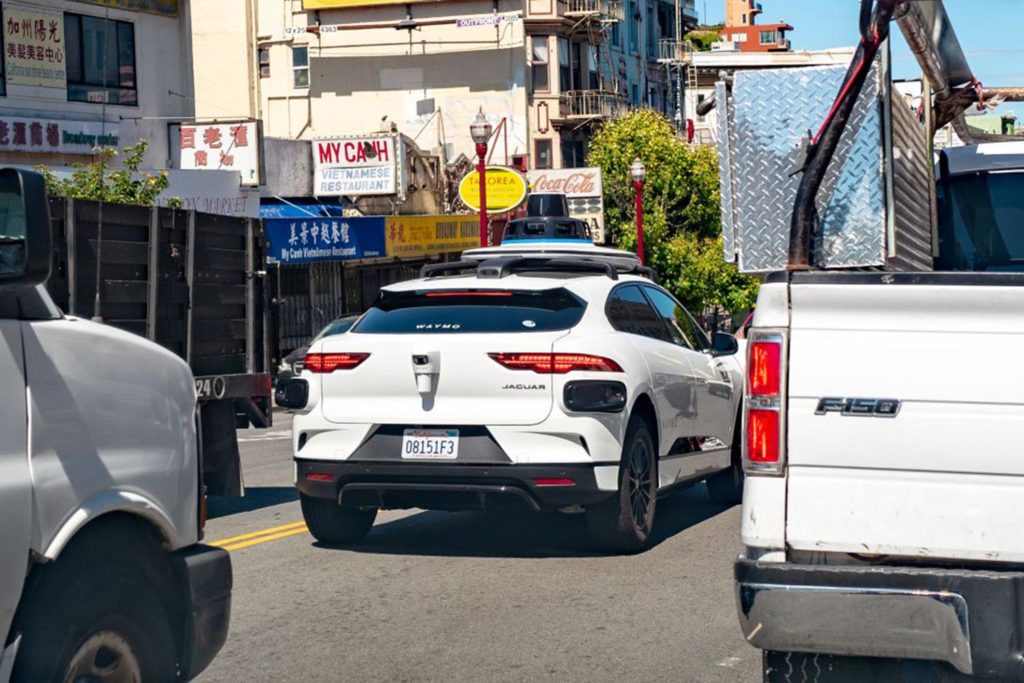
Waymo, the Google autonomous driving subsidiary, is starting a robotaxi service in San Francisco. This is notable for three reasons. First, it shows Waymo hasn’t given up despite years of setbacks for the whole driverless sector, which has found that mimicking human drivers’ myriad interconnecting faculties is actually quite hard. Second, it reckons it can handle SF’s busy, narrow streets, not just the vast runways of Phoenix where it first set up shop. Third, it’s not taking any chances. Hail a Waymo cab in San Francisco (you have to be pre-approved to do so), and you’ll find it has a driver after all. Just in case.
Havana syndrome hits team Veep
Is it possible that a member of Kamala Harris’s advance team was targeted by a weird Russian-invented acoustic weapon in Hanoi? It is, although resident US diplomats are more likely to have been hit. CBS said Harris’s flight to Hanoi from Singapore had been delayed after reports of an “anomalous health incident” at her destination that required a US official to be medically evacuated at the weekend. NBC used the “acoustic” word, which serves as code for suspected use of targeted microwave radiation thought to have been used by Russia and its allies against dozens of US diplomats and spies in Cuba and elsewhere. It brings on nausea, headaches, dizziness and ringing in the ears. Harris is on a swing through Asia to butter up natural allies like Singapore and warn China not to be a bully. Sometimes it feels as if the world’s intelligence agencies just have too much time – not to mention tech – on their hands.
Beavers are back
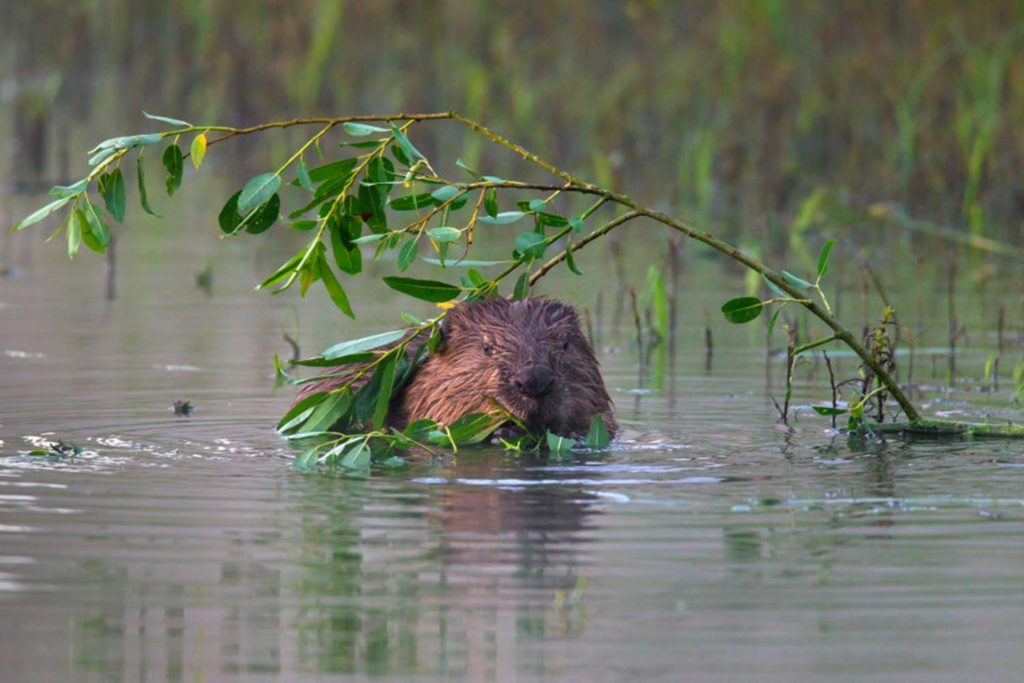
After a successful trial in Devon, the UK government has approved a plan for the tentative reintroduction of beavers to England’s rivers and wetlands, 400 years after they were hunted to extinction. This is excellent news for ecosystems, school children, beaver-lovers, and beavers. There’s abundant evidence beavers improve water quality, reduce flood damage and boost carbon sequestration, Rob Stoneman of the Wildlife Trusts tells the Guardian. For school children, a quantum leap in field trip excitement is in prospect. Cross-sections of beaver dams and houses were always the best illustrations in primary school science books. Seeing them in real life will take that to the next level, even if beavers prove themselves to be shy.
The $3.5 trillion shopping list
On a party line vote, Democrat House representatives in the US passed a $3.5 trillion budget resolution that if adopted by the Senate would bring the biggest funding boost in years for publicly-funded childcare, community college and healthcare for those without private insurance. If passed in anything like its current form it would close up a lot of gaps in America’s threadbare social safety net – and could compensate in next year’s midterms for what Republicans will justifiably call the Afghanistan disaster. Politically, getting this far has been a big lift and a significant coup for Nancy Pelosi, the House speaker, who’s had to wrangle nine outspoken left-wingers including New York’s Alexandra Ocasio-Cortez into line. AOC wanted to make sure ambitious climate plans were sewn into the budget resolution before backing it. Some have been, but not all.
The Paralympic Games start in earnest today, after yesterday’s opening ceremony (the closing ceremony is on Sunday 5 September). Tokyo has the honour of being the first city to host two Paralympic Games. In 1964, nine sports were on the programme, featuring 375 athletes from 21 nations. In Tokyo 2020, there are 22 different sports, with more than 4,400 athletes competing in 539 medal events.
Team GB’s Dame Sarah Storey has already won a gold medal. Today she defended her C5 3,000 metre individual pursuit title in the Izu Velodrome, cementing her status as the most decorated female British Paralympic athlete. With 14 golds, the cyclist and former swimmer is one win behind Mike Kenny, the all-time British great. Swimmer Kenny won his first golds back in 1976 in Toronto; and his last golds in Seoul 1988.
Thanks for reading and do share this around.
Giles Whittell
@GWhittell
Produced by Sophia Sun and edited by Xavier Greenwood.