
What just happened
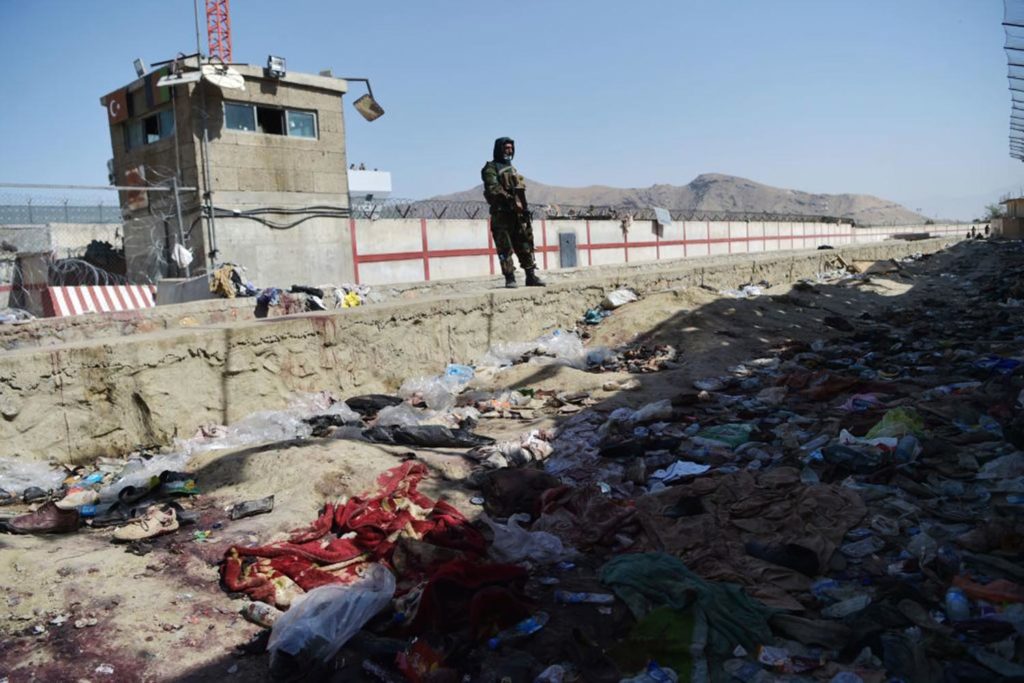
- The UK government said no more people would be allowed into Kabul’s airport for British evacuation flights after yesterday’s twin suicide bombs.
- Covid case numbers quintupled in Sturgis, South Dakota, after the town’s annual motorcycle rally.
- The Chinese actress Zheng Shuang was presented with a $46 million tax evasion fine as part of a government campaign against celebrity culture.
Thirteen days after the fall of Kabul at least 13 US military personnel and 72 Afghan civilians are dead. More than 150 others were wounded in Thursday’s two suicide attacks, which left an open sewer full of bodies. President Biden said the attacks showed why the US had to end the conflict, as he committed himself to a new one by promising to hunt down those behind the bombings.
Germany’s last evacuation flight left Kabul yesterday and France’s will leave today. Britain stopped letting evacuees into the airport and said its remaining troops there would fly home this weekend. The US said 100,100 people had been evacuated so far. More than 2,000 others known to be eligible for evacuation haven’t been, excluding about 20 million women and girls whom the Taliban has urged to stay at home because its fighters may “mistreat” them.
Three winners:
- Isis-K, or Isis-Khorasan. The Afghan offshoot of the jihadist cult that tried to found a caliphate in Syria claimed responsibility for the Kabul bombings and is thought to be growing rapidly as militants gravitate to Afghanistan from across the Middle East and Central Asia (more below in Belonging).
- Pakistan. Support for the Taliban from Pakistan’s Inter-Services Intelligence agency (ISI) is an open secret. The Taliban’s return to power would not have been possible without it and solidifies what the ISI considers an essential Pakistani sphere of influence to counterbalance Indian power to its east.
- China. Like Pakistan and Russia, China has kept its Kabul embassy open. Its government hosted Mullah Abdul Ghani Baradar, the Taliban leader, last month and its foreign ministry boasts of “open and effective communication and consultation” with the Taliban now. Forecasts of big “belt and road” investments may prove premature but the West’s withdrawal is still an opening for Beijing.
Three losers: the US, whose training of the Afghan army failed and whose final judgments on how and when to leave proved catastrophic; the UK, whose evacuation started well but ended badly (see below); and the Taliban, which now has a rival it cannot control in Isis-K.
Two scoops:
- British diplomats left letters and CVs from Afghan job applicants lying in plain view in the embassy compound as they abandoned it. Three families easily identified from the papers were evacuated, but only after the Times agreed to delay publication of the story.
- In an effort to expedite evacuations, US officials gave the Taliban details of hundreds of Afghans with American citizenship, green cards or credentials still hoping to get out, according to Politico, which quoted a Pentagon official saying: “Basically, they just put all those Afghans on a kill list.”
It has been a devastating fortnight for western credibility, but it has been much worse for the hundreds of thousands of Afghans trying to flee by air from Kabul or foot over the borders into Pakistan and Iran. And it will be worse still for many of the millions of women and girls left behind. Here’s the quote from Zabihullah Mujahid, a Taliban spokesman: “We are worried our forces who are new and have not been yet trained very well may mistreat women… For now, we are asking them to stay home until the situation gets normal.”
The year is 2021, 29 years after Francis Fukuyama announced the end of history and the global victory of liberal democracy.
Isis-K
Like its parent organisation, Isis-K considers the Taliban soft, parochial and treacherous – soft in its interpretation of Sharia law, parochial in its willingness to be content with just Afghanistan, and treacherous in having negotiated with America. Isis-K, by contrast, wants worldwide jihad and a caliphate across Central Asia. Its ideology derives from Salafist teachings as opposed to the Taliban’s (relatively) moderate Deobandi interpretation of Islamic scripture. Its full name – Isis-Khorasan – echoes that of a medieval caliphate that stretched west to the Caspian, east to the Pamirs and north to the Aral Sea. Isis-K carried out 77 terrorist attacks in the first four months of this year alone, including one on a mainly Shia girls school in Kabul that left 85 dead and more than 300 injured. It had 800 to 1,500 fighters in Afghanistan as of July, but is bidding for recruits from about 10,000 jihiadist fighters in Afghanistan in all. Thursday’s attacks were, among other things, a part of that recruitment drive.
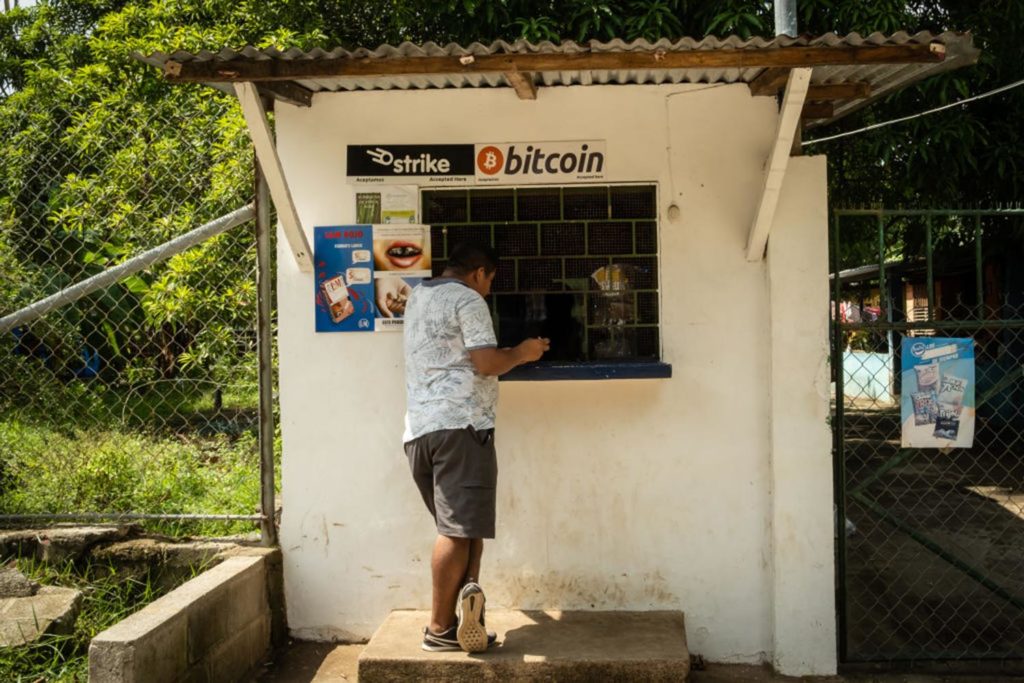
El Bitcoin
El Salvador is trying out bitcoin as an official currency in which to distribute benefit payments, alongside its other official currency – the US dollar. A US-based ATM firm is planning to invest $1 billion in a network of cash machines at which Salvadoreans will be able to buy and sell bitcoin in exchange for dollar bills. No other country has tried this, and few have economies as precarious as El Salvador’s. “Adopting bitcoin as legal tender puts us on a roller-coaster,” one local economist tells the WSJ ($). President Nayib Bukele is more bullish. He hopes for a rush of inward investment, not least from bitcoin miners keen to use thermal energy from El Salvador’s volcanoes to power their banks of servers.
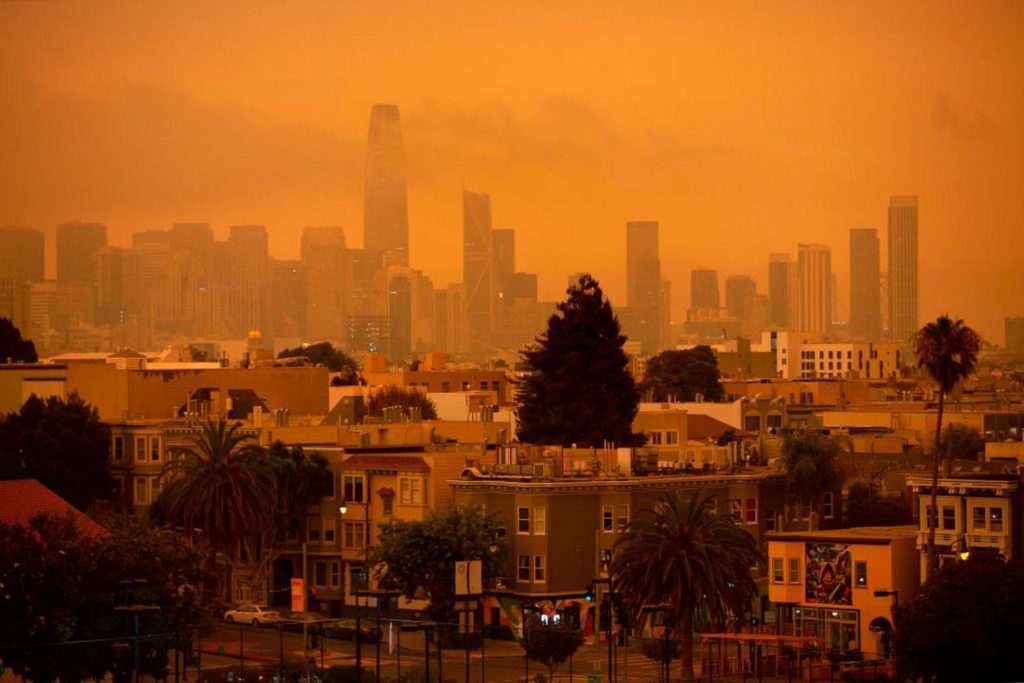
Smoke and pregnancy
As wildfires continue to rage along America’s west coast, a Stanford study of births in California has found exposure to wildfire smoke increases the risk of preterm labour. The study found that between 2006 and 2012 around 7,000 preterm births were associated with the PM 2.5 particles released by fires. It’s believed the toxic particles increased inflammation during pregnancy, putting strain on the immune system and placenta – and increasing the risk of early labour. A week of exposure to smoke translated into a 3.4 per cent greater risk during pregnancy. In the worst smoke year of the study, 2008, wildfires may have been a factor in more than 6 per cent of all preterm births in California. Last year the fires torched more than four million acres of California leading to some of the worst air pollution ever recorded in the state – about two-and-a-half times as bad as in 2008. Recent research has also found an increased risk of death from Covid during the wildfire season.
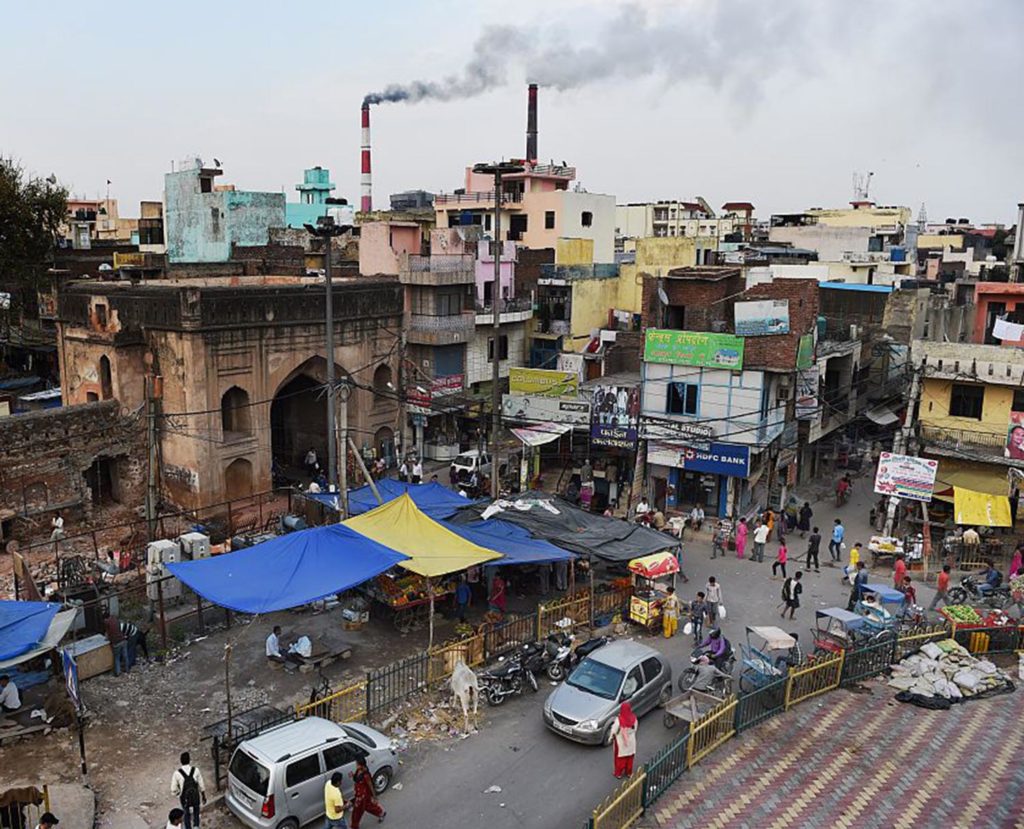
Indian emissions
Whether India and China can avoid full European-style coal-fired industrialisation may be the single most important question for the future of the planet. India gets this, which is progress. Raj Kumar Singh, minister of new and renewable energy, has given a speech claiming India has already cut net carbon emissions by 28 per cent relative to 2005 and is on course for a 35 per cent cut by 2030. He said he expects up to 85 per cent of the country’s power supply to be renewable by 2050. That would be terrific. For now though, India remains firmly hitched to coal. Fossil fuels accounted for 90 per cent of its primary energy consumption last year, and coal alone for 55 per cent. Expect Singh to be asked a lot of questions about coal at Cop in Glasgow in November. Expect unrepentant answers too.
News sells
Politico, which specialises in pithy newsletters almost as insightful as this one, is being bought by the German media group Axel Springer for more than $1 billion. Founded by two Washington Post veterans in 2007, but owned by Robert Allbritton, the nearly-all-digital outlet now has around 500 journalists, a desirable tech news subsidiary called Protocol and a hard-earned reputation for impartiality in an age of media tribalism. The German buyers say they like that. “Objective quality journalism is more important than ever,” says Springer’s CEO, Mathias Döpfner. Can’t argue with that.
The para-equestrian events are now underway in Tokyo. Para-equestrian competition first appeared in the 1984 Paralympic Games, when the events were held in New York – but was not seen again until 1996. It has been held at every Paralympics since. Team GB has dominated the sport – winning a total of 31 gold medals since it was introduced. The US, second in the all-time medal list, only has 7 golds so far. Back in 1984 there was one Team GB gold medallist, Jane Stidever, who went on to win four golds in para-swimming – in Seoul 1988, Atlanta 1996 and Athens 2004.
Thanks for reading and do share this around.
Giles Whittell
@GWhittell
Additional reporting by Phoebe Davis.
Produced by Sophia Sun and edited by Xavier Greenwood.
Photographs Getty Images