What just happened

- The Taliban announced its first Afghan cabinet since 2001 and revived its ministry for the promotion of virtue and prevention of vice.
- Fran Unsworth stepped down as director of news at the BBC.
- A Spanish bishop resigned after falling in love with Silvia Caballol, author of satanic-themed erotic fiction including The Hell of Gabriel’s Lust. Sources say Bishop Xavier Novell wanted to “do the right thing”.
Boris Johnson’s Health and Social Care Levy is more than a rebadged version of National Insurance (NI). Much more. Hypothecated (ie reserved) for what it says on the tin, it will be the first significant new tax in the UK since VAT in 1973. It will mean more new money for the NHS, some new money for care for the elderly and the highest overall tax burden in Britain since the 1950s. It tears up a manifesto promise but Johnson is calculating that voters don’t read manifestos, and in any case he points out Covid wasn’t in his manifesto either. It will sail through the House of Commons today – inadequate as policy but clever politically and a good deal better than nothing.
By the numbers:
- 1.25 – amount by which NI rates will increase across the board as they morph into the levy, in percentage points.
- 36 – extra revenue expected to be raised by the levy in the next three years, in £bn.
- 23.3 – total public expenditure on social care in England in 2019-20, in £bn, compared with £23bn in 2010-11.
- about 1 – new money expected to be devoted specifically to improved social care in each of the first three years of the scheme, in £bn.
- 86,000 – new cap on self-funded care costs in £, expected to be paid by one in seven retirees.
- 20,000 – value of assets below which social care is free in the new scheme and above which means-tested support kicks in, in £.
- 30,000 – number of hospital beds occupied by people “who could have been better cared for elsewhere” when the pandemic started, according to Johnson.
- 35.5 – overall UK tax burden with the levy, as per cent of national income, compared with 39 per cent in Germany and 40 in France.
The politics. Tories (among others) are neuralgic about voters being forced to sell their houses to pay for care in their old age. Other reasons Johnson has grasped a nettle his predecessors have avoided include:
- the general state of social care in Britain, which is a national scandal and potential political time bomb, as revealed by Covid;
- polling, which shows voters are willing to shoulder higher taxes in these stressed circumstances if confident the money will be spent on health and / or care;
- the need for money, with debt at 100 per cent of GDP and more borrowing ruled out by his chancellor.
Johnson hopes that by raising NI rather than income or capital gains tax he’ll be able to give the impression of spreading the burden equitably, without soaking the rich. Anti-tax zealots in his party muttered about a rebellion, but ministers weren’t shown the plan until yesterday morning and when they were it was under threat of a reshuffle and with today’s snap vote looming. The rebellion folded.
The policy has a number of glaring weaknesses:
- Care quality. A key number in the list above is 30,000 – the hospital beds occupied by people who should have been in residential care at the start of Covid and weren’t because their families weren’t confident they’d be safe there. “We learned from the pandemic that we can’t fix the NHS unless we also fix social care,” Johnson said. Not true. We knew this before the pandemic. Decades before. And there is no plan in the 33-page pamphlet accompanying his statement yesterday to raise the standard of care in care homes to the point that those 30,000 beds are freed up for people needing cancer operations and new hips.
- Integration. There is no plan yet for the general integration of health and social care – just a promise.
- Pay and conditions. Underpaid care workers left the sector in droves because of Covid and Brexit and there is nothing to tempt them back.
Johnson has marched into a political minefield gambling that voters will agree the time has come for tax-and-spend Toryism even if his own MPs only back it through gritted teeth. “Governments have ducked this problem for decades,” he said. “There can be no more dither and delay.” True on both counts. The problem isn’t solved, but no one can accuse him of ducking it.
Michael K Williams
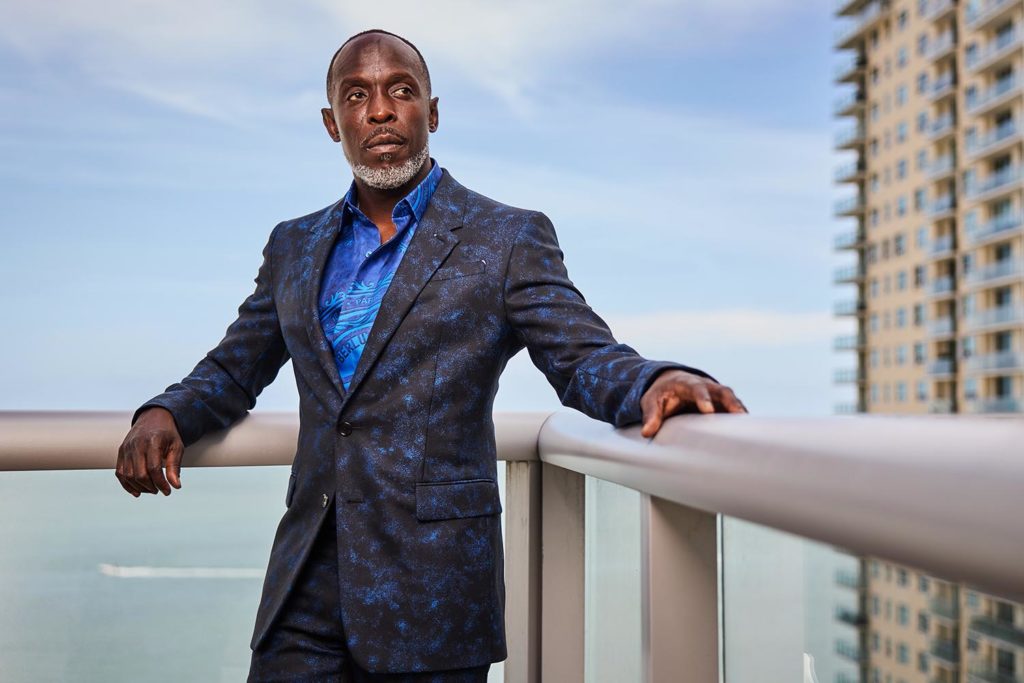
The news broke yesterday that Michael K Williams, legendary actor, was found dead in his home in Brooklyn at age 54. In the last 24 hours, social media has been flooded with outpourings of grief from former colleagues, friends, loved ones and fans. Williams is best remembered for his breakout performance in The Wire as Omar Little, a black gay stick-up man, who swaggered onto screens across the world in 2002. In the years since, Williams has brought complexity and nuance to other black queer characters in shows like Hap and Leonard, When We Rise and Lovecraft Country. He wrote a post last year in which he spoke about his mortality and wondered how he would be remembered and what his legacy will be. It is a legacy of bringing humanity and depth to stories of marginalised people who have historically been typecast or completely overlooked. He will be missed, on the screen and by many.

Who’s Starlink for?
The business case for Elon Musk’s vast constellation of low-earth orbit satellites is to bring high-speed broadband to the 3.7 billion people with no fixed connection to the web. But try selling a $99 a month subscription plus $499 in upfront fees to an average worker in sub-Saharan Africa. The MIT Technology Review reckons it’s more likely that early adopters of the system – which does deliver faster download speeds than networks using high-flying geostationary satellites – will be airlines and the US military. Musk admits it’ll be a while before Starlink stands a chance of breaking even. In the meantime it has plenty of competitors and stargazers say the new swarms of low-flying satellites could wreck the entire field of radio-astronomy. Doesn’t seem a great trade-off.
Remember TB and HIV
Covid has elbowed aside efforts to expand the number of people tested and treated for TB, especially in Africa. HIV testing has also been badly affected, the Global Fund says in a report released today. Treatment for extensively drug-resistant TB fell by 37 per cent while HIV testing was down by 22 per cent and HIV treatment and prevention fell by 11 per cent. All these metrics should have been heading in the opposite direction and the impact of the slow-down will be devastating, says Peter Sands, the fund’s executive director. One ray of hope: the number of people getting antiretroviral therapy for HIV actually rose by 8.8 per cent to nearly 22 million. But the broader message is clear: across the planet the pandemic’s ripple effect on treatment of other illnesses has been powerful and negative.
H2 bet
The heir to the JCB digger fortune is going all-in on hydrogen. Jo Bamford has raised £200 million towards what he hopes will be a £1 billion green hydrogen investment fund – £100 million of it from his own family. The Times says he’s identified more than 40 promising firms, many of them in the UK, as potential destinations for the money. The plan is to help build a green hydrogen infrastructure using all-renewable power to electrolyse water, splitting it into H2 and O2 and bottling the former for fuel cell buses and cars and more broadly as an energy-dense alternative to batteries. The idea of green hydrogen as a multi-purpose energy store has inspired visionaries for a couple of generations, but it’s still darned expensive to produce. A good thing is that Bamford’s rich. Perhaps he can hold on until the UK government comes through with green H2 subsidies – although its current plan for a “world-leading hydrogen economy” puts the onus on people like… Bamford.
Chinese common prosperity
Xi Jinping has warned China’s tycoons to share their wealth with the rest of the country to achieve “common prosperity” as he prepares for a likely third term. China’s biggest billionaires, including Alibaba’s Jack Ma, have donated billions to align themselves with Xi’s campaign following his crackdown on the tech industry. The phrase “common prosperity” was first used by Mao Zedong in the 1950s as he pushed China towards socialist collectivisation. In the 1980s, Deng Xiaoping pledged to “let some people get rich first” while keeping “common prosperity” as the ultimate goal of communism. The FT wonders if Maoist political campaigning is next on Xi’s agenda. We’ll know more if he starts introducing property and inheritance taxes targeting the wealthy, which would be politically challenging: the rich have links to both Xi’s faction but also to his rivals in the Communist Party. Targeting their wealth too directly could make powerful people angry.
Thanks for reading, and do share this around.
Giles Whittell
@GWhittell
Nimo Omer
@nimsaden
Sophia Sun
@sophiaasun
Produced by Sophia Sun and edited by Xavier Greenwood.
Photographs by Getty Images