Sensemaker Daily


What just happened
- A US federal judge suspended enforcement of Texas’ new anti-abortion law as an “offensive deprivation” of an important right.
- Nato expelled eight “undeclared intelligence officers” from the Russian mission to its headquarters in Brussels.
- Russia’s defence minister announced disciplinary action against a military honour guard for sending soldiers to create a sabre arch at the country’s first royal wedding in a century, between Grand Duke George Mikhailovich Romanov and Rebecca Virginia Bettarini.
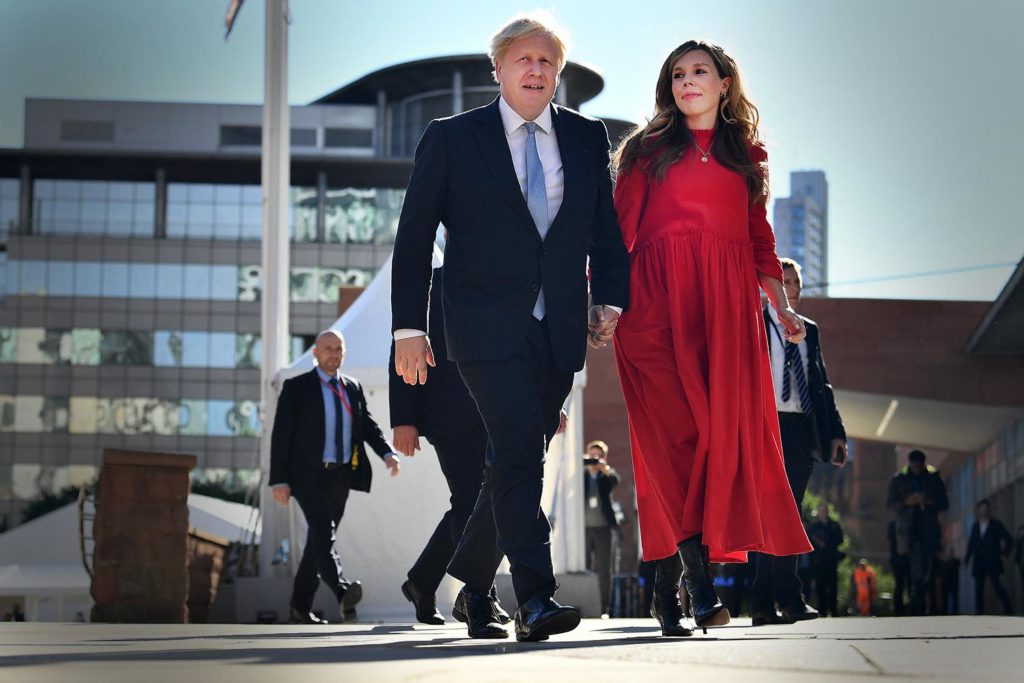
Boris Johnson still gives a good speech, but he should be worried. Yesterday he did his party the favour of cramming his conference remarks into 45 minutes and larding them with jokes. The adoration was loud and genuine. Michael “John Bon Govey” was in heaven. Then business leaders who used to rely on the Conservatives to make it easy to make money broke cover to express despair at the party’s new fondness for high wages and high taxes. And Opinium, a polling company, showed a cross-section of voters highlights of Johnson’s speech and Keir Starmer’s for Labour last week.
Johnson was funny, effervescent, wildly optimistic. Starmer was slow and stolid. The voters preferred Starmer.
The Conservatives have been in power for 11 years, and for 29 of the last 42. When the economy reopened in July it was not hard to find forecasts that they would still be in Downing Street in 2028. That is still likely, but storm clouds are looming and they could quickly make the Tories’ strengths look soggy.
The strengths:
- Johnson. He is measurably more divisive than Starmer but can still galvanise a party like few others in the democratic world. Yesterday he called the Tories “the most jiving hip happening and generally funkapolitan party in the world”, which set exactly the tone he sought after 18 months of Covid: upbeat, unserious and largely divorced from reality.
- His majority. Despite a Tory defeat in the Chesham and Amersham by-election in June, Johnson commands an 82-seat majority in the Commons with no serious rebels in sight.
- Brexit. That he delivered on the promise to “get Brexit done” is the reason his parliamentary party is not split – a luxury no Conservative leader has enjoyed since the 1970s.
- The economy. GDP and wages are growing, albeit from deep Covid-induced troughs, and unemployment is at under 5 per cent and falling despite the tapering of furlough.
- Scotland. Labour’s evisceration by Scottish nationalists since 2015 creates an imbalance between the two main parties in Westminster that would only be solidified by Scottish independence.
The storm clouds:
- Brexit. It’s the common factor behind most of the shortages blamed on supply chain disruptions, and the elephant in the room whenever Conservatives gather together and try to move on. The cost of erecting barriers between the UK and the single market is an order of magnitude bigger than any new trading opportunities created by withdrawing, and 63 of the 68 free trade deals agreed by London since 2016 are pure rollovers of deals negotiated by the EU. Four of the other five are tweaked rollovers. The fifth is with Australia, to which the UK exported £12 billion worth of goods and services in 2019 compared with £294 billion to the EU.
- The economy. The upward pressure on wages celebrated by Johnson in Manchester and attributed to Brexit will feed directly into prices. That inflation will combine with higher National Insurance rates, frozen income tax thresholds and rising energy prices to create what one of Johnson’s instinctive cheerleaders in the Telegraph calls a quadruple whammy for those on low and moderate incomes. The new NI rates kick in next year. A temporary £20 uplift to Universal Credit ended this week.
- Productivity. The Conservatives’ big task this week is for voters to view petrol queues and empty shelves as part of a long-planned transition to what Johnson called “a high wage, high skill, high productivity and yes, thereby low tax economy”. But the higher wages will have to be funded by the higher productivity if they are to outpace inflation, and as the same cheerleader notes: “It is almost dementedly hubristic to believe that any government could deliver this over three years.”
- Business sentiment. The employers who pay most of the Conservatives’ bills don’t like being accused of “mainlining” low-cost migrant labour in the past, or being expected to absorb all the costs of replacing it with high-cost local labour in the future. One stormed away from the conference calling it a nest of “socialists”. Another, Tim Martin of Wetherspoons, an enthusiastic Brexiter, called the idea that rigid immigration controls would lead automatically to higher living standards “cobblers”.
Many of the Tories’ strengths are political and, relatively speaking, ephemeral. Most of the storm clouds are structural and stubborn. It’s a good thing for Johnson that the same can be said of his optimism. The question is how long he can persuade voters to share it.
Newcastle bought
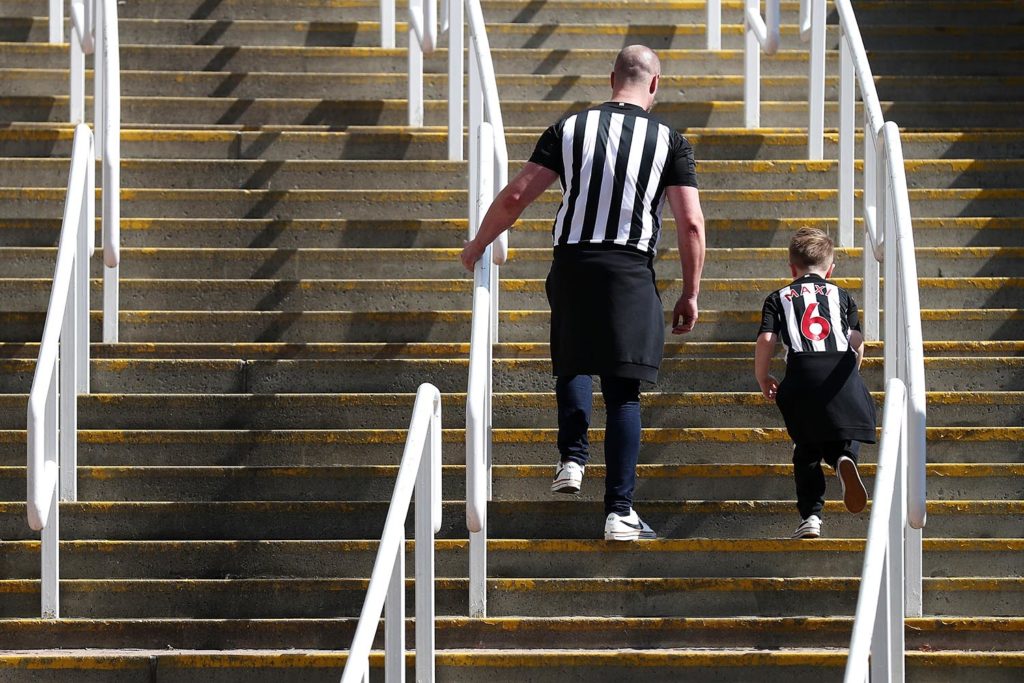
A Saudi-backed consortium is poised to buy Newcastle United, currently 19th in the English Premier League. The takeover has been a year and a half in the making. It was held up by delays first from the Premier League, which said the consortium, which includes Crown Prince Mohammed bin Salman, found to be ultimately responsible for Jamal Khashoggi’s murder, failed its owners’ and directors’ suitability test. The club’s owner, retail billionaire Mike Ashley, then hired lawyers to prevent the Premier League blocking the sale. While the arbitration proceedings were ongoing, bin Salman wrote to Boris Johnson asking him to intervene, saying any further delays would damage relations between their countries. Ashley then filed an anti-competition case against the Premier League. The deal, worth around £300 million, will likely close by the end of the day, giving the de facto leader of a state that conducts capital punishment by public beheadings and treats women as second-class citizens a nice chunk of English culture.
Police excuses
Former senior police officers told the Guardian that budget cuts over the past decade “severely diminished” police forces’ ability to control violence against women. One described the cuts as a “massive body blow” to their ability to stop men being violent towards women and girls. It’s true that austerity led to police station closures and cuts in police officer numbers, but it affected all areas of policing. It doesn’t explain the police’s specific failings in relation to violence against women and girls, which – in any case – predated austerity.
Mala aria
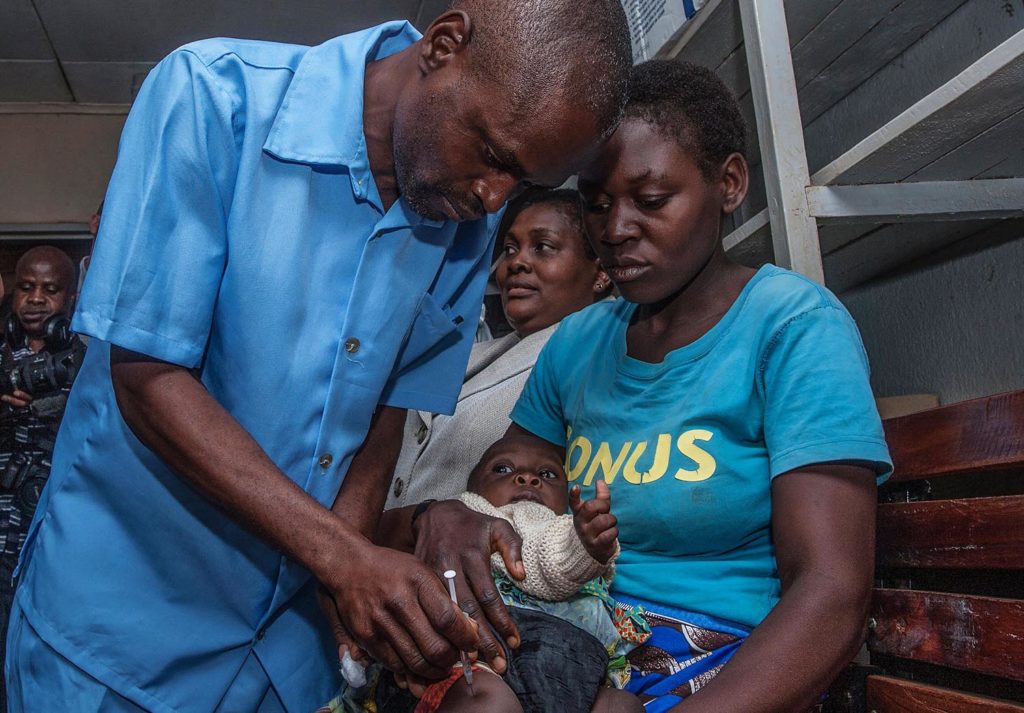
The World Health Organization recommended the widespread distribution of the first vaccine against malaria, one of the world’s deadliest diseases. Spread through mosquitos, malaria infects about 230 million people a year – and around 410,000 of them die. Almost all the cases and deaths occur in sub-Saharan Africa. Two thirds of the fatalities are children under five years old. The vaccine – called RTS,S or Mosquirix – was developed by the British pharmaceutical company GlaxoSmithKline and went through lengthy clinical trials on small children in Africa. Its efficacy ranged from 29 to 30 per cent, but when in August researchers gave it to children in combination with antimalarial drugs they found a 70 per cent reduction in serious illness or death. This is big and good news.
Mind the climate
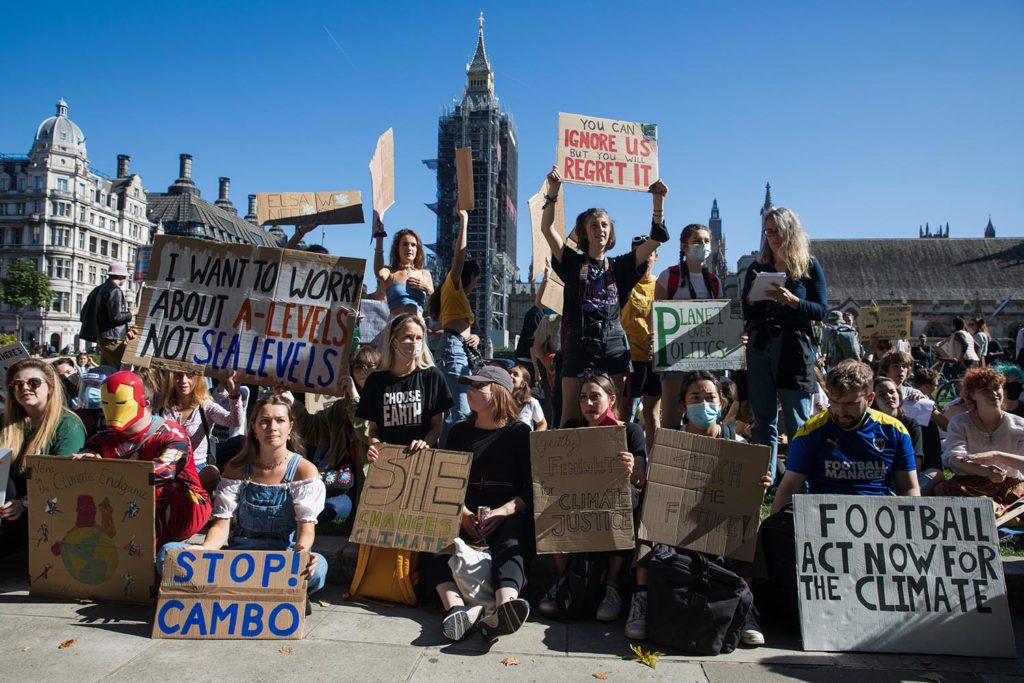
The accumulation of evidence and opinion that global warming is a problem – and not just for the planet – continues. Mala Rao and Richard Powell, both of Imperial College London’s Department of Primary Care and Public Health, wrote in the BMJ that “eco-anxiety” – the chronic fear of environmental catastrophe, not considered a diagnosable condition – “risks exacerbating health and social inequalities between those more or less vulnerable to these psychological impacts”. The impacts are significant. Rao and Powell cite a survey that found 57 per cent of child psychiatrists in England are seeing children and young people distressed about the climate crisis.
Facebook crisis
Facebook, still reeling from this week’s global outage and a whistleblower’s leak of internal documents showing harm from the company’s platforms, delayed the roll-out of new products ($), the Wall Street Journal reports. More than a dozen people at Facebook are conducting “reputational reviews” to examine how the new products may be criticised and to ensure that they don’t harm children. “I’ve spent a lot of time reflecting on the kinds of experiences I want my kids and others to have online,” founder and chief executive Mark Zuckerberg said on Tuesday, “and it’s very important to me that everything we build is safe and good for kids.” Another Facebook idea being reviewed for its potential to cause the company reputational damage is that of suing Frances Haugen, the whistleblower. Free advice: best not.
Thanks for reading, and do share this around.
Giles Whittell
@GWhittell
Paul Caruana Galizia
@pcaruanagalizia
Produced and edited by Xavier Greenwood.
Photographs Getty Images


