Sensemaker Daily


What just happened
- Ali Harbi Ali, a 25-year-old British man who was once referred to the counter-terrorist Prevent scheme, was arrested over the murder of MP Sir David Amess (more below).
- An armed gang kidnapped at least 15 American Christian missionaries, including children, outside an orphanage near Haiti’s capital Port-au-Prince.
- Thousands of protesters rallied in Khartoum, Sudan’s capital, to demand an end to civilian rule and the instalment of a military government.
Last week the UK’s Rishi Sunak went to Washington to urge fellow finance ministers to fix global supply chains and channel aid to needy countries. He said Britain was committing £1 billion in extra loans to an IMF poverty reduction fund. What he didn’t say was that the money comes from the International Monetary Fund in the first place; nor that under current Treasury plans it will displace direct grants in the UK’s aid budget and mean less money for the world’s poorest, not more.
Twenty years of British leadership in international development have come to an abrupt halt since last year:
- UK aid and development spending has been cut by £4.6 billion to bring it under a ceiling of 0.5 per cent of gross national income after a manifesto commitment to spend 0.7 per cent was torn up last year. The cuts mean dozens of programmes helping millions of vulnerable people have been abruptly cancelled.
- Plans to rebadge so-called Special Drawing Rights from the IMF as British aid, glossed over by Sunak last week, could mean an additional effective cut of £310 million. The plans have been condemned by aid experts and criticised by two Conservative former international development secretaries. The Treasury said the UK remains “a world leader in international development” and would return to the 0.7 per cent spending target “when the fiscal situation allows”.
- UK commitments to the G7 to lead a global Covid vaccination effort have not only not been met; Boris Johnson failed to attend a vaccination summit last month in DC even though he was in the US at the time and President Biden found the time to be there.
- As host of next month’s Cop26 Britain undertook to raise the $100 billion in annual climate finance for developing countries promised in Paris in 2015 – but hasn’t.
- The British Council, a vital conduit of British development aid for nearly a century, is closing 20 offices worldwide because of Covid’s impact on its income from English language teaching and the government’s refusal to make up the shortfall.
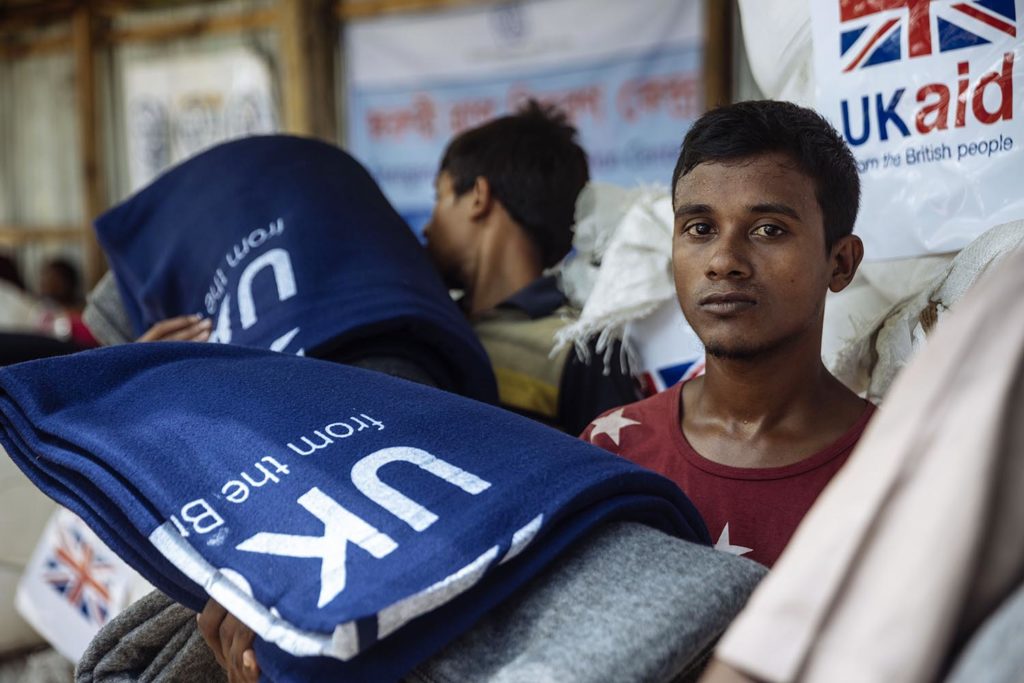
The suspension of the 0.7 per cent aid commitment is temporary, the Treasury notes. The impact of this and other development downgrades on Britain’s international reputation and its hard-won stock of “soft power” is likely to be longer-lasting.
Harvard Professor Joseph Nye defined soft power to mean the ability to get what you want through attraction rather than coercion. Much of it derives from activities that have little to do with government – activities that have kept the UK at or near the top of most soft power rankings including the closely-followed Portland Soft Power 30 (current UK ranking: 2, ahead of the US and Germany, behind only France).
Britain’s culture, broadcasting, football, sport more generally, higher education and English language teaching sustain its soft power largely irrespective of policy, says Lord Ricketts, former Foreign Office permanent secretary and author of Hard Choices: What Britain Does Next. “But where the government has influence on soft power, its effect has been pretty disastrous.”
Ricketts and others see the erosion of Britain’s soft power as an act of mutual harm.
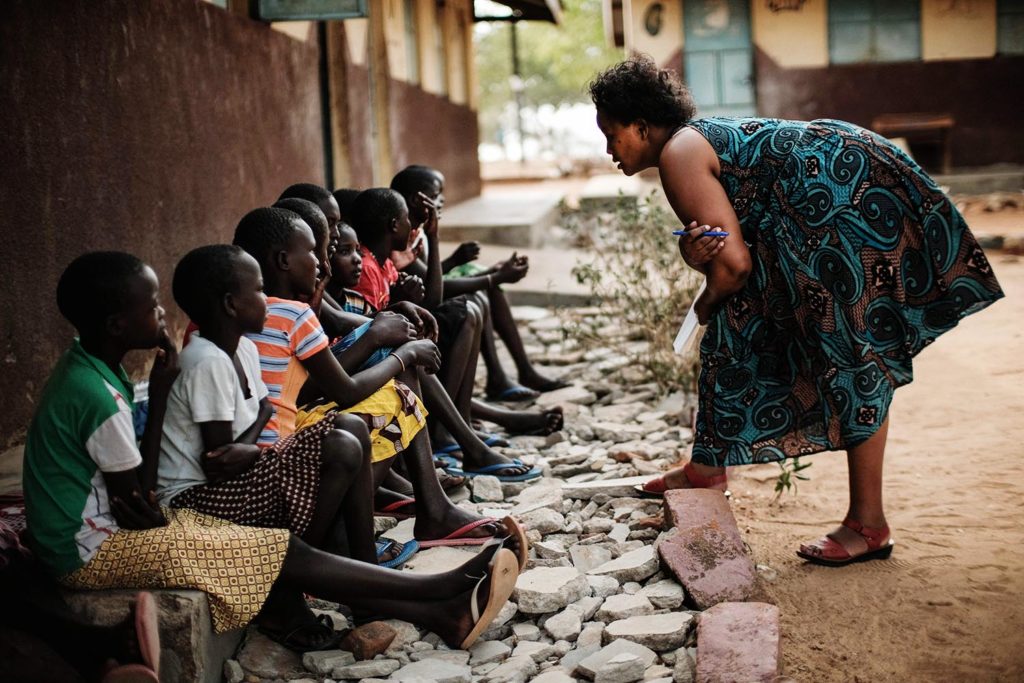
Harming others. Cuts in UK aid spending since last year have pulled funding from more than 70 long-standing programmes that among other things:
- helped 38 million people living with Aids;
- provided education for 310,000 girls, nutrition support for 12 million infants and family planning advice for 14.6 million young women in Bangladesh;
- cleared mines across the Middle East;
- led peacebuilding initiatives in Myanmar, Yemen, Somalia, Ethiopia, South Sudan and the Central African Republic; and
- helped child labourers in Bangladesh, homeless girls in Uganda and children with special needs in Tanzania.
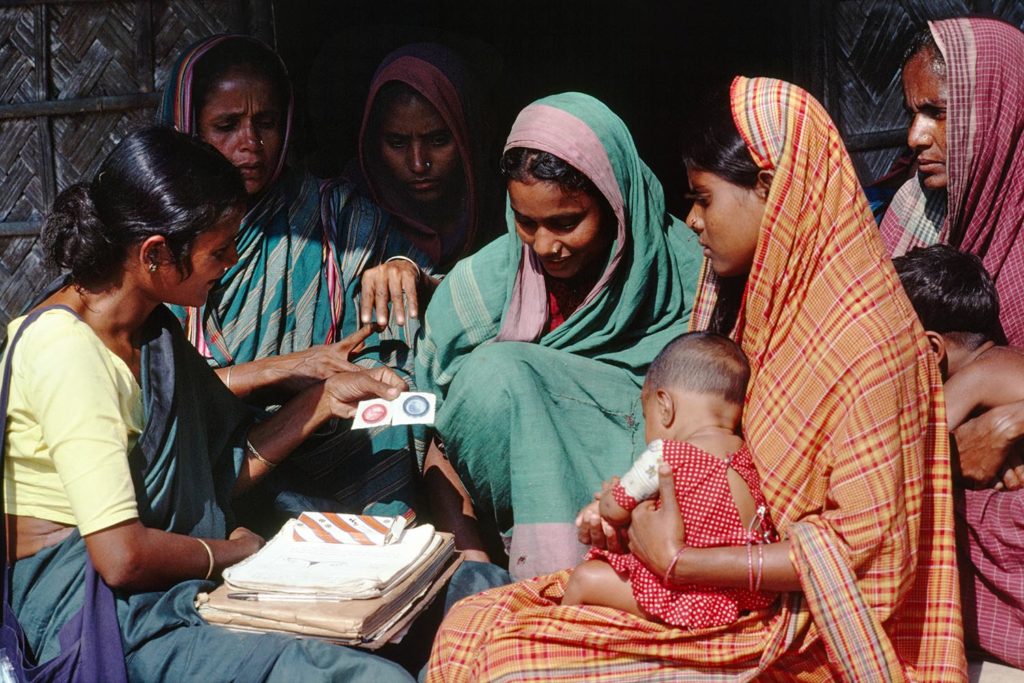
Harming Britain. “Britain’s reputation as a global leader in development and poverty alleviation, built up over 20 years with DfID [the Department for International Development, now rolled into the Foreign, Commonwealth and Development Office] is being damaged,” Ricketts says. Brexit hasn’t helped since its implementation has involved a casual approach to international treaties, which makes it difficult to pressure others to uphold the rule of law. Nor has a new immigration policy whose spear tip involves turning back migrants in the English Channel. “That chips away at the idea of Britain as a force for good.”
To compare: multiple rankings and collective hindsight pinpoint 2012–13 as Britain’s soft power peak. Basking in the afterglow of the 2012 Olympics and the Queen’s Diamond Jubilee, the country of the Beatles, the NHS and Harry Potter still had influence in Europe and a claim to be the most welcoming in the world. It led the Institute for Government’s New Persuaders index, and hit the 0.7 per cent GNI aid target for the first time for any major economy. “The received wisdom is that 2012 was the high watermark for British soft power, and I’d have a hard time arguing with that,” says Jonathan McClory, formerly of the Institute for Government, who founded the Soft Power 30 index.
To note: Since last year British defence spending has been increased by almost exactly the same amount as aid spending has been cut. An extra £16.4 billion over four years was announced in the teeth of the pandemic last November because, as Johnson put it, “the defence of the realm must come first”.
Further reading. The full impact of recent British aid cuts is itemised here. Its context is of course dominated by Covid and consequent budget pressures faced by all government departments. But it’s heartbreaking nonetheless.
David Amess suspect
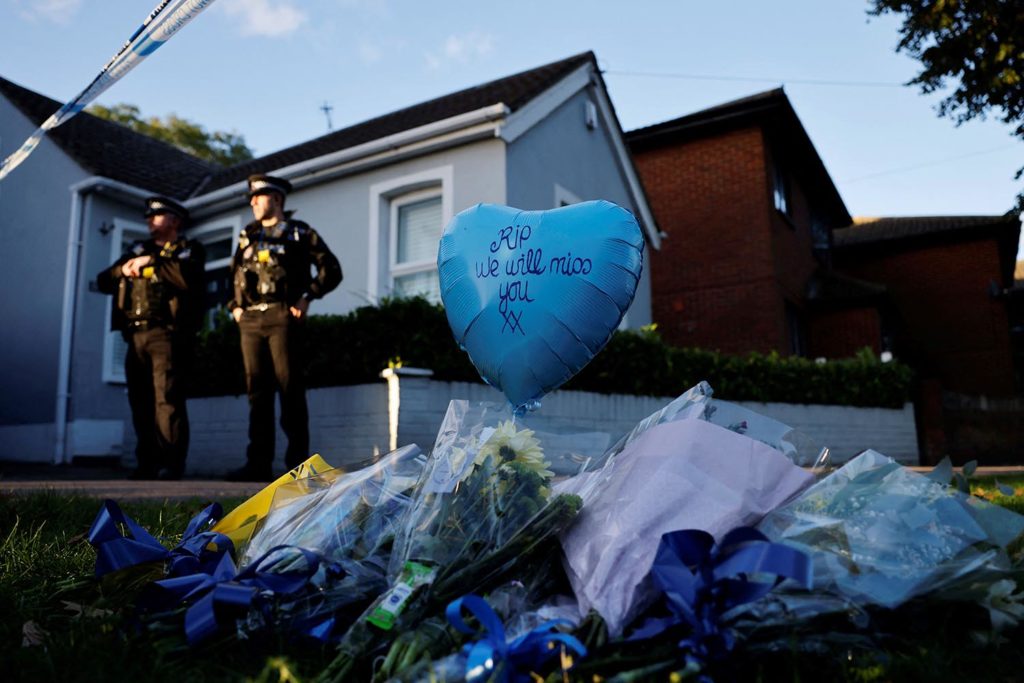
Police arrested Ali Harbi Ali on suspicion of murdering Sir David Amess, the MP for Southend West. Ali is a 25-year-old British man of Somali heritage who was once referred to the counter-terrorist Prevent programme, a voluntary scheme that tries to stop people becoming radicalised. The BBC reports that early investigations showed Ali had a potential motive linked to Islamic extremism. He was arrested under the Terrorism Act. Amess, who was a Conservative MP since 1983, and married with four daughters and a son, died after being stabbed multiple times during a regular constituency surgery. There are now calls to make surgeries, at which MPs hold unscheduled meetings with constituents, more secure. One proposal is to offer them police protection. What’s clear is that a new balance between security and openness will be needed but hard to strike.
Chinese missile
Five unnamed sources told the Financial Times the Chinese military tested a nuclear-capable missile in August. The hypersonic weapon, a faster and more agile type of rocket, circled the globe through low-orbit space before missing its target by about two dozen miles. China’s development of this technology surprised US intelligence agencies, which fear it will heighten tensions in the region. “That is one reason,” a Pentagon spokesman said, “why we hold China as our number one pacing challenge.”
Russian disease
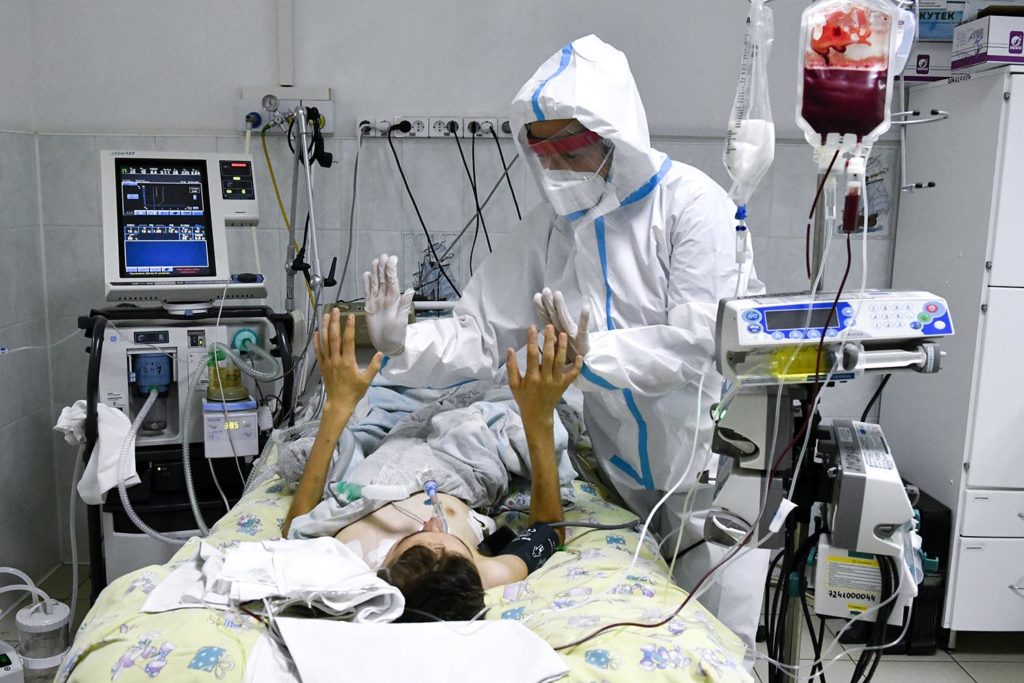
Russia registered over a thousand Covid deaths in a single day for the first time. The country produces its own Sputnik vaccine and now has an excess supply because of a vaccine-hesitant population. Only around 30 per cent have been vaccinated due to a mixture of concerns over safety protocols used during Sputnik’s development and disinformation about vaccine side effects. But perhaps the biggest problem is inconsistent public health messaging and policy. Putin was slow to take the virus and the need for vaccines seriously. And this year, he didn’t impose lockdowns to save money and prop up his popularity.
Rishi ambitions
A leak of confidential documents revealed an “extraordinary rift”, the Observer reported, between Boris Johnson and Rishi Sunak, his finance minister, over the costs of a carbon neutral economy. The documents show the Treasury warned of serious economic damage to the UK and future tax rises if the government’s green investment is misdirected. “They are not climate change deniers but they are emphasising the short-term risks,” a source at the Department for Business, Energy and Industrial Strategy said of the Treasury, “rather than long-term needs, which is what we are emphasising.” But the rift may be less high-minded. Whitehall sources told the newspaper Sunak was trying to position himself as being “not really down with this green stuff” – unlike Johnson – in order to boost his popularity with like-minded Conservative activists.
Alex Saab extradition
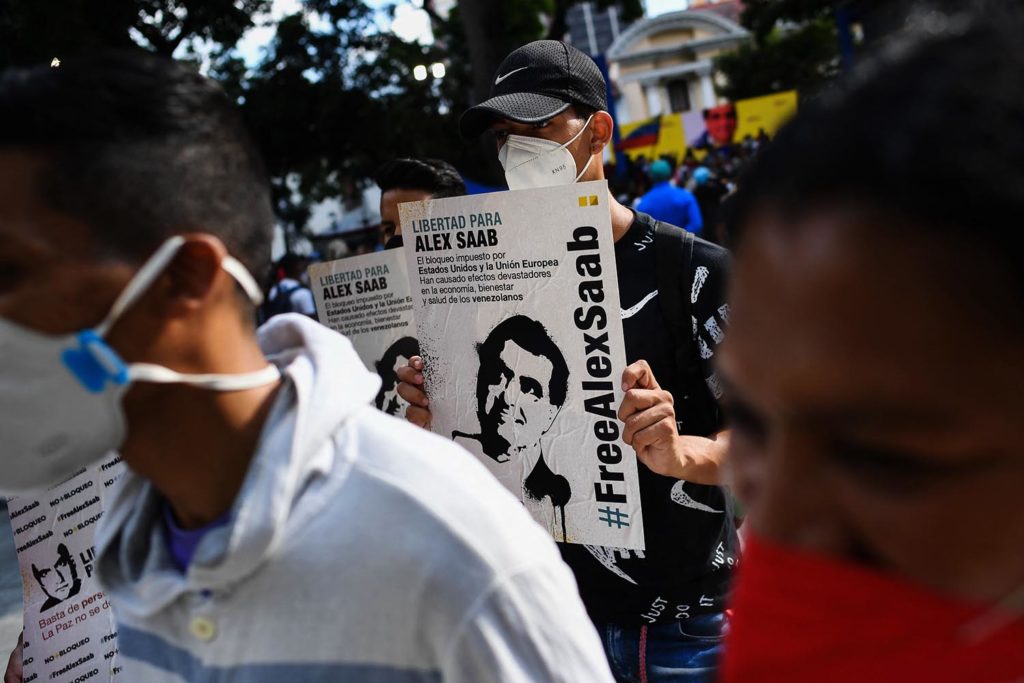
American prosecutors extradited Alex Saab, a Colombian-born fixer for Venezuela’s autocratic regime of Nicolás Maduro, from the West African island nation of Cape Verde. The US accuses Saab of helping Venezuela’s regime evade US sanctions and funnelling more than $350 million from Venezuelan government contracts through the American financial system. Saab’s lawyers called his extradition “illegal and shameful”. Maduro called it “illegitimate, illegal and inhumane”. Venezuela’s opposition leaders welcomed the extradition as did Colombia’s president, who called it “a triumph in the fight against narcotrafficking, money laundering and the corruption” of Maduro’s government. There’s often criticism and joking over America’s assumed role as World Police. But if not them, then who?
UK:
18/10 – House of Commons pays tribute to murdered MP David Amess; David Henderson appears in court charged over the plane crash that killed footballer Emiliano Sala, 19/10 – High Court hears judicial review of Covid care home measures; NHS chief executive speaks at select committee session on backlog caused by pandemic, 20/10 – Cop26 president Alok Sharma speaks at select committee session on Glasgow climate change conference, 21/10 – Tortoise editor Matthew d’Ancona among journalists to speak at select committee session on Draft Online Safety Bill, 22/10 – deadline to charge or release man arrested on suspicion of murdering David Amess; Green Party holds autumn conference in Birmingham
World:
18/10 – quarterly press conference on China’s economic situation; jury selection begins in case of men charged with murder of Ahmaud Arbery in US in February 2020, 19/10 – Netflix issues third-quarter results; 96-year-old German woman appears in court charged over Nazi concentration camp deaths, 20/10 – 10 years since death of deposed Libyan leader Muammar Gaddafi; plea hearing takes place for alleged Parkland school shooter, 21/10 – South Korea launches first homegrown rocket; largest known triceratops, called Big John, goes on auction in Paris, 22/10 – Vladimir Putin meets Israeli prime minister Naftali Bennett, 23/10 – Hungary celebrates anniversary of 1956 uprising and end of Communist era, 24/10 – Uzbekistan holds presidential election; United Nations Day marks anniversary of UN’s foundation
Thanks for reading, and do share this around.
Giles Whittell
@GWhittell
Xavier Greenwood
@XAMGreenwood
Produced by Phoebe Davis edited by Xavier Greenwood.
Photographs Anna Dubuis/DFID/Flickr, Getty Images