Sensemaker Daily


What just happened
- Iraq’s prime minister, Mustafa al-Kahdimi, survived a drone attack on his home.
- Eight people including two teenagers died at Travis Scott’s Astroworld Festival in Houston.
- Ireland’s foreign minister said the whole EU-UK Brexit deal could be shelved if London invokes Article 16 to suspend the Northern Ireland protocol.
Here’s a name to conjure with in week two of Cop: Espen Barth Eide. And here’s a concept: carryover credits.
Barth Eide is Norway’s climate minister. Carryover credits could make or break efforts to create a global carbon market. Neither gets mentioned in the protests outside Cop but both are at the core of the work it’s doing to keep a lid on global warming (see Article 6 below).
Week one at Cop featured a lot of talk but not much follow-through. Specifically:
On coal, 40 countries signed a pledge to stop getting power from coal by 2030 but
- the US, China, India and Australia – coal superpowers all – were not among them;
- the pledge only actually committed signatories to a deadline of 2030 “or as soon as possible thereafter”;
- and it’s non-binding anyway.
On finance, over 450 banks, insurers and asset managers joined the Glasgow Financial Alliance for Net Zero, but their $130 trillion in assets is just a number and there’s still a huge gap between the $100 billion in annual climate finance pledged by next year and the $1.2 trillion a year that Brazil and others are now – with some justification – demanding.
On forests, 127 countries signed an agreement to “halt and reverse deforestation” by 2030, but no mechanisms were agreed to get it done and Indonesia is now calling it “inappropriate and unfair”.
Week two, therefore, needs to produce answers on how a world’s worth of aspirations might actually lead somewhere.
The best hope for real progress lies in talks being led by Barthe Eide to finish work started six years ago on Article 6 of the Paris Agreement, which is supposed to turn cross-border carbon trading into a silver bullet against climate change.
The idea is to join up regional carbon markets and provide a framework for large-scale bilateral carbon credit trading too. But two big obstacles have kept Article 6 on the drawing board:
- double counting, whereby Brazil, say, might want to sell a carbon credit based on a preserved patch of forest to a European country, but also count it as a step towards meeting its own emissions targets; and
- carryover credits, whereby Brazil, say, might want to carry over all the carbon credits it was assigned by the ill-fated Kyoto Protocol even though there were so many that they flooded the market, undervalued the credits and gave no one an incentive to trade them.
Yes, there’s a pattern here. Brazil has been a big drag on progress on Article 6, but Barth Eide tells Reuters there’s a can-do vibe to the talks. Don’t rule out a deal that honours some carryover credits in return for a ban on double counting.
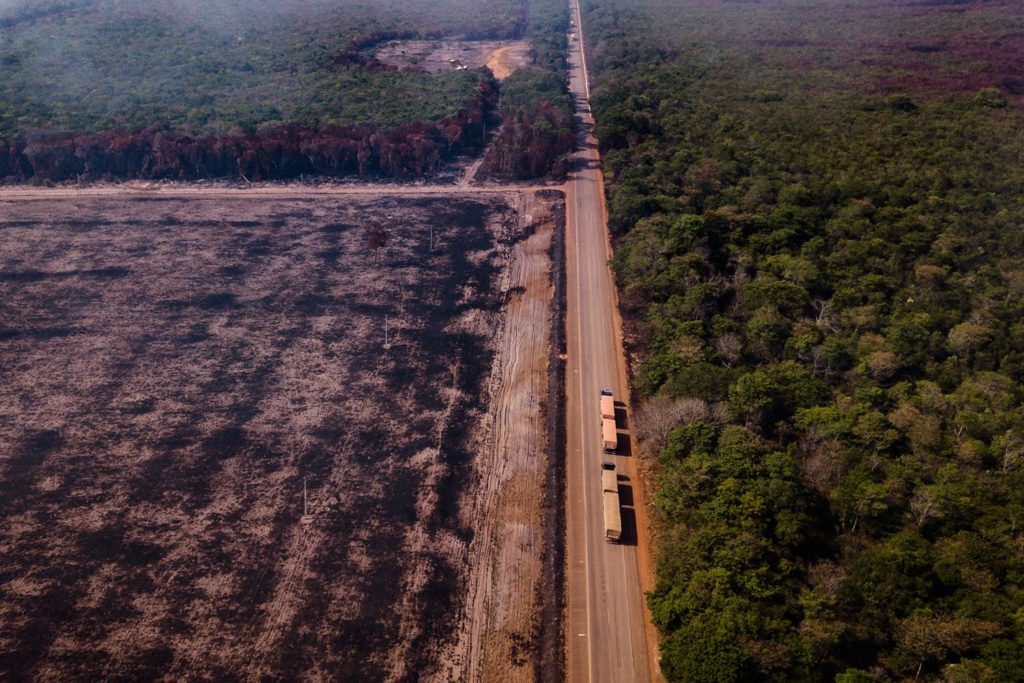
Unsexy? Not really. This is about saving the Amazon. And it can’t hurt that Barack Obama’s here for much of the week. He’s associated with Cop success (Paris) as well as failure (Copenhagen), and Glasgow could use a little stardust.
US infrastructure
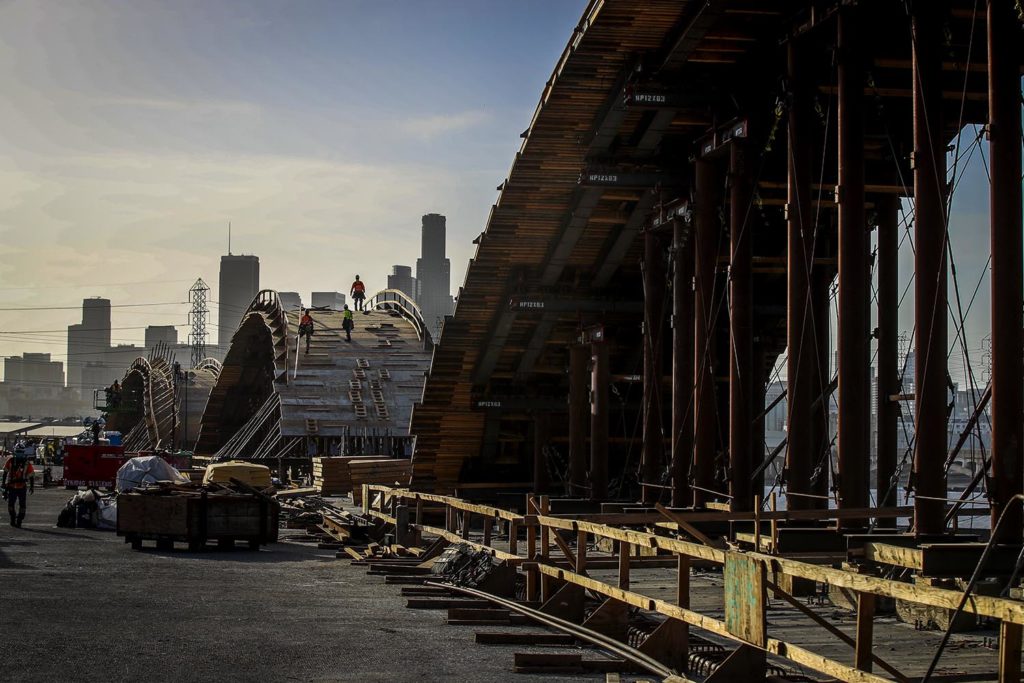
A water main breaks somewhere in America roughly every two minutes, the Economist notes in its sit-rep on Biden’s $1.2 trillion infrastructure bill. The bill was passed on Friday with the help of thirteen Republicans in the House. After being forced to travel to Europe and Cop without the climate breakthrough he wanted, and with news breaking of a big defeat for Democrats in last week’s Virginia governor’s race, this was an important win for the president. It’s also a lot of money: the $550 billion in previously unannounced spending represents more for road, rail, canals, bridges, airports (and the jobs that flow from them) than FDR provided in the New Deal. The question now is whether Congress gets behind the $1.75 trillion social welfare and climate package that Biden wanted first. The signs are it will. That would mean half a trillion dollars for clean energy incentives, EV tax breaks and EV charging networks for Democrats to boast about at next year’s midterms. Whether voters like shouldering more debt and tax for this sort of thing remains to be seen.
Back in time
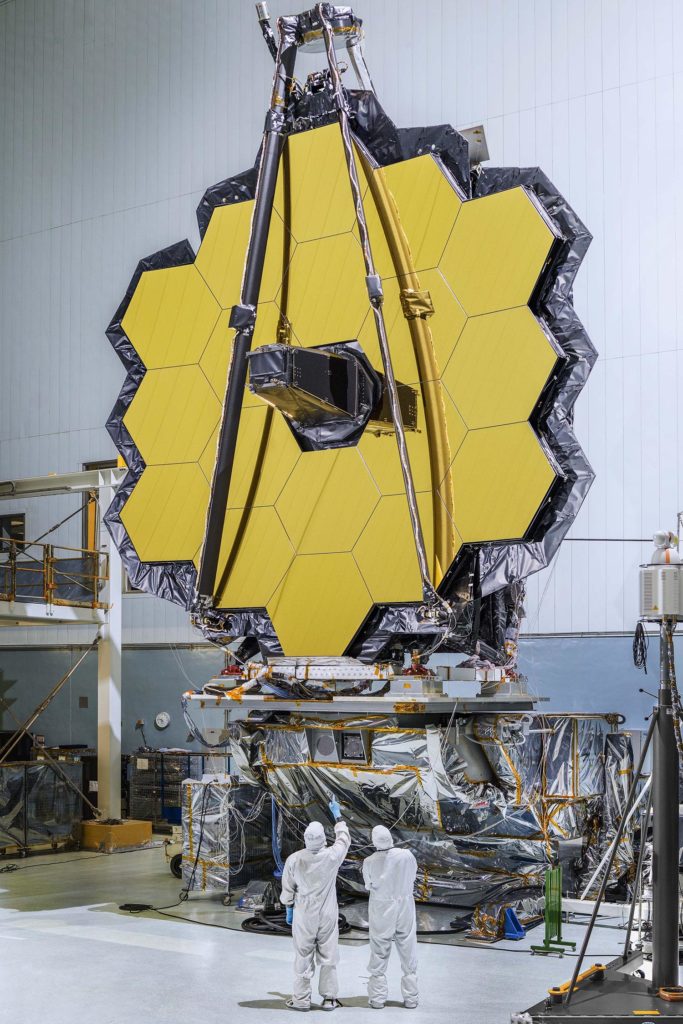
A telescope that can see what the universe looked like when the first stars and galaxies formed will be launched in mid-December. It’s called the James Webb Space Telescope, the product of a collaboration between Nasa, the European Space Agency, and the Canadian Space Agency at a cost of $10 billion. Much of the cost has been borne by Nasa. Europe contributed €700 million. “When you look at it as a cost per inhabitant in Europe, it comes down to a cheap cup of coffee in a cheap cafe, drunk over a period of 20 years,” Peter Jensen, the European Space Agency project manager, told the BBC. “And for that we get access to such a high-performance observatory that will take us on a kind of Columbus journey to an unknown period in cosmic history.”
Advancing on Addis
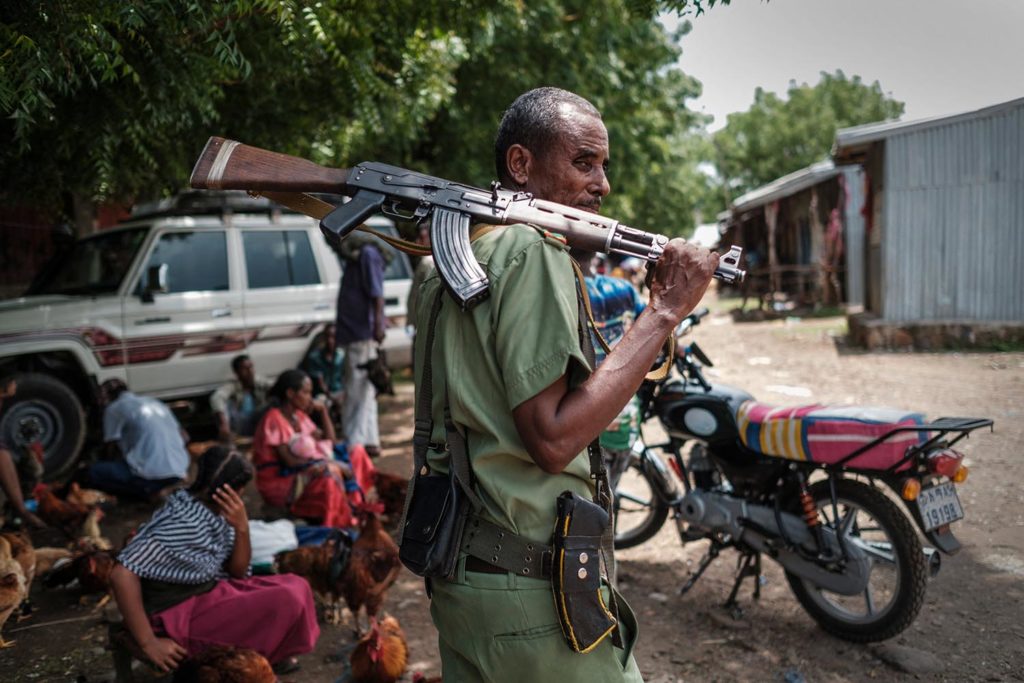
Last week Abiy Ahmed, the Ethiopian prime minister awarded the Nobel Peace Prize in 2019, told his people to take up arms to protect the country from the Tigray People’s Liberation Front (TPLF). On Saturday, the TPLF said it wasn’t their objective to take Addis Ababa but added that “the claim that Addis will turn into a bloodbath if we enter Addis is absolutely ridiculous”. Ethiopians are registering their arms – kalashnikovs and ancient weaponry among them – and preparing to fight. Meanwhile the US embassy has advised its citizens to get out ASAP. Abiy sent troops into Tigray a year ago to topple the rebels, hoping for a quick victory that has instead displaced two million people, left thousands dead and put the TPLF on a march to the capital.
Close to death
Zhang Zhan, a lawyer turned citizen journalist, travelled to Wuhan in February 2020 to report on Covid’s epicentre. She questioned the Chinese authorities’ handling of the outbreak in numerous videos taken on her smartphone. In May 2020, the authorities arrested her and sentenced her to four years in prison for “picking quarrels and provoking trouble” – a charge used to crush dissent. She’s in the news again because her brother tweeted that she is on hunger strike, and approaching death. Amnesty International and Reporters Without Borders have called for her release. Three other whistleblowers disappeared after reporting on the early days of Covid, and one is still missing. If the international community is serious about holding China to account over its handling of Covid, calling for the country to leave its own journalists alone would be a start.
Russia’s stranded assets
Depending on oil prices, Russia is staring at losses of $1.7–$2 trillion in the value of stranded fossil fuel assets as the world turns away from hydrocarbons. Considering the size of its economy (a bit bigger than Spain’s) that is a big share of the $11–$14 trillion in total stranded assets facing Russia, the US, Saudi Arabia, Canada and Norway combined. The numbers come from a British paper published in Nature last week that shows a big potential growth upside for current fossil fuel importers, and a corresponding slump for exporters. But not a catastrophe. The Moscow Times picks out an interesting number for Russia: despite those stranded assets, Russia’s economy will only be 0.8 per cent smaller than it would have been on pre-transition trends once it gets to net zero. Doesn’t that pre-suppose a lot of implausible diversification? Or is the Russian tech sector about to take us all by storm?
For the latest from Cop26, just opt in to our daily Net Zero Sensemaker.
UK:
8/11 – first public hearing takes place in independent inquiry into Post Office IT scandal; House of Commons holds emergency debate on parliamentary standards after resignation of Owen Paterson as MP; early booking for Covid boosters opens in UK, 9/11 – House of Commons rises for autumn recess; Associated British Foods full-year results, 10/11 – UK Supreme Court judgment on Google’s alleged data breach of iPhone users; ONS release on climate-related mortality in England and Wales between 2001 and 2020, 11/11 – Armistice Day; UK third-quarter GDP estimate, 12/11 – sentencing for man guilty over 2019 plane crash that killed footballer Emiliano Sala; AstraZeneca third-quarter results, 14/11 – Remembrance Sunday
World:
8/11 – Facebook whistleblower Frances Haugen appears before European Parliament; Chinese Communist Party gathers in four-day meeting expected to pave the way for Xi Jinping to seek a third term, 9/11 – OECD report on health status, expenditure and risk factors across 36 European countries, 10/11 – European Court of Justice rules in Alphabet challenge to 2017 fine from EU, 11/11 – Pushkar Camel Fair begins in India; Paris Peace Forum begins, with Kamala Harris and Emmanuel Macron to speak, 12/11 – Cop26 closing plenaries; hearing takes place to discuss termination of Britney Spears’ conservatorship, 14/11 – Bulgaria presidential election
Thanks for reading, and do share this around.
Giles Whittell
@GWhittell
Paul Caruana Galizia
@pcaruanagalizia
Xavier Greenwood
@XAMGreenwood
Produced and edited by Xavier Greenwood.
Photographs Getty Images, NASA Goddard