
What just happened
- US officials alarmed by a new Russian troop build-up on Ukraine’s eastern border warned Europe of a possible invasion threat, Bloomberg reported.
- Prosecutors sought to shut down Memorial, which alone among Russian NGOs has kept alive the memory of the 20 million who died in the gulag camps of the Soviet Union.
- Angela Merkel’s best-known doppelgänger, Ursula Wanecki, said her dream as Merkel retires is to meet her for the first time, as Wanecki plans to retire from her own day job as a tax consultant.
As Cop stumbles, the markets stride on. The chances of a deal in Glasgow that ropes in the big polluters look slimmer by the hour and you can read more about them in today’s Net Zero Sensemaker. But Wall Street has an alternative approach to climate change: plough tens of billions into a new electric vehicle start-up even though it’s sold hardly any cars, is being sued for a “toxic bro culture” and has lost nearly $1 billion so far this year.
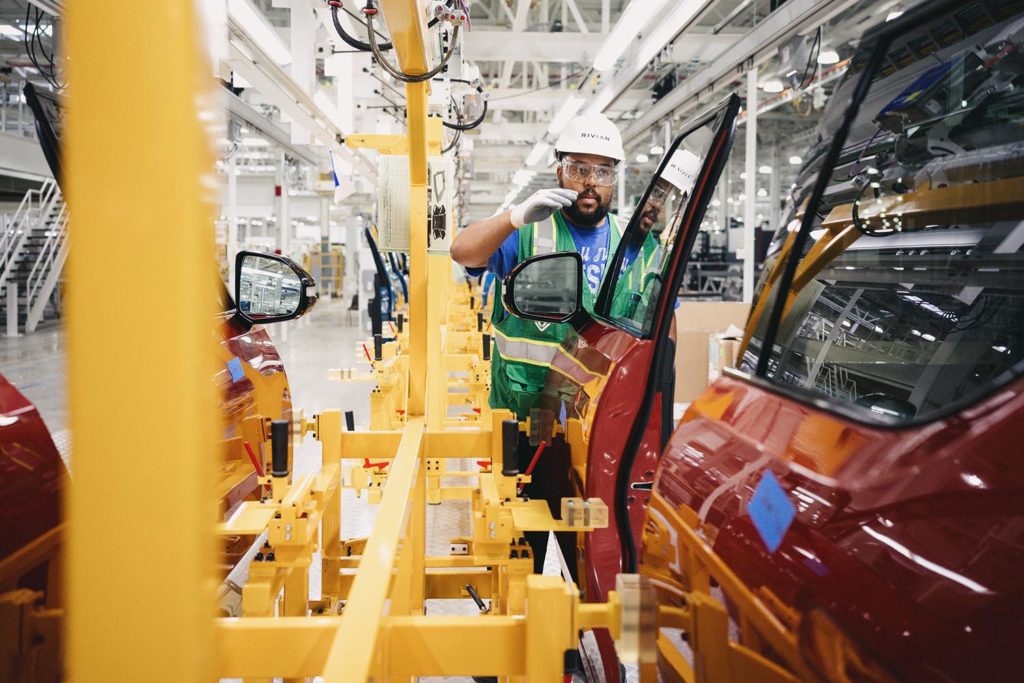
It’s worth asking: what is going on at Rivian Automotive?
The company is based in California, has a plant in Normal, Illinois, builds all-electric pick-up trucks and went public this week. Notionally valued before the flotation at $78 each, its shares started trading 50 per cent above that and closed at $123 last night.
That gives Rivian a market cap of $104 billion – more than that of Ford or General Motors. There are a number of reasons why it could stay at roughly this level despite critical shortages of the semiconductors and rare earths on which EVs depend:
- Clean power. Like Tesla, Rivian is an all-electric pure play for investors, with no internal combustion baggage.
- Greed. Investors have been looking for the next Tesla ever since its stock achieved escape velocity last year, and they think Rivian could be it.
- Low rates. US base rates have been close to zero for eight of the last 11 years, funneling trillions of dollars into equities in search of a return that in another era might have been found in bonds.
- A changing world. The US is phasing out new internal combustion engines by 2035. Dozens of other countries have similar deadlines falling between 2030 and 2040, and manufacturers are taking them very seriously. Rivian’s founder, RJ Scaringe, says more than a billion petrol and diesel vehicles will have to be swapped for electric ones in the next 15 years, and no one’s really arguing with him. It’s a remarkable testament to the power of policy.
- Pick-ups. Americans love them. Despite their dreadful mileage, sales more than doubled between the crash and Covid – to 12 million in 2019. Normal car sales, by contrast, plateaued in 2015. Pick-ups are popular elsewhere too. The Toyota Hilux was 2020’s best-selling vehicle in 14 countries including Argentina, Australia and South Africa.
To note: Amazon and Ford are big investors in Rivian. Amazon has ordered 100,000 of its vehicles for delivery by 2030. Ford is hedging its bets in case it can’t ramp up production of the electric version of its F-150 pick-up fast enough.
Also: Laura Schwab, a former Rivian executive, is suing the firm for gender discrimination and wrongful termination. The company says it’s investigating her claim it has a toxic culture.
And finally: Mary Barra, CEO of General Motors, says Rivian’s high valuation shows GM (frantically retooling for the EV age; market cap $89 billion) is a bargain. She wishes.
Xi’s thoughts
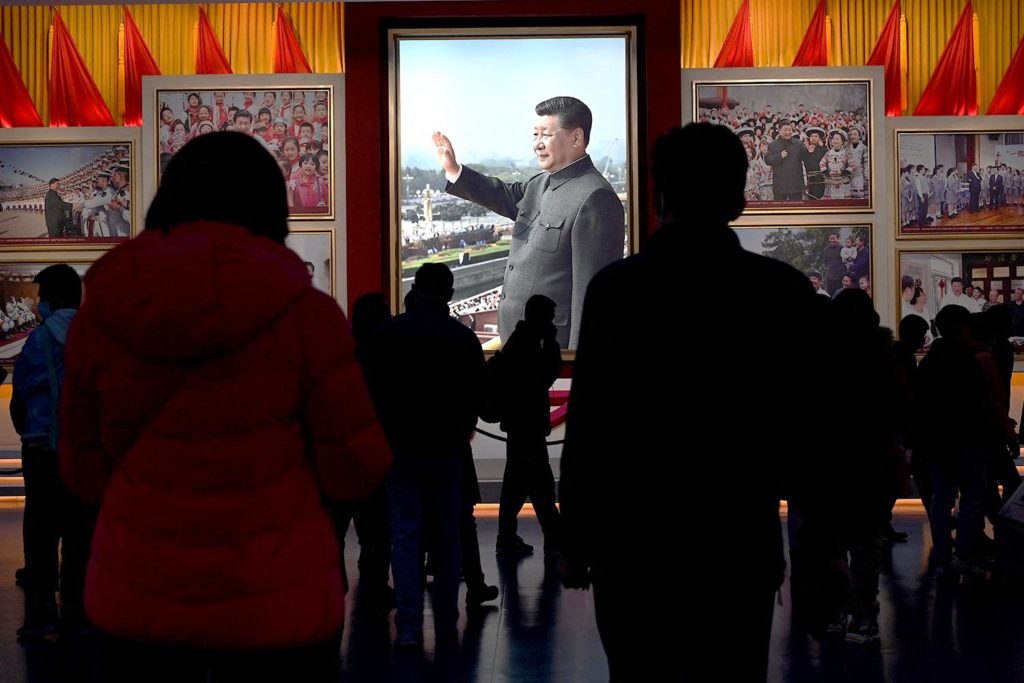
Xi Jinping had a good day at the sixth plenum yesterday. Sixth plenums of the Chinese Communist Party’s central committee are important because they precede the party’s five-yearly national congress. If Xi’s plans to be installed as president for life were to be derailed, this is when it might have happened. It didn’t. Even more gratifyingly for the world’s most powerful anti-democrat, his “theories and thoughts” were formally elevated to a status shared only with Mao Xedong and Deng Xiaoping. Xi Jinping Thought on Socialism with Chinese Characteristics for a New Era is now even more essential reading than it was. He was praised from the podium for his courage and strategies, but especially for his crushing of dissent in Hong Kong.
Vestager v Google
Google lost an appeal on Wednesday against a $2.8 billion EU fine for favouring its own comparison-shopping ads over others’. Google makes money from advertisers whenever users click on these ads, which often appear at the top of search results. Margrethe Vestager started pursuing Google for what she saw as anti-competitive practices soon after taking over the EU competition brief in 2014 so this is a big personal win. Google tried to argue she’d ignored the competition it faced from Amazon in the shopping comparison space, but the EU’s General Court in Luxembourg wasn’t buying it. If it becomes generally accepted that you can’t claim to replicate a public or quasi-public space online and then run it like a despot or a crook, that would be good.
UK Covid
Very slowly, UK Covid case numbers are going down. It’s hard to know, though, whether to be pleased about the trend or dismayed about the slowness. The Times has done its own number crunching to show the rolling seven-day average has been falling for 16 days, which is the longest decline since May. The FT has looked at the same trend, which Julian Hiscox of Liverpool University attributes almost entirely to a “wall of immunity, rather than behavioural changes or restrictions”. So jabs are working. Up to a point. Yesterday 42,408 new cases were recorded. Germany’s seven-day average has more than quadrupled since last month, to 31,094.
Coal at Cop
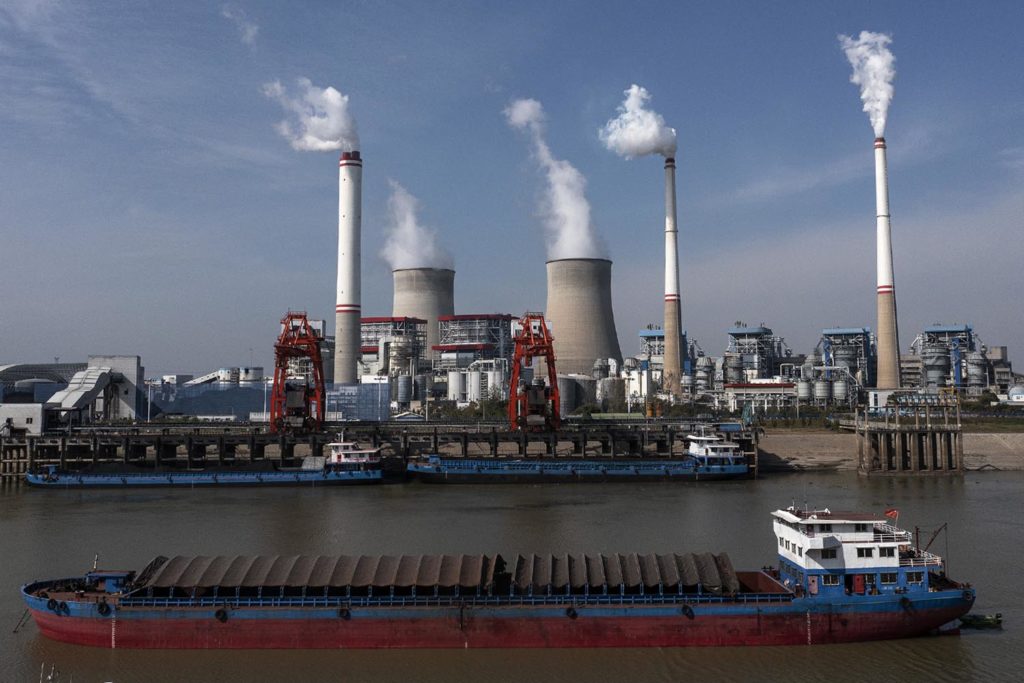
The big question for Xie Zhenhua on Wednesday was whether China would accept the word “coal” in the final Cop communique. As China’s climate envoy, he wouldn’t answer it. But the word’s still in. This morning’s draft implores countries to work towards “the phaseout of unabated coal power”. “Unabated” is the new qualifier, and it would leave coal-hungry countries wriggle room to offset or bury emissions while continuing to burn the stuff. Burying = CCS (carbon capture and storage), which remains extremely expensive and unproven at scale – except when used by oil companies to squeeze more oil out of old deposits. So beware the smallprint, but note the progress. “Coal” hasn’t gotten this far in the Cop process before. Note also that if Xie had his way he would have accepted the first draft, which called simply for the phasing out of coal. He’s a climate change activist stuck in a Chinese official’s suit.
Digital rhino
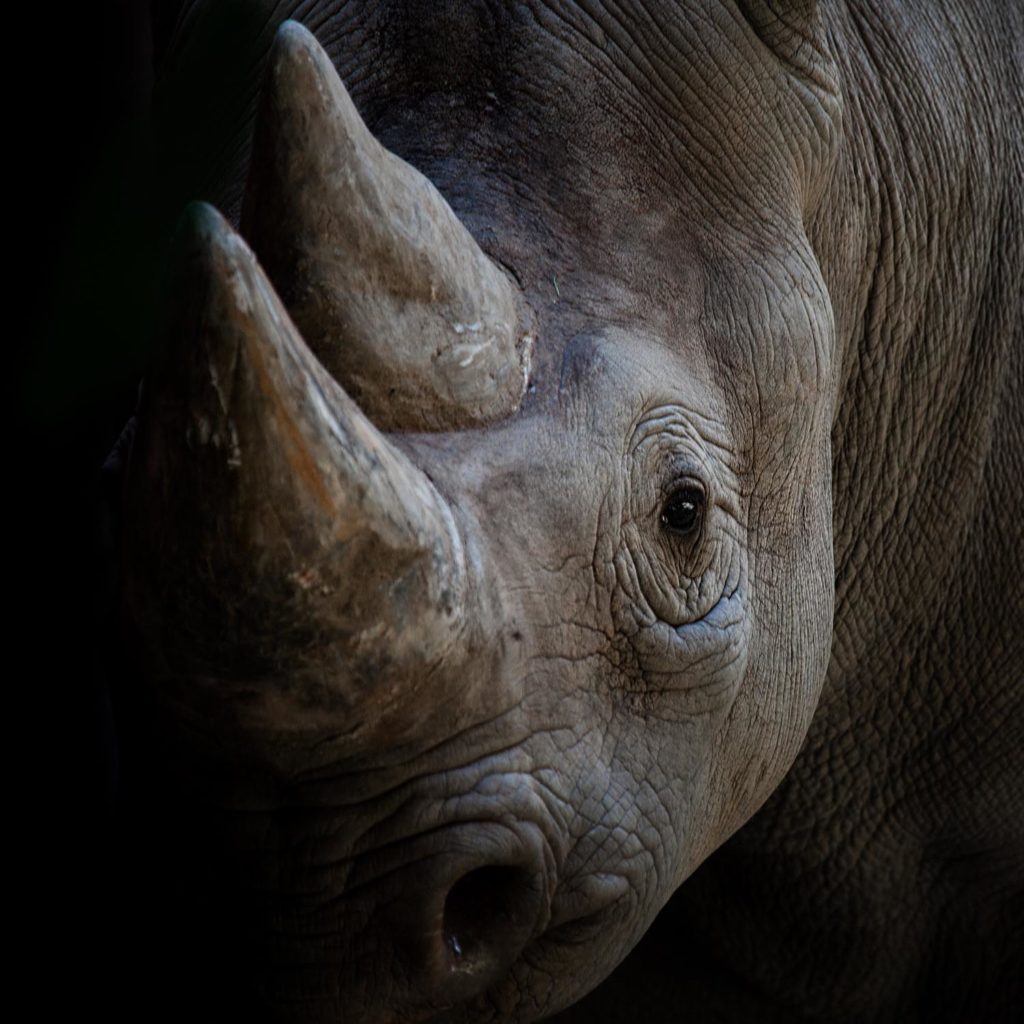
A Cape Town businessman paid the equivalent of $6,850 for the first ever non-fungible token (NFT) of a rhino horn. The NFT is a digital replica of a real rhino horn in a South African reserve where 200 rhinos are protected from poachers and able to breed. The money goes to the reserve. Derek Lewitton, who runs it, says he’s managing to double his rhino population every four years. Elsewhere in South Africa, at least 249 rhinos were killed in the first six months of this year alone – 83 more than in the same period last year.
Thanks for reading, and do share this around.
Giles Whittell
@GWhittell
Edited by Xavier Greenwood produced by Phoebe Davis.
Photographs courtesy Rivian Automotive, Getty Images