What just happened

- A total of 99 Conservative MPs voted against plans for UK Covid passes in the biggest rebellion Boris Johnson has faced since becoming prime minister.
- A federal judge in New York said a secret settlement between Jeffrey Epstein and Virginia Giuffre, who accuses Prince Andrew of sexual assault, should be made public.
- North and South Korea agreed in principle to declare a formal end to the Korean War, 71 years after it started.
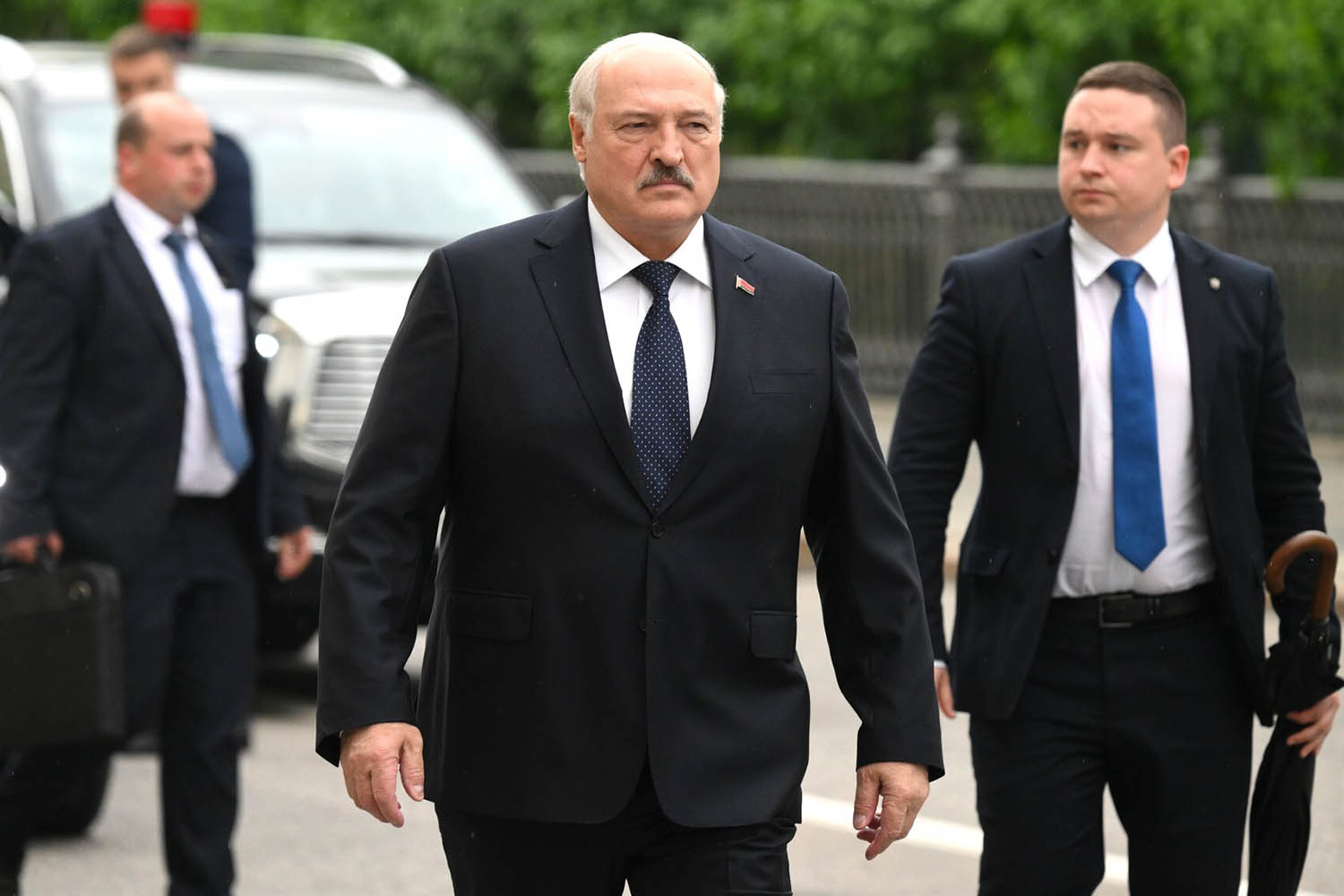
You have to admire his timing. In the middle of the distracting global public health emergency that is Omicron, Europe’s last dictator has locked up his most troublesome dissident for 18 years. It’s not technically Alexander Lukashenko’s signature on the sentence handed yesterday to Sergei Tikhanovsky, a popular YouTuber who calls Lukashenko a cockroach. But Tikhanovksy’s wife, the opposition leader Svetlana Tikhanovskaya, is in no doubt the long jail term is an act of personal revenge.
Most of Belarus’s pro-democracy activists are now in exile or in jail. This is not how the movement was supposed to end, nor how it necessarily will end. But it’s an object lesson in the staying power of a tyrant who’s abandoned any interest in being liked.
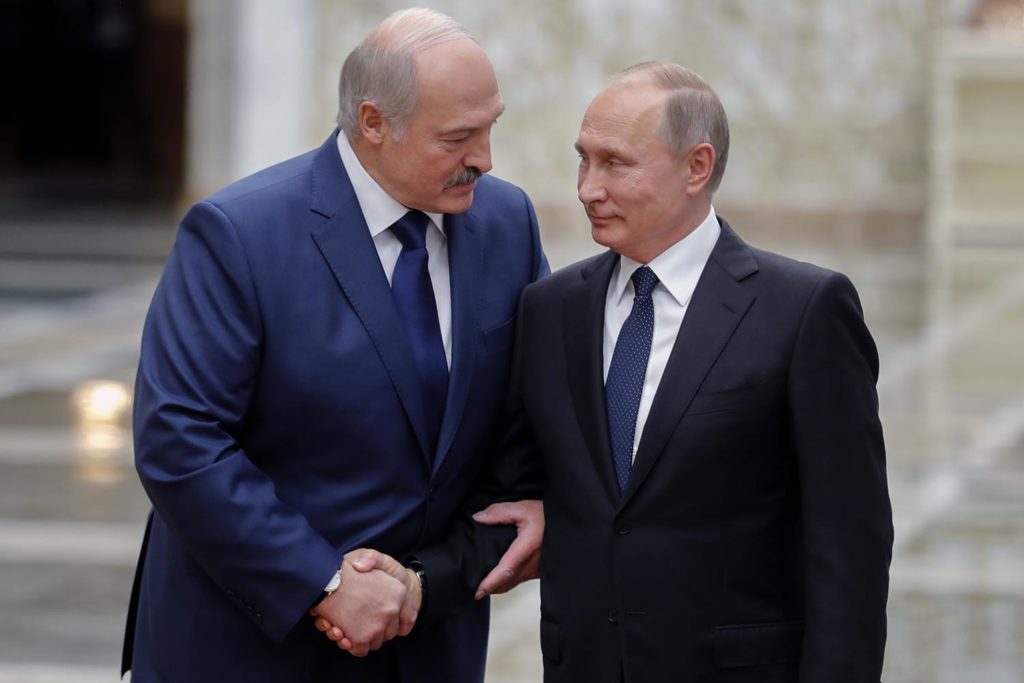
Lukashenko has been supported in office for 27 years by a variety of people, relationships and saleable goods, including:
- Trucks – Soviet Belarus produced most of the eastern bloc’s tractors and under Lukashenko the state-run Minsk Automobile Factory (MAZ) still delivers a residual export surplus from sales of trucks, trolleybuses and ballistic missile transporters.
- Gypsum – another holdover from the Soviet times Lukashenko remembers so fondly as an ex-collective farm boss is a steady ($2.7 billion per year) overseas trade in potassium-rich fertiliser made from local gypsum.
- Putin – Lukashenko depends overwhelmingly on Russian financial and political backing, but also more specifically on teams of advisors, police and even replacement TV anchors flown in from Moscow since the pro-democracy movement flooded Minsk with protests last year. Their purpose is to spread fear and compliance. In a seminal piece last month in the Atlantic, Anne Applebaum called this “the Lukashenko rescue package” and likened it to a similar one put together for Syria’s Bashar al-Assad. Applebaum wrote: “As Vladimir Putin figured out a long time ago, mass arrests are unnecessary if you can jail, torture, or possibly murder just a few key people. The rest will be frightened into staying home.”
- Cronies – unlike Yeltsin in Moscow’s wild post-Soviet aftermath, Lukashenko never let oligarchs morph into political rivals. By 2001, according to one estimate, three quarters of the country’s business leaders had been expropriated or forced to flee. In their place he’s since allowed three close associates to dominate a shrunken private sector on the understanding that they can be stripped of their assets at the first hint of disloyalty.
International capital markets have propped up Lukashenko too. In 2018 he faced cash flow problems resolved with the help of a $600 million Eurobond issue handled by Clifford Chance, the law firm.
What’s in store now for Sergei Tikhanovksy? “My husband is a strong person and he will not, of course, for sure, spend all these years in jail,” says his wife, who leads the Belarusian opposition from exile in Lithuania. It’s possible Tikhanovsky will be freed in due course as a pawn in a bigger deal. Otherwise it’ll take regime change. Either way the best advice from Moscow, where Alexei Navalny is in a similar position, is not to hold your breath.
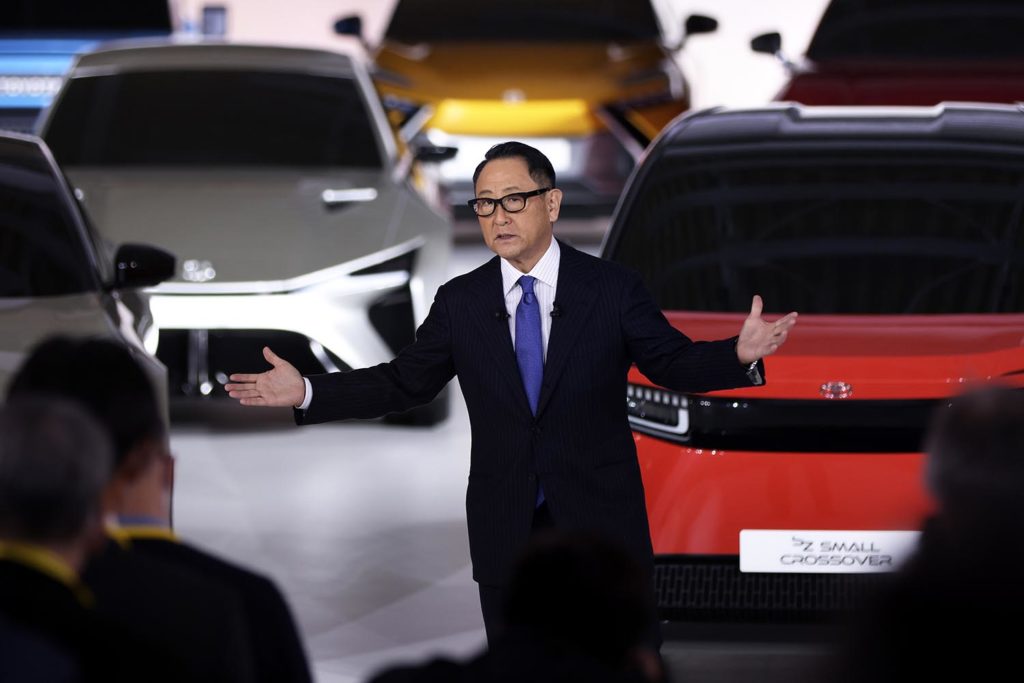
Toyota’s big bet
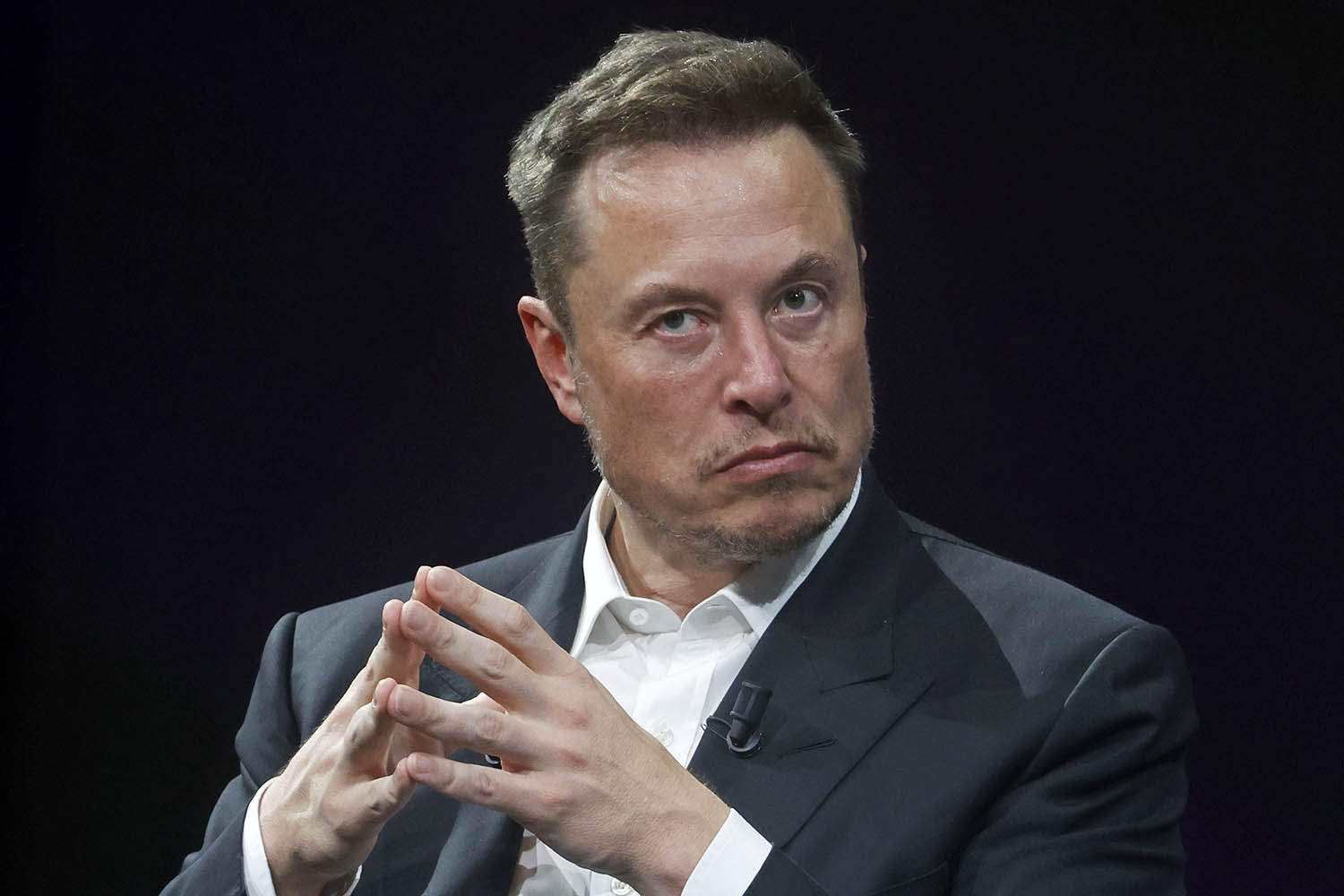
Toyota says it will spend $35 billion retooling factories and redesigning cars so that by 2030 it’s producing 30 fully electric models. It’s hard to overstate what a capitulation this is to the all-battery approach Tesla has popularised on the other side of the Pacific. Toyota was an early adopter of hybrid tech in its Priuses. It has been fascinated for decades by fuel cells and was the first big manufacturer to bring a fuel cell car to market. But it has been conspicuously and deliberately slow to invest in all-battery cars, and now it’s admitting that was the wrong call. If you can’t hear Elon Musk yelling “I told you so” that’s because you’re not in the room or he doesn’t feel the need. But he has sneered at hybrids as unnecessarily complicated ever since his first roadster stunned the critics 13 years ago. The world’s biggest car maker (Toyota) has now joined the world’s second-biggest car maker (VW) in officially playing catch-up.
Rich moms
Social media is many things, including a language-mangling labeller of off-the-shelf personae. Take Rich Moms. As promoted by Christina Najjar on TikTok they don’t have to be rich, moms or even women. More important is that they wear Golden Goose sneakers and / or diamante-encrusted tracksuits and / or drink espresso martinis. If that sounds too specific, be assured anything that gets Najjar’s approval, or just her attention, counts as evidence of membership. “A Rich Mom doesn’t necessarily want the most expensive thing – she wants the best thing,” Najjar, who is 31, tells the WSJ ($). She has paid partnerships with Uber and Chipotle, the Mexican-American fast food chain, so “best”, here, is both subjective and bought. But she has 1.4 million followers on TikTok, which tells you… something.
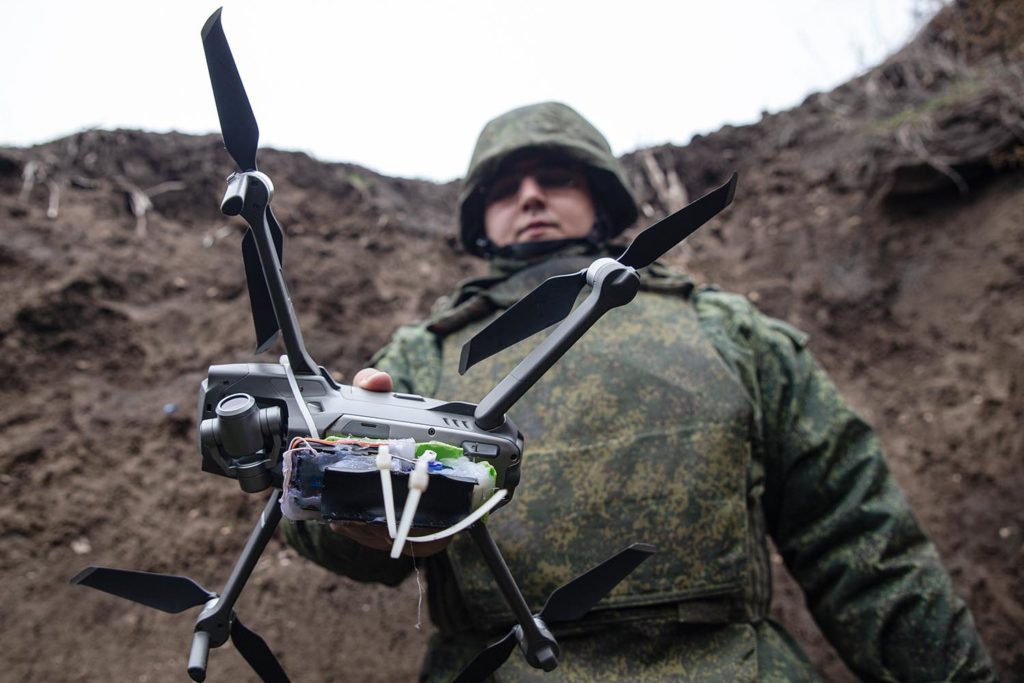
Killer drones
For proof that drones are going to dominate the battlefield of the (possibly very near) future, look no further than a recent complaint from Ukraine’s defence minister about anti-drone rifles. He was troubled that Germany was refusing to supply them, which indicates that Ukraine expects to be shooting at drones above its trenches in the east if or when Russian troops roll in. Germany has since relented and dispatched some of the specialised rifles on the basis they’re non-lethal, but the same can’t necessarily be said of the drones themselves – even if they’re not armed. The US has blacklisted DJI, China’s biggest commercial drone maker, because of its role in Beijing’s military-industrial complex – a resurrection of the Eisenhower-era phrase coined to bracket together missile makers and their clients in the Air Force and Strategic Air Command. The Chinese military-industrial complex in 2021 includes DJI because of its drones’ deployment to spy on Xinjiang’s Uyghurs.
Brain damage
Neuropathologists say Phillip Adams, a former American footballer with the San Francisco 49ers, had chronic traumatic encephalopathy (CTE) when he shot and killed six people and then himself earlier this year. The CTE involved serious damage to Adam’s frontal lobe – a common injury among professional footballers and one often linked to mood swings and violent behaviour. The finding has brought a measure of solace to the families of Adams and of four of those he killed, NPR reports. It recalls the case of Charles Whitman, the gunman in a mass shooting at the University of Texas in 1966, who begged doctors before his death to study his brain afterwards. They found a large tumour, prompting decades of debate as to whether it was the cause of his behaviour. There’s less doubt now that brain damage can bring horrifying collateral damage in its wake.
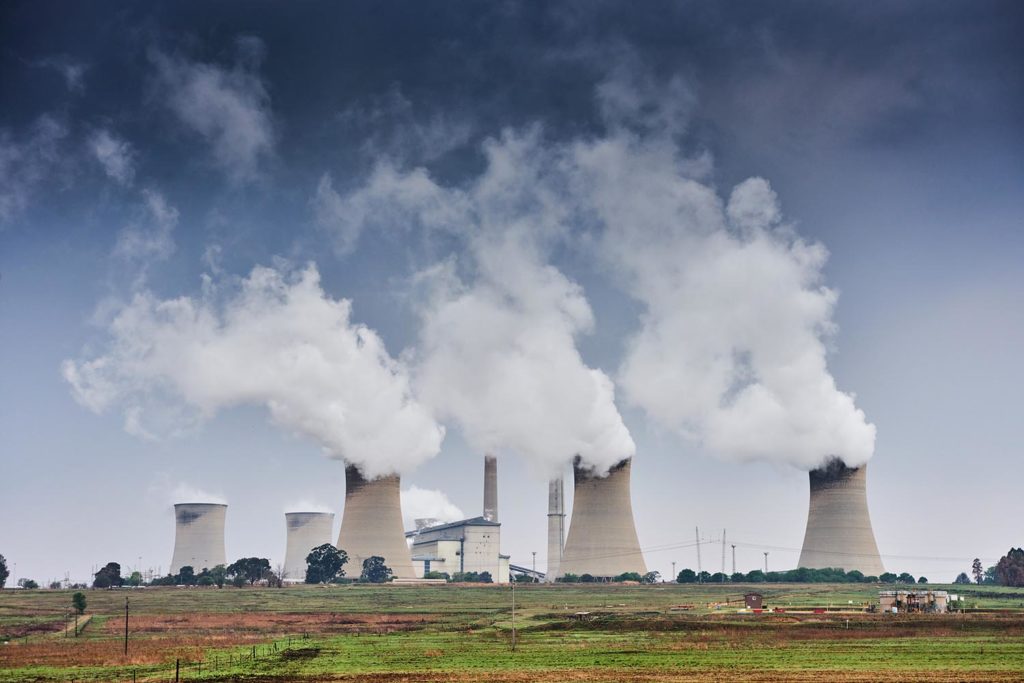
HSBC on coal
Slowly, cautiously, not wishing to lose any business it can decently cling onto, HSBC is getting out of coal. According to Reuters the bank is saying its clients must have plans in place to “exit” coal by 2023. Where to start with the caveats? These only have to be plans. Whether HSBC will stop lending to clients that slow-roll the execution or forget their plans altogether remains to be seen. And while the deadline for plans is tight, the deadline for follow-through isn’t. The bank says it will shrink its own exposure to coal power generation by 25 per cent by 2025 and 50 per cent by 2030, reserving the right to go on funding coal power outside the OECD until 2040. Sorry HSBC. Under no livable scenario does the planet have that much time.
Thanks for reading, and do share this around.
Giles Whittell
@GWhittell
Edited by Xavier Greenwood and produced by Phoebe Davis.
Photographs Getty Images