
What just happened
- American and British diplomats’ families were withdrawn from Kiev as Russian troop numbers on the Ukrainian border rose to a reported 127,000.
- Two years after the event, Downing Street ordered an inquiry into Nusrat Ghani’s claim she was sacked as a UK minister because her “Muslimness” made colleagues uncomfortable.
- US officials indicated they would not sign up to a revived Iran nuclear deal unless four American hostages held by Tehran were released.
- Dave “the Rocket” Ryding became the first British skier ever to win a World Cup race, in the men’s slalom at Kitzbuhel.
British MPs should find out this week if Boris Johnson lied to them when he said he thought a party in his garden was a work event. If he did, he’ll have to go. It’s (almost) that simple.
As soon as tomorrow evening Sue Gray, the civil servant and former Newry publican, will give Johnson an advance look at the report that could determine his fate. He commissioned it and technically it’s up to him what to do with it, but
- if Gray concludes he misled parliament he will be expected to resign for breaking the ministerial code;
- even if she doesn’t, dozens of MPs who want him to step down will be scouring the report for reasons to make him do so. Four and a half dozen – precisely – could force a vote of no confidence in his leadership.
The remit. Gray was asked last month to investigate “staff gatherings” during lockdown in Downing Street and the Department for Education to establish
- whether they were parties
- who was there
- where they were held
- why; and
- whether they contravened Covid guidelines in force at the time.
Here’s the exact wording: “The primary purpose will be to establish swiftly a general understanding of the nature of the gatherings, including attendance, the setting and the purpose, with reference to adherence to the guidance in place at the time.”
She will be expected to indicate whether “individual disciplinary action” is warranted given the available evidence. She won’t be expected to opine – explicitly, at least – on whether Johnson should step down.
The parties. Gray started with a short list of specific alleged parties to investigate – on 27 November and 18 December at Number Ten and 10 December at the DoE – but the rubric allowed her to pursue credible allegations of other parties, and she has. The list is now at least ten parties long. It could cover up to 16 and definitely includes those alleged to have happened on the eve of the Duke of Edinburgh’s funeral last April and on 20 May in the Downing Street garden.
The big one is the garden party, because Johnson told the House of Commons he “implicitly” thought it was a work event even though his principal private secretary, Martin Reynolds, had emailed 100 people inviting them to “make the most of the lovely weather” and “bring your own booze”. Anything in writing to this effect that Johnson himself could reasonably be expected to have seen could be his undoing.
The sources.
- Done: Gray is believed to have interviewed Reynolds, Johnson, the police officers stationed at Number Ten on the days of the gatherings and scores of officials (civil servants) and special advisors (who are political appointees). Her remit states that “all Ministers, Special Advisers, and civil servants will be expected to co-operate with the investigations”.
- To do: Dominic Cummings. Johnson’s former advisor has been a vengeful leaker of hints and emails since his sacking in November 2020, and has promised more material after Gray’s report is published. She is expected to interview him this week; possibly today.
- The data. More important than any hearsay is swipe card data showing precisely which members of staff went in and out of Downing Street, and when, on the days and nights at issue; calendar invites showing who might be expected to have known of the gatherings; and emails and other messages showing who said what about them. Gray is believed to have access to them all.
There were rumours at the weekend of staff withholding information. That would infuriate Gray as much as earlier talk from inside Number Ten that her report would effectively exonerate Johnson. She has made clear she hates being pre-judged, and her brief states explicitly that “any staff with information relevant to the investigations should provide it to the Cabinet Office investigation team”.
She has a lot of ground to cover, but she also has six fellow investigators and the report is only expected to be 25 pages long. A redacted version is expected to be published within hours of Johnson seeing the full one.
It will include her overall findings. It won’t include names of junior staffers, even if they’ve been found to have transgressed. Gray strongly disapproves of junior people taking the fall for senior people’s sins.
To consider: Outsiders, especially abroad, may still be baffled that a leader with a working majority of 75 could be brought down by office parties held two years ago. This isn’t about national security or bunga bunga, after all. What it is about is hypocrisy and double standards – but also idiots at the helm in the depths of a pandemic, before vaccinations, when parties weren’t just illegal but unbelievably stupid too.
Ghost flights
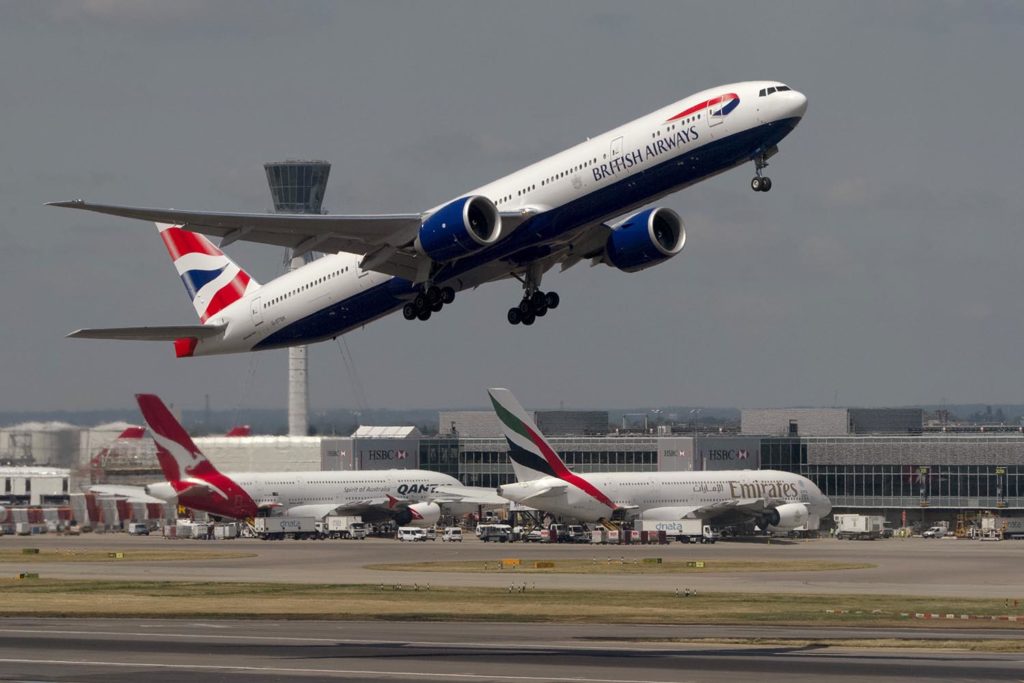
A couple of weeks ago Kai Forsyth, a student, found himself the only passenger on a British Airways Boeing 777 flying from London to Orlando. He wasn’t upgraded but otherwise, he said – generously – he was spoiled rotten. Either BA knew it had a lot of people to fly back from Florida, or Forsyth was on a ghost flight, flown despite being virtually empty because airlines have to use most of their take-off and landing slots to keep them. Pre-Covid, “most” meant 80 per cent. During Covid the rule was abandoned. The Times says Grant Shapps, the transport secretary, plans to bring it back but with a lower 70 per cent requirement to help struggling airlines and the environment. He claims Brexit gives him the power to do so. Willie Walsh, head of the IAG group, points out that the EU already has a lower “use-it-or-lose-it” requirement to use 64 per cent of slots. Either way, a 777 burns about 40 tonnes of kerosene to get to Florida. Price carbon properly!
T-shirts at the Open
Martina Navratilova has condemned Tennis Australia for a “pathetic” and “cowardly” capitulation to China in banning people from wearing T-shirts in support of Peng Shuai at the Australian Open. Peng, the Chinese tennis player who’s the subject of our Slow Newscast this week, disappeared for three weeks last year after accusing a senior Chinese Communist Party official of sexually assaulting her. She has since recanted but concerns remain about her whereabouts and wellbeing. Last week supporters at the Melbourne tournament began distributing 1,000 T-shirts with the question: “Where is Peng Shuai?” Officials told them to take the shirts off on the basis that the Open has a rule against political messaging. Navratilova: “This is not a political statement. It’s a human rights statement.” What she said.
NFTs a go-go
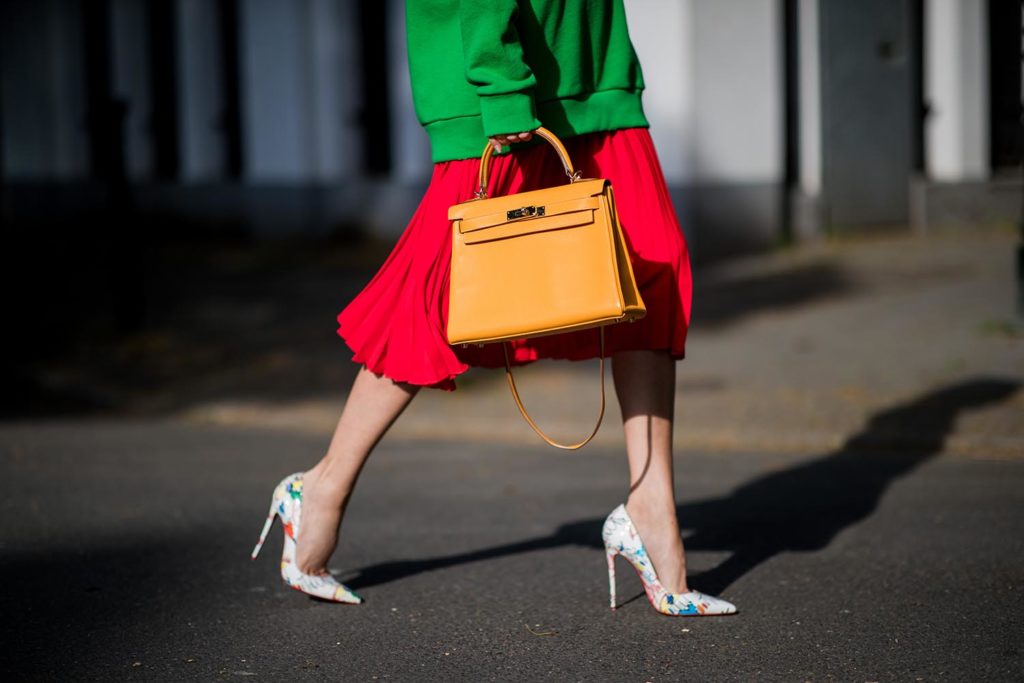
In real life, Birkin handbags from Hermès tend to cost between £5,000 and £250,000. In the metaverse you can get them for not much less. “Metabirkins” are being sold by a New York-based “artist” as non-fungible tokens (NFTs), and Hermès is suing him for allegedly ripping off one of its most lucrative trademarks. Mason Rothschild, the artist, says that since his creations are art he’s free and clear. Hermès calls him “a digital speculator who is seeking to get rich quick”. If so he’s not the only one. Last year he sold a metabirkin for $23,000 and it resold for the crypto equivalent of $42,000. To be clear, NFTs are impossible to forge but they consist of nothing but data. If Mark Zuckerberg and others are right that most of the world is migrating to the metaverse, does that mean a bit more breathing space for those who stay behind?
Covid, what Covid?
Twenty-two months since Covid restrictions were first introduced in the UK the end is in sight – for now. In England, the guidance to work from home if possible has been dropped and masks are no longer required in secondary school classrooms. From Thursday, Plan B ends. Face masks will only be recommended and Covid passports for venues won’t be needed. Self-isolation for seven days after a positive PCR or lateral flow result will remain, but even that could end soon, the prime minister has said. Scotland and Wales are moving slower to ease restrictions, not least because the number of people in hospital with Covid in the UK is still above 17,000. That is fewer than in previous weeks and not all these patients will have been admitted because of Covid, but in parts of the Midlands, the North East and Yorkshire hospitalisation rates have yet to fall. In the absence of restrictions, the best protection is infection or vaccination, and there’s good news on that front. The Office for National Statistics estimates that 97.35 per cent of people in the UK would test positive for antibodies.


