What just happened
- Michael Gove emerged from a long period of seclusion with a long press release about “levelling up” that the UK government hopes will change the subject of the national conversation.
- The US National Archives said Donald Trump personally tore up records related to the 6 January insurrection before handing them over.
- The president of Guinea-Bissau said he had survived a five-hour gun battle that was part of a failed coup attempt in which many people died.
- Whoopi Goldberg was suspended for two weeks as co-host of ABC’s The View for saying the Holocaust was “not about race”.
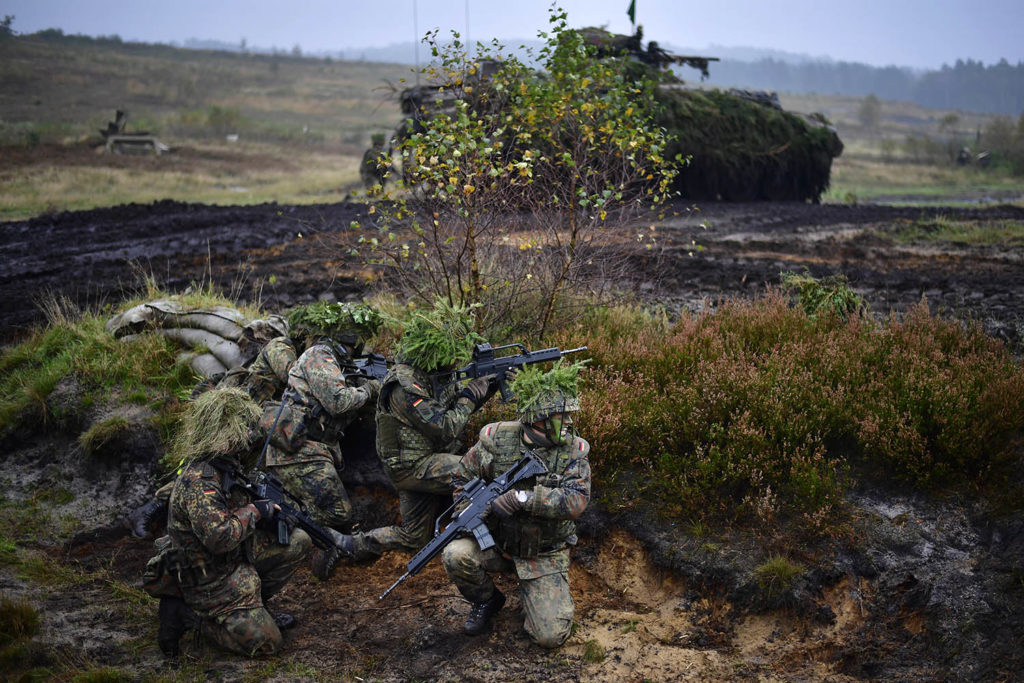
Russia threatens Ukraine. America equivocates. France proposes a new European security apparatus and wins zero support from any other country in the European neighbourhood. So the question arises, not for the first time: why can’t Europe defend itself?
It’s not for want of trying.
- Repeatedly since the creation of the European Defence Community in 1952, European countries have discussed building a European army.
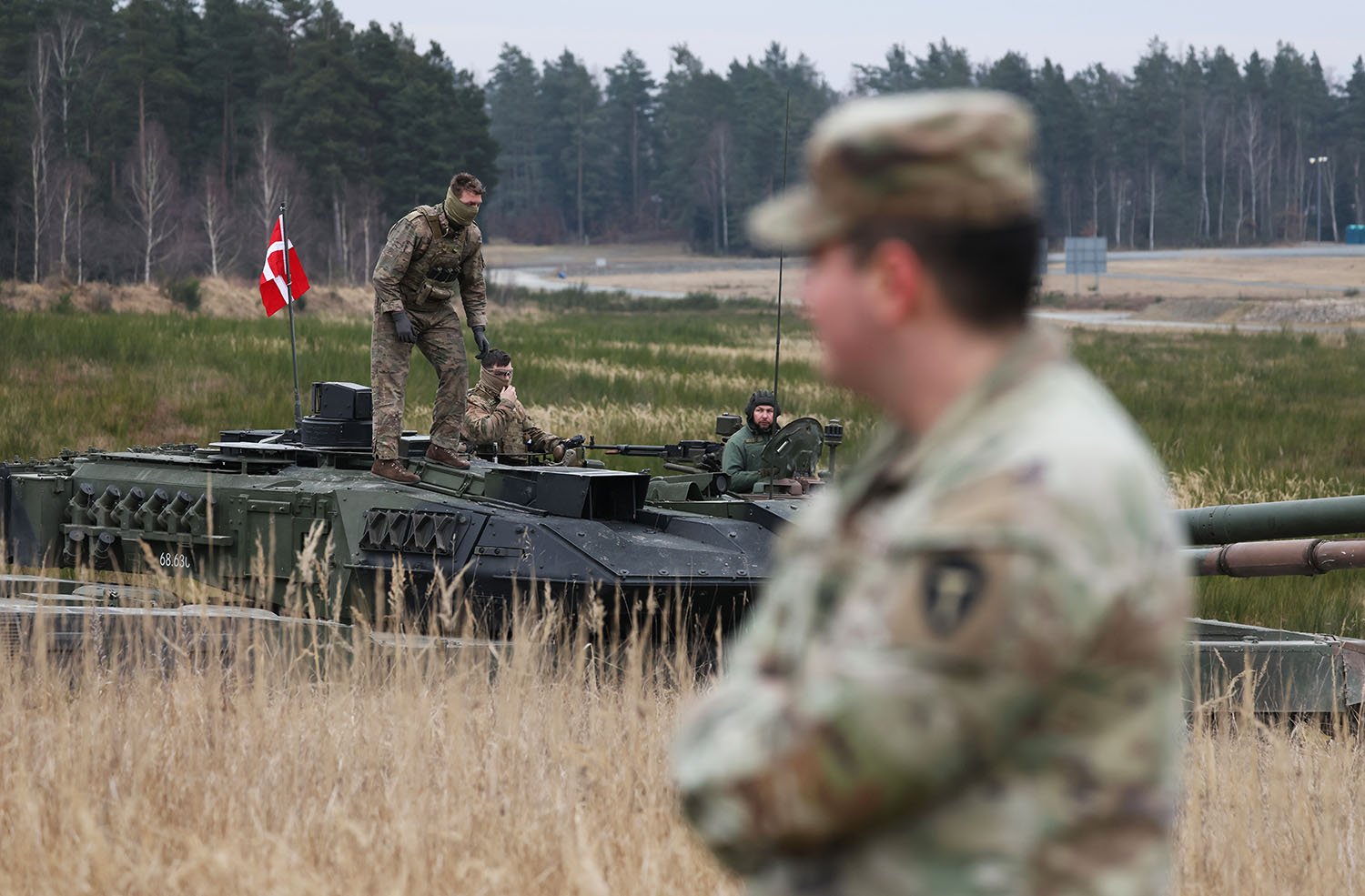
- Most of those discussions have led nowhere but in 2019 they bore fruit in a genuinely non-national deployable European fighting force, the Dutch-German 414 tank battalion.
- Nato’s EU members have slowly increased defence spending to the point that their combined defence budgets total around $300 billion, which is more than three times Russia’s.
- Alarmed by i) the US tilt towards Asia that started under Obama; ii) America’s disastrous withdrawal from Afghanistan; iii) the sudden creation of Aukus by the US, Australia and UK as an alternative to Nato force-projection in the Indo Pacific; and iv) hybrid threats in the weaponisation of vaccines, data and tech, the EU produced a new “Strategic Compass” last November.
- The leaked document implored member states to “increase our capacity and willingness to act and strengthen our resilience”, because “Europe cannot afford to be a bystander in a world order that is mainly shaped by others”.
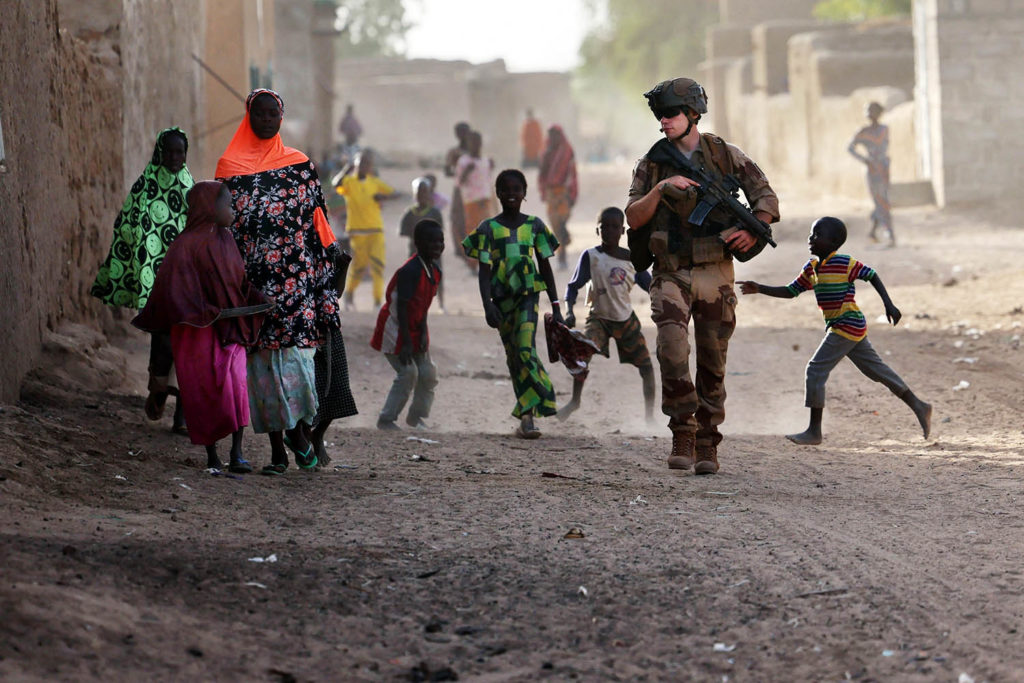
As if to prove the point, the biggest current overseas deployment of European force – in Mali – is losing its grip as the host government enlists the help of Russian mercenaries from the Wagner Group instead. And for European army enthusiasts, Ukraine is a reminder that…
- European defence spending is still low and low-tech compared with American.
- EU countries are still reliant on Nato – ie the US – for strategic airlift capability and intelligence, surveillance and reconnaissance. Not by chance, most of the drones above the Russian-Ukrainian border are American. Not by chance, the intelligence behind a “French” assassination of a senior jihadist in the Sahel last September was American.
- Brexit removed from the EU the only “framework” nation apart from France capable of taking on command-and-control duties for complex operations.
- And German appetite for a new collective European security body dominated by France is low to non-existent.
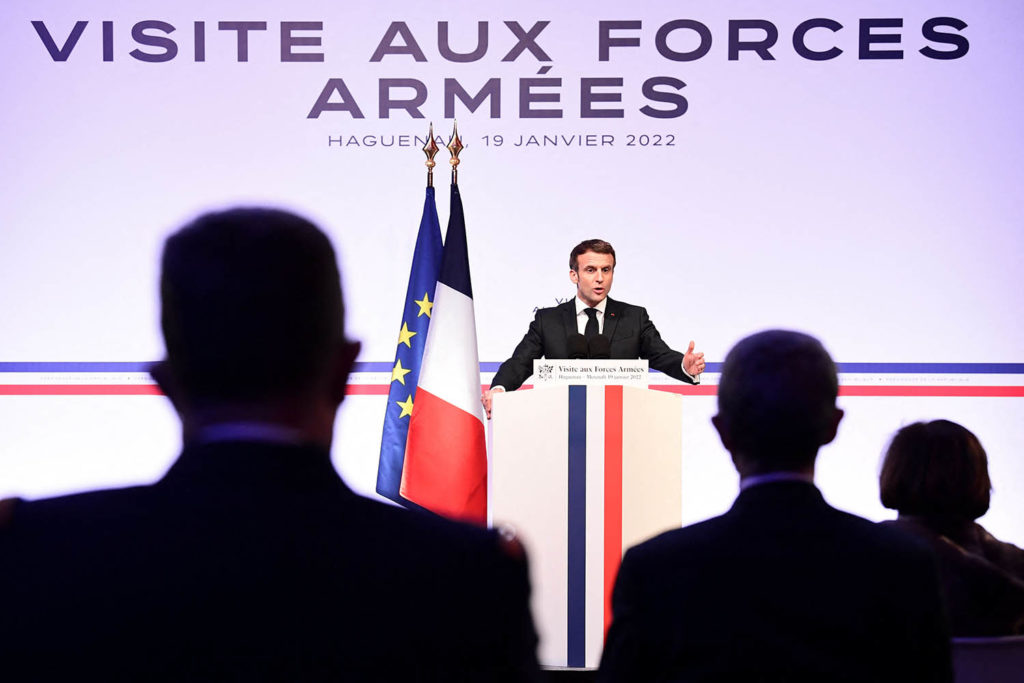
“The President of France gives a speech calling for ideas about European security to be developed by the EU… and the only European reaction was to castigate him for raising the idea without having consulted anyone else in the EU,” says Ivo Daalder of the Chicago Council on Global Affairs. “That speaks volumes.”
“The EU needs to put down its pen, look at what’s in front of them and sort it out with Nato,” says Ed Nolan of the Royal United Services Institute.
For now, that is what is happening. New coalitions of the willing are plausible, and the UK has duly signed up for one with Poland and Ukraine. As long as Macron is President of France the dream of a European army isn’t dead, but it is on hold – and Nato is more relevant than at any time since 1991. If this was Putin’s goal, he’s less of a geopolitical genius than many people thought.
Beijing bets on Baghdad
As the US shrinks its footprint in the Middle East, China moves in. A new report shows how Iraq has become a major beneficiary of Beijing’s Belt and Road initiative even as overall BRI investment falls. Construction deals worth $10.5 billion signed last year included one for a new heavy oil power plant at Al-Khairat, south of Baghdad, and another to develop the Mansuriya gas field near the Iranian border. The bigger picture, which includes new pipelines from Siberia direct to China’s industrial heartland, is one in which Beijing takes absolutely no chances with its oil and gas supply even as it expands its renewables capacity faster than the rest of the world combined.
Police culture
It’s a week of apologies – this time from the Met for the actions of officers at London’s Charing Cross police station. The stomach-turning Hotton report from the Independent Office for Police Conduct (IOPC) reveals a culture of misogyny, racism and homophobia. Although the inquiry began with a claim in 2018 that an officer had sex with a vulnerable woman in the station, one of the key findings was the misconduct of officers in online messages. Jokes about raping women, racist remarks about Muslims and derogatory terms about disabled people were shared in WhatsApp groups and reportedly described as “banter” when questioned. The IOPC set out a number of recommendations, including one that online privacy not be accepted as a “defence to discreditable conduct”. See also Monday’s ThinkIn, at which we asked if police officers should be banned from social media.
Bags of cash
NSO Group, an Israeli spyware company, is accused of offering to give “bags of cash” to an American mobile phone security firm, Mobileum, in exchange for access to global cellular networks. A whistleblower from Mobileum told the US Justice Department the offer came from Omri Lavie, NSO’s cofounder. He said NSO wanted access to the SS7 network, which can geolocate mobile users. In a statement, Lavie’s spokesperson said: “Mr Lavie has no recollection of using the phrase ‘bags of cash’, and believes he did not do so. However if those words were used they will have been entirely in jest.” NSO’s known for its Pegasus spyware, which was used to hack into the mobiles of human rights activists and journalists from Mexico to Israel, India and Saudi Arabia.
India vaccination fraud
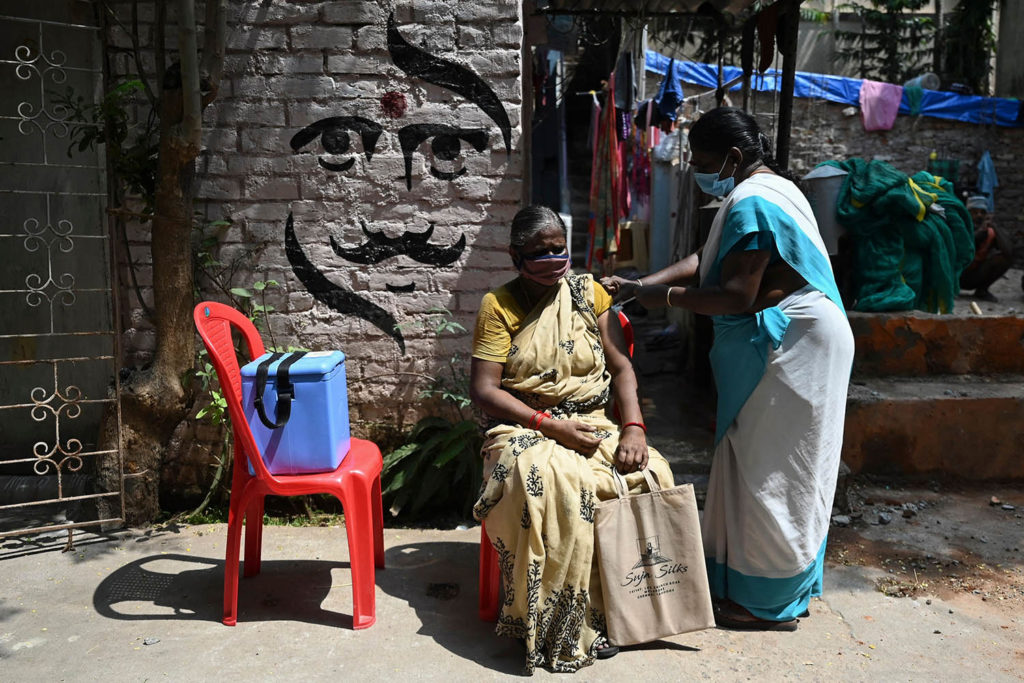
Narendra Modi is celebrating the “momentous feat” of vaccinating 75 per cent of India’s population but the reality could be starkly different. Healthcare workers on the ground say 20 to 35 per cent of adults in urban areas and 40 to 60 per cent in rural areas are fraudulently listed as double vaxxed. This is less a story of vaccine hesitancy than of “unprecedented pressure” from ministers to give more jabs – without the infrastructure to support it. Threats of withholding salary and job suspension have pushed workers to falsely register doses, which has been made easier by loopholes in the registration system. The Guardian has the story, which makes clear that once certified as doubled-vaxxed, Indians are cleared for inter-state and international travel.