
What just happened
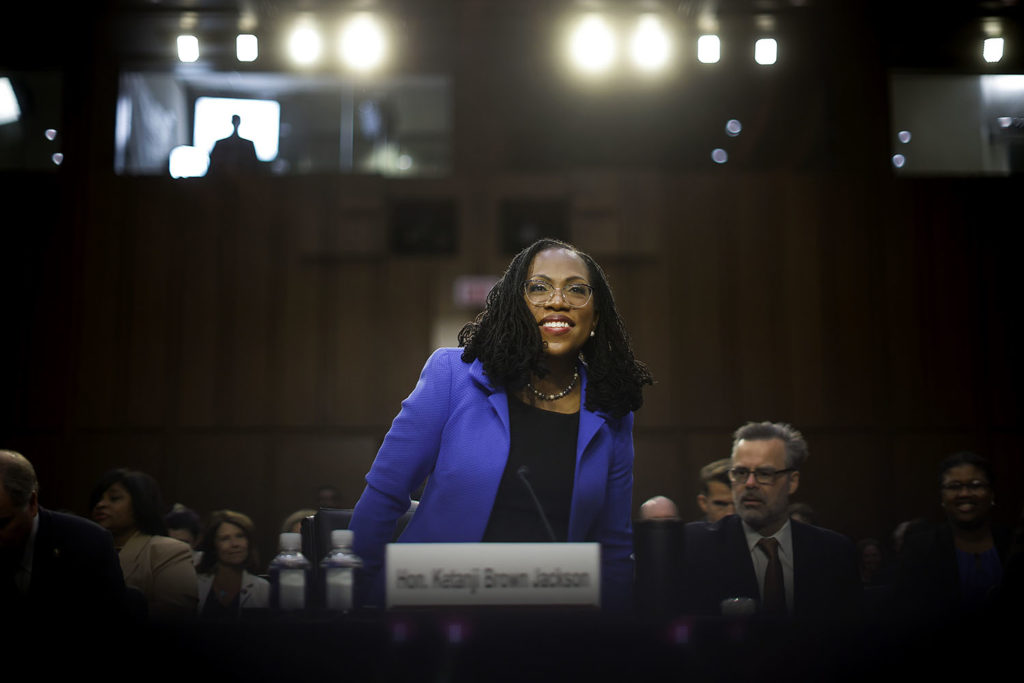
- The US Senate approved Ketanji Jackson Brown’s nomination as the first Black woman on the US Supreme Court (more below).
- Volodymyr Zelensky said atrocities being uncovered in Borodyanka, northwest of Kyiv, were even worse than those committed in Bucha.
- Polls showed Marine Le Pen closing on Emmanuel Macron, in some cases to within the margin of error, two days before the first round of voting in France’s presidential election.
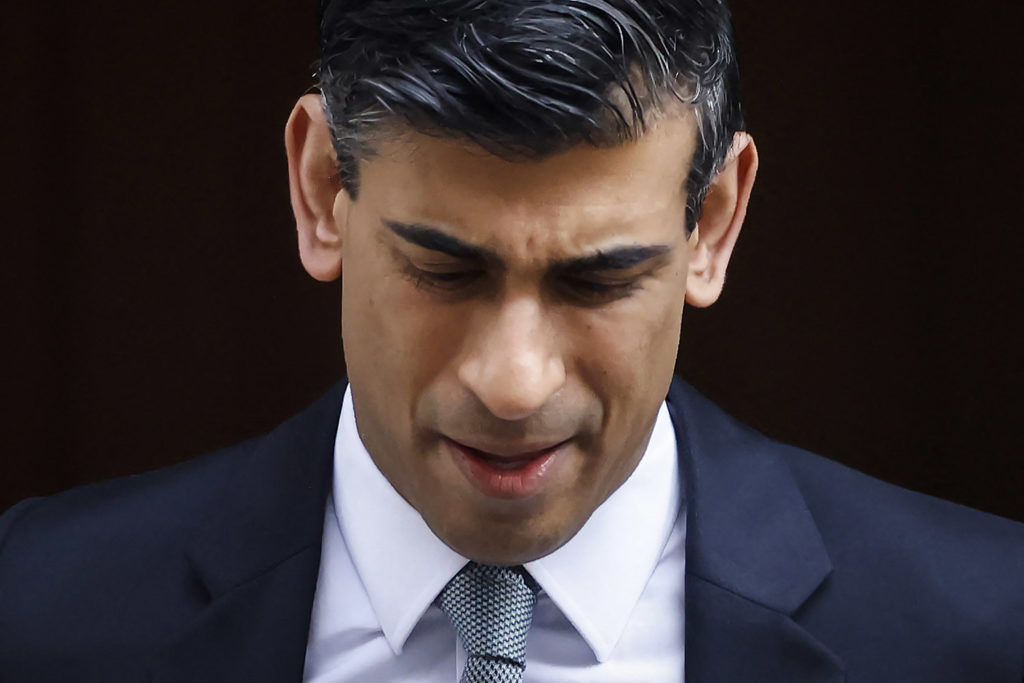
Two months ago the UK’s chancellor of the exchequer was a prime minister-in-waiting; the most likely spear tip of any operation to remove Boris Johnson from Downing Street before the poison of Partygate spread too far. Now Sunak is the poisoned one. He’s the least popular minister in cabinet and possibly a spent political force. If he wants to bid for Number Ten, one Tory source says, it’ll have to be in 2035.
What happened?
Brand mismanagement 101. For a Stanford MBA who entered the world of work via Goldman Sachs, Sunak made a good fist at first of seeming to understand the real world. He worked hard, drank Yorkshire tea and moved fast to bail out businesses and households when Covid hit. But giving handouts in a pandemic was always going to be easier than responding smartly to world-changing macroeconomic shocks, as he has found three times since 24 February:
- Spring statement. Sunak used last month’s mini-budget to raise benefits by less than half the rate of inflation, hoard tax revenues for a future tax cut and resist any extra borrowing. It went down like cold sick, even with the Telegraph, whose front page announced “the biggest fall in living standards on record”. Sunak had either misread global trends and the public mood or been captured by a blinkered Treasury orthodoxy concerned only with sound money, or all three. His photocall later that day filling up a borrowed Kia Rio (his own cars include a Lexus, a Range Rover and a BMW) didn’t help.
- Russia link. Asked the following day if his family was benefiting from his wife’s stake in Infosys, which continues to operate in Russia, Sunak said he had “absolutely no idea”.
- Non-dom bomb. On Wednesday the Independent reported that his wife, Akshata Murthy, pays £30,000 a year for non-dom status which allows her to avoid UK income tax on her overseas earnings. Murthy’s spokesperson said the status was effectively forced on her by her desire to retain her Indian citizenship, but this isn’t true. Domicile for tax purposes has nothing to do with a person’s nationality, and applying for non-dom status is a proactive choice. Getting it is not a given. Applicants are supposed to show an intention to return at some point to their country of origin, and Sheffield University’s Professor Richard Murphy says in this case an HMRC inquiry would be warranted since all the signs are that Murthy intends to stay in the UK.
Sunak tells the Sun today it wouldn’t be fair to ask his wife to sever her ties with India because of who she’s married to, but no one is asking her to do anything of the sort. She could easily pay taxes on her worldwide income in the UK and retain all her ties to India.

The UK’s tax treaty with India allows someone in Murthy’s position to pay Indian income tax on her Indian earnings at 10 per cent compared with 38.1 per cent in the UK, rising this week to 39.35 per cent. At that rate, she will have saved about £20 million in UK tax over the past seven years on the £54.5 million she has received in dividends from her stake in Infosys.
Will Sunak have benefited from these savings? Of course, Professor Murphy says.
- Are they illegal? No.
- Are they politically survivable? We’ll see.
- Who ultimately decides whether HMRC should investigate Ashtaka Murthy’s tax status? Rishi Sunak.

Walmart truckers
Walmart is paying new truck drivers starting salaries of $110,000 a year, up from a previous starting rate of $87,500 and a median wage for US truckers of $47,130 two years ago. The world’s biggest retailer has always paid its drivers relatively well, but the 67 per cent premium it is now paying relative to the 2020 median for the sector reflects a rare confluence of a) surging inflation, b) supply chain bottlenecks threatening even well-established business models and c) a new resolve on the part of big companies to deal with those bottlenecks by bringing more of their logistics in-house. Amazon is doing more and more of its trucking itself, and Walmart is copying its move to recruit drivers internally from other parts of the business.
America’s new justice
Ketanji Brown Jackson, both of whose parents went to segregated schools, celebrated her elevation to the US Supreme Court in the White House yesterday as Republicans who failed to derail her nomination walked out of the Senate calling it a win for the far left. When Jackson replaces Justice Stephen Breyer later this year the court will for the first time have four women, two Black justices and a Latina. In demographic terms, after two and a half centuries dominated by white men, it will reflect more closely than ever the nation whose laws it’s meant to govern. But with six of the nine justices Republican appointees, its conservative leanings could influence its rulings for decades. Jackson, who has two Harvard degrees and long experience as a public prosecutor, was trolled by critics in Congress as a coddler of criminals but hailed by supporters as a consensus-builder. She is likely to spend much of her time writing dissenting opinions even so.

Heavy weapons
Nato agreed yesterday to step up its supply of heavy weapons to Ukraine as Russian troops regrouped for what’s expected to be a fresh assault on the Donbas. So far Nato members fearful of triggering a Russian nuclear escalation have been cautious about supplying anything bigger than the portable anti-tank and anti-aircraft systems lest they be deemed “offensive”. But yesterday Nato’s secretary-general said the distinction between offensive and defensive was meaningless since from Ukraine’s point of view this was a defensive war. The US has promised air defence hardware. The UK is expected to send Mastiff and Jackal armoured vehicles. A race is on to get them to where they are needed, because Putin is thought to be determined to achieve an “announceable” victory – for instance a conquest of the whole of Donetsk and Luhansk – by Russia’s annual Victory Day celebrations on 9 May. Putin’s spokesman admitted “significant” Russian losses for the first time yesterday, which may make the need for a “victory” all the more acute.
After miscarriage
Even though one in four pregnancies ends in miscarriage and around 250,000 occur in the UK every year, doctors are still mostly in the dark as to why it happens. What they are beginning to understand is the potential for miscarriage to lead to post-traumatic stress disorder (PTSD), depression and anxiety. Professor Tom Bourne tells the BBC that based on his research of pregnancy loss an estimated 45,000 women in the UK will experience PTSD symptoms every year. The figure isn’t more precise because of a lack of data internationally and in the UK on miscarriage rates, exacerbated by stigma that still leads many women to miscarry at home in isolation. Things are getting better, though. Charities working with parents and celebrities like Myleene Klass and Chrissy Teigen who have shared their personal stories have increased pressure on government to deliver on commitments to boost perinatal care.


