

What just happened
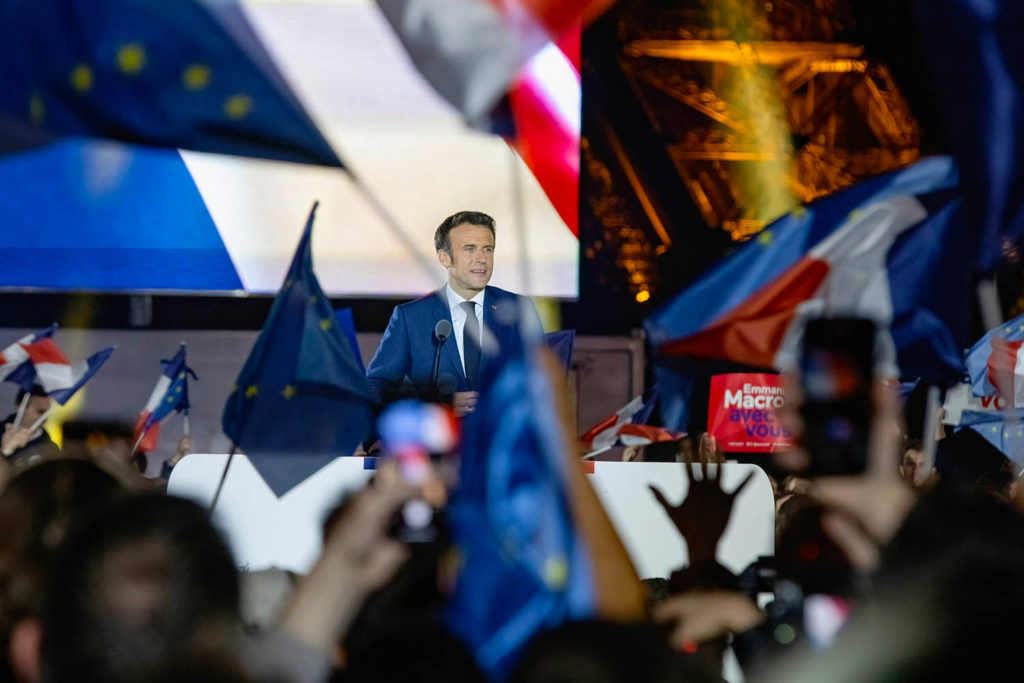
- Macron won a second term as president of France, with a 17 point lead in the official exit poll over Le Pen (more below).
- The US announced $700 million more in military aid to Ukraine on a visit to Kyiv by its secretaries of state and defence that they failed to keep secret because Zelensky announced it in advance.
- A senior UK government official told the Times Sue Gray’s forthcoming report on lockdown parties is so damning Boris Johnson may have to go.
French voters rejected nationalism last night, about four and a half times more emphatically than British voters embraced it six years ago.
Emmanuel Macron admitted in his victory speech that many of the 58 per cent of French voters who backed him for a second term did so only to erect “a barricade” against Marine Le Pen – who won nearly 3 million more votes than in 2017 and hinted she may yet run again.
But it was Macron’s night.
- He’s the first French president to win a second term since 2002 and the first in five decades to win one not encumbered by “cohabitation” with an opposition majority in parliament.
- Parliamentary elections in June – aka round three of the presidential election – could force him into a cohabitation. Equally, his party could hold on to its majority thanks to the same polarised opposition that has let him redefine the centre of French presidential politics.
- His margin of victory, half as big as in 2017, was still a crushing disappointment for Le Pen supporters who hoped for an upset to match the UK’s EU referendum and Trump’s 2020 election.
Brexit, Trumpism and Putin were all factors in Macron’s win. He has cast himself as a figurehead of European democracy against all three, and EU flags were as evident as French ones on the Champs de Mars last night. That said, his slow walk to a podium with his wife and a backing track of Ode to Joy was not exactly joyful.
The price of victory is anger as well as polarisation.
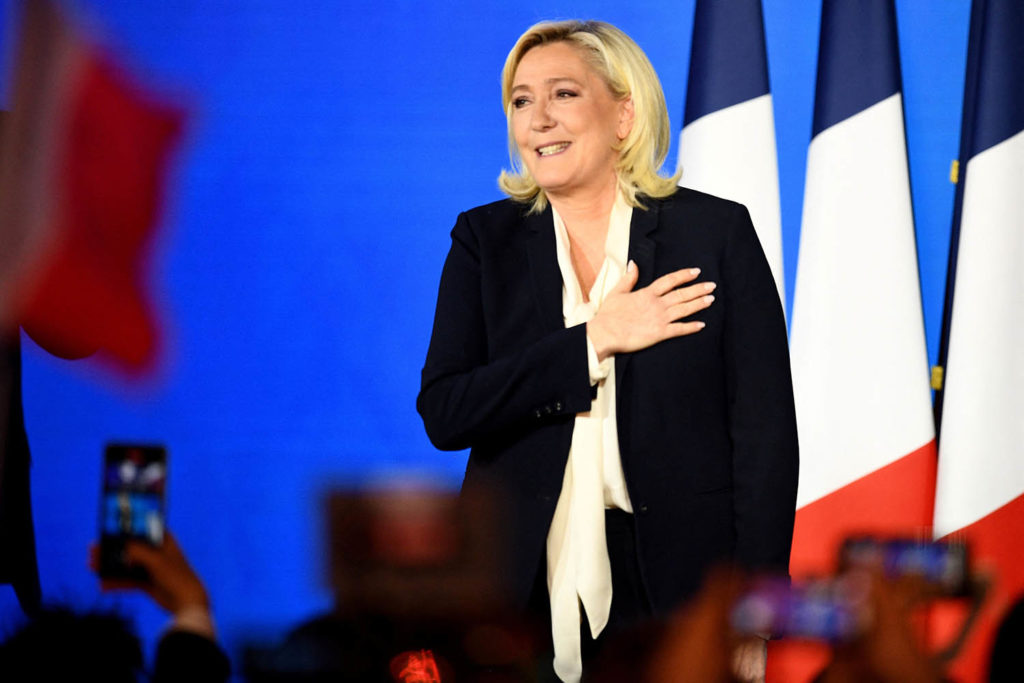
The hard right is the new opposition: from 18 per cent when Le Pen’s father competed in the 2002 run-off, to 41 per cent now, its vote share has grown relentlessly and its platform of soft-focus xenophobia – couched now as preferential treatment for native-born French – has entered the mainstream.
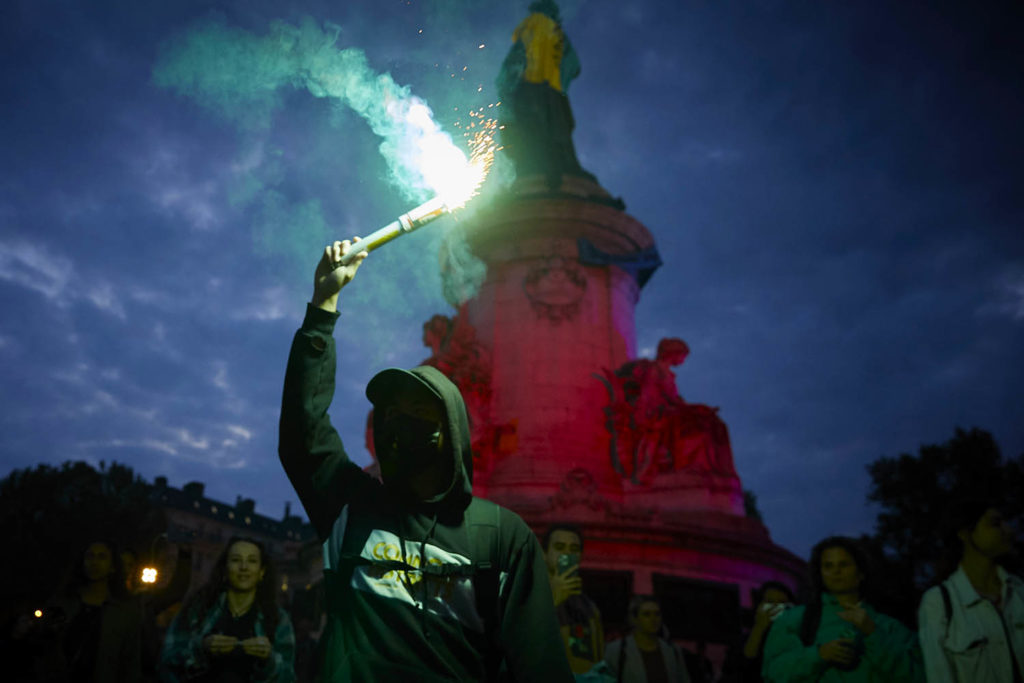
The hard left detests Macron, and the fact of having to choose between him and Le Pen. Its de facto leader, Jean-Luc Mélenchon, begged supporters after round one not to give Le Pen a single vote but didn’t endorse Macron, whom he caricatures as an ex-banker who outsources government to McKinsey. Only 15 per cent of his 7.7 million first-round supporters backed Le Pen yesterday. 42 per cent voted for Macron – but 45 per cent abstained or spoiled their ballots. Mélenchon appealed to them directly last night to vote in force for his Union Populaire in June, and make him prime minister in a cohabitation to thwart Macronian elitism.
Why the unhappiness?
Macron has presided over a period of relative economic success. France emerged from Covid the fastest growing economy in the G7. Wages rose on his watch and unemployment is at its lowest point in more than a decade. But the headline numbers mask underlying problems:
- Cost of living: Pressures on the cost of living induced by the pandemic and the war in Ukraine are top of mind for the French electorate. Inflation (at 4.6 per cent) is lower than in the UK or US but still high enough to wipe out most wage growth.
- Inequality: It has been tough for Macron to shift the view that he’s president of the rich. He has been criticised throughout his presidency for focussing on big business and wealthy urbanites while ignoring the poor and rural.
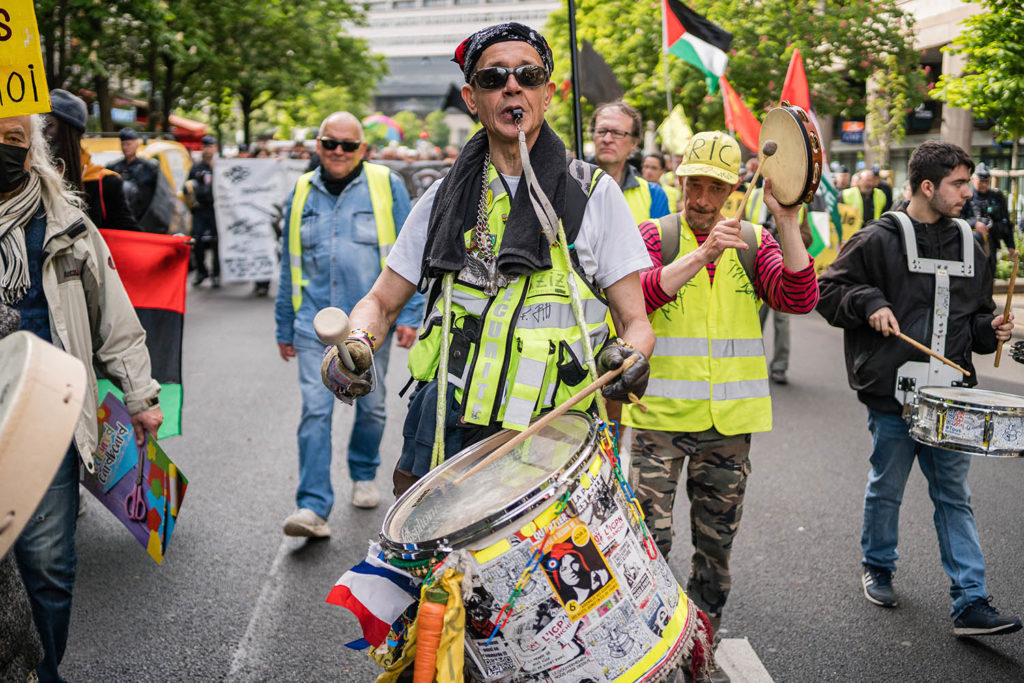
City and country clashed spectacularly in 2018 when the gilets jaunes stormed France’s roundabouts to protest, initially, against a proposed rise in fuel duties. The demonstrations morphed into a broad revolt against Macron’s perceived arrogance, and nearly dethroned him. The protests subsided but the resentment hasn’t gone away.
Macron 2.0 – the agenda
If he is to see off the far-right and the radical left, he will need to prove that he can satisfy the demands of the electorate. Polling by Ipsos for Le Monde found that the top concerns for French voters going into this election were:
1. Purchasing power (52%)
2. Healthcare (30%)
3. Climate change (29%)
4. Immigration (28%)
Macron sought to answer many of these concerns in his campaign.
- Purchasing power: His government has put a cap on gas and electricity prices and handed out €100 grants to 38 million people on low and middle incomes. Further proposals include allowing employers to give out bonuses of up to €6,000 tax-free.
- Healthcare: France has a shortage of doctors, particularly in rural areas: around 7.4 million people in the country have “limited” access to a GP. To help support the healthcare system Macron proposed a recruitment drive for nurses, elderly care assistants and assistants for GPs. He promised to simplify healthcare administration, to improve access to emergency care and to better coordinate care between GPs and hospitals.
- Climate change: Macron pledged to increase France’s nuclear energy capacity with six new power stations and to build more renewable energy sources. He also promised to help insulate 700,000 homes per year.
- Immigration: A significant portion of the French electorate is worried about illegal immigration. Macron has tried to speak to those concerns without echoing Le Pen’s racism. He said he wants to accelerate the decision making process for asylum applications and to deport those who are not granted asylum. He also proposed limiting French citizenship to those who are able to pass an advanced language test.
Bear traps
- Cohabitation: if Macron’s La République en Marche fails to persuade voters to its left and right that it takes their grievances seriously, his second term could be gridlocked in parliament and his agenda for term two stillborn.
- Gilets Jaunes redux: “The Gilets Jaunes didn’t just evaporate after taking off their vests,” says Magali Della Sudda, a researcher at Sciences-Po. France is subject to the same energy price spikes as the rest of Europe, and smaller-scale protests have emerged against Macron’s strict vaccine mandates and his plan to raise France’s retirement age to 65. That plan is on ice, but the protests could still balloon.
It’s fashionable to focus on what ails liberalism, not its winners. For all his critics and the heavy lifting he still faces, Macron is a winner. The most conspicuously talented politician in any advanced democracy has just won a second term, and his rival conceded promptly and with reasonably good grace. Democracy ain’t dead.


