Sensemaker Daily

What just happened
- Russia said it would cut off gas supplies to Poland and Bulgaria from today because of their refusal to pay in rubles.
- In a U-turn, Germany announced plans to send tanks to Ukraine.
- Kyiv blamed Russia for a series of explosions in Transnistria, where Russian troops store 20,000 tonnes of weapons and ammunition.
- Imran Khan, the British ex-MP convicted of child sex abuse, was found to have been advising the government on grooming gangs at the time.
The former US general who led President Obama’s troop surge in Afghanistan has called the American withdrawal from Kabul a heartbreaking and tragic failure.
David Petraeus tells Tortoise the sudden end to Nato’s 20-year Afghan operation was a “failure of strategic patience” because
- America’s Nato allies were willing to stay;
- the human cost was sustainable – US had not lost a soldier in combat in Afghanistan in 18 months; and
- while not a “win”, the status quo was better than the alternative for the US and “more importantly for Afghanistan and the Afghan people”.
Petraeus was speaking to Andrew Neil for The Backstory, a new Tortoise podcast series launched yesterday. The evidence for his argument is plain to see even if the world has turned away to focus on Ukraine.
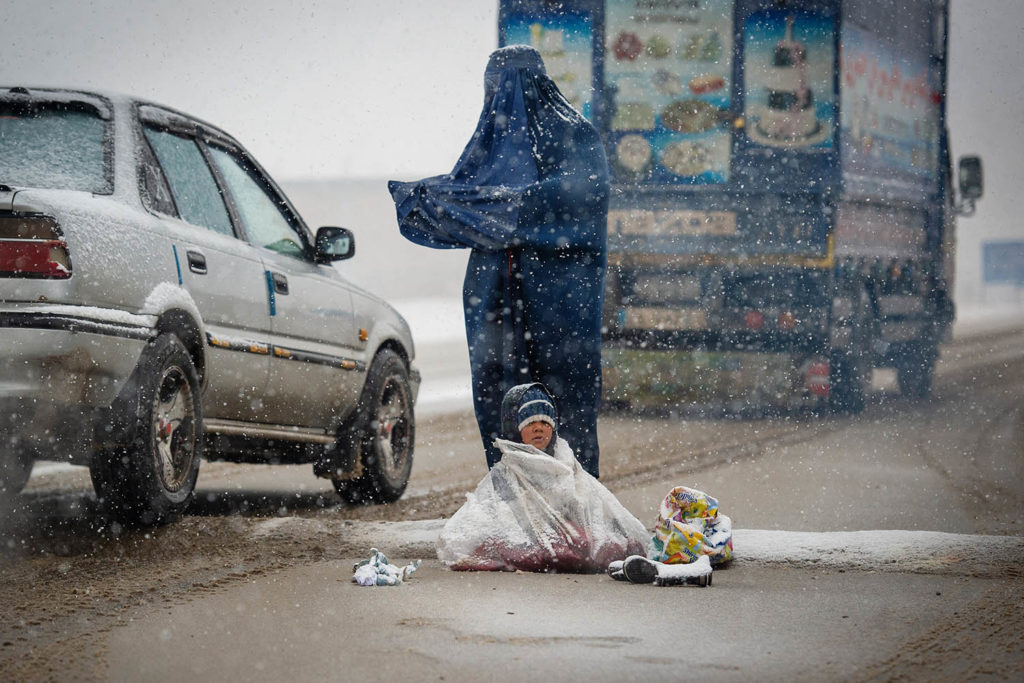
Eight months on from the withdrawal, Afghanistan has no functioning economy. A quarter of its people are at risk of starvation. Ninety-five per cent lack enough food. Isis bombings are on the rise. The security situation is expected to get worse with the summer fighting season and fully half the population – Afghanistan’s women and girls – are confined by the Taliban to a form of purgatory that for two decades Nato helped to hold at bay.
Economy. Foreign aid accounted for three quarters of public spending and up to 40 per cent of all economic activity in Afghanistan for most of the past 20 years. That aid was frozen last August along with $9 billion of Central Bank reserves held abroad. Two executive orders signed by President Biden in February allowed limited access to those reserves to enable the UN to distribute cash directly to households, but…
- $3.5 billion of the reserves remain frozen and subject to litigation in the US by families of victims of 9/11;
- the Afghan Central Bank is still not functioning;
- private banks remain closed;
- foreign banks have no way of bringing money into the country;
- Afghan citizens cannot access credit; and
- US sanctions first imposed on the Taliban in 2001 remain in force and now extend to the Central Bank and other financial institutions under Taliban control.
Food. The UN’s Special Representative for Afghanistan told the UN Security Council in March that her worst fears of famine and starvation had been averted, but the reality is that 95 per cent of of Afghans are not getting enough to eat.
According to the World Food Programme and Unicef
- 22.8 million people – more than half the population – face acute food insecurity;
- 8.7 million people face emergency levels of food insecurity;
- 3.2 million children in Afghanistan will suffer from acute malnutrition in 2022; and
- a million severely malnourished children will be at risk of death.
Obstacles to feeding Afghanistan include
- Lack of money, which is proving as dangerous as a lack of food. There have been multiple reports of people selling kidneys and even their own children in desperate attempts to pay for food, and most current aid is based on expensive and unsustainable handouts that will only become more expensive as the war in Ukraine pushes up prices of staples such as wheat. The WFP is seeking $4.4 billion from the UN, its biggest-ever ask for a single country, but even that is unlikely to be enough.
- The Taliban. Aid agencies are struggling to get food to where it needs to be, as opposed to where the Taliban would like it to be. Food has long been used as a weapon by the Taliban to gather support and crush dissent. To bring aid to the most vulnerable requires navigating centuries-old disputes between Afghanistan’s myriad ethnic groups.
- Drought and Covid. The worst drought in 27 years and a health system over-burdened by the pandemic have left Afghanistan even more vulnerable to malnutrition than it would have been thanks to the takeover alone.
Women’s rights. Women are bearing the brunt of the country’s food and economic crises. The UN reported in March that almost 100 per cent of women-led households were experiencing hunger. In addition:
- Public spaces. As under the previous Taliban regime in the 1990s, women’s access to public spaces, education and work is being increasingly curtailed. The Ministry of Propagation of Virtue and the Prevention of Vice (which replaced the Afghan Ministry of Women Affairs) has tightened constraints on women, including requiring a male guardian (mahram) for journeys of more than 45 miles within the country and abroad. There are similar restrictions on accessing healthcare and parks, and reports of women being banned from taxis and public transport in cities.
- Work. Women are allowed to work and study, “subject to Islamic Law”. The result is a culture of fear among working women, and restrictions on girls’ education. According to the International Labour Organisation, Afghan women’s employment levels fell by around 16 per cent in the third quarter of 2021, compared with 6 per cent for men. By the middle of this year women’s employment is expected to be 21 per cent lower than before the Taliban took over. For widows and women who are sole breadwinners, this means relying on aid to survive.
- Schools. After a campaign of international pressure it seemed schools would allow female students to return last month after a seven-month absence. But after two days back in classrooms girls were turned away until their education was deemed “compliant with Islamic law”. Despite condemnation from other Muslim-majority countries, ”the Taliban appear to have stopped giving any pretence of appeasing donors in hopes of gaining aid and recognition,” Heather Barr of Human Rights Watch writes. The impact on girls excluded from education is likely to be felt for generations.
Security. US and UN officials have identified 20 militant groups operating in and from Afghanistan. By far the most serious threat to Taliban control is posed by Islamic State Khorasan (IS-K), now stepping up attacks after being suppressed in the first few months after the Taliban’s return. Unlike the Taliban, IS-K targets Afghanistan’s Shia minority and dreams of a Sunni emirate straddling Central Asia’s borders. It claimed responsibility for suicide bombings that killed a total of 18 people earlier this month in a boys’ school in Kabul and a mosque in Mazar-i-Sharif, and is blamed by Pakistan for dozens of cross-border attacks despite a new 1600-mile border fence declared 90 per cent complete last year. Pakistan also accuses Kabul of helping the Pakistani Taliban mount hundreds of attacks on government forces in northwest Pakistan since last August – to which Islamabad has responded with cross-border airstrikes.
“Whether we like it or not in the West, Afghanistan will remain… an ungoverned space for international terrorism,” says Roh Yakobi, a former refugee and associate fellow at Human Security Centre. You can hear Roh’s story in our Slow Newscast, A son of Afghanistan.
Petraeus says the Nato could have maintained an acceptable level of security in Afghanistan with
- 3500 US troops
- 8500 troops from non-US Nato allies
- an expanded drone presence; and
- a functioning helicopter capability that was the “lynchpin” of Afghan security until last year.
Refugees. The August takeover led to a new exodus of refugees. 2.6 million Afghans are now registered as displaced, 2.2 million of them in Iran and Pakistan. Western countries’ promises of support have seldom been kept. As of last month 12,000 of the 16,000 Afghan refugees to have arrived in the UK since the withdrawal from Kabul were still living in hotels at a cost to the government of £1.2 million a day.
Petraeus invoked the image of a circus performer to remind America of its role as the indispensable nation at a time of multiple geostrategic emergencies, from keeping Ukraine supplied with heavy weapons to managing a critically important relationship with China.
“The US uniquely has to keep a whole bunch of plates spinning,” he told Neil. “We have to have a capability that is full-spectrum, and we can, and we do.” Except, apparently, in Afghanistan.
Bounceback bonanza
Unscrupulous recipients of UK “bounceback” loans during the pandemic used them to fund poker games, pay themselves consultancy fees and beautify their gardens, according to a Times investigation that in normal times would terrify the government – and might do even in these abnormal ones. Some of those who got cash from the chancellor tried to smuggle it out of the country in suitcases, Home Office sources tell the paper. Others wildly inflated their turnover in order to qualify for the maximum £50,000 loan, one (the poker player) claiming revenues of £200,000 when his bank balance stood at £2.72. £80 billion was lent via banks under the scheme, mainly to small businesses. About £5 billion is thought to have been lost to fraud, and the Treasury expects £15-17 billion will never be paid back. Those early months of the pandemic were chaotic, to be sure, but due process still needs to reach back in time and untangle the chaos.
Wales v conversion therapy
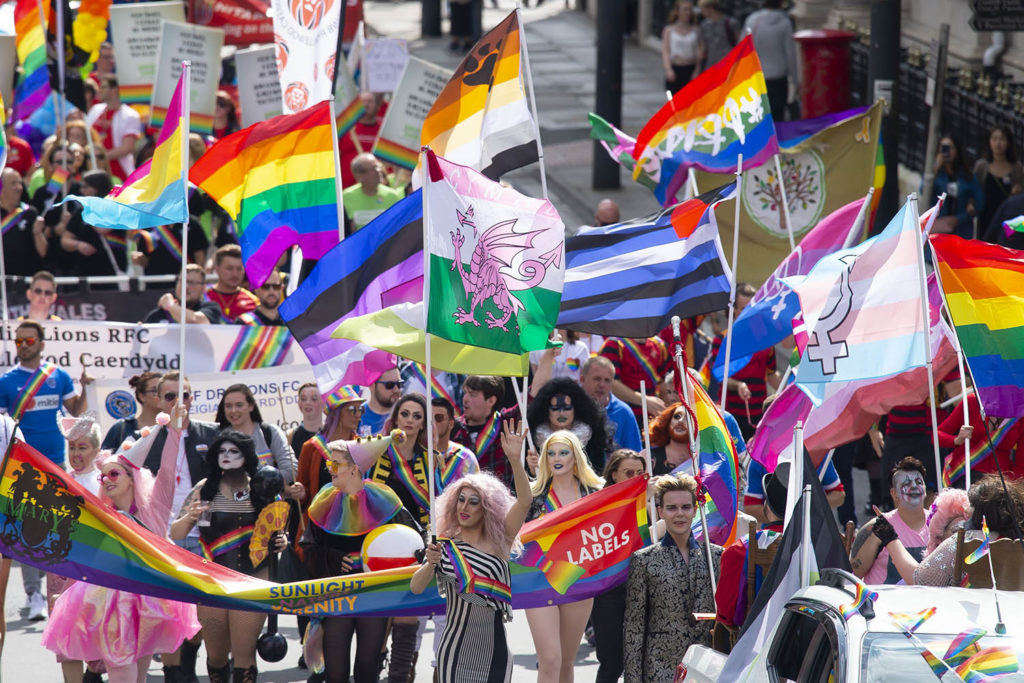
Wales plans to ban conversion therapy – which treats sexuality and transgender identities as illnesses to be cured – as “discredited”, “draconian and “wholly unacceptable”. The Welsh Government has reached an agreement with NHS Wales to prevent any conversion therapy being commissioned or provided in Wales but it faces a hurdle enforcing a full ban as justice and policing aren’t devolved to Wales. Scotland, where they are devolved, looks set to ban conversion therapy by 2023 after the Conservatives there broke rank and supported a complete ban. Last month the UK government reversed a decision not to ban conversion therapy at all but partially backtracked after outrage from many LGBT+ Tory MPs. It was also forced to cancel its global Safe To Be Me conference in the summer after more than 100 LGBT+ organisations pulled out over the issue. Banning conversion therapy entirely is popular across the board according to polling, including among Tory voters.
EU rules for Twitter
The three-word version of the day-two story on Elon Musk’s Twitter takeover goes like this: not so fast. First, officials in Brussels pointed out that if the platform wants to continue to operate in the EU it will have to continue to obey EU rules on content-moderation. Then Tesla stock took a dive as markets contemplated the idea of Musk selling large chunks of his stake to fund his $44 billion Twitter purchase. Twitter’s share price dipped too and remains substantially below the premium Musk offered, reflecting market doubts about whether the deal will actually go through. And, helpfully, Jeff Bezos, now merely the world’s second-richest man, noted in a Tweet that Musk’s ownership of Twitter might give China new influence over the content it hosts because Tesla depends so heavily on China for sales, manufacturing and batteries. We’re asking whether Musk is a good billionaire next Tuesday at 6.30 pm. Which means we’re also asking whether he’s a bad one.
#36QuaidesOrfèvres
A French jury has overturned the conviction of two police officers for raping a Canadian woman in Paris police headquarters in 2014, despite medical and DNA evidence. Antoine Quirin and Nicolas Redouane were sentenced in 2019 to seven years in prison for gang-raping Emily Spanton, a Canadian woman, at 36 Quai des Orfèvres. Kim Willsher covered the case for Tortoise at the time.
The police officers initially denied any sexual contact with Spanton, but when evidence including DNA from three men on her underwear and medical proof of traumatic gynaecological injury came to light, they argued it had been consensual sex. In the appeal trial, the policemen said they lied because they were scared of an extramarital affair being revealed. Spanton’s account of the night allegedly contained inconsistencies too – something commonly found among rape victims whose memories are distorted by trauma. Though the judge presiding over the case didn’t reveal the jury’s rationale for acquitting the men, Redouane’s lawyer suggested the jury decided to focus on inconsistencies in the account of the woman, the alleged victim, rather than the other evidence.
Ford Lightning
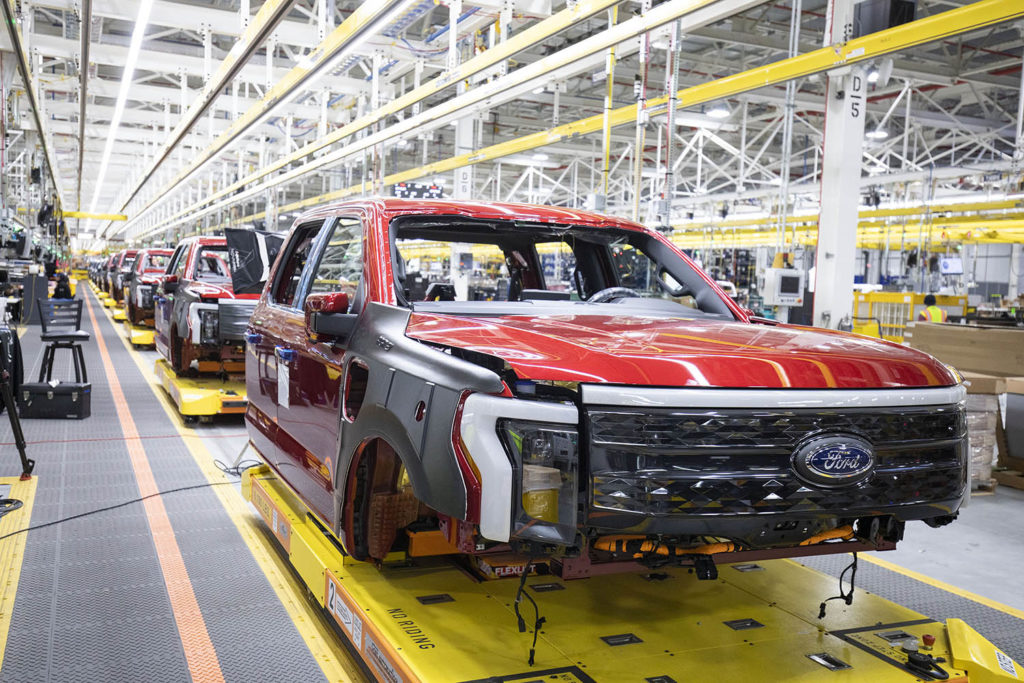
The Ford 150 pickup is America’s bestselling vehicle. The electric version, the Lightning, out now for just under $40,000 for the entry-level model, is a bet-the-company launch that might also give a glimpse of a future in which heartland petrolheads finally see the merits of clean motoring and neck-snapping torque. Then again, it might not. The good news for Ford is that a) having anticipated 40,000 advance reservations it’s got 200,000 and is therefore tripling its production target for this year to 150,000; and b) oil prices are spiking almost as high as battery prices, offsetting the sticker shock that comes with any EV. But it’s too soon to say traditional pickup buyers are switching to battery power in droves. Market research suggests most of those 200,000 reservations are from people considering a pickup for the first time precisely because they can now feel like King / Queen of the road without the guilt that (for them) comes with a five-litre V8.
Thanks for reading. Please share this around and tell us what we’ve missed. News tips and story ideas are welcome. Email them to sensemaker@tortoisemedia.com.
Giles Whittell
@GWhittell
Phoebe Davis
@phoebe_ivy
With additional reporting by Ellen Halliday and Ed Barnes.
Photographs Scott Peterson/Getty Images, Marcus Yam/LA Times via Getty Images, Bulent Kilic/AFP, Wakil Kohsar/AFP via Getty Images