
What just happened
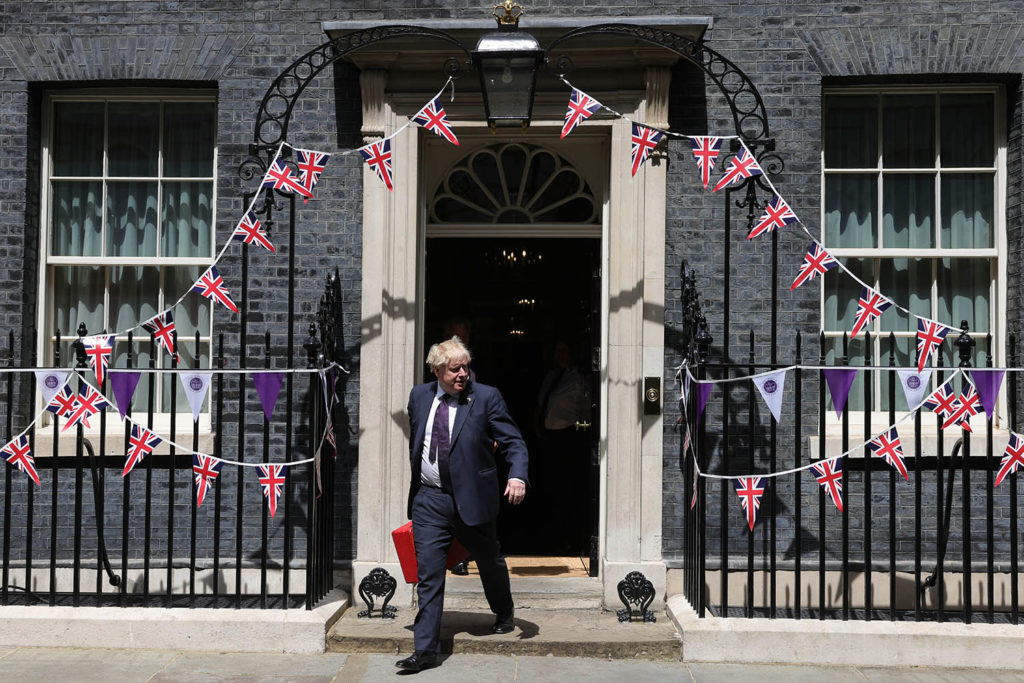
- Boris Johnson won a no-confidence vote by Conservative MPs by just enough to ensure months more infighting over his fate (more below).
- Russia confirmed the death of its 12th senior office in its war on Ukraine, General Roman Kutuzov.
- On a tour of England with the musician Jeff Beck, Johnny Depp paid a £50,000 bill for curry for friends and fans at Birmingham’s Varanasi restaurant.
It’s now highly likely that Britain’s next prime minister will be chosen by fewer than 0.5 per cent of the electorate from a shortlist of two drawn up by a total of 365 MPs.
Boris Johnson says yesterday’s vote of confidence, which he won by 63 votes, drew a “decisive” line under questions about his leadership. The reverse is true.
Current rules do now give him a year before rebels can force another vote and in principle he could limp on into 2023 and beyond. But in practice:
- those rules could be re-written any time party grandees decide they need to be; and
- Johnson has been humiliated as well as hobbled – humiliated because two-fifths of a parliamentary party that considered him a winner now think he’s a liability; hobbled because the rebels can defeat any government legislation by voting with the opposition.
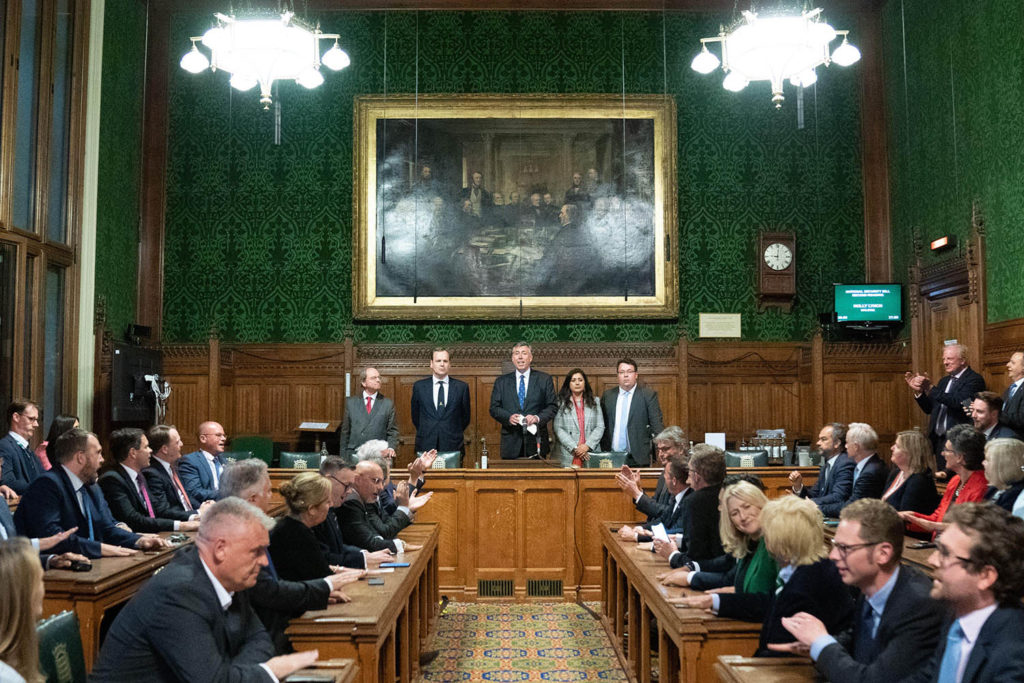
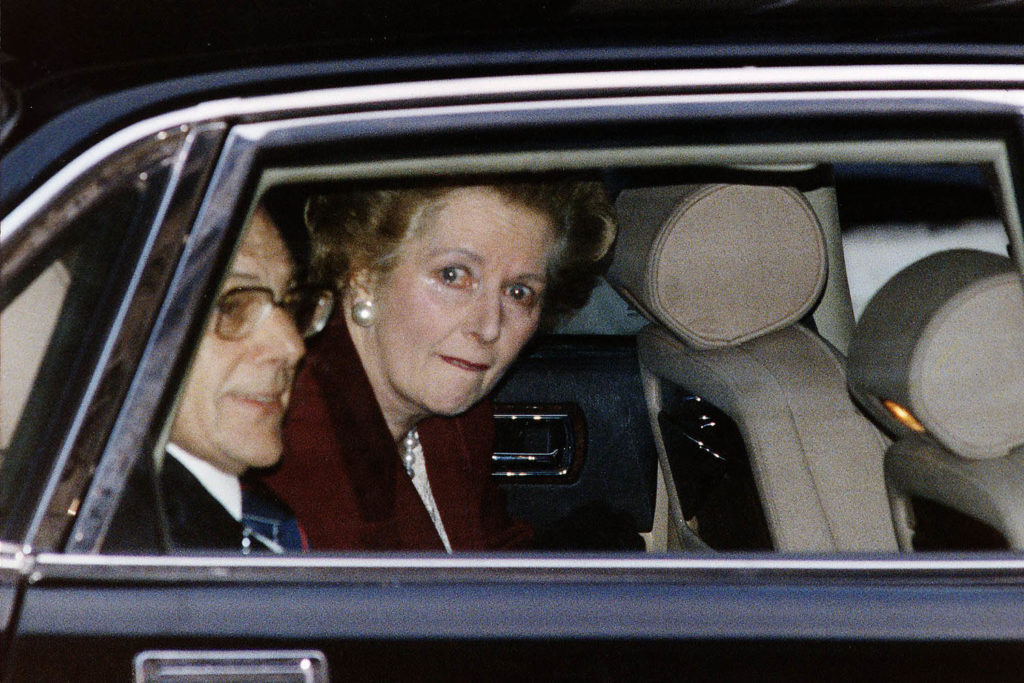
The scale of it. The rebel alliance of 148 is 41 per cent of the MPs Johnson led to victory three years ago – a bigger share than voted against John Major in 1995 or Theresa May in 2018 and the same as voted against Margaret Thatcher in Michael Heseltine’s 1990 leadership challenge.
- Major lasted two more years, then lost to Labour in a landslide.
- May was gone in five months.
- Thatcher said she’d fight on and fight to win, and stood down two days later.
In fairness to Johnson he has a 75-seat majority May could only dream of and a cabinet purged of rebels, or at least of rebels willing to declare themselves. So for now there is no equivalent of the ‘men in grey suits’ who eventually removed Thatcher. But the party’s self-preservation instincts run deep. When familiarity with a leader turns to contempt, defenestration tends to follow fast.
The form. In 1990 the Conservatives swapped Thatcher for Major. In 2016 May succeeded Cameron and in 2019 she was replaced by Johnson. None of these decisions involved the public. All prioritised the party and MPs’ jobs, and by the benchmarks of recent history, the party has now turned decisively against Johnson.
The activists. It’s not just the number of MPs who voted against him that will worry Johnson. (Whips hoped to keep that under three figures.) It’s the party members and constituency association activists who used to mob him at conference time and now neither believe nor believe in him – and who will be whispering in MPs’ ears as rivals for Number Ten go on manoeuvres.
- In a snap poll of activists by Conservative Home yesterday, 55 per cent said MPs should remove Johnson, up from 35 per cent in April and 41 last month. A similar ConHome sample gave him a 93 per cent approval rating after his 2019 win.
In any leadership challenge, Conservative MPs will vote in successive rounds to eliminate all but two contenders. The party’s national membership of about 200,000 will then decide between those two. This is the outer ring of what the late Fleet Street legend Peter Paterson called the Tory selectorate. The UK’s electorate currently numbers about 48 million.
Democracy in action.
Don’t miss Tortoise’s in-depth investigation of the state of British democracy, starting tomorrow.
Tiger Global sinks
Want to know how low the tech stock swoon is dragging those who believed most fervently in the tech stock boom? Consider Tiger Global, one of Wall Street’s biggest investors in Big Tech since the middle of the last decade, but also in exotica with names like DoorDash (food delivery), Snowflake (cloud computing) and Carvana (online used car sales). It had to tell investors last week that its hedge fund has lost 52 per cent of its value so far this year while another of its funds, which doesn’t hedge, is down nearly 62 per cent. Tiger’s losses are in the tens of billions and the US is not even in recession (yet). It’s hoping to recoup some of those losses by buying what it thinks are undervalued Chinese electric vehicle stocks. The WSJ has a write-up.
Beware 2027 in Taiwan
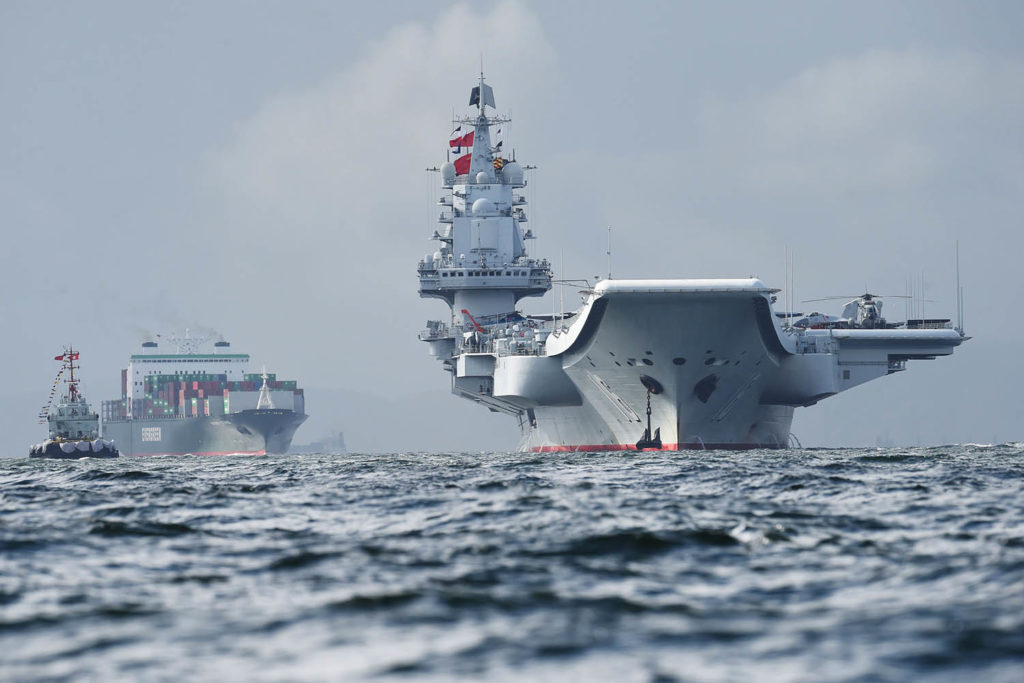
2027 will be the 100th anniversary of the foundation of the People’s Liberation Army (PLA) in China. It’s also the year retired US admiral Phil Davidson, former US military commander in the Indo-Pacific, thinks of as a plausible year for China to attack Taiwan. The FT’s interviewed him for a comprehensive read-thru on tensions across the Taiwan Strait. Paraphrasing Davidson, it talks about 2027 as a “potential time horizon”. Whatever that means, the Pentagon seems to share his general view that at current rates of military modernisation China will be ready to invade its neighbour well before the end of this decade. Last month Biden went further than his predecessors and than the current US doctrine of “strategic ambiguity” requires, confirming explicitly that if Taiwan were attacked America would come to its aid. China said in that event the US would pay “an unbearable price”. Brace, brace.
Alternatives to gun control
“To me, it’s just bizarre that the way we stop a person with a gun is by sending in another person with a gun” says Rick Smith, CEO of Axon – one of the biggest police contractors in the US for tasers and body cameras. There is some logic to this. But his solution of a drone that shoots taser darts, is no better. In a surreal video posted on his personal Twitter Smith speaks over comic book strips that illustrate how the drone could incapacitate a shooter within 60 seconds, as well as slow-motion footage of a test drone in action. As a member of Axon’s artificial-intelligence ethics advisory board puts it: “You cannot address these horrific national tragedies … by throwing a Taser on a drone”. In response to resignations by board members Axon has now abandoned the plans – but there are other companies producing everything from school surveillance systems to bulletproof backpacks. If only there were a simpler way to stop school shootings.
Autism care
Autistic adults self-report lower quality healthcare across a swathe of markers in comparison to non-autistic adults, according to new research from the University of Cambridge. In the largest study to date comparing the experience of autistic and non-autistic adults, the researchers found persistent inequalities across the board, from levels of pain and communicating symptoms to understanding what healthcare professionals are saying. Of the 51 criteria studied, autistic people reported lower quality healthcare in 50. Dr Elizabeth Weir, lead researcher on the study, told Sensemaker: “I think it’s really going to surprise doctors how basic a lot of these issues are”. But problems with those issues can “completely inhibit care”. Listen back to our Slow Newscast a place for Elliott from last year on how some of these problems affected a family trying to get their son vaccinated against Covid.

Cooked or what?
John Kerry, the US climate envoy, says we’re “cooked” if promises made six months ago at Cop26 aren’t kept. He knows full well they haven’t been, and the thrust of his remarks at this week’s UN climate conference in Bonn is that using the war in Ukraine as an excuse to fall back on fossil fuels will only make the post-war climate hangover worse. (See today’s net zero Sensemaker for more on the war and climate.) But amidst the gloom there’s a substantial piece of rosy data, if it’s to be believed. China says its net carbon emissions fell by 1.4 per cent in the first quarter of this year, thanks to its economic downturn but also to “strong” increases in renewable energy capacity. 1.4 per cent of a big number is not to be sniffed at.
Thanks for reading. Please share this around and tell us what we’ve missed. News tips and story ideas are welcome. Email them to sensemaker@tortoisemedia.com.
Giles Whittell
@GWhittell
With additional reporting by Phoebe Davis and Ella Hill.
Photographs Andrew Parsons / No 10 Downing Street, PA/Alamy, Mirrorpix/Alamy, Getty Images


