
What just happened
- A study by the UK’s Royal College of Nursing found white nurses were twice as likely to be promoted in the NHS as their Black and Asian colleagues.
- Brazilian police launched a criminal investigation into the disappearance of Bruno Pereira, an expert on indigenous peoples, and Dom Phillips, a British journalist, in the remote Amazon.
- An 80-year old runaway tortoise was found by rail workers and reunited with her owners eight months after absconding from her pen in Knebworth, north of London.
British democracy isn’t working. Twelve years since the Conservatives took power and six since the EU referendum, voters are dissatisfied with their representatives, divided by demography and distrustful of a system that seems stacked against them.
Barely half of voters think of Britain as a functioning democracy.
Nearly a third want a strong leader unconstrained by parliament when it comes to making big decisions.
Three quarters think MPs don’t care much or at all about their everyday concerns.
Four-fifths feel they have little or no say in how the country is run.
These aren’t hunches. They are among the findings of a comprehensive Tortoise investigation of the state of democracy in the land of Black Rod, Magna Carta and Boris Johnson. They’re based on an exclusive poll of 10,000 voters – five times the standard sample size for surveys of voter sentiment.
The investigation starts with this week’s Slow Newscast, continues with a series of ThinkIns in London, Birmingham and Bristol and continues next month with the Tortoise summit on the state of British democracy.
More key findings from Tortoise’s Democracy in Britain poll:
On representation, vital levers of power between people and parliament are seen as broken.
- Two-thirds of voters say most MPs “are mainly out for themselves”.
- Fewer than one in five think ministers care about their concerns.
- By 2:1, they think it doesn’t make much difference which party is in power.
- Only 5 per cent say “the quality of our MPs” is one of the best features of British democracy, compared with 54 per cent who say it’s one of the worst.
- 61 per cent say it’s dangerous to give leaders too much power, but 30 per cent – or the equivalent of 14 million adults – think “Britain these days needs a strong leader who can take and implement big decisions without having to consult Parliament”.
On fairness, the power gap is widening.
- Nearly six in ten say “rich and powerful people having more political influence than ordinary voters” tops a list of the worst features of British democracy.
- Two-thirds say people who live in cities have more advantages than those in towns and villages.
- By wide margins, they say southerners have more advantages than northerners, men than women, graduates than non-graduates, straight people than LGBTQ+ people and those born in Britain over those born elsewhere.
- They know the elderly get more help than young people from the government, but still reject higher taxes and more support for the under-30s by 2:1.
On public services, despite endless gloomy headlines, something is working.
- Seven in ten adults are broadly or very satisfied with the service they get from the NHS, rising to 72 per cent when looking specifically at local health provision.
- Clear majorities are satisfied with their local state schools, police and local government services including bin collection.
- But satisfaction with universities and the courts barely rises above 50 per cent
On Brexit and Britishness, Britain seems to be suffering from buyer’s remorse and boomer truculence.
- 45 per cent of voters would vote to rejoin the EU if there was another referendum, compared with 40 per cent who’d vote to stay out.
- 40 per cent consider having the Queen as head of state one of the best features of British democracy even though no one’s ever voted for her.
- More than two thirds (68 per cent) across all age ranges say young people don’t have enough respect for traditional British values.
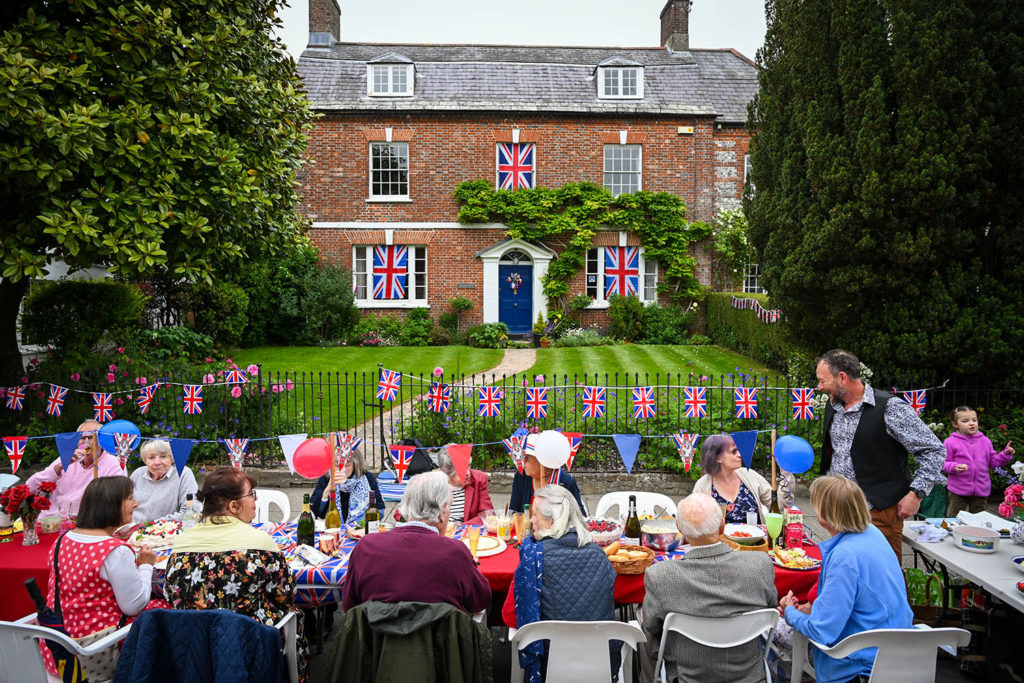
Street parties and Partygate have thrown Britons’ relationship with democracy into sharp relief, and they may help explain some of these findings. “Our response to the Queen’s Platinum Jubilee shows that tradition and rules still matter to us,” the pollster and political analyst Peter Kellner says. “It’s just that we no longer look to Parliament to uphold them.”


