
What just happened
- EU leaders said Ukraine should be granted immediate candidate status in its bid to join the union.
- The UK’s Gatwick airport said one in ten flights departing this summer would be cancelled because of staff shortages.
- The Union Cycliste Internationale halved its accepted level of plasma testosterone for trans women seeking to compete in top-level cycle races.
With all the surprise of the coming of Wimbledon, Britain has locked horns again with the EU over Northern Ireland’s borders and the goods that cross them.
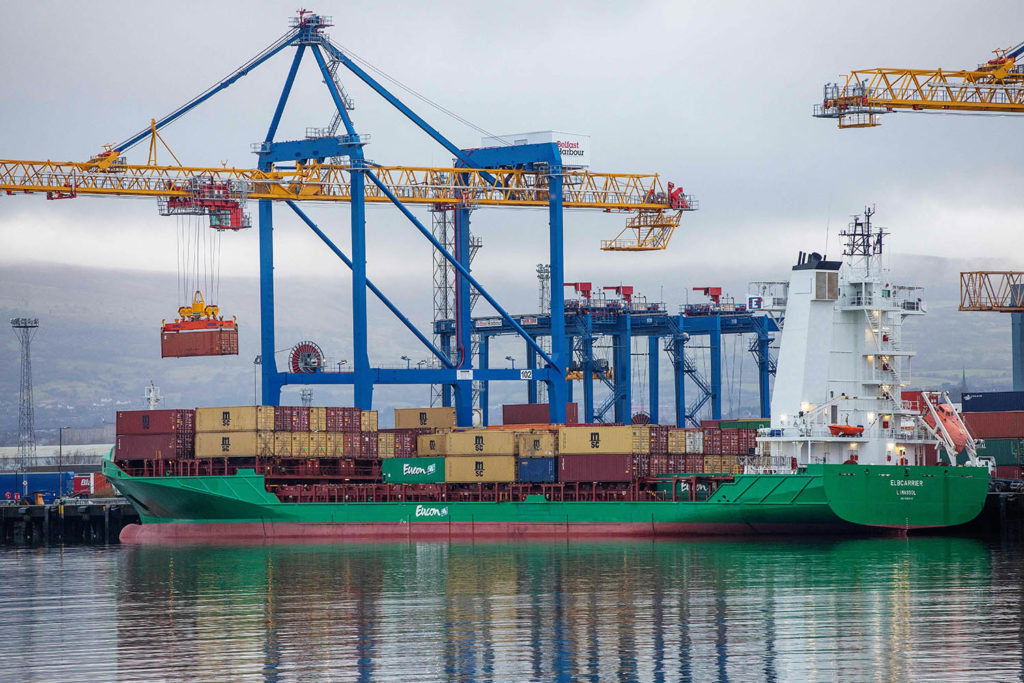
The UK government has introduced a bill to tear up the Northern Ireland Protocol that enabled it to get Brexit done. The EU has hit back with two lawsuits and scarcely-veiled threats of a trade war.
There are two ways of looking at this dispute. One – rejected by a majority in the province and by many senior Conservatives – is that the EU has been inflexible even by its own standards in applying the protocol, which is causing public angst and so has to be re-written by London.
The other is that the Johnson government wants to have its cake and eat it: Brexit thanks to the protocol, and Brexit without the protocol’s requirements.
Sound familiar? It should. The government has toyed with scrapping or unilaterally amending the protocol almost from the moment it signed it, notably when the Northern Ireland secretary admitted the UK’s 2020 Internal Market Bill would violate the protocol and thus break international law.
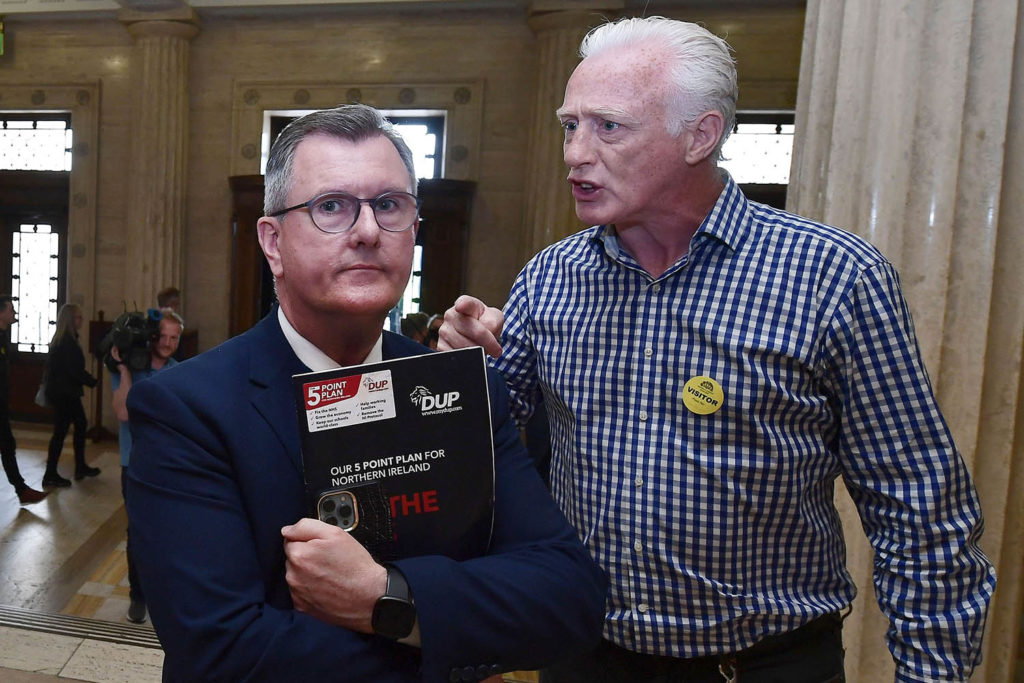
Why now? The Northern Ireland Protocol Bill was introduced on Monday for various reasons, mostly political:
- Devolution isn’t working. Northern Ireland’s unionists, principally the DUP, refuse to re-engage in the power-sharing with republicans that is the basis of the Good Friday Agreement (GFA) – i.e. of peace in the province – unless the protocol is re-worked to remove checks on goods moving from east to west across the Irish Sea.
- Northern Irish trade is shifting. Those checks exist to protect the EU’s single market; there has to be a border somewhere and the GFA forbids one the island of Ireland. The result is NI is effectively in the EU single market. This produced a sharp rise in trade between Ireland and NI in the first year of Brexit (a 65 per cent increase in goods moving from north to south and a 54 per cent rise in those going the other way); and a murkier dip in trade between Great Britain and the province, which the UK government isn’t anxious to measure. Unionists say, not without reason, they’ve been manoeuvered onto a long glide slope to a united Ireland.
- The permanent campaign. Johnson faces the likelihood of two embarrassing defeats in by-elections next Thursday. Any fight with the EU can be relied on to fire up his base, especially if it involves ritual demonisation of the European Court of Justice. Ending the ECJ’s jurisdiction over the protocol is part of the bill even there’s no alternative on offer, nor any evidence it has impacted any of Northern Ireland’s communities since Brexit.
The UK plan. Besides ending ECJ jurisdiction, the bill would
- end EU control over VAT levels and state aid rules in NI;
- replace the current goods checks regime with red and green channels for goods heading to Ireland and NI respectively (together with pre-screening of ‘trusted traders’ for the green channel); and
- include a sweeping provision for the UK government to revisit and unilaterally re-write any aspect of the revised protocol it deemed vexatious in the future.
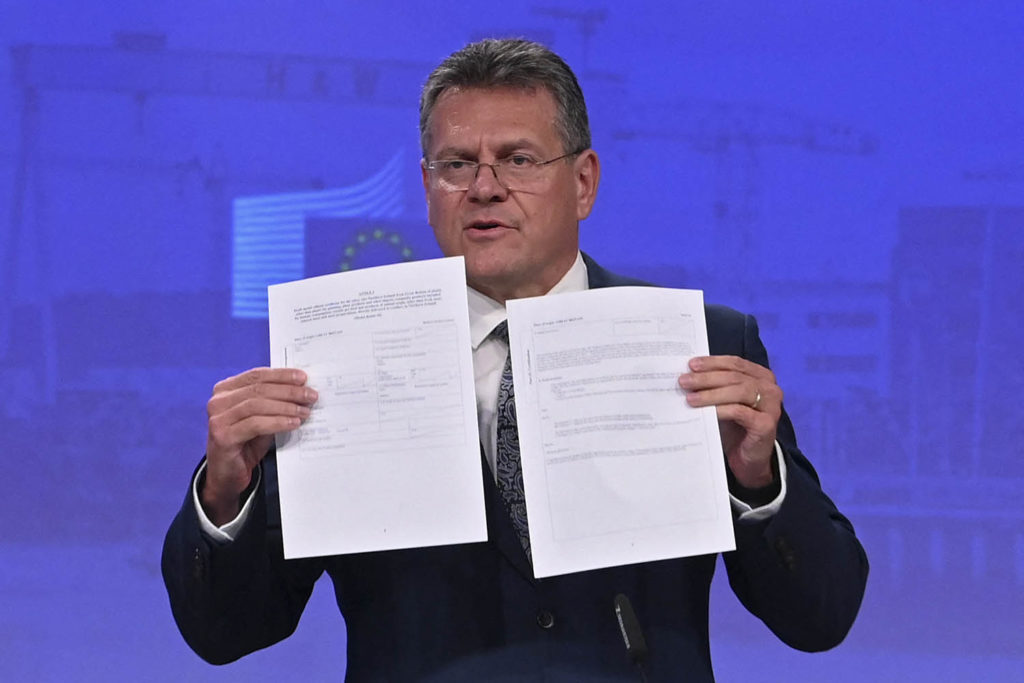
The EU response. One of the EU’s two new lawsuits accuses London of failing to provide adequate resources for east-west goods checks or provide data on those goods flows as promised. The other revives a previous suit that made similar claims but was suspended last year to give time for talks.
In addition the EU’s vice president, Maros Sefcovic, has reminded the UK that
- a streamlined customs process requiring on average a three-page declaration per lorry (only) is available for east-west goods but not being used; and that
- “It’s simply and legally and politically inconceivable that the UK government decides unilaterally what kind of goods can enter the [EU] single market.”
“Good faith” / bad faith. As a political diversion this serves Johnson well (see also the Rwanda deportation fiasco). As a way of coaxing unionists back into power-sharing it might just work. But as a resolution of the Northern Ireland problem that produced the protocol in the first place, it’s surely doomed.
The UK’s legal argument rests on the principle of “necessity”. Government lawyers claim a protocol negotiated and signed in good faith three years ago isn’t working, leaving no option but to tear it up. But both sides know Team Johnson has failed to build the infrastructure it promised to make the protocol work, relying instead on endlessly-renewed “grace periods” for exporters. That’s why it isn’t working, and the EU is tired of Britain pretending otherwise.


