
What just happened
- Three people were killed by a gunman in a shopping mall in Copenhagen.
- President Zelensky said Ukraine would retake Lysychansk after Russian forces took the city to complete their occupation of Luhansk.
- July 4th festivities were cancelled in Akron, Ohio, following the shooting death of Jayland Walker, an unarmed Black man, as he fled police last Monday.
Must read: Matthew d’Ancona on what Boris Johnson knew about Chris Pincher (see below).
At least it’s wet in China. Unusually heavy rains have lowered demand for air conditioning, raised levels in hydropower dams and temporarily eased China’s reliance on foreign energy. But there’s not much else for Xi Jinping to celebrate as
- his zero Covid strategy continues to weigh on Chinese growth;
- the traditional engines of the Chinese economy all sputter at once; and
- Xi’s coronation as de facto president for life becomes a source of tension rather than celebration.
Unforgiving spotlights are being trained on the Chinese economy from all angles, not least by former Australian prime minister Kevin Rudd in his book, The Avoidable War, and last week’s The Backstory with Andrew Neil. Note: Rudd speaks Chinese, has spent 10 hours in one-on-one chats with Xi and chose him as the subject of his Oxford PhD. He sees four factors raining on Xi’s parade:
- Property: a domestic Chinese property crisis is taking the wind out of a sector that accounts for as much as 29 per cent of Chinese GDP.
- Techlash: a predictable hit to private sector growth from Xi’s ideologically-driven assault on China’s tech sector saw $2 trillion wiped from its collective market cap in the year to May.
- War: Xi and Putin have been joined at the hip since their “without limits” pact, signed in February, but the invasion’s effect on energy prices has been disastrous for the world’s largest energy importer.
- Zero Covid: having committed to a strategy of complete containment of the virus, Xi cannot backtrack – but zero covid has meant lockdowns for 373 million people in 45 cities accounting for about 40 per cent of GDP.
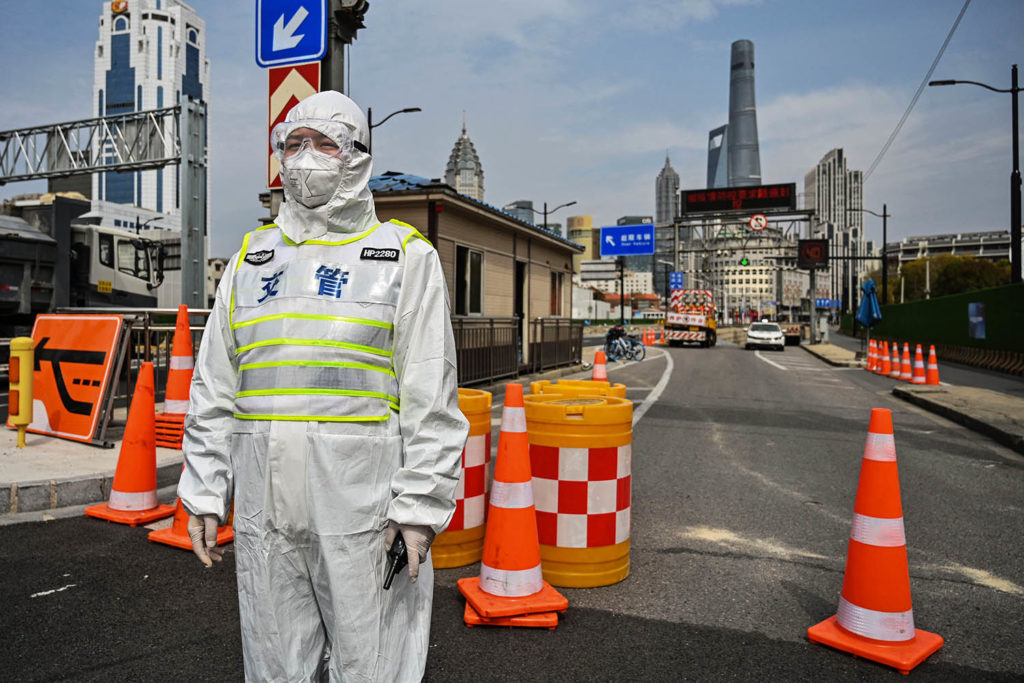
Of these, the property crisis has the greatest potential to infect – and stall – the wider economy, and it’s a symptom of long-term trends that can only dent Xi’s ambitions.
Sales of flats in new-build high-rises in China’s big cities were supposed to be the main engine of domestic demand-led growth this year. Instead they’ve fallen for 11 straight months in the sector’s worst downturn since property was privatised in the 1990s. Goldman Sachs reckons this could lower GDP growth by 1.4 per cent this year compared with official Chinese forecasts, Bloomberg reports. Add to that an expected 1.6 per cent hit from Covid, and Xi’s target of 5.5 per cent growth looks way out of reach.
Why the sales slump? Partly because global inflation, exacerbated by the war, has driven up builders’ costs and thus the price of flats. But also because the great migration to Chinese cities from the countryside is levelling off as the population ages and the workforce shrinks.
A recent study for Australia’s Lowy Institute showed China’s working-age population peaked in 2014 and if UN projections are broadly accurate could fall by 200 million by mid-century.
Labour force growth contributed 3 per cent of overall GDP growth in the 1980s. That has shrunk to zero. Productivity growth contributed 4 per cent per year in the 1980s, rising to 5 in the 90s. That has shrunk to 1 per cent.
Xi offered the Chinese people a bargain: strong growth and better lives in return for total political subservience. It served him well as long as the economy delivered, but experts see annual growth falling as low as 3 per cent for the rest of the decade.
“I suspect in the short term China can make a reasonably strong recovery because it can rely on heavy stimulus,” says Roland Rajah, lead author of the Lowy study. “[But] more Covid outbreaks and lockdowns would obviously scuttle the recovery… I expect China’s economy to slow substantially for structural reasons over the medium term.”
So: fewer new flats for China’s middle class, and less room for manoeuvre for their leader. These days that counts as good news.