What just happened

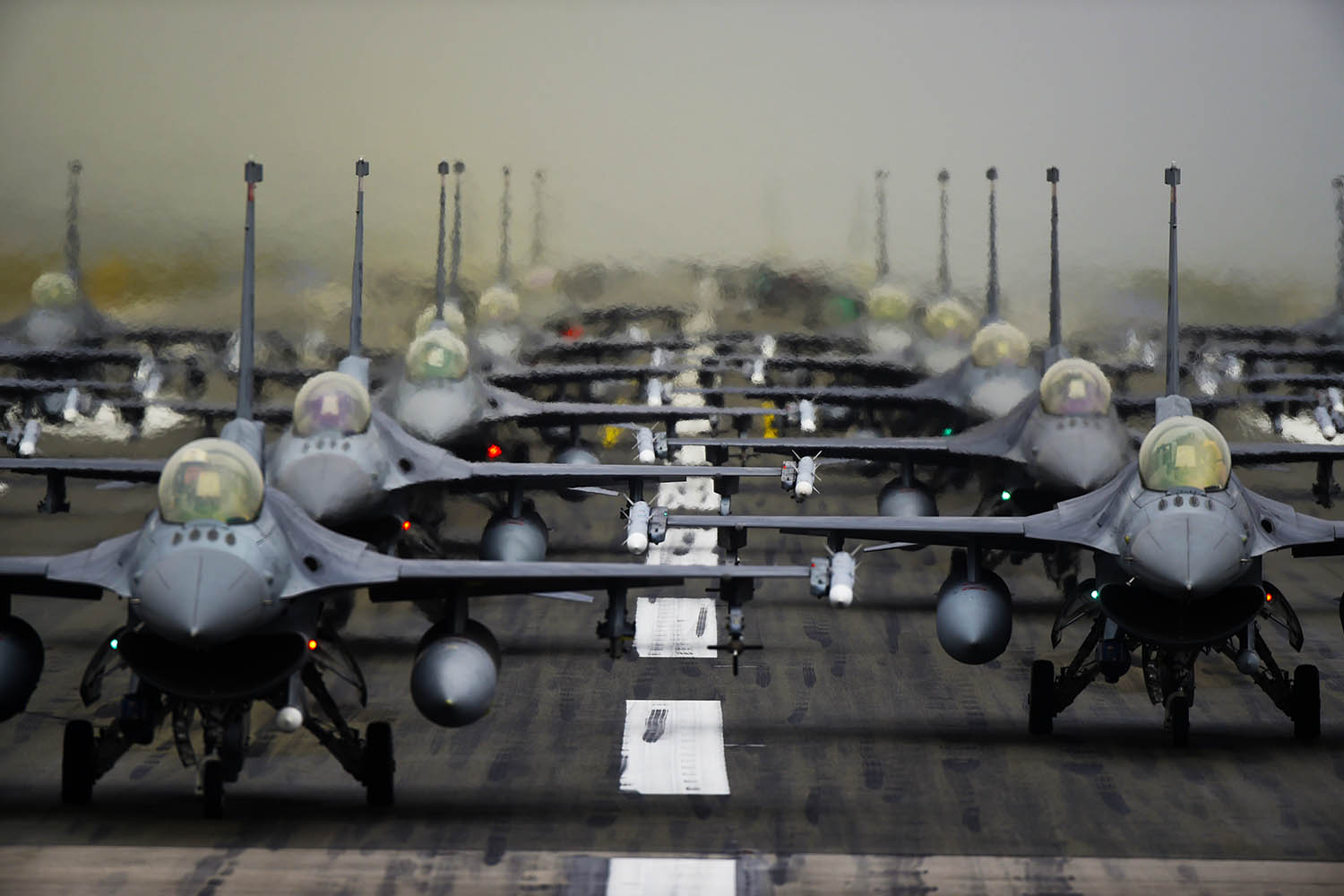
- Ukraine’s air force said ten Russian jets were destroyed in an attack on the Saky air force base in Russian-occupied Crimea.
- Qantas asked for 100 executives to volunteer to work as baggage handlers.
- Serena Williams, the most successful tennis player of all time and an icon of the struggle against racism in sport, said she would “move on from playing tennis” after the US Open (more below).
For nearly six months Ukraine’s President Zelensky kept up the appearance of unyielding unity in the senior ranks of his administration. Then people started getting fired – for treason.
The allegation is that they are Russian sympathisers. The question: does their removal strengthen or weaken Zelensky’s ability to prosecute the war?
Rolling heads. More than 600 cases of alleged state treason are being investigated against former officials in local and central government, including an ex-deputy head of defence intelligence at Ukraine’s defence ministry, a former official in Zelensky’s cabinet secretariat and an ex-manager of the Ukrainian Chamber of Commerce. All are accused of passing secret military information to Russian intelligence services.
Because so many alleged traitors have been removed from the security service and prosecutor general’s office, their heads have also been fired. Both had been in Zelensky’s team from the start of his run for the presidency, and the prosecutor general, Iryna Venediktova, had become the international face of Ukraine’s war crimes prosecutions.
New recruits hired to replace those lost tend to be allies of the head of Zelensky’s presidential administration, Andriy Yermak – now one of the most powerful people in Kyiv.

Familiar hands. The new acting head of the Ukrainian security service, Vasyl Malyuk, has been linked to Yermak’s deputy, Oleg Tatarov. In addition…
- The new prosecutor general, replacing Venediktova, is Andriy Kostin, a Yermak protege.
- The head of the newly created Defence Procurement Agency, in charge of all goods and services in the defence sphere, will be Denys Sharapov – formerly Yermak’s business partner.
So who is Mr Yermak? He made his name as a lawyer and film producer before becoming, as he puts it, the “president’s manager”. But his past allegiances haven’t been straightforward.
- His first job in politics was as an assistant to an MP in the party of Viktor Yanukovych, the pro-Moscow president ousted in 2014.
- Since 1999, Yermak has been in business with his father, Borys, who’s been linked by investigative journalists to Russian intelligence agencies. Yermak says his father never worked for Russian intelligence but another partner in their business was a Russian citizen, Rakhamim Emmanuilov, who used to be an advisor to the Head of Russia’s Federation Council, the upper house of parliament.
From the start of Zelensky’s presidency, Yermak has been in charge of external policy and international relations, including the negotiations on the status of Donbas. Since his promotion to head of the presidential administration in 2020 he’s been a central figure in the formation of Ukraine’s strategy in relation to the war and weapons.
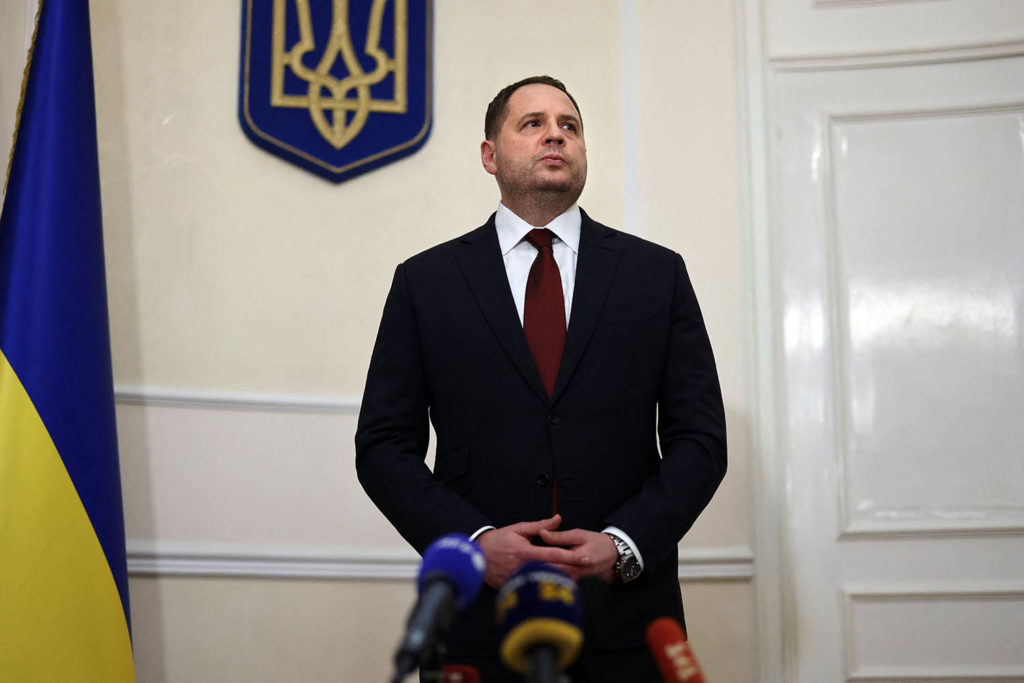
Kurt Volker, the former US Special Representative for Ukraine negotiations, says the US is “very satisfied” with its relations with Zelensky’s team, including Yermak – a good thing considering his pivotal role. Key institutions now led by people close to Yermak or his deputy Tatarov include:
- Ministry of the Interior
- Security Service of Ukraine (SBU)
- Office of the Prosecutor General
- State Bureau of Investigations
- Defence Procurement Agency
Whether Yermak’s power consolidates or undermines Zelensky’s is another matter. It could fuel tensions between the president and the opposition and harm trust towards Ukrainian authorities in the West, the political analyst Mariya Zolkina says. For what it’s worth, the NYT’s Tom Friedman wrote last week that US officials were “a lot more concerned about Ukraine’s leadership than they are letting on”.
This much is clear: such a concentration of power tends to create an information monopoly, which is especially dangerous during war. As the journalist Yuri Nikolov notes: “If the whole information flow is controlled by Yermak only, the president lives in his world view.”
A great deal is riding on Andriy Yermak’s judgement, and his loyalty.
Oil through Ukraine
Russia’s oil pipeline monopoly, Transneft, says Ukraine has suspended flows through its Druzhba (“Friendship”) pipeline to Slovakia, Czech Republic and Hungary. The Russian side says it tried to pay transit fees but Ukraine couldn’t accept them from Russia’s Gazprombank because of sanctions. Ukraine’s oil pipeline company, Ukrtransnafta, has yet to comment. The seventh package of EU sanctions since February does not ban Russian oil transit, and the sixth includes an embargo on Russian oil but its enforcement has been suspended and anyway it doesn’t apply to these three countries. Slovakia, the Czech Republic and Hungary between them receive 10 per cent of Russian oil imports to the EU, via the southern branch of the Druzhba line which crosses Ukraine and delivers 250,000 barrels per day. Poland and Germany, served by the northern branch through Belarus, are to end Russian oil imports by the end of 2022. So far Gazprombank has been allowed to conduct international business despite the war to keep Russian energy flowing to Europe. How much longer?
Warmer lobsters
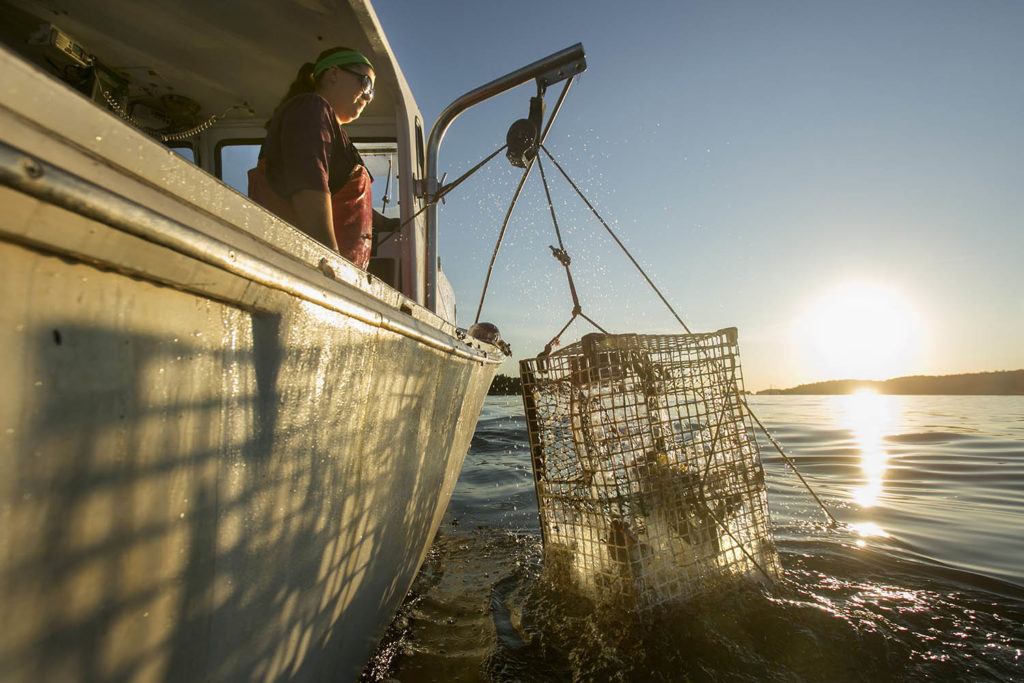
It’s getting warmer in the customarily cold waters off Maine where much of the world’s lobster industry is based. No surprises there; climate change has not left many patches of ocean unaffected. But there are two arresting aspects to a new piece of research on coastal Maine temperatures published this week in Nature. The first is that they started ticking up in the late 19th century, which is earlier than some records suggest. The second is that most of the preceding millennium was colder than average because of volcanic forcing – eruptions that darkened the upper atmosphere and increased the proportion of incoming UV radiation reflected straight back into space. We could use a bit of that right now.
Insulin cap
The most watched film on Netflix globally right now is Purple Hearts. It’s a romantic drama about a Marine and a singer from an immigrant family who enter a scam marriage so she can benefit from his military healthcare benefits. Why? She is a Type 1 diabetic struggling to pay for the insulin that keeps her alive. The romance may be fiction. Diabetics in the US paying significant proportions of their income on insulin are not. A Yale University study recently found that 14 per cent of insulin users in the US were spending more than 40 per cent of their income after food and housing costs on the medicine. Capping insulin prices has long been a goal of Democrats. They were thwarted this week by Senate Republicans who voted down a $35-a-month cap for insulin costs as part of the Inflation Reduction Act, except for over-65s. Under 65s dependent on private insurance, or with no insurance, still face steadily increasing insulin prices for a drug whose market is dominated by three pharma companies accused of acting as a cartel. In 2018, the US accounted for 31.6 per cent of insulin consumption and 83.8 per cent of sales in a market worth $21.26 billion.
Dry Corona
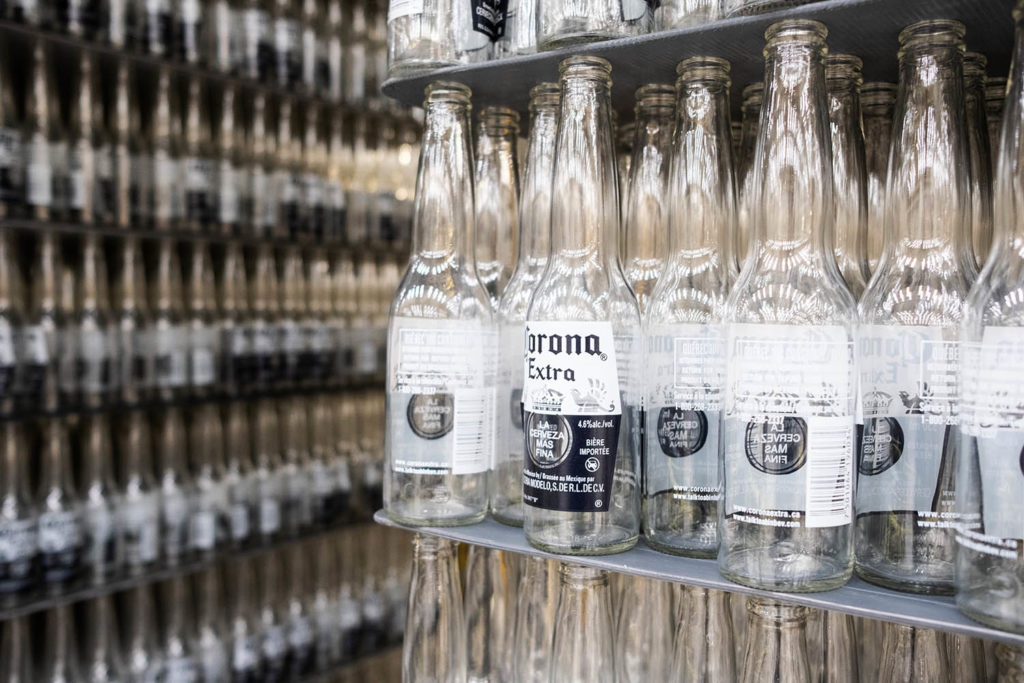
Mexico’s president says its northern provinces should stop brewing beer because of extreme water shortages. “This is not to say we won’t produce any more beer, it’s to say that we won’t produce beer in the north – that’s over,” said Andres Manuel Lopez Obrador, aka AMLO. Mexico is the world’s largest beer exporter. It brews 76 per cent of all beer imported by the US, according to Bloomberg, but nearly half its territory is currently suffering drought, and it’s so bad in the northern industrial hub of Monterrey that some neighbourhoods have been without water for 75 days. A number of beer giants operate in the region, including Heineken and Grupo Modelo, controlled by AB InBev. Grupo Modelo makes Corona, Modelo Especial and Pacifico beer, among others. Beers under the Heineken umbrella include Dos Equis and Tecate. AMLO promised support for brewers relocating to the South.

The GOAT
After a record 23 grand slams, one of which she won while two months pregnant, Serena Williams plans to retire from professional tennis. She doesn’t use the word “retirement” because she doesn’t like it, she tells Vogue, but she’s 41 this month, she wants to have a second child and “something’s got to give”. After a career spent smashing stereotypes as well as records she takes aim at the norms and biological drivers that have put her in this position. “Believe me, I never wanted to have to choose between tennis and a family,” she says. “I don’t think it’s fair. If I were a guy, I wouldn’t be writing this because I’d be out there playing and winning while my wife was doing the physical labor of expanding our family.” Looking back over 27 years at the top of her sport, starting with her US Open win aged 17 over Martina Hingis, she says she’ll miss “that version of me, the girl who played tennis”. She’s not the only one.
Thanks for reading. Please share this around and tell us what you think. Send an email to sensemaker@tortoisemedia.com.
Nina Kuryata
Contributing Editor
Additional reporting by Giles Whittell, Phoebe Davis and Jessica Winch.
Photographs Getty Images, Ukrainian Presidential Press Office/Alamy