
What just happened
- Russian officials admitted Ukrainian forces made breakthroughs towards Kherson on the right bank of the Dnipro river.
- Iranian schoolgirls removed their hijabs in nationwide protests.
- Chess.com issued a report saying Hans Niemann “likely cheated” in 100 online chess games.
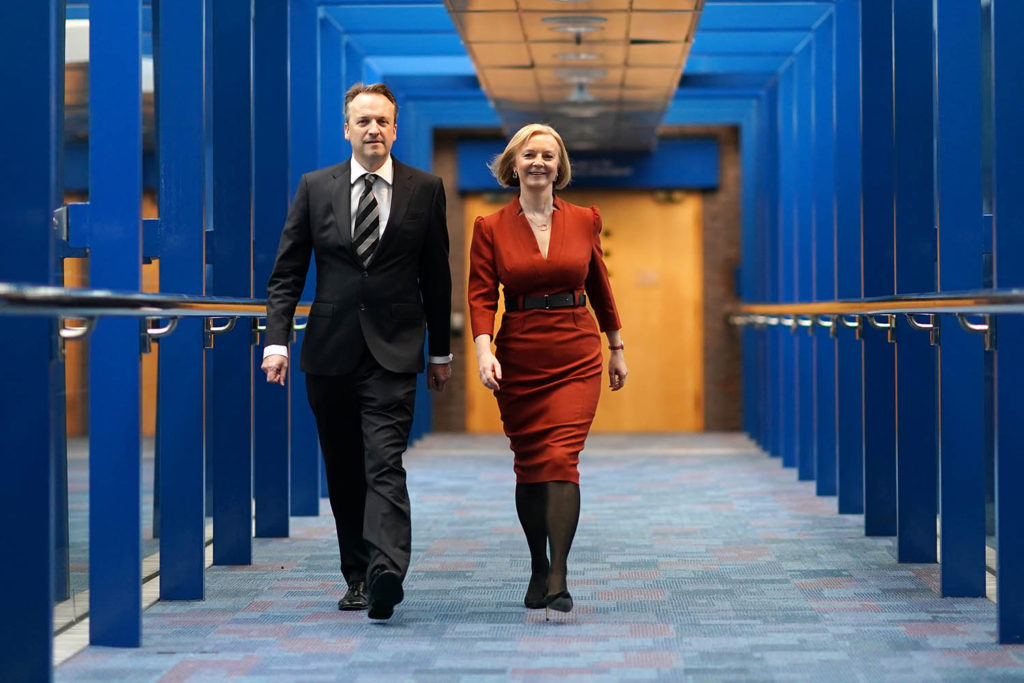
The UK’s new prime minister is delivering her first conference speech to loyalists – and not many others. Thus far, poor turnout and the lure of unscripted fringe events have left her defence secretary and chancellor speaking to a smattering of party faithful. Today Liz Truss has to contend with train strikes and her own imploding authority one month into the job.
Many Conservative MPs didn’t even get to Birmingham. Some cited holidays, family gatherings and parliamentary business. Others said they just didn’t want to be there.
Truss may have wished some of those who did make it hadn’t, as blue-on-blue attacks spiralled out of control. “Drama central,” was one attendee’s take on a day Truss will want to forget.
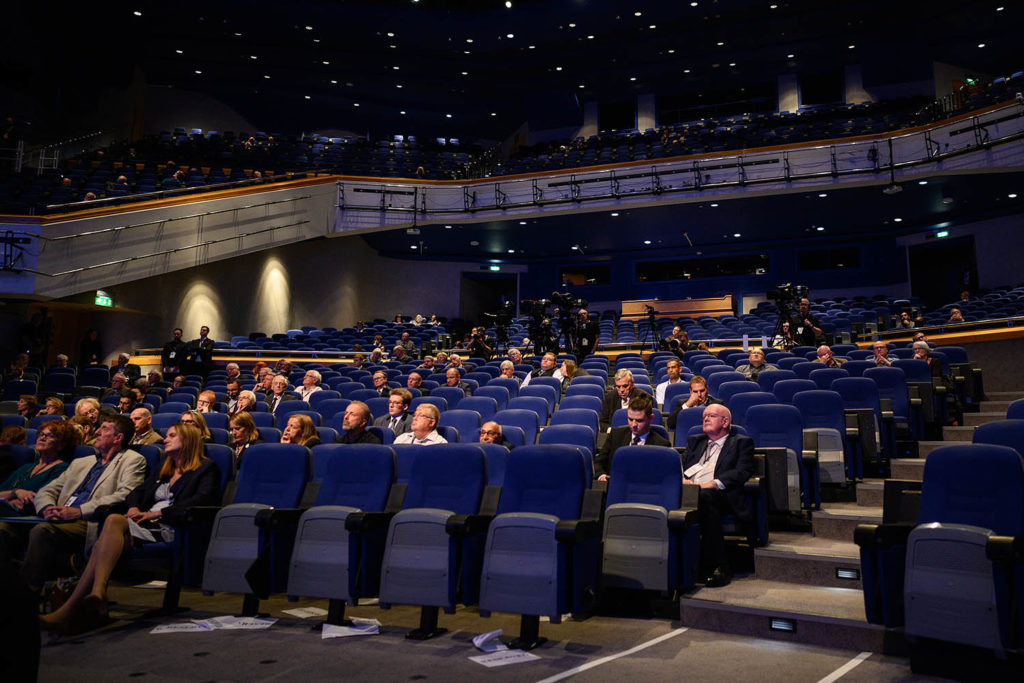
Home secretary Suella Braverman blamed the U-turn on the 45p tax rate on a backbench “coup”, with a highly visible Michael Gove attracting much of the blame. But whether it was the former fixer-in-chief, as Number 10 seems to think, or allies of Rishi Sunak, “who is conveniently distancing himself from conference”, as one MP suggests, remains unclear.
Whoever lit that blue touchpaper, the effect has been explosive.
- From top Tories: Penny Mordaunt, leader of the House of Commons and a former leadership contender, launched a pre-emptive strike against austerity measures, saying the UK’s welfare system should be “keeping pace with inflation”. Former leader Iain Duncan Smith and Treasury committee chairman Mel Stride also voiced concerns.
- From Team Boris: Responding to Truss’ suggestion that policy be radically reworked, former supporter Nadine Dorries demanded an early election, noting: “People voted in ‘19 on the policy promises we made (and for Boris).” Conor Burns – who like Dorries is a staunch ally of Boris Johnson – said trade secretary Kemi Badenoch was “the future of our party”; someone who understood the need to “move beyond Instagram posts about free trade agreements”.
- From her chancellor: Kwasi Kwarteng added to the chaos by insisting his medium-term fiscal plan will be published on November 23, despite the Treasury having confirmed it was being brought forward to the end of this month. “It’s an O-turn”, one former minister told Tortoise. “Maybe Kwasi has put a letter in.”
This is the real risk faced by the prime minister, who having spent the last few days insisting her economic plan is not in tatters has no obvious path back to power. On their way out of the conference centre, delegates were taking snaps of ‘Liz for Leader’ merchandise “as collectors’ items”, according to one Tory source. Responding to the trail of her speech overnight, many questioned the wisdom of praising disruption following days of market turmoil.
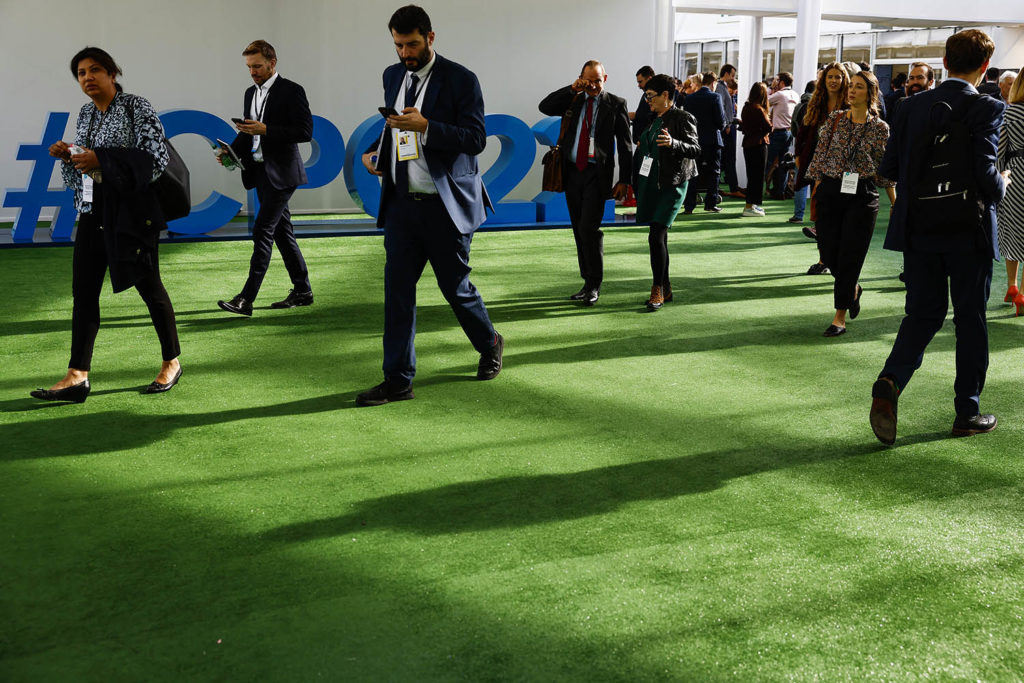
It’s not just the optics of Truss addressing a half-empty room that matter – although this speaks to her lack of foresight and an unwillingness to face facts until it is too late. It raises the question of who in the country at large is listening.
With polling suggesting that voters are also heading for the exit, these are the questions Tory MPs are asking:
Truss appeal. Can she sustain the 2019 coalition of Tory voters? Boris Johnson managed it – just – but many Tories think Truss now has to pick a side and face the consequences. If not, she risks losing both Red and Blue Wall support. That means MPs will go into survival mode – and increases the likelihood of rebellion.
Twist or stick? The single biggest question is whether ditching a third prime minister in three years is better than sticking with a bad one. Increasingly the view seems to be yes. Time is critical though. While MPs would rather allow Truss a little breathing space to see if she can turn things around, the 2024 election is looming large.
Dis-united Kingdom. The main reason Johnson lasted so long was a lack of alternatives. There was a significant ‘anyone but Rishi’ campaign this summer, and other candidates will be branded also-rans by the opposition. That said, the old teams are still in place and ready to go. “We certainly won’t be splitting up the band anytime soon,” says one potential rebel.
Damage limitation. Many Tories appear weary and almost ready to throw in the towel. Some
are talking about getting a job in “the real world” come 2024. Privately, many concede it’s now a case of damage limitation.
By the numbers
242: Tory MPs who voted against Liz Truss in the final round
0.1: Percentage of the UK’s electorate who voted for her
30: Days since becoming prime minister
23: percentage share of Red Wall voters intending to back the Conservatives, according to Redfield & Wilton Strategies (3-4 Oct)
Final thought: getting Brexit done was meant to unite the Tories. It hasn’t.
Musk caves
There’s a complicated way of looking at the Twitter / Musk story that involves 700 submissions to a Delaware court and partially substantiated allegations of incomplete datasets on bots and fake accounts. And there’s a simple way: earlier this year the world’s richest man realised that in principle he could afford to buy an entire social media platform, making him a proper tech bro as well as a maker of cars and rockets. The purchase might also enable him to try out a new persona as a defender of free speech. He’d already built up a big stake in Twitter. In April he offered $44 billion for the company at a generous premium for shareholders, and almost immediately was poleaxed by buyer’s remorse. It didn’t help that the $44 billion was hard to assemble because so much of Musk’s net worth was tied up in Tesla stock. So he tried to back out. Twitter’s board sued. He suggested the company was withholding important data but a judge saw that as a ploy. A trial loomed. It was going to be embarrassing. Yesterday Musk caved. He now says he’ll buy Twitter for the original $44 billion – but much of it has to be borrowed at new, high rates that will hurt Musk and his bankers. The only happy party in this saga is likely to be Trump, whose account Musk has promised to reinstate.
Charging ahead
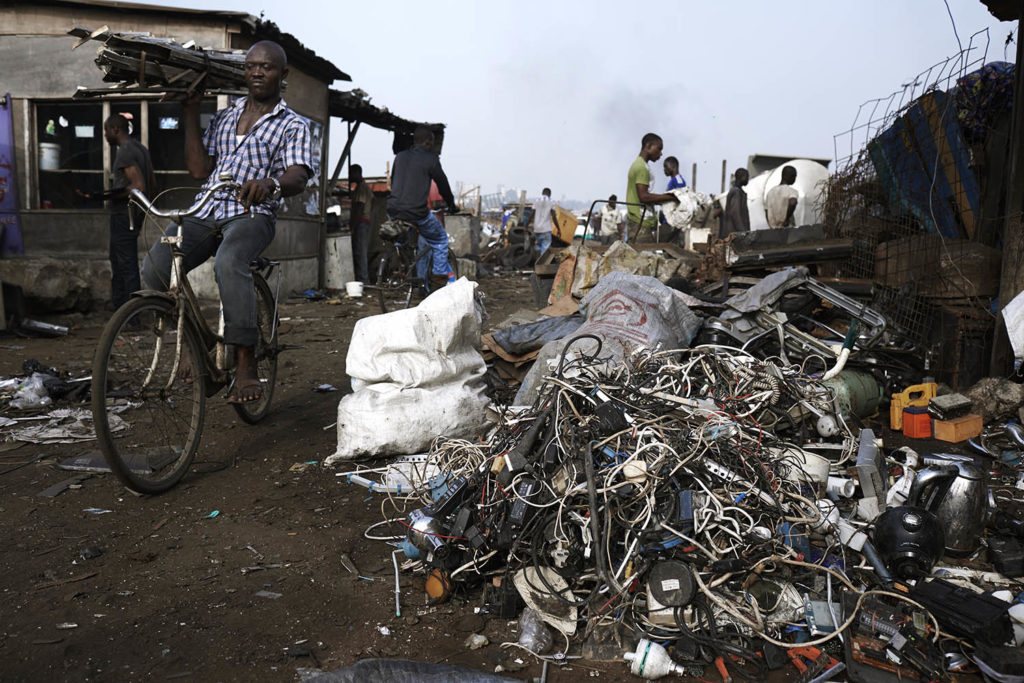
By 2024, in Europe at least, smartphone users of all kinds will only need one sort of charger. If they lose one and have to borrow another, they’ll know it will work. No one will be able to charge a premium for proprietary charging tech, and consumers will save around a quarter of a billion euros. Why didn’t anyone think of this before? They did. It’s just taken years for the European Commission to herd the tech companies – chief among them Apple, the world’s most egregious serial re-inventor of charging plugs – into line, and for the European Parliament to approve new plans for everyone to use USB-C chargers on all devices. Apple fought this, claiming it would cause a lot of waste. The pot and kettle come to mind. The UK has hinted it might not go along with the new EU law. Good luck with that.
Austerity kills
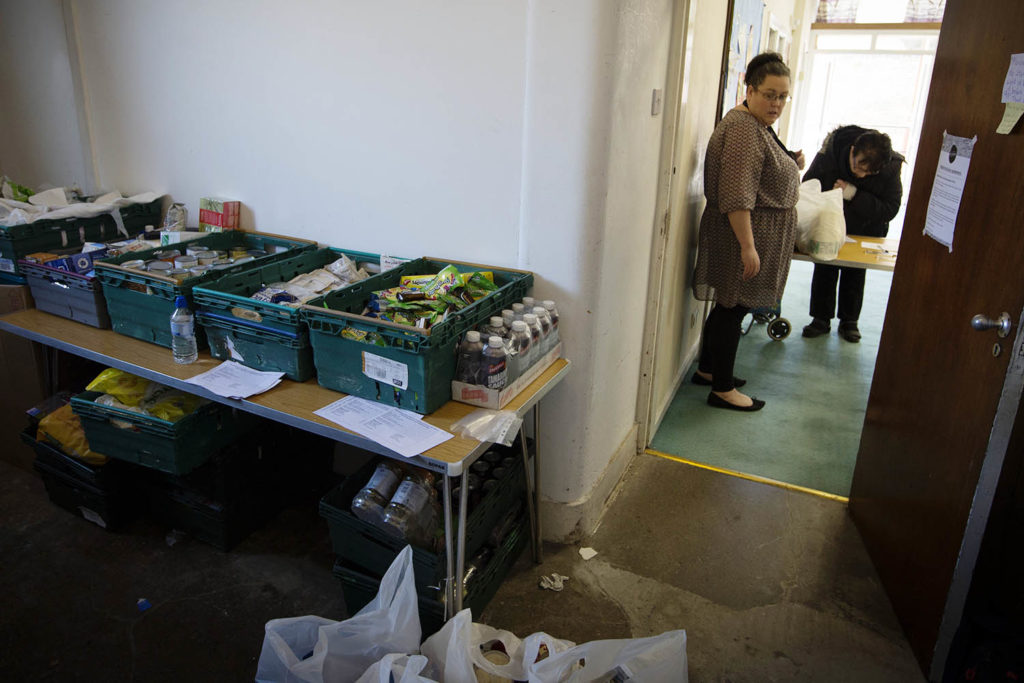
A new study shows death rates rose across the UK as public spending cuts introduced from 2010 began to take effect. The study attributes 330,000 excess deaths between 2012 and the onset of the pandemic in 2019 to the combined effects of reduced income, poor health, nutrition and housing, and loneliness. These are not necessarily deaths of people who would otherwise be alive today, but deaths classified as premature given average death rates at the start of the period – which have consequently risen. They were up by 3 per cent for women in the most deprived 20 per cent of neighbourhoods in England and Wales after falling by 14 per cent in the previous decade. The increase was steeper for men, and in Scotland. Trussonomists’ instincts might be to throw shade on such research but it feels like an important part of the context for their 30+ point lag in polls.
Worm spit
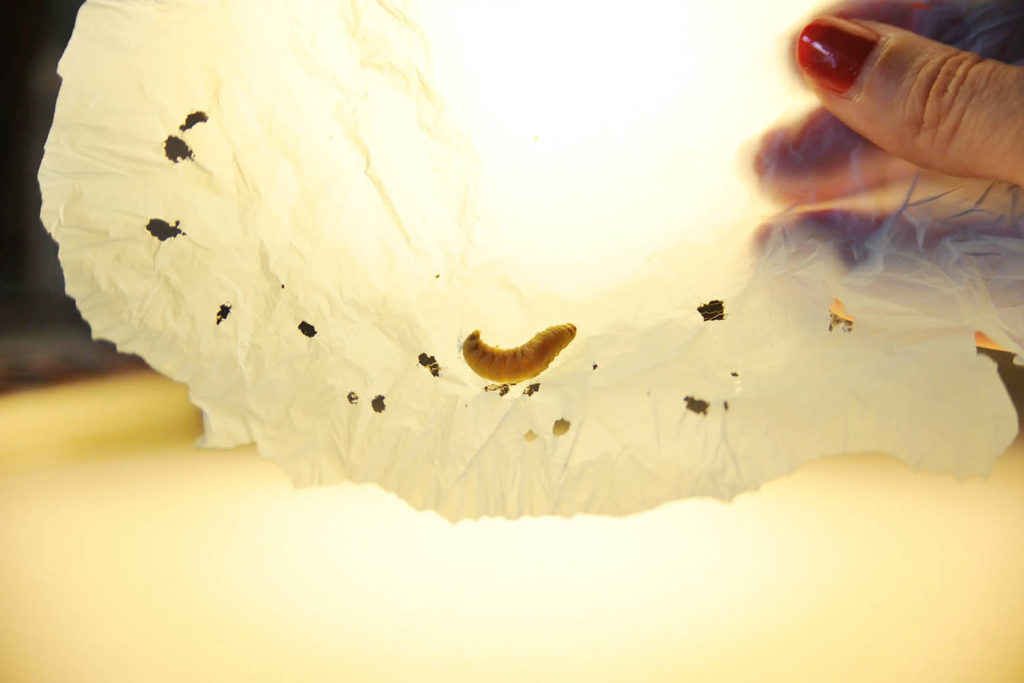
One day, a beekeeper noticed one of her hives was infected with wax worms. She cleared them out into plastic bags and later noticed holes. Their saliva had dissolved the plastic. The beekeeper was also a scientist at the Biological Research Centre in Madrid, and Dr Federica Bertocchini may have now found a way to revolutionise plastic recycling. The enzymes in the worms’ saliva can break down polyethylene within hours at room temperature. Polyethylene is used in 30 per cent of plastic production and is currently only recycled at scale using mechanical processes that make lower-grade products. The enzymes, which can be synthesised, can create new chemicals and possibly new plastic, according to the research published in the journal Nature Communications. This could be a story with a happy ending.
Scotus and politics
After their 2022 term culminated in the overturning of Roe v Wade, the nine US Supreme Court justices are set for another hot-button year. There are some particularly big cases to watch: on voting law two are being considered that could shape future elections – one from North Carolina that could give state legislatures power to reshape their electoral maps for federal elections and another from Alabama that could change how states’ congressional district maps are drawn. The potential for gerrymandering is large. The court will also consider business discrimination for LGBT+ customers, affirmative action at top universities and environmental cases on clean water and animal rights. The justices take their seats with 20 per cent fewer Americans saying they have a “great deal” or “fair amount” of trust in the court than two years ago.
Catherine Neilan
@CatNeilan
Additional reporting by Giles Whittell, Jessica Winch and Phoebe Davis.
Photographs Getty Images, CSIC Communications Department


