What just happened
- A former police officer killed more than 30 people including 22 children at a nursery gun attack in Thailand.
- British nurses voted on whether to strike for the first time in a dispute over pay.
- US Marine Colonel Nicole Mann became the first Native American woman in space.
The Ukrainian army is reversing on the ground what Russia’s illegal annexation has tried to assert on the map. Putin’s supporters are split, criticising the mobilisation, the Russian defence ministry and each other. This is not rebellion – yet – but by the standards of the past eight months it’s close.
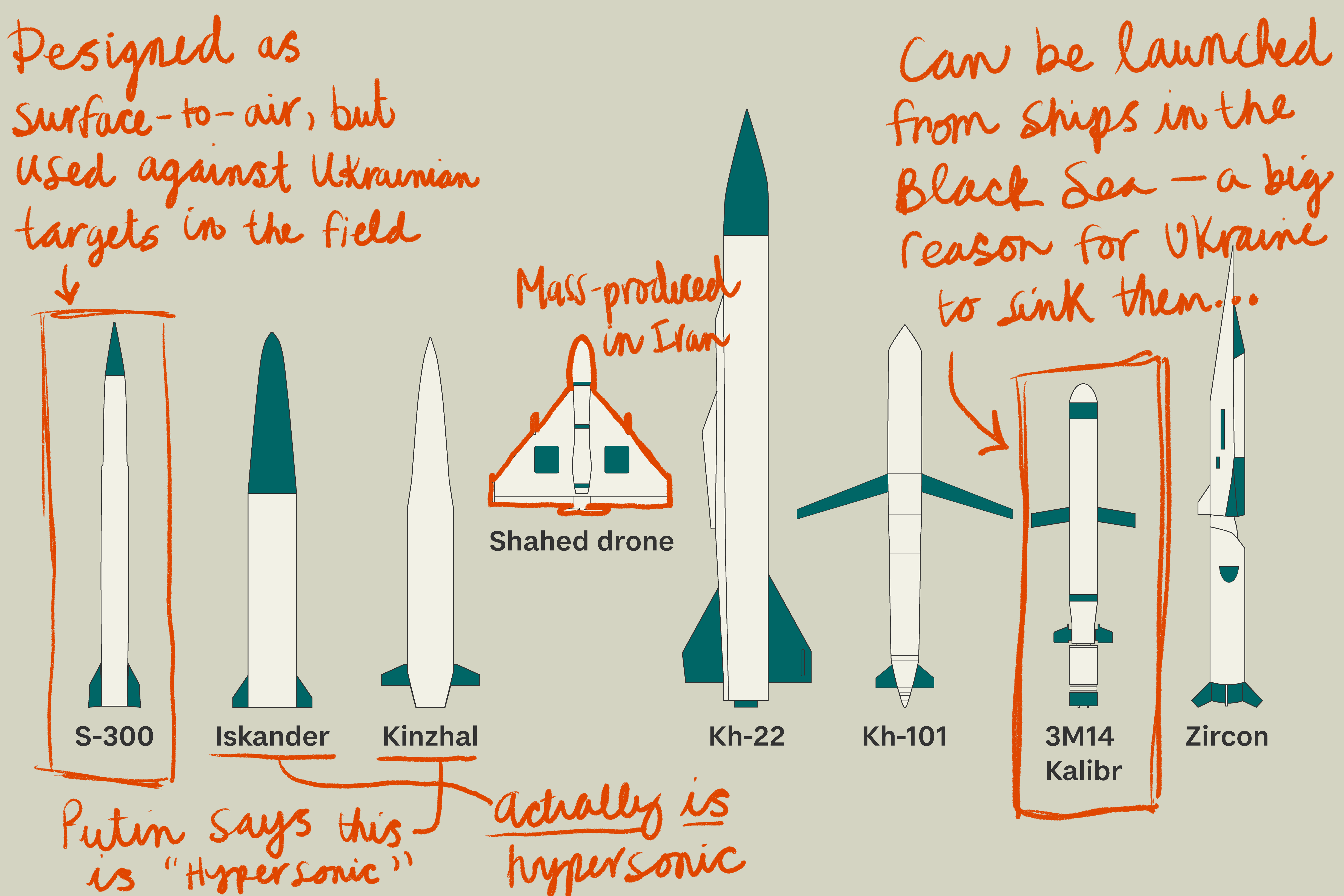
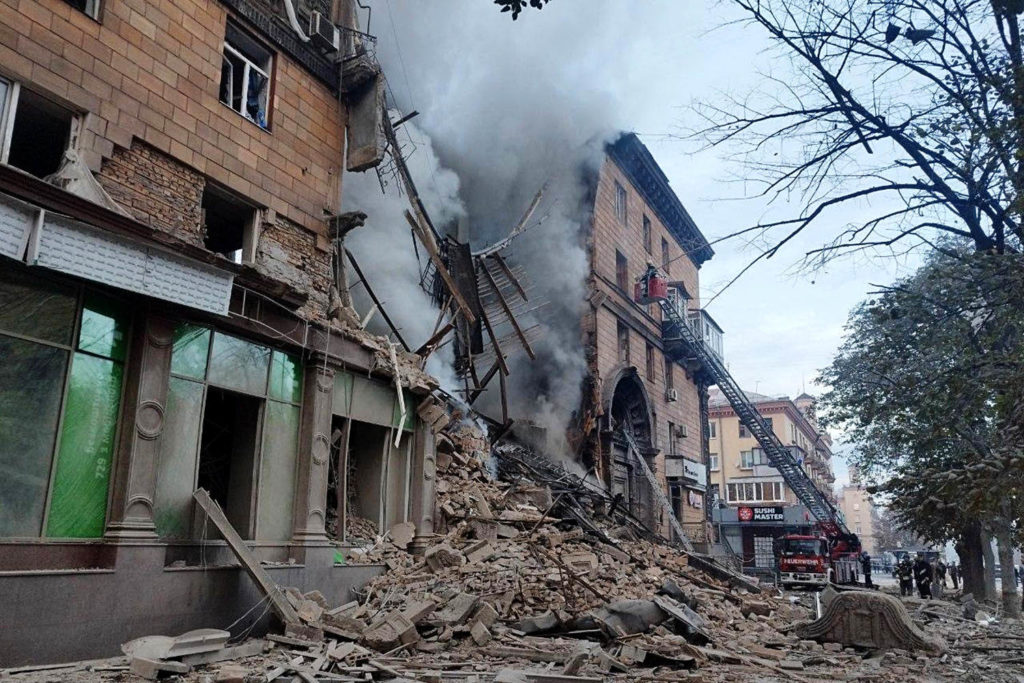
Overnight: Seven Russian missiles hit Ukrainian targets in Zaporizhzhia after kamikaze drones supplied by Iran attacked Odesa and Bila Tserkva, southeast of Kyiv. So Russia can still terrorise from a distance, but its forces in the field are stuck or in retreat.
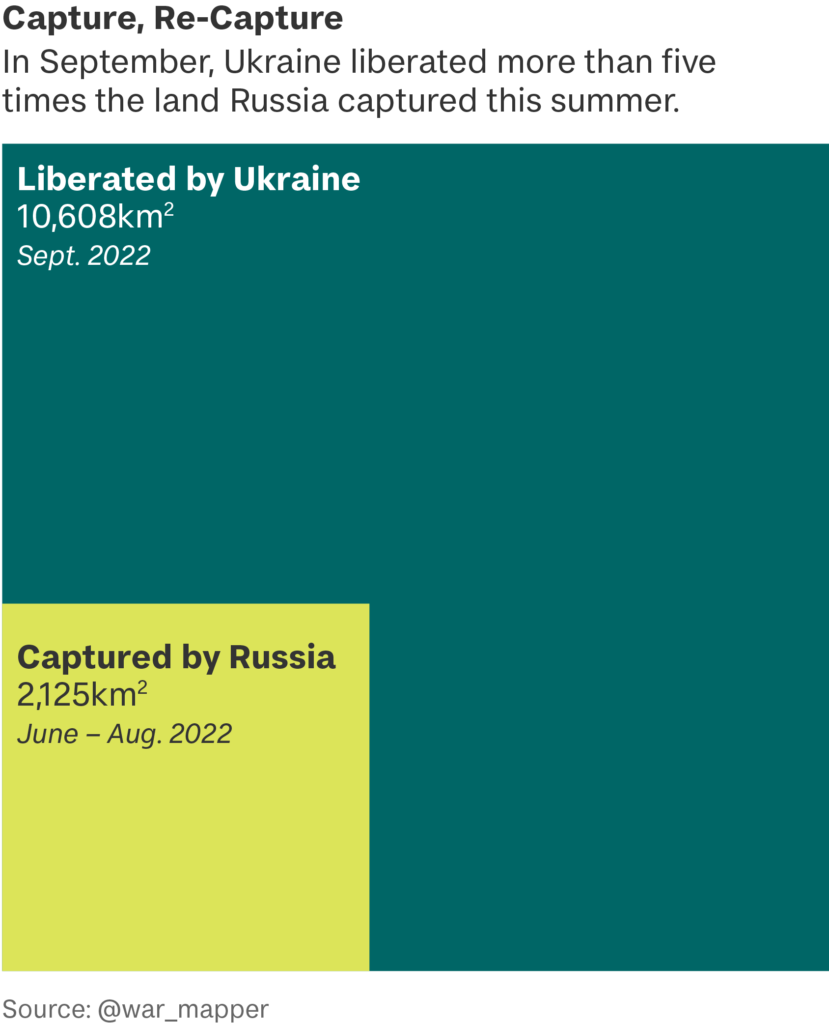
Under pressure: In September alone Ukraine’s armed forces liberated more than 10,000 square kilometres.
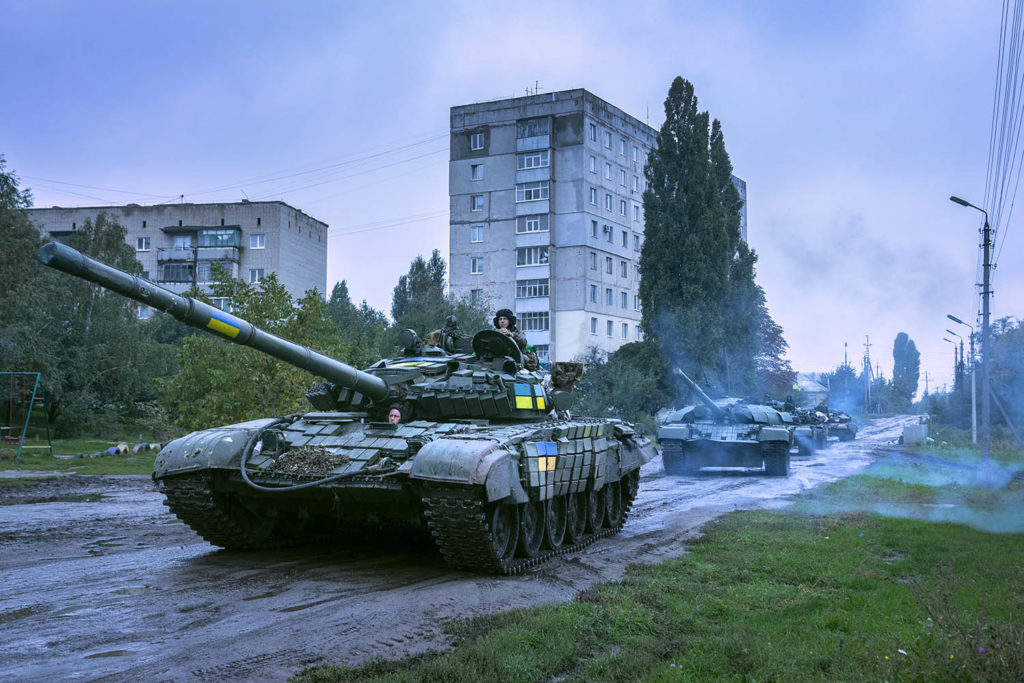
The Ukrainian army is counter-attacking in two directions: towards Kherson in the South and Svatove in Luhansk in the East.
- In Kherson region, it has trapped Russian troops on the west bank of Dnipro river, shelling bridges, pontoons, ammunition bases and supply chains with US-supplied HIMARS artillery. Ukrainian forces have also liberated several settlements on the eastern bank of the Inhulets River, pushing Russians toward Kherson City.
- The liberation of Lyman and advances on the Oskil River have opened the way for Ukrainian troops to the rest of Luhansk. Donetsk is the only region where Russian forces are trying to attack.
Losing on the frontline, Russia can only attack from the air. Zaporizhzhia, Kharkiv and Mykolayiv are under near-constant missile bombardment. Iranian “Shahed” drones have been used on Odesa as well as Bila Tserkva.
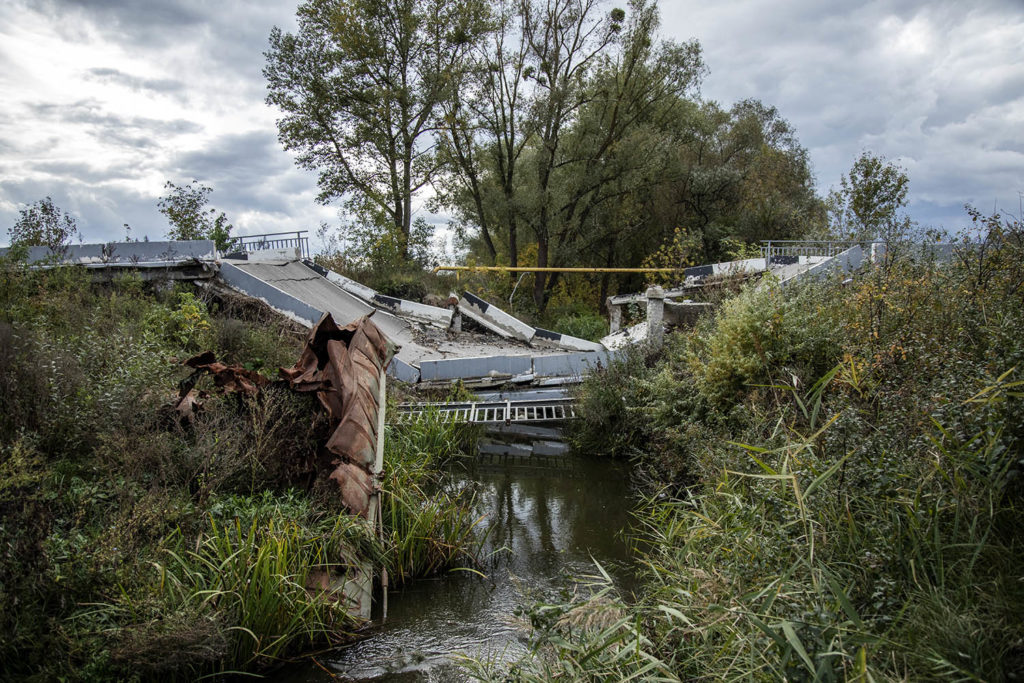
Russian losses. In the first two weeks of the Ukrainian counteroffensive, Forbes estimates Russia lost “a battalion every day”. That would equate to a daily casualty rate of 600-800 killed or injured. Ukraine’s general staff claimed to have destroyed more than 1,100 tanks and fighting vehicles in that time, of which 400 were confirmed via social media.
Ukraine doesn’t publish figures for its own casualties but claims Russia’s losses since the start of the war include 61,000 personnel, nearly 2500 tanks, 266 aircraft, 232 helicopters and 15 warships and other boats.
Mobilisation as a mistake. Since Putin’s mobilisation speech two weeks ago, more people have fled Russia than have been mobilised (about 300,000 vs 200,000, according to reports). “Partial mobilisation is having more significant short-term impacts on the Russian domestic context than on the war in Ukraine”, the Institute for the Study of War says in its latest update. Besides the exodus of fighting-age men to Turkey and Central Asia, those impacts include rioting in Dagestan and social media footage of conscripts being made to sleep on floors and buy their own equipment.
Those who reach the front are targeted via their phones with Ukrainian invitations to call the “I want to live” hotline and surrender.
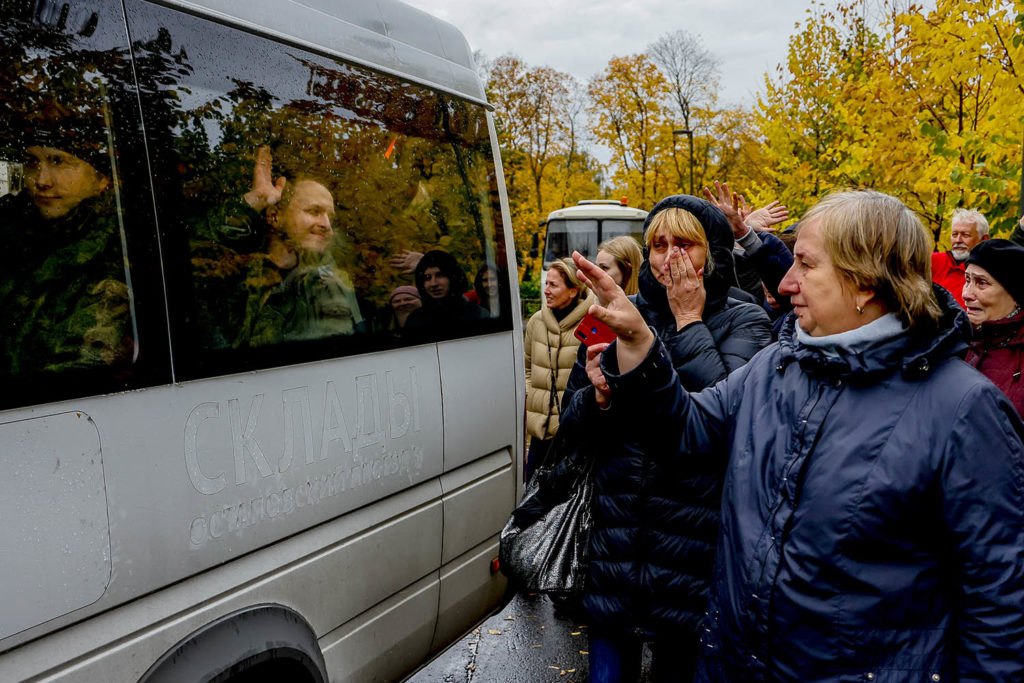
Supporters split. Bad news from the front has a way of leaking out. Even the Putin propaganda machine is not immune, not least because he’s let it be known he is personally directing Russian troop movements.
- The All-Russian Officers’ Assembly, an influential veterans’ group that earlier called on Putin to declare war on Ukraine and to say Russia was fighting Nato there, has criticised the handling of the mobilisation.
- Ramzan Kadyrov, the Chechen leader, and Yevgeny Prigozhin, financier of the Wagner Group, have criticised the defence ministry and General Aleksandr Lapin – blamed for losing Lyman to Ukrainian forces last week.
- Military bloggers tasked with presenting Putin’s vision of the war have turned on Kadyrov for his attack on Lapin and started questioning each other’s military expertise.
Rebellion risk. Russia Today’s editor-in-chief Margarita Simonyan, hitherto one of Putin’s most loyal propagandists, has started to distance herself from the Kremlin, saying she is “just a journalist, not an authority,” and criticising the mobilisation. Earlier she saw two possible outcomes of the war – “Russia’s victory or nuclear war”. Recently she offered a third – civil conflict in Russia.
To note: Russia is not going to give up Nova Kakhova without a serious fight. This is the location of a dam over the Dnipro River that controls the Crimean peninsula’s water supply, which Ukraine cut off in 2014. It was near the top of Russia’s target list in February.
Opec+
The fistbump was for nothing. For months, US president Joe Biden has tried to convince the Saudis to pump more oil, as the White House seeks to lower oil and gas prices ahead of midterm elections in November and to cut the energy revenues that sustain Russia’s invasion of Ukraine. But extensive US lobbying has failed: Saudi Arabia led the Opec+ group in announcing a cut in production of two million barrels a day, equivalent to 2 per cent of global supply, in a decision likely to raise petrol world prices. The US called the move “short-sighted”; the White House told reporters it was “clear” that the oil production cartel was “aligning with Russia”, and the US issued a statement suggesting it might support cross-party legislation known as Nopec that would revoke the cartel’s immunity from prosecution, as well as hinting it could increase domestic supply. The 75-year energy partnership between Washington and Riyadh is shifting.

Keep it civil
Online mentions of “civil war” in the US spiked following the FBI raid on Trump’s Mar-a-Lago residence in August, according to the media monitoring company Critical Mention. The firm’s researchers found that posts containing the phrase “civil war” increased by 3,000 per cent within a few hours of the raid, and that mentions doubled on radio shows and podcast platforms. Following Trump’s bogus claims that the 2020 election was stolen and the subsequent 6 January insurrection, the prospect of another American civil war doesn’t seem a remote prospect to many. Polling by YouGov in August found that 54 per cent of Americans who identify as “strong Republicans” believe it’s very or somewhat likely that a civil war will erupt in the US within the next ten years. The midterms and the soothing balm of democracy are a month away.
Rugby risk
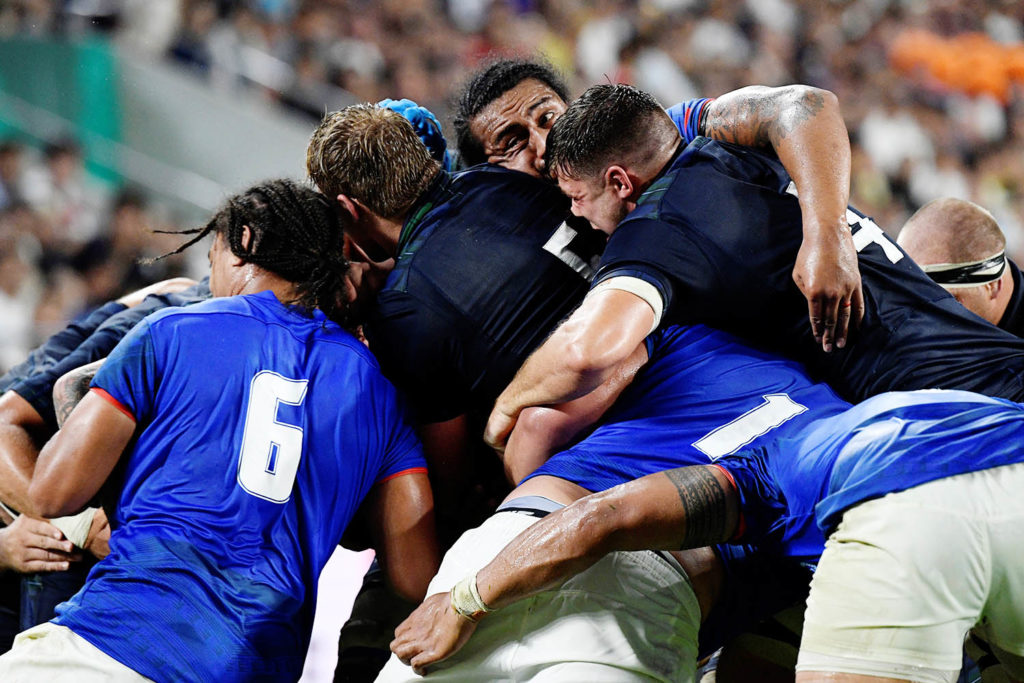
The largest study of former rugby players to date has thrown a harsh light on the link between neurodegenerative disease and repeated traumatic head injuries. The study, which compared former Scottish international players with the general population, found they were twice as likely to get dementia and more than three times as likely to get Parkinson’s disease. For the first time, a correlation with motor neurone disease was also discovered – a dramatic 15-fold increase in risk. Current players train harder and compete more than those studied, which suggests the numbers could get worse. The study’s author, Dr Willie Stewart, a consultant neuropathologist, is urging rugby union teams to take “rapid” action to reduce play time and take contact out of training altogether. To listen: Tortoise’s Visible Women podcast on the lack of data on head injuries in women’s rugby. To watch: Steve Thompson, a star of the 2003 men’s Rugby World Cup, made a BBC documentary on the devastating impact early onset dementia has had on his life.
There’s more to sport than games and goals. How does it operate? Where does the power lie? Paul Hayward reports weekly in the Sport Sensemaker. Sign up here.
Meeting the neighbours
Ever since Brexit, Emmanuel Macron has been floating variations on the theme of a two-tier Europe or a Europe of concentric circles. Today his musings take shape at the first meeting of the European Political Community in Prague. Turkey will be represented, as will Ukraine – by President Zelensky, via video link. Even the UK will be there. Truss flew in this morning in search of common ground with Europe on security and energy, having found “Ukraine will win” to be a strong applause line in her party conference speech back home (see Culture). Truss also wants to find allies on immigration, which could prove a bigger ask. Her new home secretary, Suella Braverman, wants to make it illegal for cross-channel migrants to claim asylum in the UK, and dreams of a front page Telegraph picture of a deportation flight departing for Rwanda. Europe is kinder than that, and more respectful of international law.
Bring the Noise
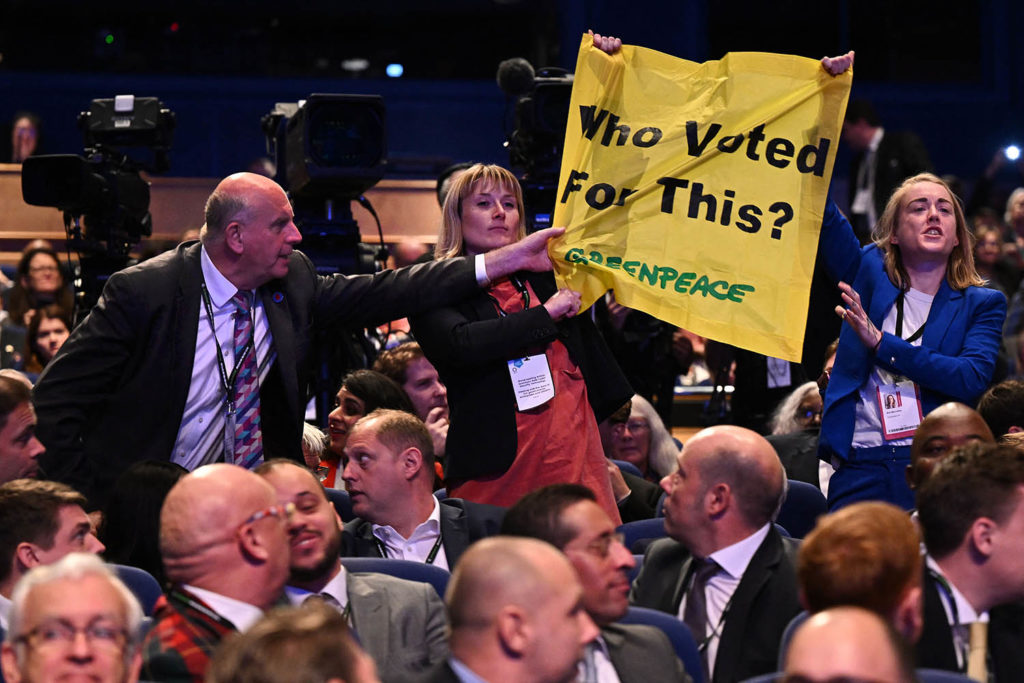
Liz Truss drew the Conservative Party Conference to a close with a whimper rather than a bang. The UK’s new prime minister gave a paint-by-numbers speech that ticked off her heartwarming backstory (revised to avoid dissing her old school in Leeds, as she did during her leadership campaign), her vision (growth, growth, growth) and to make clear that her chancellor, Kwasi Kwarteng, remains in her circle of trust. After the drama of the preceding days, Tories were simply relieved the set did not collapse. Truss did create a new public enemy number one – the anti-growth coalition. This appears to be a catch-all term for anyone who disagrees with Truss. It will become clear how many Tory MPs that includes when Parliament resumes next week.
Nina Kuryata
Contributing Editor
Additional reporting by Phoebe Davis, Giles Whittell, Catherine Neilan, James Wilson and Jessica Winch.
Photographs Getty Images