What just happened
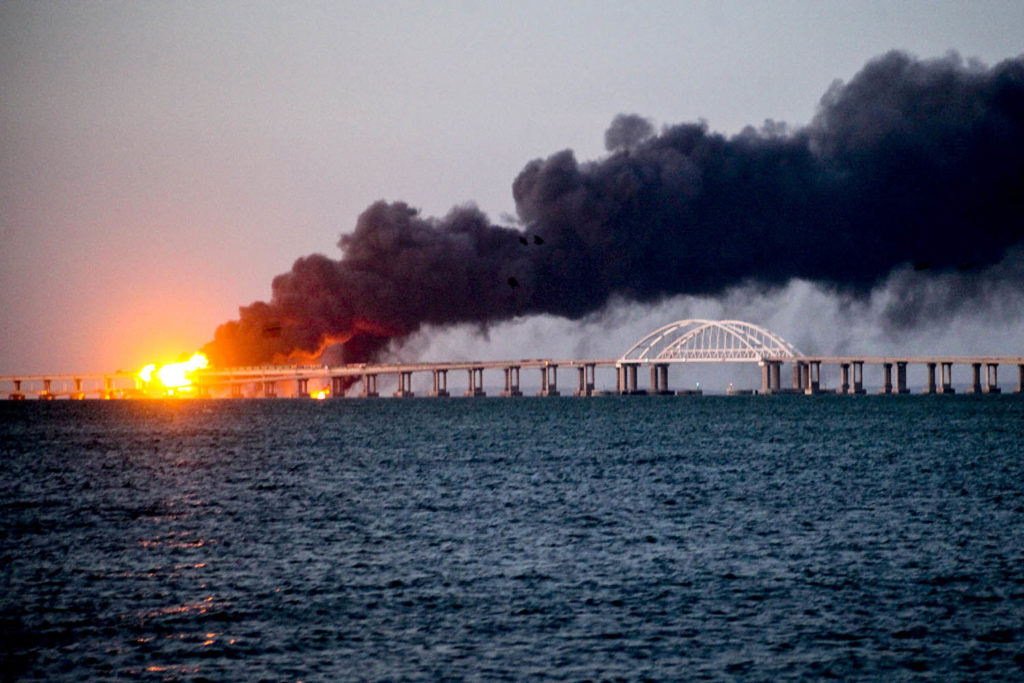
- Russia targeted central Kyiv with rockets for the first time in the war (more below).
- 76 people died when an overloaded boat capsized in Anambra state in southeastern Nigeria.
- Criminal barristers in England and Wales voted to end strike action after accepting a government pay offer.
- UK chancellor Kwasi Kwarteng moved his planned medium-term fiscal plan forward to 31 October.
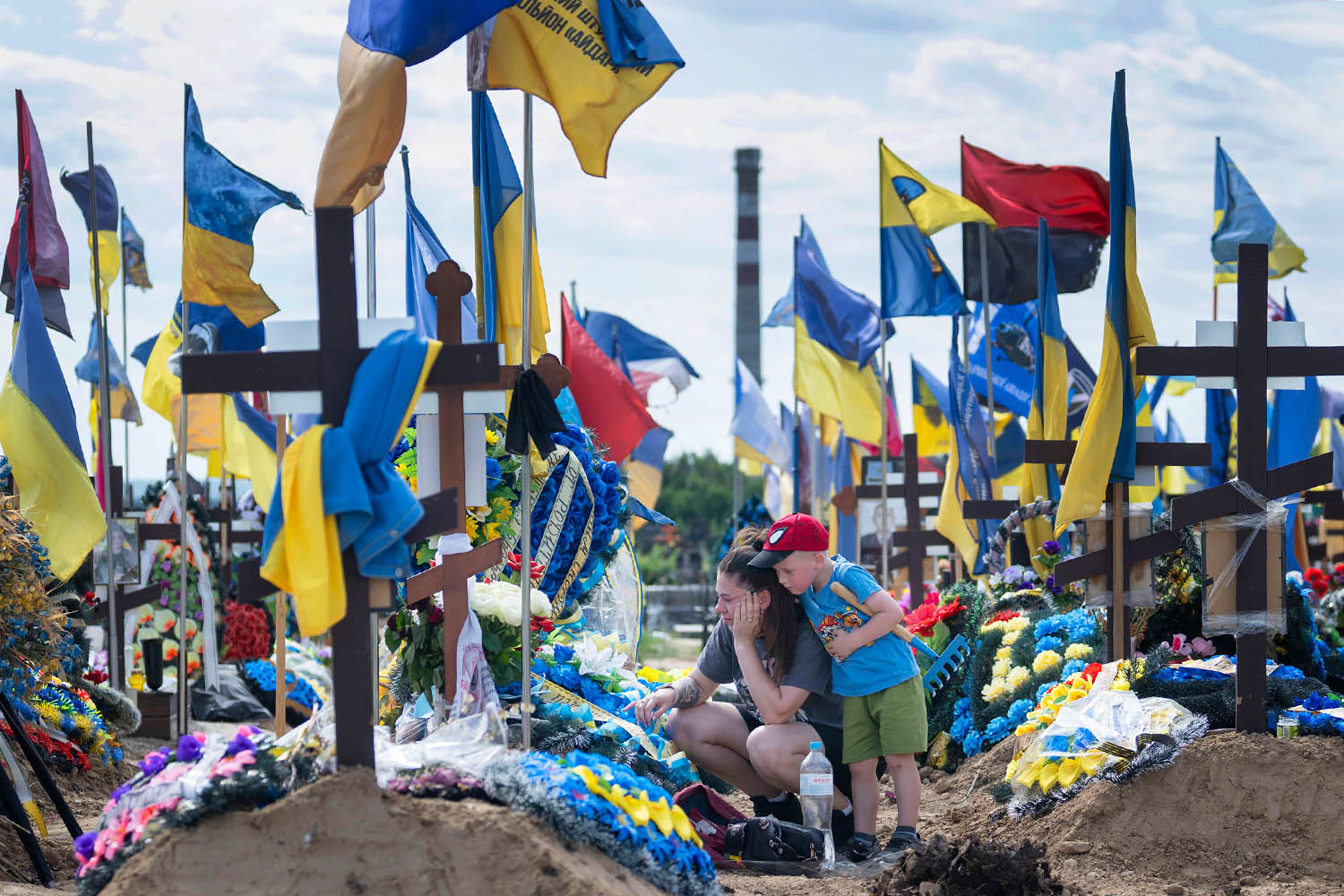
Kyiv, Dnipro, Lviv, Poltava and Zhytomyr had one thing in common until this morning. By the standards of Putin’s war on Ukraine, they were relatively safe. Nowhere is safe now.
This morning Putin met his security council in Moscow to get its rubber stamp for his latest escalation – a dawn wave of rocket attacks on civilian targets across Ukraine in revenge for Saturday’s remarkable demolition job on two spans of the strategic Kerch Strait bridge.
Ukraine says Russia launched 75 missiles of which 41 were shot down.
Yesterday, sighing heavily, Putin asked the chairman of his prosecutor general’s investigative committee if the bridge blast was a terrorist attack on civilian infrastructure. There was only one acceptable answer. Yes, Alexander Bastrykin said – and it was delivered by a truck bomb that reached the Russian end of the bridge via Bulgaria, Georgia, Armenia and North Ossetia as well as southern Russia.
This is the provokatsiya playbook, adapted for events. However the Kerch bridge attack was carried out, it will be used as pretext for whatever comes next.
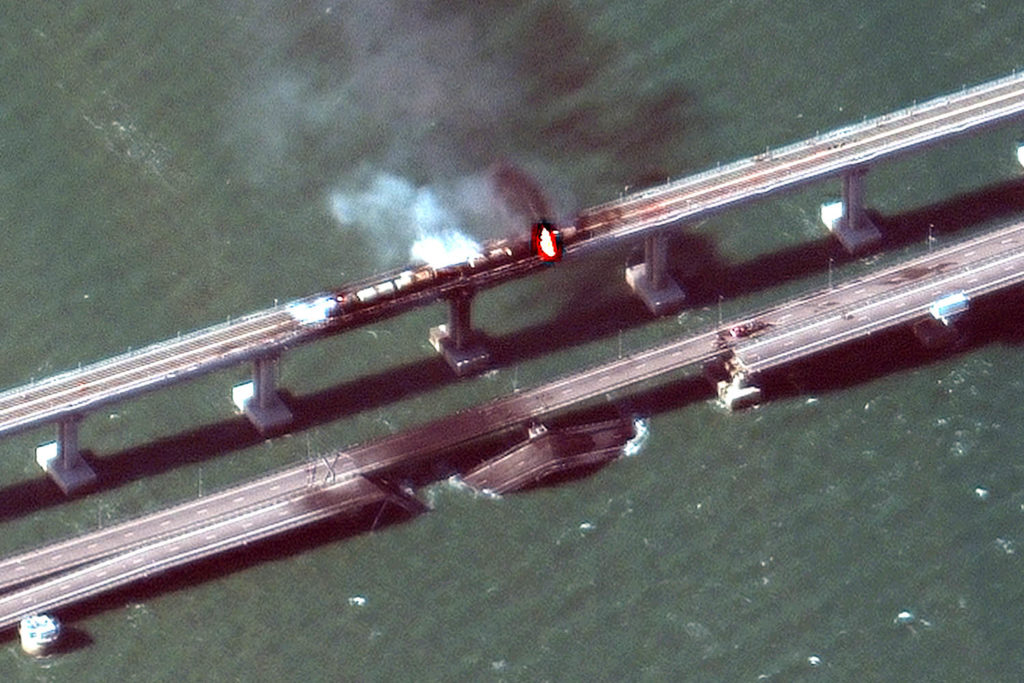
The truck bomb theory is plausible – just – but it’s worth noting that
- nothing uttered by Putin since he said in February he had no plans to invade Ukraine has been remotely trustworthy;
- the route ascribed to the truck by Bastrykin is wildly circuitous and defies geography unless it was smuggled through Turkey or flown or shipped across the Black Sea; and
- there are other ways Ukraine could have attacked the bridge, including with seaborne special forces or its own Hrim 2 short-range ballistic missiles, a “western source” cited by the FT suggested.
So what? Much has been said about the bridge’s symbolic value, and it’s true the 12-mile span is a concrete umbilicus linking Mother Russia to the Crimea that Putin claims Khrushchev gave away in error. It’s a love-child of Putin’s kleptocracy (the $3.7 billion construction contract went to his old judo partner, Arkady Rotenberg) and his toxic brand of Russian nationalism. And this may turn out to be, as the military historian Eliot Cohen predicts, “one of the great inflection points of this war – the moment when Russian elites began to understand that they are losing”.
But the bridge’s value is practical, too:
- It brings Crimea to within a day’s drive of Rostov-on-Don, the biggest military logistical hub in southern Russia.
- It has carried trainloads of tanks, howitzers and armoured personnel carriers into Crimea during but also before the war, enabling a steady military build-up since its opening by Putin in 2018.
- Its destruction would force this materiel to be routed via Russia’s newly-conquered land bridge through Zaporizhzhia and Kherson oblasts, all of which is now within range of Ukraine’s US-supplied HIMARS artillery systems.
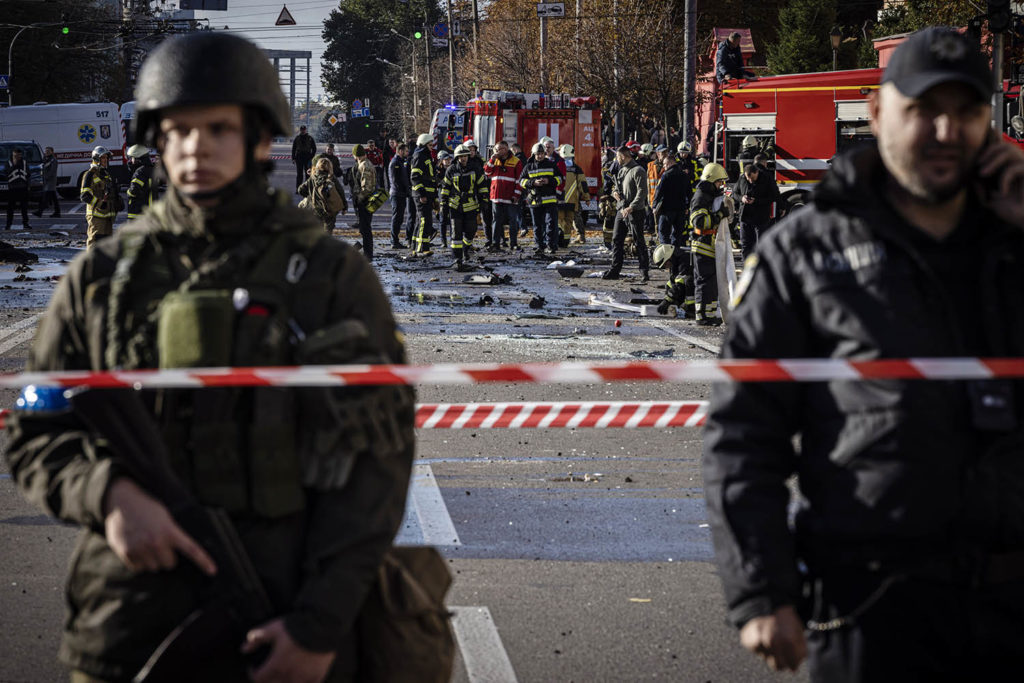
The bridge is not dead yet, but the sight of one roadway in the water and the rail bridge on fire brought on a wave of euphoria in Ukraine. That will be dampened by today’s revenge attacks but in the race to take out strategic Russian targets all bets are now off. Those targets include
- Nova Kakhovka, the dam on the Dnipro river that controls the main water supply to Crimea’s towns and agriculture;
- Sevastopol, Crimea’s main naval port, seized by Russia in 2014 and home since then to Russia’s Black Sea fleet;
- The Kerch Strait bridge, again.
Fearful of Putin’s response, the Pentagon warned Ukraine not to use HIMARS rockets against the bridge. But the US did not try to dissuade Kyiv from using its own assets, and the clamour from within Ukraine to attack it had been growing for months. The postal service has already marked the blast with a commemorative stamp.