
What just happened
- Russia attacked Kyiv with a wave of Iranian-made ‘kamikaze’ drones.
- The UN and African Union warned of escalating violence in Ethiopia’s Tigray region.
- Three Just Stop Oil climate activists were released on bail after throwing soup over Van Gogh’s Sunflowers painting in London’s National Gallery.
- George and Alfred Degiorgio were jailed for 40 years for their part in the murder of the investigative journalist Daphne Caruana Galizia.
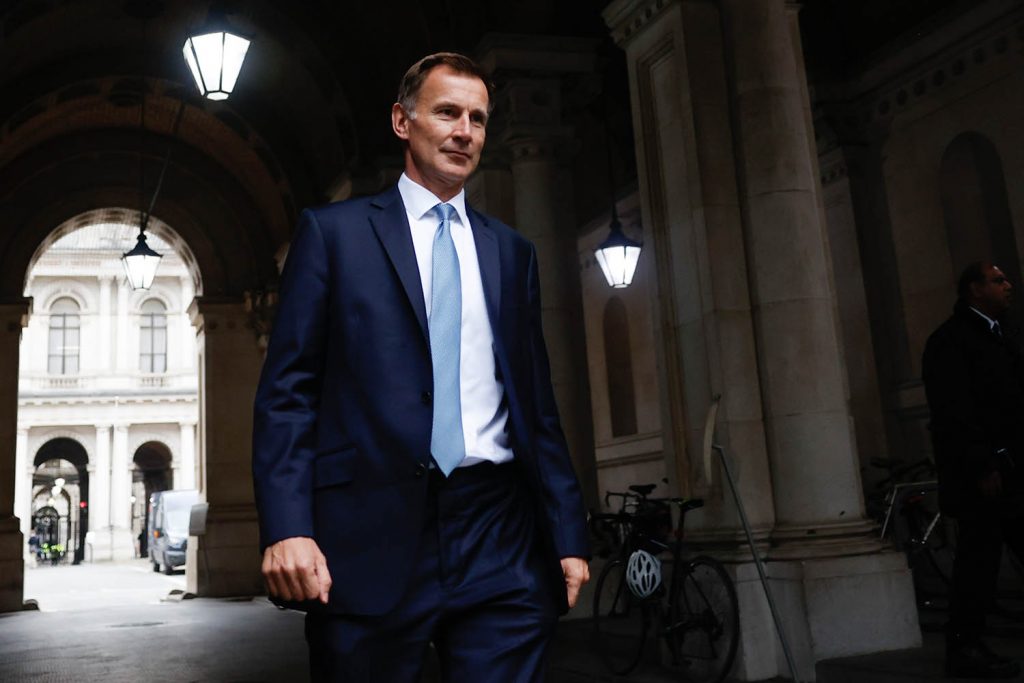
Like Liz Truss, Jeremy Hunt says he wants growth, but he’s also trying to fill a £72 billion hole in Britain’s public finances and in doing so calm the markets. To that end he plans to
- delay indefinitely a proposed cut in income tax
- means-test energy payments from next April
- let corporation tax return to 25 per cent
- keep the top rate of tax at 45 per cent
- scrap reintroduction of VAT-free shopping for tourists
- scrap stamp duty cuts
- shelve capital projects
- require “additional efficiencies” from every government department
Trussonomics has been euthanised, saving £32 billion. How much of the rest of the hole can be filled by “tailoring” energy payments and demanding public spending cuts is unclear and probably will be at least until 31 October. The political price for Truss will be severe.
MPs are publicly calling for her to go. There are reports that letters of no confidence are already in the double digits. The pound is bobbing up, but only because her departure is baked in. If she stays, all the markets’ bets are off. After 41 days in the job it seems all but inevitable the prime minister who lent her name to Trussonomics and then had to kill it off will be forced out. But it wasn’t just the mini-Budget that precipitated her downfall.
It was:
- a series of unforced errors, ranging from the shape of her team to bizarre personal attacks on high-ranking colleagues;
- a frankly ungovernable party, still deeply divided after Brexit with constituents whose needs work against each other; and
- a genuinely challenging economic backdrop shaped by Covid and the war in Ukraine, with little room for manoeuvre after leaving the EU.
The prime minister’s predicament is “almost entirely self-inflicted”, according to one Tory MP.
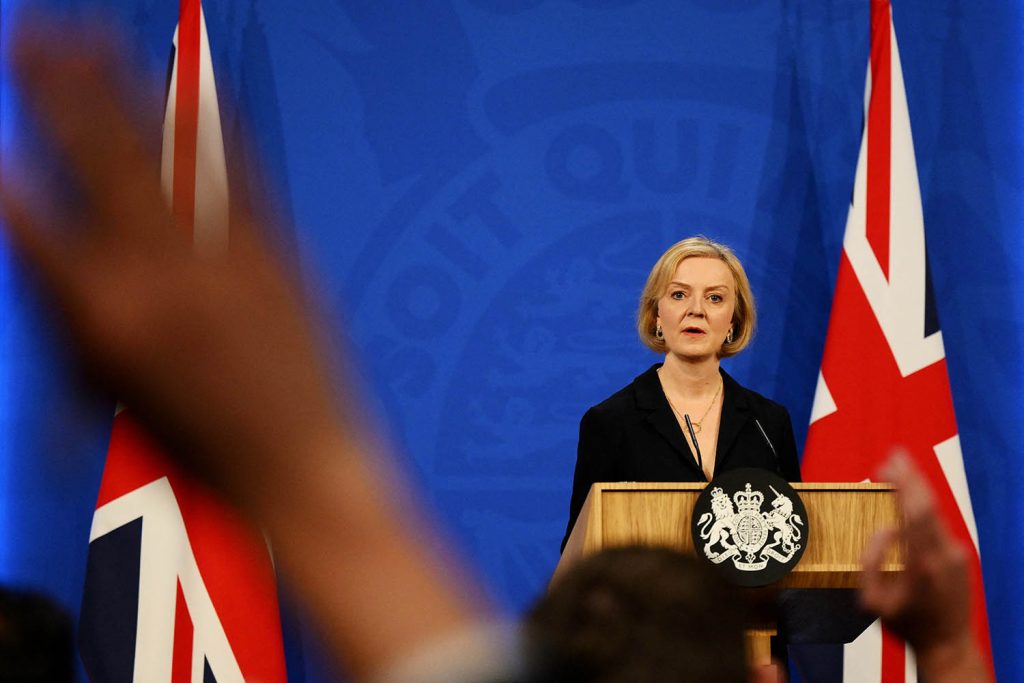
Political malpractice is certainly part of the story. Truss went into Number 10 on a promise to cut taxes and be more steely than the Iron Lady, only to abandon her chancellor, her economic strategy and an eight-minute press conference in one disastrous Friday.
She appointed no Rishi Sunak supporters and sacked some, like Grant Shapps, on the basis that they backed the wrong horse rather than any disagreement with their work.
She has allowed hostile briefing about ministers including Michael Gove, who some felt deserved it, and Sajid Javid, who most felt did not. Former chief whip Mark Harper called out her team for “nasty insults” at the weekend, and he wasn’t alone. “Truss and the vile bunch of snotty kids she employs in Number 10 need to pack their bags,” another Tory said.
But that sort of venom points to a bigger problem for the Conservatives.
A shattered party. The leadership contest threw a spotlight on intra-Tory divisions and they go deep. MPs may be colleagues on paper, but after 12 years in power there is little left that binds them together. Tory tribes include:
- Red Wall Brexiteers
- Libertarian Brexiteers
- Blue Wall/One Nation Tories
- Green Tories
- Culture warriors
- Malcontents, refuseniks and outgoing big beasts
Factionalism is not exclusively a Conservative problem – look at the still-healing Labour party for proof – but the dysfunction in the so-called party of government has undermined every Tory leader this century.
Brexit is the elephant in the room. Westminster is still traumatised by the three years of political chaos and constitutional soul-searching that followed the referendum, and this means the issue of the UK’s relationship with Europe is danced around rather than grappled with.
Covid enabled this evasion. Suddenly politicians had something more serious to talk about, and potentially something to unite around. Lockdowns provided cover for the start of the economic damage being caused by the UK’s departure from the EU, and for the failure to locate any sunlit uplands.
Ukraine. The war is invoked incessantly and with good reason by Truss and her allies, because it has fuelled inflation. Like Covid, it has also obscured the damage being done by Brexit, which according to an FT analysis of government figures amounts to £100 billion a year in lost output.
The reckoning. Phones were “red hot” this weekend with plotting to find a unity candidate as Truss’ replacement, but the mechanism for ousting her isn’t obvious.
The 1922 executive committee met on Friday evening to thrash out a plan that includes raising the threshold to ensure only one candidate emerges – although sources said no plan was finalised. Thatcherite MPs of the Conservative Way Forward group are understood to be holding a crisis meeting today his week, with former Brexit minister David Frost telling colleagues “things look bleak”. And a grandee – some named Michael Howard, others William Hague – is being lined up to dispatch the prime minister if she doesn’t take the hint. So one way or another…
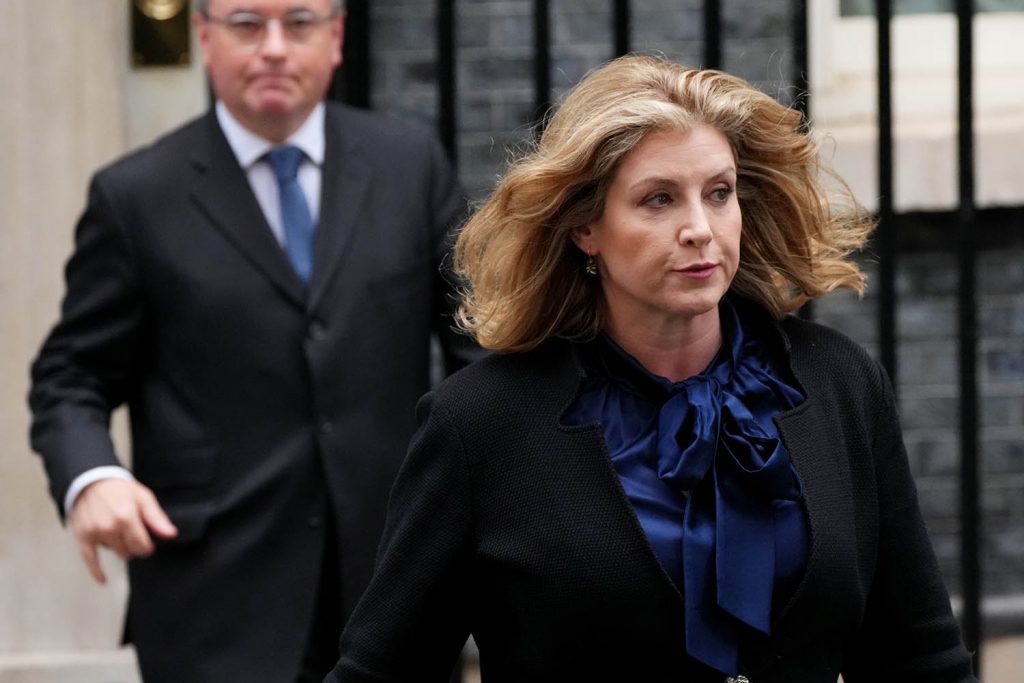
Change is afoot. Penny Mordaunt writes in a rallying op-ed which does not preclude a future leadership challenge of her own that recent changes have “left our compass spinning… our country needs stability”.
And it is hard to imagine stability with Truss. The Tory crown now looks likely to pass to either Rishi Sunak, Ben Wallace or Mordaunt, although Jeremy Hunt, the new chancellor, is also in the running. Whoever it is will lead a party that seems to have forgotten what it’s for, and – perhaps only briefly – a country that’s fed up with it.


