

Alok Sharma, Cop26 president, says the King's attendance at climate talks this year would help. What else needs to happen to keep 1.5C alive?
- BP posted underlying profits of £7 billion for the July-September quarter.
- Greta Thunberg said she won’t go to COP27, and called attention to Egypt’s restrictions on protest and activism.
- Britishvolt, the company behind plans to build a battery factory in the UK’s north-east, is reportedly on the verge of collapse.
There’s a blizzard of numbers around the UN’s climate talks, but only one that matters: 1.5C.
That’s the goal of the Paris agreement, keeping global heating to 1.5C above pre-industrial levels.
We’re already approaching this threshold. Above it, the damage inflicted on our health, our cities and roads, and on nature by heatwaves, fire and flood becomes much greater.
At the end of COP26 in Glasgow, Alok Sharma announced that the world had “kept 1.5 alive”. But this was only true because countries agreed to come back with improved offers ahead of next week’s talks in Egypt: so far, only 24 have done so.
On the current trajectory, emissions will go up 10.6 per cent by 2030, compared to 2010 levels. This is an improvement on last year’s assessment, but we need to go much further, much faster – making deep emissions cuts for a liveable world. As things stand, we’re heading for a 2.8C world of catastrophic warming.
Ahead of COP27, Tortoise spoke to Alok Sharma, president of the UN climate talks. He told us:
- The Paris goal of 1.5C is still alive but the pathway is narrowing. And with every day that ticks by the pathway narrows further.
- We are going to get to a net zero world. The issue is whether we do it fast enough to avert the worst impacts of climate change.
- The King has been a leader on climate change for decades and it would make a positive contribution if he went to Cop27.
- The World Bank and IMF need to be redesigned so that tackling climate change becomes their central mission.
- Rishi Sunak has made a good start by reversing the push on fracking but the UK government’s policies on new oil and gas licences are something it needs to explain.
Sharma told us: “What we really need is for the UK government to set out how its policies, including on new oil and gas licenses, are consistent with legally binding commitments on net zero by 2050.”
Here’s what to watch for at COP27:
The US and China. “Almost every iteration of major climate progress has been achieved after the US and China have found some bilateral common ground,” says Jonathan Pershing, program director of environment at the William and Flora Hewlett Foundation. “At this moment that doesn’t look very promising. Over the medium term I’m hopeful that things will ease.”
Paying for climate disaster. Rich nations won’t accept liability. That, John Kerry said last week “is going to be a problem for everybody,” but they are likely to find ways to offer more finance. Look for leadership from Germany, which assumed the presidency of the G7 this year and from the hosts Egypt – a win here is a priority for them.
Implementation. Countries meeting in Glasgow agreed to establish a work programme to scale up implementation. This will be decided in Egypt.
Sharma says: “The big win from Glasgow is to be able to say with credibility that we’ve kept 1.5C alive, but as I said at the time, and I continue to repeat, is that it’s a really fragile win because to be able to deliver that, it needs every country to follow through and implement.”
As things stand, humanity isn’t heading for the best climate outcome. But it looks like our species has also averted the very worst – a reminder of what can be achieved through an effective combination of technology and political will.
Coal
4/10. Last year’s commitment to “phase down” coal hasn’t materialised. Since Russia invaded Ukraine, China and India burned more, not less. But even though new coal-fired power plants are still being opened, obsolescence looms. “The way that China has set itself up now, it’s building so much wind and solar and that is more than offsetting the rise in demand,” says Dave Jones, consultant at Ember.
What next? A bright spot at Cop26 was the $8.5 billion package that developed nations pledged to help South Africa wean itself off coal. It’s too early to say if the “Just Energy Transition Partnership” has worked (or even whether it can be called “just” – a leaked summary shows that South Africa will have to pay 97 per cent of the money back as loans). But similar partnerships for Vietnam and Indonesia should be on the cards this year.
A message from our sponsor

Companies are investing more time producing climate risk disclosures based on the TCFD recommendations. However, these disclosures are not translating into actionable strategies to accelerate decarbonisation. The EY report analyses the reasons behind this by reviewing the disclosures made by 1,500 companies across 47 countries. Find out more
Cars
7/10. At Glasgow 100 countries, cities and companies signed a non-binding declaration to end the sale of internal combustion engines by 2035 in leading markets, and by 2040 worldwide. Since then, the proportion of countries that now mention electrification of transport in their national targets has jumped from 28 to 41 per cent. The EU voted to ban the sale of ICE vehicles by 2035 and the US now provides credits that cover 30 per cent of the total costs of charging infrastructure for businesses. New electric vehicle registrations in China are expected to skyrocket from 6 per cent in 2020 to 28 per cent by 2025.
What next? Despite increasing sales, the cost of EVs isn’t declining fast enough. Securing the raw materials needed for cheaper batteries will require cooperation with China, which controls the lion’s share of rare metal extraction and processing.
Cash
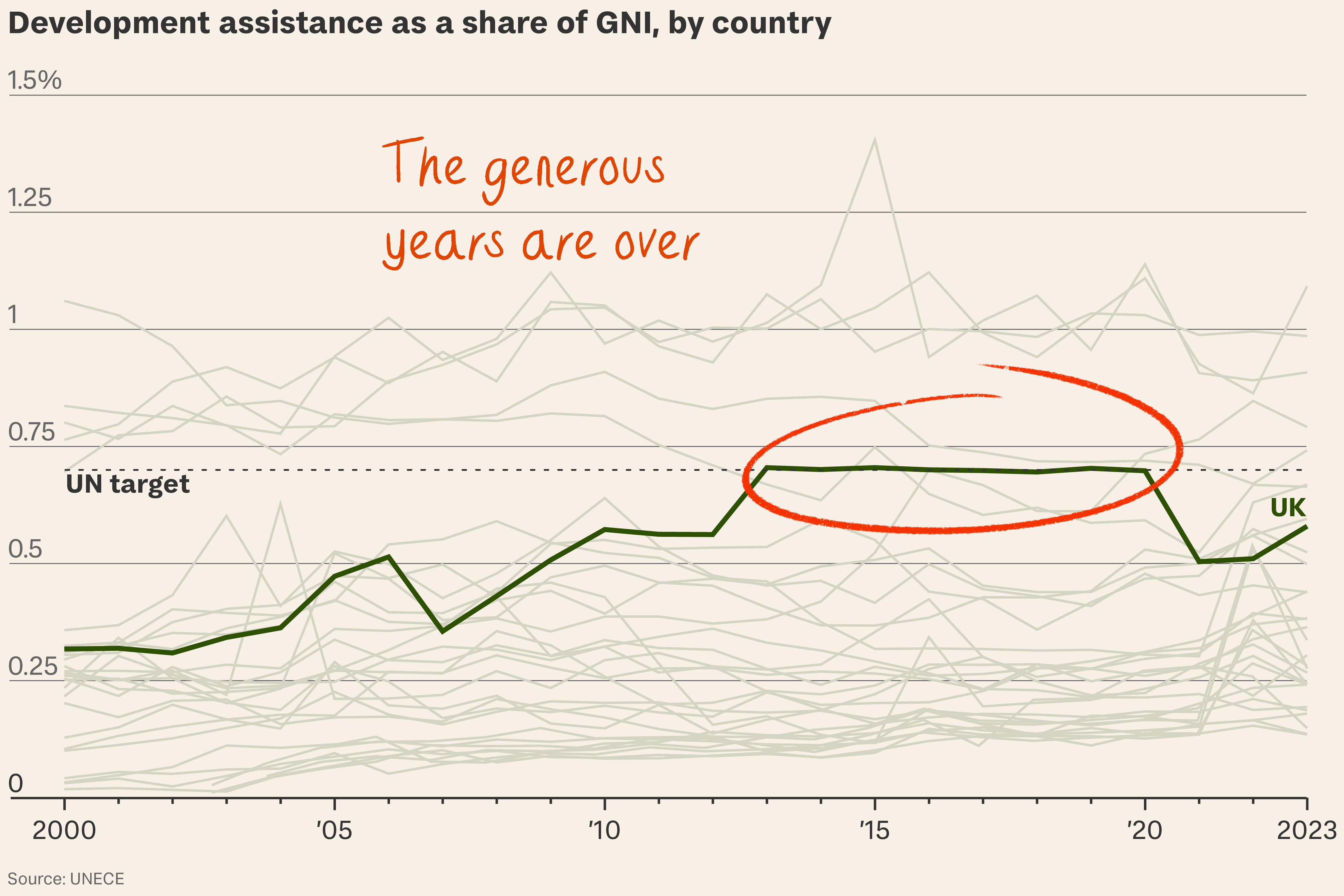
2/10. Repeated broken promises by rich countries to provide $100 billion a year in climate finance by 2020 is a key reason for the lack of trust brewing between nations at the talks. The UK, for instance, has pledged £11 billion up to 2025 but according to reports has defaulted on its most recent payment of $288 million to the Green Climate Fund. The GCF has been forced to defer three projects as a result.
What next? As well as hitting the totemic target of $100bn, more funding is needed for adaptation. An announcement from the US on adaptation might help to soothe relations with vulnerable countries if the talks on compensation break down.
Trees
3/10. 145 countries at Glasgow signed a declaration to halt and reverse forest loss by 2030, accompanied by a financing pledge of $12 billion between 2021 and 2025. Global deforestation rates have slowed slightly, but in Brazil they hit a record high in the first nine months of 2022, raising the spectre that the Amazon will soon turn from a powerful carbon sink into a source. President Lula’s win is welcome but he’ll need to act fast. Other notable actions include the EU’s proposed legislation requiring companies to minimise deforestation in their supply chains, and the US’s deal with the DRC to preserve forests.
What next? Much hinges on the Amazon but developed countries should also look to ramp up funding for protecting crucial rainforests in Indonesia and Central Africa.
Thanks for reading.
Jeevan Vasagar
@jeevanvasagar
Barney Macintyre
If you want to get in touch, drop us a line at netzero@tortoisemedia.com.
Sponsored by

With thanks to our coalition members: a network of organisations similarly committed to achieving Net Zero