What just happened
- Israel held its fifth election in less than four years with former premier Benjamin Netanyahu hoping to return to power.
- Oleg Tinkov, a Russian oligarch, renounced his citizenship over the war in Ukraine.
- Taiwan’s national palace museum admitted breaking three artefacts from the Ming and Qing dynasties worth a reported £66 million.
It took all of a week for Rishi Sunak to learn that what Labour and the public are telling him is true. Power without a popular mandate isn’t really power at all.
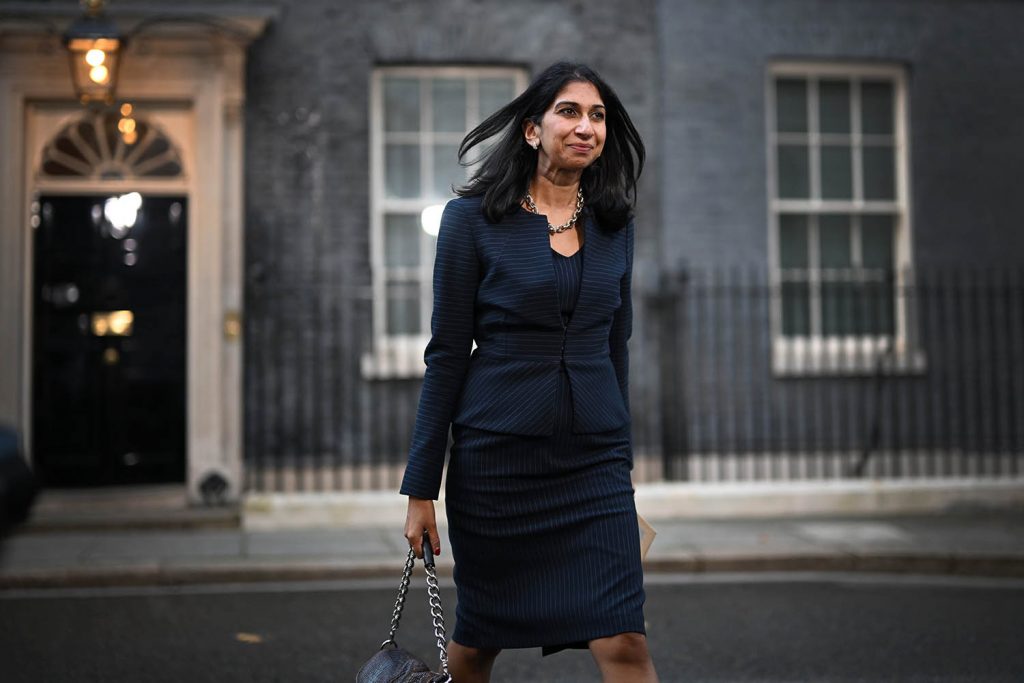
The UK’s new prime minister wanted to keep the hard right of his party happy by naming the fiercely anti-immigrant Suella Braverman home secretary. She’ll be lucky to last until Christmas.
Sunak may lack the political capital to keep her that long even if he wants to.
Last night Braverman claimed she was the victim of a political witch-hunt as she
- faced down opposition MPs who challenged her over multiple security breaches – and by extension, breaches of the ministerial code;
- alarmed fellow Conservatives with her choice of words to describe what she called an “invasion” of cross-Channel refugees; and
- rejected claims she ignored legal advice over the period of time refugees were kept in the tented Manston asylum centre in Kent.
Here are the facts:
24 hours: Maximum time people are meant to stay at the processing centre
4 weeks: Amount of time people have actually been held there
4,000: Number of people staying at the centre, more than double the capacity of 1,600
40,000: Number of people who “have arrived on the south coast this year alone”, according to Braverman
Braverman may have hoped to shore up her support among Tory backbenchers at a moment of peril, but many of them are weary of blue-on-blue attacks. The feeling is that Sunak could pull the plug on his home secretary, and sooner rather than later.
What would that say about his party? As we show in this week’s Slow Newscast, divisions within the Conservatives have rendered it ungovernable:
- Sunakites argue that Trussonomics has made the economic crisis even more acute than it already was and that Boris Johnson brought the party into disrepute.
- Johnsonians still say their man is the only one who can win a general election. They blame Sunak for his early demise, and for putting taxes up to generational highs.
- One Nation Tories will do anything to prevent Johnson’s return.
That scenario is now implausible, but a fight between ideologues and pragmatists is still tearing at the fabric of the Tory party 12 years after David Cameron entered Downing Street.
Price of power. Braverman is “a distraction,” a Conservative source said. “She’s lied and broken the law” in her handling of the Manston affair, and has to go.
Sunak’s difficulty with this logic is that Braverman was critical to his ascent to power. In the frantic weekend of campaigning that followed the collapse of Liz Truss’s premiership, the contest was wide open until Braverman and her ally Steve Baker, the influential Brexit ultra, threw their weight behind him.
But to lead is to choose. Sacking Braverman would create enemies for the new PM, but her support base looks thin. One former minister says Sunak has overestimated her value to him: “Priti commands more respect on the mad right-wing fringe – he’ll wish to waste very little more capital on this shit show.”
Off-ramp. The process case against Braverman is that she emailed confidential government business to another ally in her first stint as home secretary, and it turns out she was a repeat offender. Her reappointment is now widely seen as a poor reflection on Sunak’s judgement – which hasn’t exactly shone in his dithering over whether to travel to Cop27.
Last week Sunak told Tory MPs they must “unite or die”. One of his colleagues says the government is “probably heading for the latter if this start is anything to go by.” Ouch.
Biden & BP
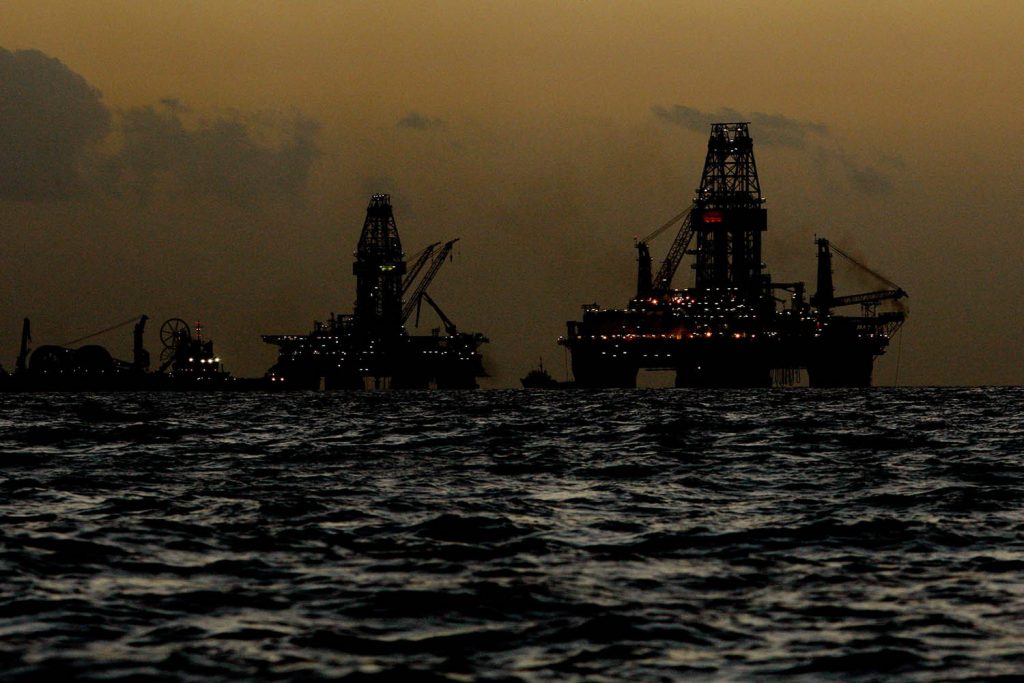
BP’s quarterly profits are more than double those of this time last year, and Biden considers them part of an “outrageous” war-fuelled bonanza – unless the oil majors step up output to ease supply constraints, or pass on some of their profits direct to US customers in the form of lower prices. He need not add “in time for the midterms” because the political imperative for Democrats hoping to cling on to Congress is baked into everything they say. BP earned third-quarter profits of $8.2 billion compared with $3.3 billion in the same quarter last year. Biden didn’t single it out for condemnation, probably because its US earnings are dwarfed by those of Exxon (nearly $20 billion). But BP remains a player in North America and Biden will remember vividly its humiliation because of the Deepwater Horizon disaster, which unfolded on his watch as Vice President. Windfall taxes loom in the US, and pressure for stiffer ones is growing in the UK. Rishi Sunak may find it irresistible.

The asteroids we cannot see
Astronomers have spotted a new potential threat to Earth. Asteroid 2022 AP7 is roughly a mile long and its orbit crosses Earth’s path around the Sun, making it the largest potentially hazardous asteroid discovered in the past eight years, according to an international team of researchers who published their findings in the Astronomical Journal. The asteroid, along with two other projectiles identified, had been previously hidden in the glare of the sun. The good news: 2022 AP7 is unlikely to be a threat to Earth for at least the next century, perhaps far longer. The bad news: its existence raises the question of how many other “planet-killer” sized asteroids may be lurking out of sight. To answer this question, Nasa is launching a Near-Earth Object Surveyor mission later this decade that with a telescope will stare into the sun’s glare. “We want to do everything possible to not be surprised,” said Cristina Thomas, a planetary astronomer at Northern Arizona University who was not involved with the study.
Affirmative action
“The way to stop discrimination on the basis of race is to stop discriminating on the basis of race,” declared John Roberts, the chief justice on the US Supreme Court, in a 2007 case about whether race should be a factor in assigning public school places. It’s a phrase to remember as the conservative-majority Supreme Court considers arguments in favour of overturning a decades-old precedent allowing universities to use race as a factor in admissions, a process known as affirmative action. In a pair of cases involving Harvard and the University of North Carolina, the universities argue that having a diverse student body creates a better learning experience for their students. The challengers, fronted by conservative activist Edward Blum who has previously sued over race-based admissions, claim the process is discriminatory against Asian Americans and violates civil rights. The court will release its final opinion in June.
Political climate
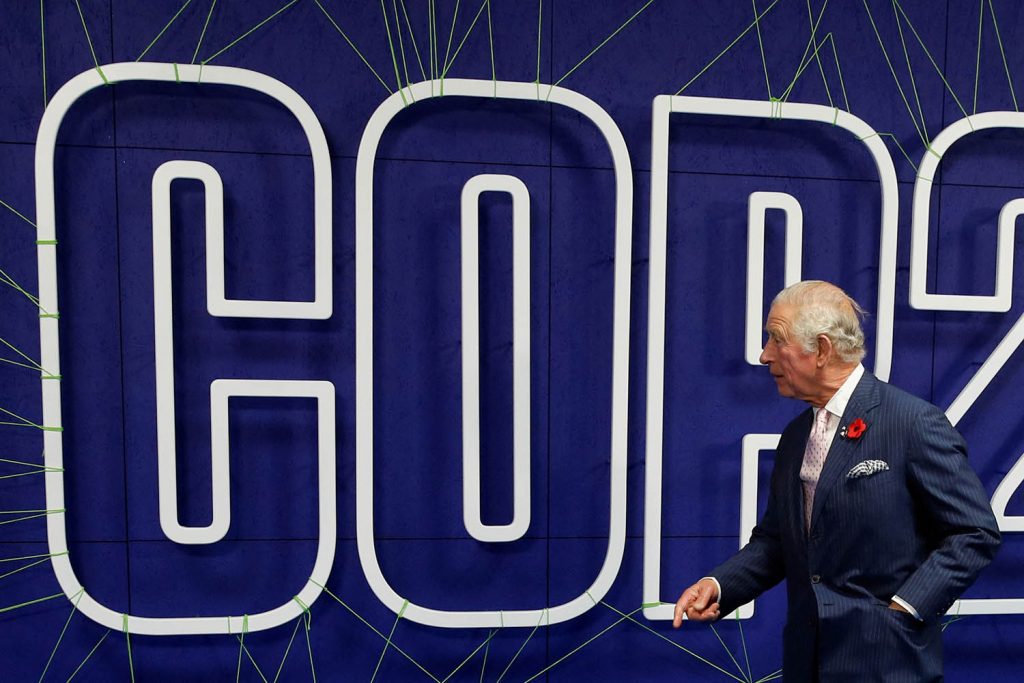
Rishi Sunak is learning fast that the perils of a warming climate aren’t just physical – they’re political too. His decision not to attend Cop27 in Sharm-el Sheikh, Egypt is now “under review”, while he is also facing scrutiny for donations accepted from fossil fuel investors. In an interview for this week’s Net Zero Sensemaker, Alok Sharma, the current president of the UN climate conference, said that the Paris goal of 1.5C is still alive “but the pathway is narrowing” and that the UK government needs to explain how issuing new oil and gas licences is consistent with a legally-binding target to reach net zero by 2050. Sharma didn’t comment on Sunak’s decision not to attend Cop27 but made it clear that some senior leadership would help. “It would make a really positive contribution if we did have the King at Cop27,” he said. For now, King Charles is bringing the conference to him, hosting 200 business leaders, campaigners and politicians at a pre-Cop reception at Buckingham Palace.
Book megamerger blocked
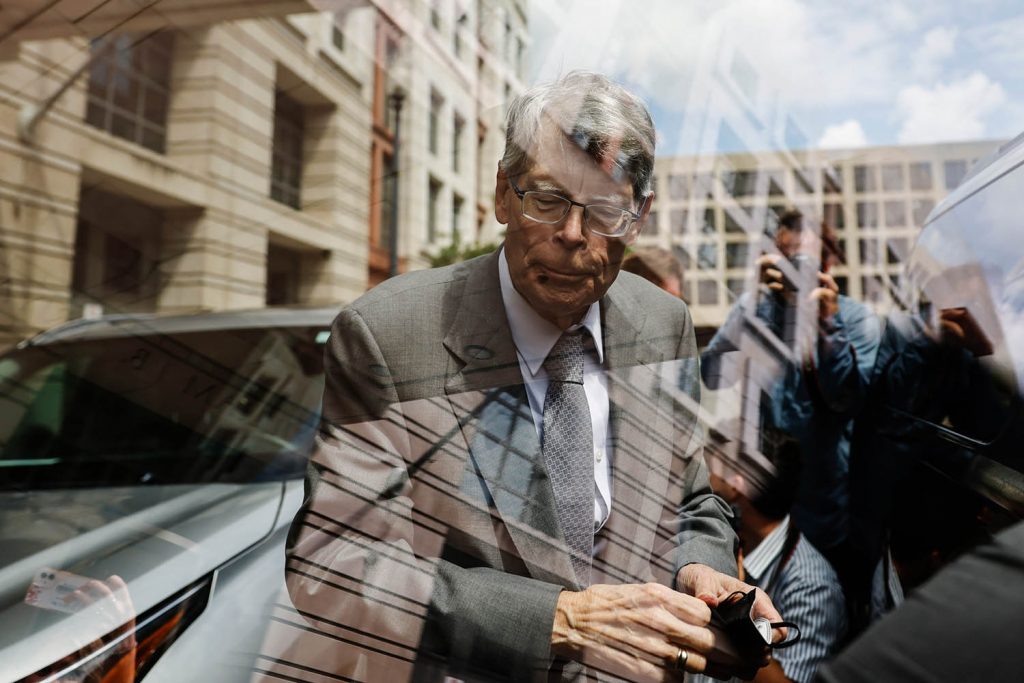
A US court has blocked a proposed $2.2 billion merger between publishing giants Penguin Random House and Simon & Schuster. Judge Florence Pan ruled that the merger would “substantially” reduce competition in the market for US publishing rights for anticipated best-selling books, siding with the Department of Justice which warned it would damage authors’ earnings. The publishing houses argued that combining forces would lead to cost savings and free up money to spend on authors. Not so, said best-selling author Stephen King, who testified that the trial that consolidation would be bad for competition, comparing it to a husband and wife bidding against each other for the same house. King said yesterday he was “delighted” with the judge’s ruling.
Thanks for reading. Please share this round, send us ideas and tell us what you think. Email sensemaker@tortoisemedia.com.
Catherine Neilan
@CatNeilan
Additional reporting by Phoebe Davis, Barney Macintyre and Jessica Winch.
Photographs Getty Images, NOIRLab