What just happened
- Trump declared a third run for the US presidency (more below).
- Intelligence sources said a missile that killed two people near Poland’s eastern border may have been fired by Ukrainian air defence (more below).
- A new Covid lockdown triggered riots in Guangzhou in southern China.
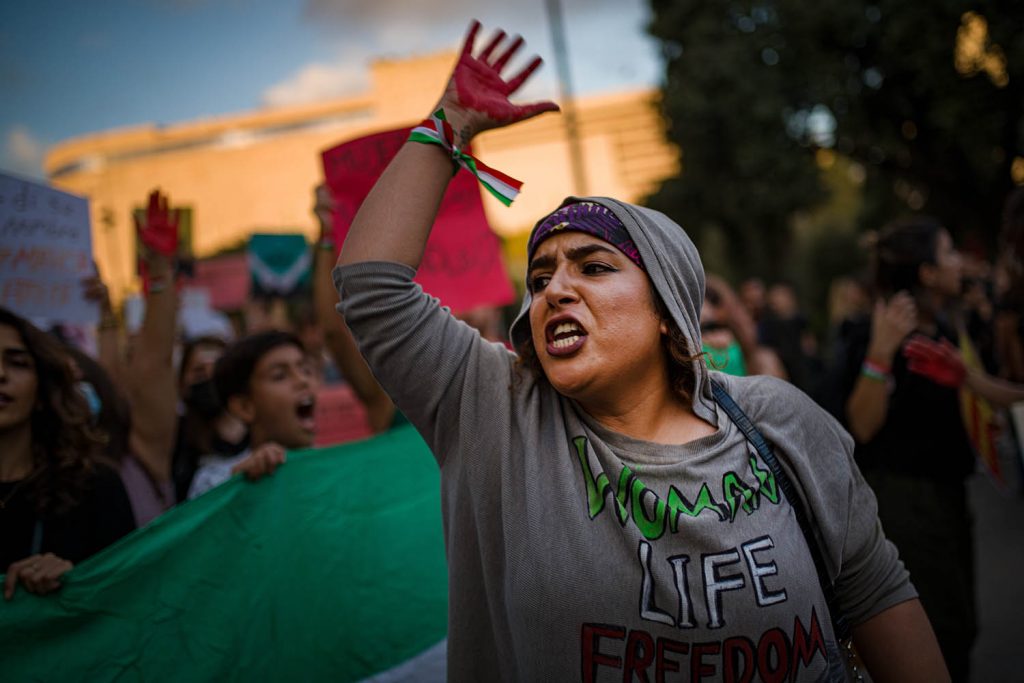
Earlier this month, Iran’s supreme leader seemed almost conciliatory when speaking of the young people – mainly women – who have led nationwide protests for the past two months.
“These are our own kids,” Ayatollah Ali Khamenei said. “We don’t have any dispute with them.”
The actions of his regime tell a crueller story. The protests started following the death of 22 year-old Mahsa Amini on 16 September, after she was detained and beaten by Tehran’s so-called morality police for not wearing her head covering correctly. Since then
- Iranian security forces have killed at least 326 people.
- Of these, at least 43 were children. Young people have been beaten, detained and shot to death on the street. The average age of the protesters is 15.
- More than 14,000 Iranians have been arrested, according to the UN.
- Two female journalists who helped break the story of Mahsa’s death are in jail accused without evidence of being CIA agents.
- Iranian courts have started sentencing protesters to death.
The protesters’ rallying cry is unequivocal: death to the dictator, referring to Khamenei. They no longer want an Islamic Republic. France’s Emmanuel Macron described the unrest as a revolution and said nuclear talks with Iran were on hold as a consequence. Women are openly walking the streets without headscarves and shouting back at clerics: “pack your bags and leave”.
Iran has seen nationwide anti-government protests before, but these are seen as the most serious threat to the Islamic regime since its founding in 1979:
Gen Z. The protests were prompted by the Persian language hashtag #MahsaAmini, driven mostly by Gen Z, says Holly Dagres, a senior fellow at the Atlantic Council. This generation, born between 1997 and 2012, can work around repressive internet censorship and has been instrumental in driving the protests. They have also been targeted like never before (see above).
Continuity. The protests have not stopped since September 16, taking place in cities and towns in all 31 provinces and across different social and ethnic groups.
Bloody Aban. This week marks the third anniversary of “Bloody Aban”, or Bloody November, when at least 321 people according to Amnesty International were killed by security forces during 2019 protests over a rise in fuel prices. There have been strikes across the country to mark the anniversary.
Leaderless. So far, the protesters seem to be deliberately leaderless, wary of giving the regime names to target, as happened during the 2009 Green Movement protests. But Hamed Esmaeilion, a Canadian-Iranian who lost his wife and daughter on a Ukrainian passenger plane shot down by Iran’s Revolutionary Guards in 2020, has become one of the leading forces in Iran’s diaspora, organising a rally in Berlin that attracted up to 100,000 people.
A search for scapegoats. While the regime has been unleashing its fury on teenage protesters, it has publicly placed blame for the unrest
- on the US and its allies such as Israel; and
- on Kurdish opposition groups in northern Iraq, claiming “terrorists” there have been inciting the riots.
The reality is that a rejection of Iran’s theocracy has been spreading through society for years, one activist now based in Manchester says. Iran’s clerics have become more hardline; elections have been rigged and the economy is in freefall. “Iranian people are living in a vast prison,” this person said.
What happens next is unclear. It will take more protests, more supply chain disruptions and sustained strikes in the strategic oil sector to bring the clerical establishment to its knees, Dagres says. That could take time. “But it’s important to remember that the 1979 revolution took two years.” The grandchildren of that revolution believe it’s now their turn.
Bad deal
The UK has signed 71 trade deals since Brexit. Sixty-nine are exact facsimiles of existing deals negotiated on its behalf years ago by the free trade powerhouse known as the EU. One, with Japan, differs slightly from the EU version. The 71st, with Australia, is new. When it was signed last year the government said it would unlock more than £10 billion of new trade by removing tariffs on beef and sheep, but British farmers said it would hurt them and George Eustice, the former Tory environment minister, now says it gave away too much and was negotiated “on the back foot” throughout because Liz Truss, then trade secretary, told her opposite number her priority was to get it signed in time for the 2021 G7. The best thing about the deal, Eustice says, is that the UK can get out of it at six months’ notice, no questions asked.
Artemis flies
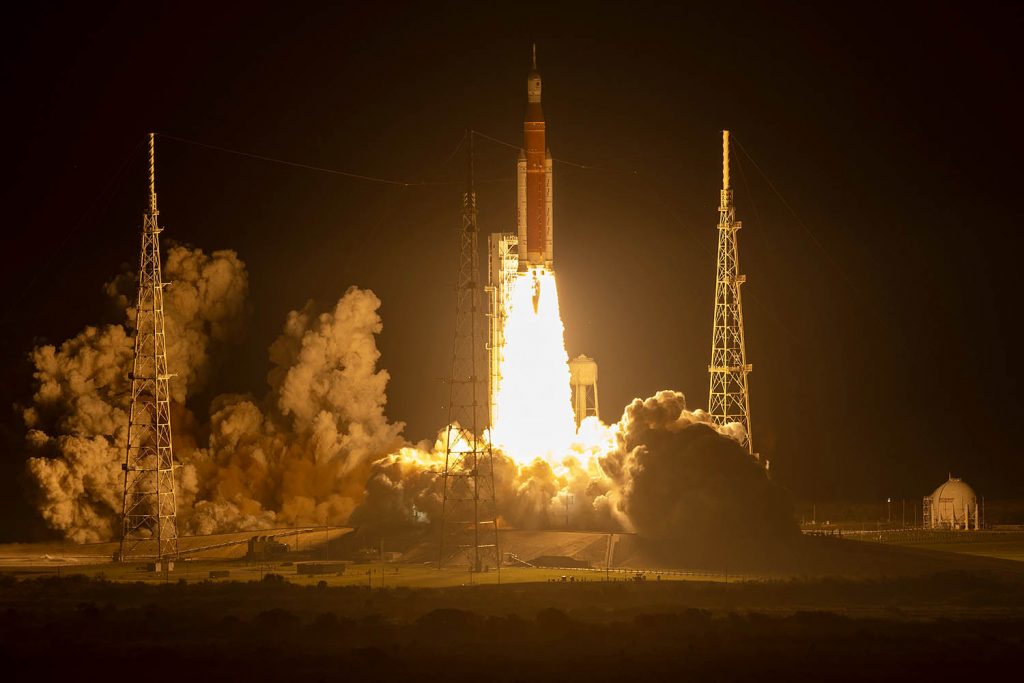
Nasa’s biggest rocket since the Saturn V of the Apollo programme blasted off this morning from Cape Canaveral, bound for a loop around the moon. It’s a beast: 25 engines on the Artemis 1 rocket itself, with two giant Shuttle-era solid rocket boosters attached to it like crutches. There are two ways of looking at this trip. Nasa’s is to say it’s back in the human space exploration business after far too long a pause. The other is to say Nasa is wasting $4 billion per launch on old, single-use space tech at a time when SpaceX is reusing rockets up to ten times each, on a mission that’s an exact copy of Apollo 8 (1968), but without the astronauts. They will strap in for the next flight, all being well. In the meantime Artemis has at least overcome fueling difficulties that kept it on the ground in a series of aborted launches earlier this year. Godspeed.
Not yet doomsday
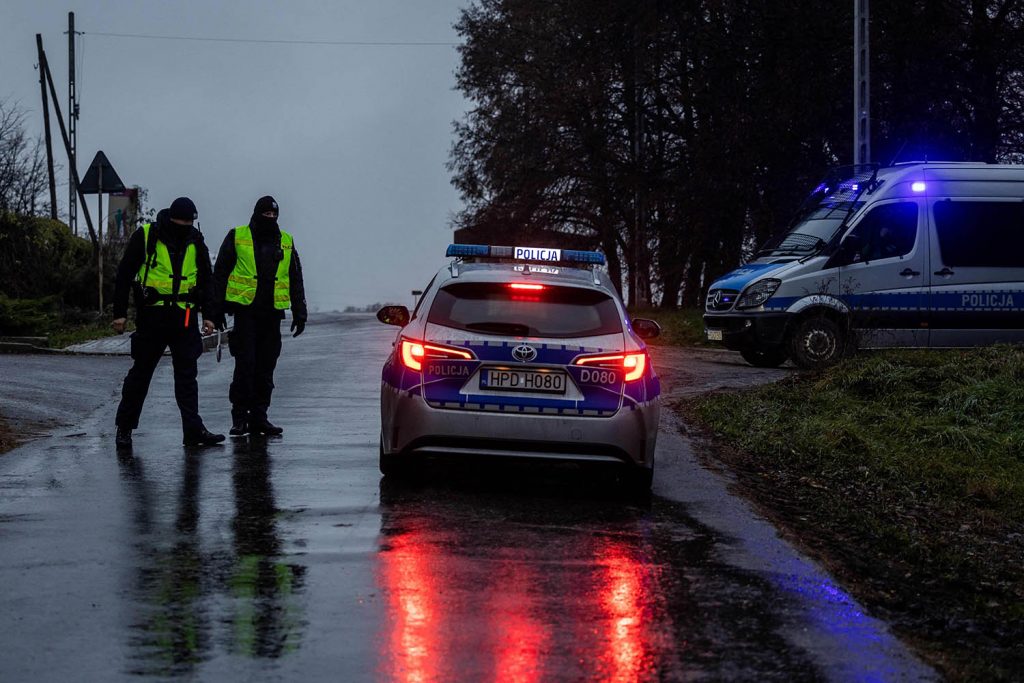
At about 7pm UK time yesterday news reached the G20 in Bali that two people had been killed by a pair of missiles a few kilometres inside Poland’s border with Ukraine. If they were Russian missiles, even stray ones, Poland could invoke Article 5 of the Nato charter to request an armed response from the alliance. So whose were they? The Polish foreign ministry described them as “Russian-made”. Russia denied any responsibility. Ukrainians, under attack from about 100 Russian missiles on the same day, were wondering on social media if Nato would come to Poland’s defence. The answer: not this time. Poland’s President Andrzej Duda said there was no “conclusive evidence” as to who launched the missiles, and Biden said it was “unlikely” to have been fired from Russia. An unnamed US official later told the AP it could have been a Ukrainian air defence weapon launched to shoot down a Russian missile. Nato is monitoring the situation. It has no plans to launch World War III just yet – and nor does Article 5 require an armed response – but for a few tense hours last night all bets were off.
Awaab Ishak
Awaab Ishak’s parents remember him as beautiful and full of smiles. He died in 2020, eight days after his second birthday, from a respiratory condition caused by mould in the one-bedroom flat assigned to him and his parents by the local social housing provider in Rochdale. It has taken two years for a coroner’s inquest to confirm the cause of death – two years in which the salary of the chief executive of Rochdale Boroughwide Housing (RBH), Gareth Swarbrick, rose from £170,000 to £185,000. Awaab’s father, Abdullah, first reported the mould in 2017 and was told to paint over it, but the coroner concluded he would not have understood the need to use special anti-mould paint. RBH required an agreement with Abdullah’s solicitors before carrying out repairs itself. They came too late. Swarbrick has been summoned for a dressing down by Michael Gove, the levelling up secretary.
Thar he blows again
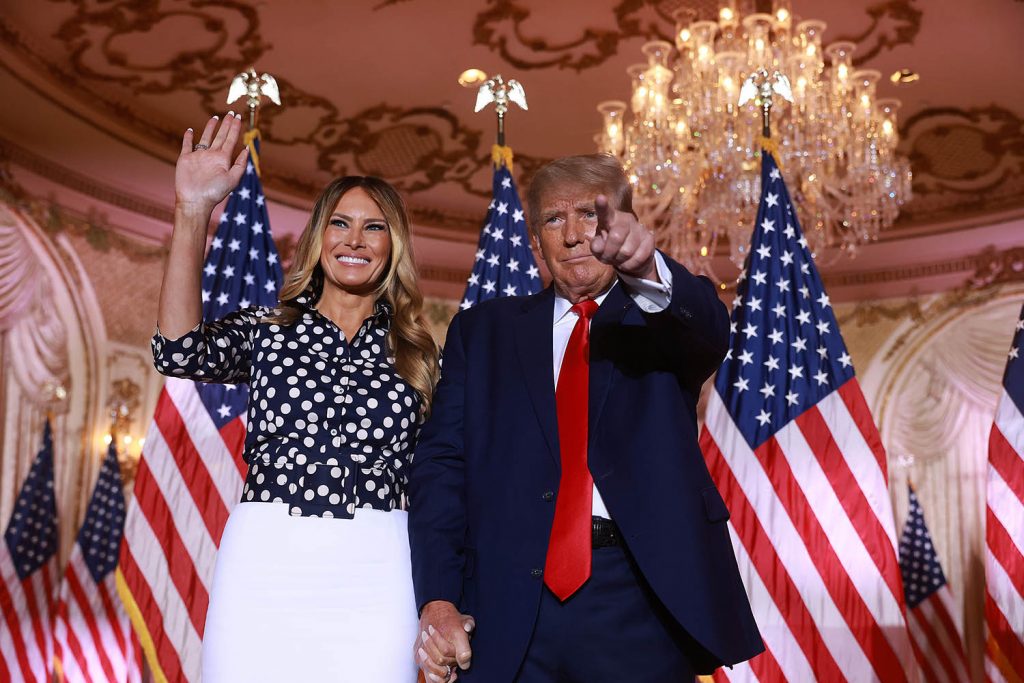
Donald Trump has defied his growing ranks of doubters in the Republican party by announcing another run for the White House. He will hope his candidacy insulates him from the six criminal and other investigations under way into alleged crimes during and after his presidency, and in the conduct of his business empire. Two are being run by the Department of Justice, one by the state of Georgia, one by Congress, one by the New York State attorney general and one by the Manhattan district attorney. In an hour-long speech at Mar-a-Lago, Trump said he would lead a movement to make America wealthy, strong, proud, safe and glorious again. Obstacles he faces this time that he didn’t in 2016 include a Murdoch media empire that has turned against him, the aforesaid investigations, a formidable rival for the Republican nomination in Ron DeSantis, the Florida governor, and his own miserable performance as a pop picker in the midterms. Among the Trump-backed candidates who lost were all five in the five most hotly-contested House seats, and every candidate for state office who rejected the result of the 2020 election and could have helped Trump rig that of 2024.
Thanks for reading. Please share this round, send us ideas and tell us what you think. Email sensemaker@tortoisemedia.com.
Jessica Winch
@jswinch
Additional reporting by Giles Whittell, Guy Taylor and Phoebe Davis.
Photographs Getty Images, AP/Shutterstock


