What just happened
- Russian missiles caused blackouts across Ukraine and Moldova (more below).
- A Brazilian judge fined Jair Bolsonaro $4.3 million for a “bad faith” election challenge.
- Ancient gold coins confirmed the existence of the Roman Emperor Sponsian.
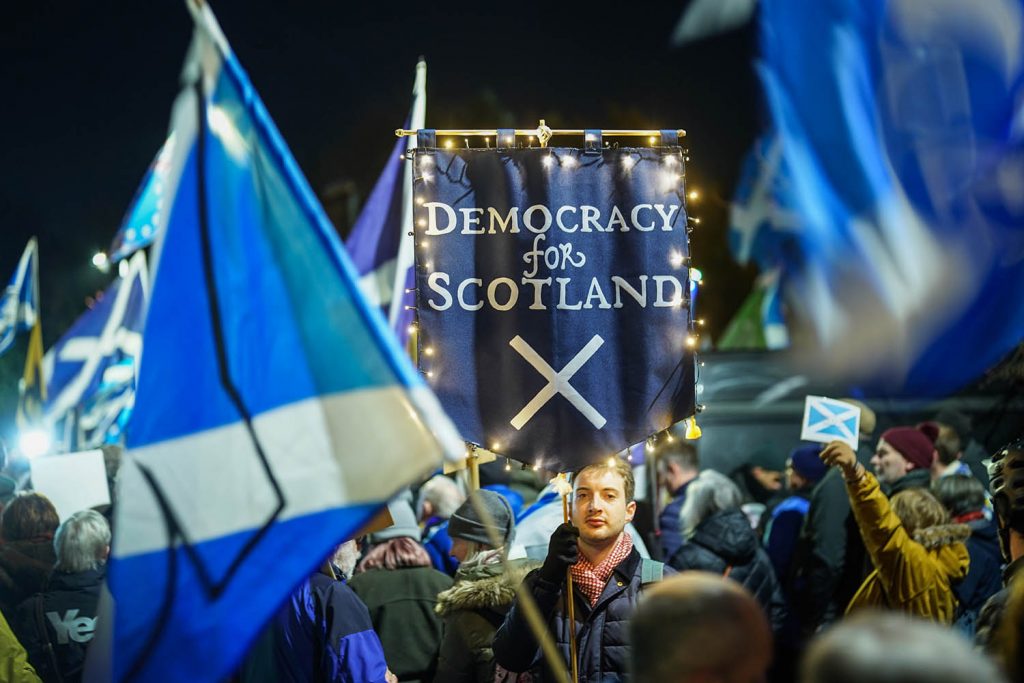
The UK’s highest court told Scotland yesterday it couldn’t hold a second independence referendum without Westminster’s permission.
The decision was expected. It was also
- quick (delivered in six weeks)
- short (by the Supreme Court’s standards, at 34 pages); and
- unanimous (all five justices concurred).
Rishi Sunak told the House of Commons he was grateful for this “clear and definitive ruling”.
So what?
It’s not really definitive. On the substance of whether Scotland will move towards or away from independence the decision resolves nothing. It makes clear the UK judiciary won’t give its blessing to a unilateral referendum but in doing so may boost anti-union sentiment in Scotland. Nicola Sturgeon would have preferred a “yes” but the decision clears the way for her next gambit – turning the next general election into a de facto referendum.
There was instant harrumphing about that idea in the Telegraph and elsewhere, but if as expected Labour wins the next election, the Scottish National Party’s position that a majority for pro-independence parties within Scotland would constitute a mandate for independence may not be so easily dismissed (see below).
This is about politics. That was the Supreme Court’s message. In legalese it found that the Scottish government’s bid to legislate for a referendum related to two reserved (ie not devolved) matters – the UK parliament and the British union. Independence would end parliament’s sovereignty over Scotland and break up the union, ergo legislating for a referendum was a job for London, not Edinburgh. Translation: the future of the union and the reach of the UK parliament are fundamentally political questions to be resolved by voters and politicians; please don’t bother us with them again.
And self-determination. Their lordships said the right to self-determination “is not in issue here”, knowing full well that it is. They rejected the SNP’s contention that Scotland is being denied self-determination, on the ground that i) only oppressed and ex-colonial peoples can claim that under international law and ii) Canada’s Supreme Court found that Quebec wasn’t being denied self-determination in 1998. But pro-independence Scots have never liked being told by London whether they are oppressed or not, and they’re not likely to get a taste for it now.
And Labour. Sir Keir Starmer says he won’t do deals with a party that wants to break up the union, but he may have to.
- Labour’s alternative to independence and the status quo is a big new devolution package drafted by Gordon Brown and due for publication imminently.
- Labour could win the next election with a big enough majority to force these reforms onto the statute book without Sturgeon’s consent, but only at the risk of further enraging SNP voters.
- Equally, the SNP could hold the balance of power after the election and demand a referendum of some sort. A three-way version would be an option, offering voters a choice between no change, some change and independence.

And Europe. Brexit boosted support for independence by about 5 per cent. Those converts’ dream of Scotland in Europe lives on for at least two reasons:
i) by ruling out a Catalonia-style wildcat referendum, yesterday’s decision makes a Spanish veto of eventual Scottish EU membership less likely, not more; and
ii) the urgent need for Sunak and whoever follows him into Number 10 to ease trading restrictions with Europe makes the idea of a Scottish-English EU border more plausible, not less.
“The toughest questions now are for unionists,” says Kirsty Hughes, former head of the Scottish Centre on European Relations. “Is this a voluntary union or not?”
That one’s for the voters.