What just happened
- The US said it would send Patriot missile defence systems to Ukraine.
- At least three people died after a small boat holding 50 people capsized in the English Channel.
- The EU accepted Bosnia as a candidate for membership.
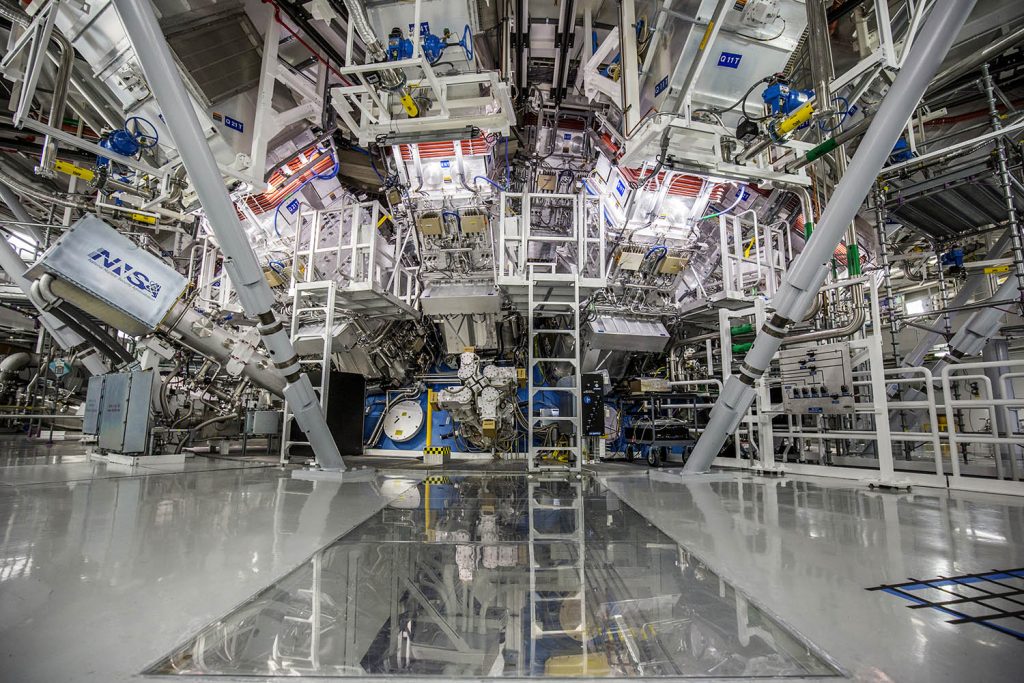
It’s official. At 1.03 am on Monday 5 December, the world’s most energetic laser system triggered a controlled fusion reaction that gave out, for the first time ever, more energy than went in.
Hundreds of trillions of excited neutrons burst from a fuel pellet the size of a lentil to be absorbed by a target bay of reinforced concrete ten storeys high and six feet thick, creating heat.
2.05 megajoules of energy went in. 3.15 megajoules came out, for a net gain of 50 per cent; breakeven, or, in the vernacular, ignition. It was 70 years in the making and all over less than a billionth of a second.
So what? This was a Sputnik moment for the US, and it could save the planet (see the hype, below).
It has “never been done before in any fusion laboratory in the world,” Dr Mark Herrmann of California’s Lawrence Livermore National Laboratory (LLNL) noted at yesterday’s announcement of the result.
The event was long on expectation management and it’s true that
- the technical obstacles to commercialising fusion power are still immense;
- the race to plug a fusion plant into the grid is still a marathon; and
- the laser-based technique used at the LLNL won’t necessarily win it.
But but but. In terms of pure science this is a proof of concept that constitutes “a remarkable point in human history,” Mark Wenman of Imperial College said yesterday. In terms of applied science, fusion is “the holy grail of the world’s energy problems,” said Oxford’s Gianluca Gregori.
A lot of people have reached for the same cliché, and no wonder.
- In the annals of experimental nuclear physics 5 December was comparable to Enrico Fermi’s first sustained fission reaction in a University of Chicago squash court in 1942.
- The experiment drew far more power from the grid than the LLN’s 192 lasers were able to deliver to the fuel pellet, but they were built in the 1980s and vastly more efficient lasers are available now.
- Even a slight increase in laser power can yield dramatic increases in the energy produced by the fusion reaction, as the LLNL has discovered by tweaking its equipment in the past 3 months.
- For all the caution about commercialisation, a design for a laser-based fusion power plant already exists. It would use an air-powered gun to fire 10 pellets a second into the centre of the target bay, creating temperatures of 100 million degrees C, reduced via a series of heat exchangers to 600 degrees in water boilers driving conventional steam turbines.
The hype may be premature, but it’s accurate: such a fusion plant could deliver virtually limitless clean baseload power. Unlike conventional renewables it wouldn’t depend on the wind or sun. Unlike fission power plants it would produce no high-level nuclear waste. Its fuels are deuterium and tritium, heavy isotopes of hydrogen found naturally in water.
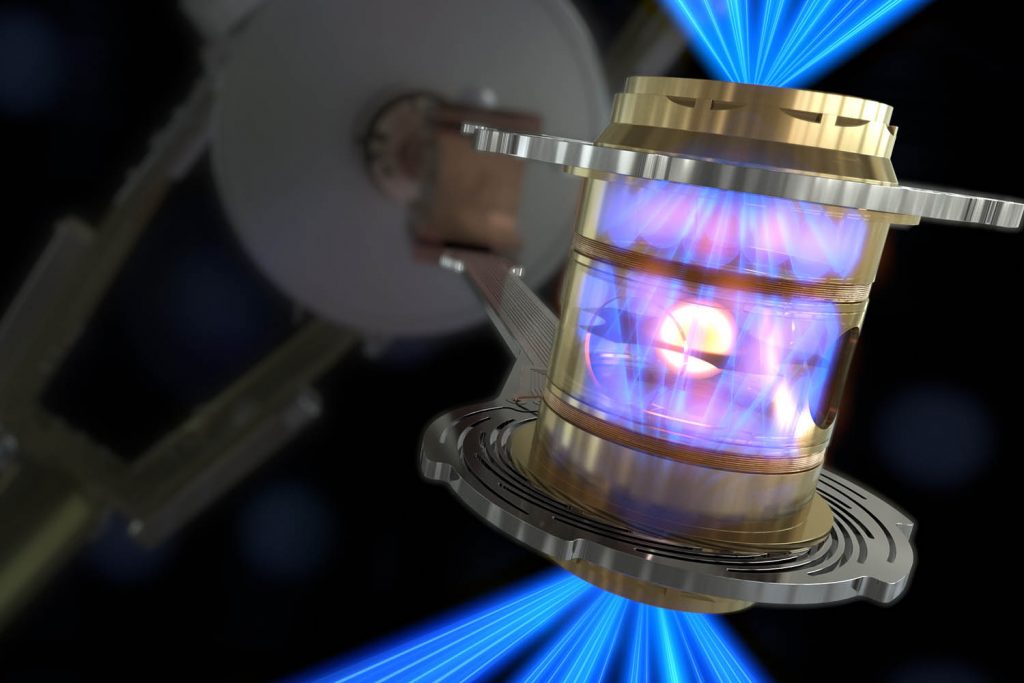
What happened. In inertial confinement fusion (ICF) the lasers bounce off the inside walls of a gold capsule called a hohlraum, the size of a thimble. Converted into X-rays, they implode the fuel pellet, starting a fusion reaction that for the first time heated up faster than it cooled down, creating conditions ten times hotter than the centre of the sun, at twice the pressure, for a billionth of the time it takes to blink.
What has to be done. The 5 December process has to be refined and harnessed to all-new state-of-the-art lasers so it can be repeated multiple times a second instead of a few times a month.
What that would mean. Scaled-up fusion power could create a world in which energy was nearly as cheap and abundant as data – and certainly abundant enough to
- enable planetary-scale Direct Air Capture, the energy-intensive process of removing CO2 directly from ambient air to slow down climate change;
- produce enough cheap green hydrogen by the electrolysis of water to power formerly carbon-intensive industries like steel and cement;
- electrify most of the rest of the global energy system as demand for electricity rises by an estimated 40-60 per cent this decade alone; and
- desalinate enough seawater to save cities otherwise doomed by climate change to permanent drought.
The LLNL experiment already sets America apart. Other countries are ahead in magnetic confinement fusion using doughnut-shaped “tokamaks”, but they haven’t reached ignition yet and in ICF no other country comes close. Hence Sputnik – and not in a good way for Russia, Saudi Arabia, Venezuela or Iran.
Peak inflation
UK inflation fell last month by a fifth of a percentage point more than expected, from 11.1 to 10.7 per cent. Inflation fell in the US too, to 7.1 per cent, its lowest level in a year. Prices themselves are going on going up, of course, and still at close to their fastest rate for the UK in 40 years. But falling world oil prices, largely a result of stagnant Chinese demand because of Covid, have at last taken the edge off an inflation surge that has upended priorities for consumers, businesses, governments and central banks for most of the past two years. This won’t ease tensions between the UK government and striking unions, which are likely to say the new numbers undermine an already flimsy case for pay restraint.
Indian chips
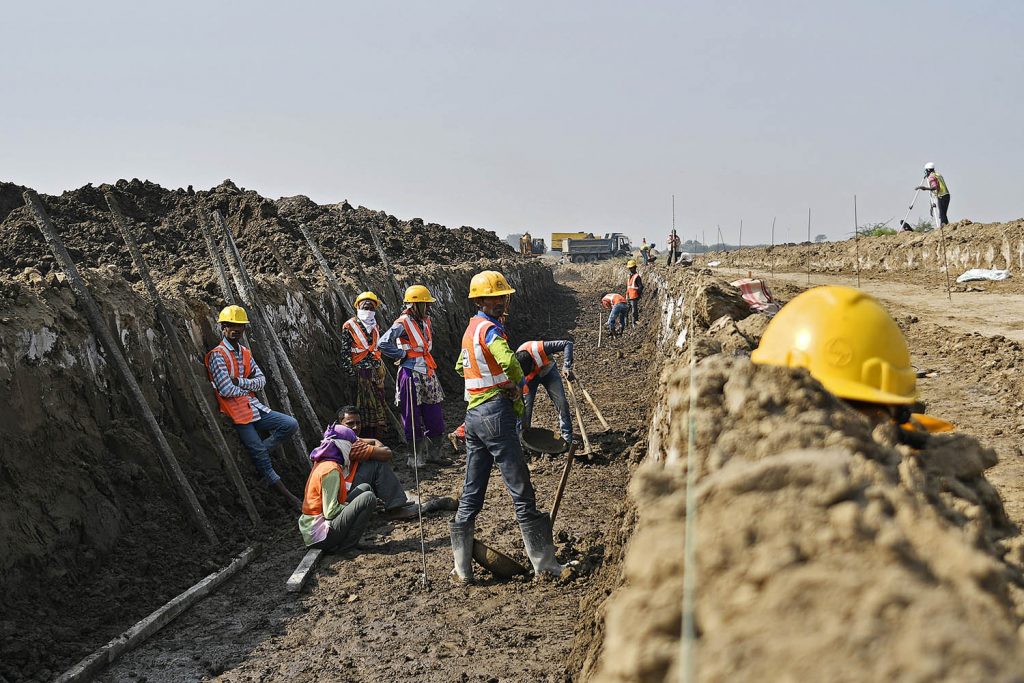
How to kill three big geopolitical birds with one stone: build a $20 billion advanced semiconductor manufacturing campus on 355 square miles of salt marsh in coastal Gujarat, in a joint venture with Taiwan. The plan is a pet project of India’s Prime Minister Narendra Modi, who comes from Gujarat. If realised it would i) put his home state’s so far largely rural Dholera district on the map; ii) make India a player in a high-value industry that’s become a byword for supply chain bottlenecks since Covid; and iii) build an axis with Taiwan at China’s expense. The putative partners are India’s Vedanta Group and Taiwan’s Hon Hai Technology Group, (which also operates in China’s Shenzhen manufacturing hub as Foxconn). The WSJ says Modi wants to turn Dholera into India’s Shenzhen.
Midwife strike
Welsh midwives voted in favour of strike action yesterday, because of quality of care concerns and a below-inflation pay offer from the UK government. 55 per cent of 1500 eligible Royal College of Midwives (RCM) members in Wales voted, with 91 per cent of those saying yes to a walkout. In England the turnout threshold (50 per cent) was not reached for its 28,500 members. That doesn’t necessarily mean English midwives are happy with their lot. The RCM says some of its members didn’t receive, or couldn’t return, their ballot papers in time because of Post Office strikes. The college tweeted: “Online [voting] simply wasn’t an option… – yet it’s OK for political party leaders, and Prime Ministers, to be chosen that way.” After talks with health secretary Steve Barclay went sour, 100,000 nurses in England, Wales and Northern Ireland will strike tomorrow for the first time in the Royal College of Nursing’s history. Are you a midwife or nurse who voted to strike? We’d like to hear from you.
Carbon clubs
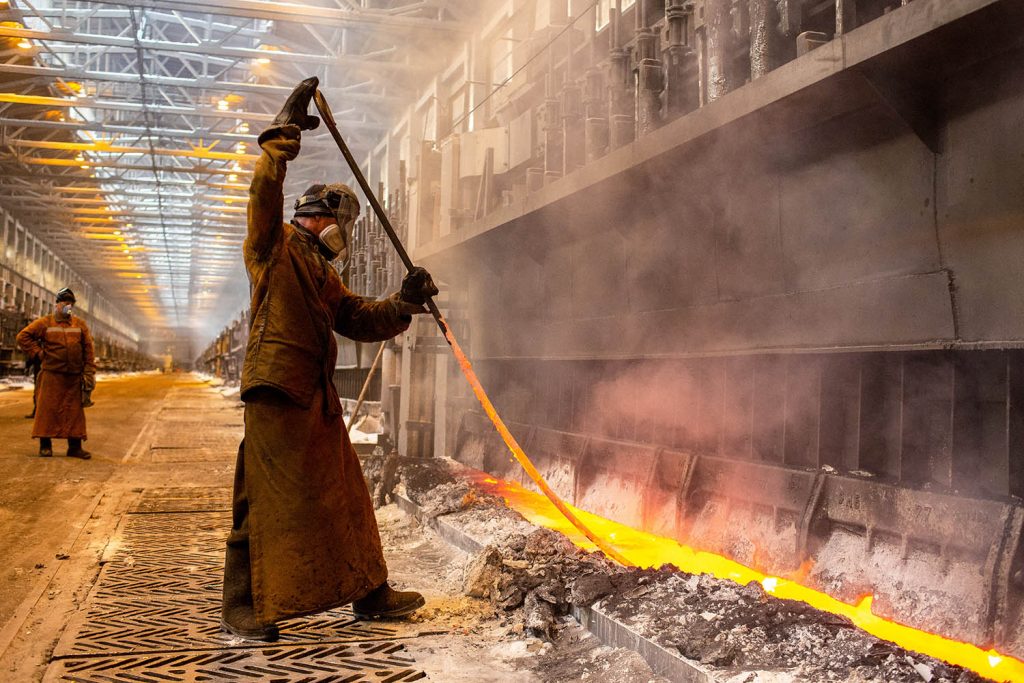
Europe’s heavy industries are required to buy permits from the carbon market when they pollute. From next year, companies which import goods to the bloc will too. The EU’s newly agreed carbon border adjustment mechanism (CBAM) will tax carbon-intensive imports of iron, steel, cement, aluminium, fertilisers and hydrogen in an attempt to support greener production at home. The WSJ says the move has “rattled supply chains” and “angered trading partners”, while Oxfam is calling for an exemption for poorer countries. Along with a proposed US-EU green steel deal, it’s a step towards creating a “carbon club” of nations that agrees on pricing pollution. But is the EU’s gang too exclusive? Mozambique could lose more than 1 per cent of its GDP due to the tariff on aluminium imports. Expect some club rivals.
Welcome to the UK
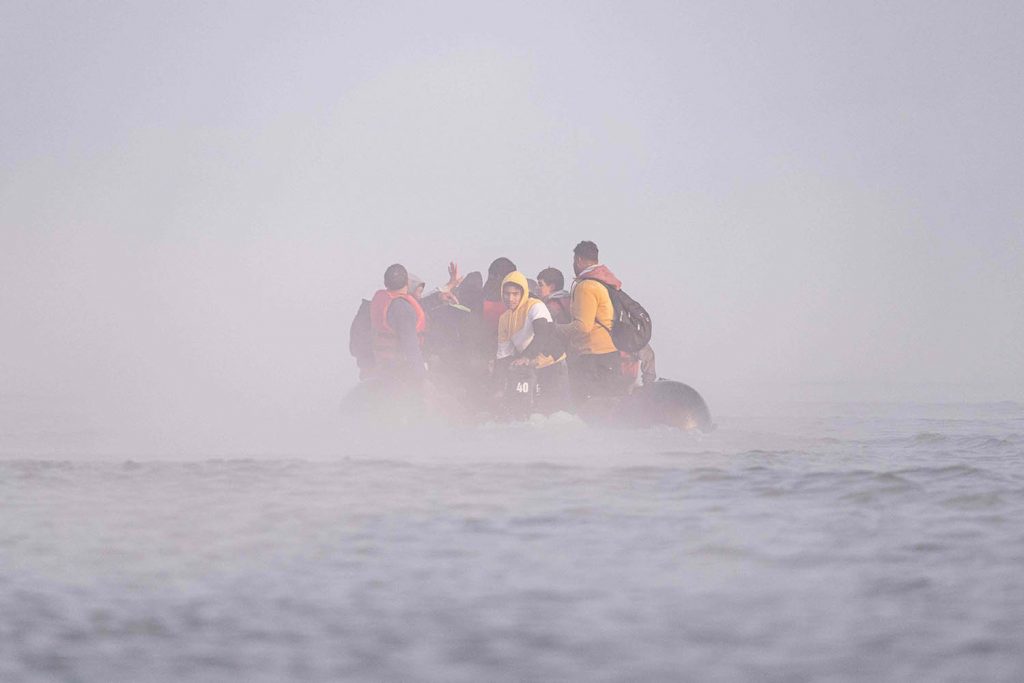
Rishi Sunak has set out a five-point plan that he hopes will tackle illegal immigration – and keep his premiership alive a little longer. Sunak unveiled plans for a new “small boats command” yesterday, and a goal of clearing the UK’s backlog of 150,000 asylum seekers by the end of 2023. The PM also announced a new agreement with Albania to ensure unsuccessful asylum applicants are “swiftly returned”. But the significance was less what was said than who was saying it. Suella Braveman, the home secretary, sat apart from Sunak in the House of Commons as he outlined the plan, on which sources say Number 10 has made the running with junior minister Robert Jenrick also “rolling up his sleeves”; no credit given to Braverman. Being seen to take command of the immigration and asylum issues is now existential for Sunak, and the clock is ticking down to May’s local elections.
And finally… Seven world player of the year awards, four Champions League titles, more than 1,000 games and nearly 800 goals for club and country: Lionel Messi has it all, except a World Cup winner’s medal. Sunday’s final in Qatar will, he says, be his last attempt to plug that hole. Messi, 35, has often seemed overwhelmed by the national redeemer role. But not in Qatar. He scored a penalty and bamboozled the world’s best young centre-back – Croatia’s Josko Gvardiol – to set up Argentina’s third in a 3-0 semi-final win. Messi has been demonic in his quest to secure the one honour to have eluded him. His 26th World Cup finals match on Sunday will set a tournament record. This is his fifth World Cup and Argentina’s sixth final. But catch him while you can. He told Argentina’s Diario Deportivo Ole last night: “It’s many years until the next one and I don’t think I’ll be able to do it. And to finish like this, it’s the best.”
Thanks for reading. Please tell your friends to sign up, send us ideas and tell us what you think. Email sensemaker@tortoisemedia.com.
Giles Whittell
@GWhittell
Additional reporting by Barney Macintyre, Phoebe Davis, Paul Hayward and Catherine Neilan.
Photographs Getty Images, Lawrence Livermore National Laboratory