
What just happened
- MI5 raised the terror threat level in Northern Ireland to “severe”.
- Biden said Israel “cannot continue” with its judicial reforms.
- An Australian man found a rock containing 83 ounces of gold worth $240,000 at current prices.
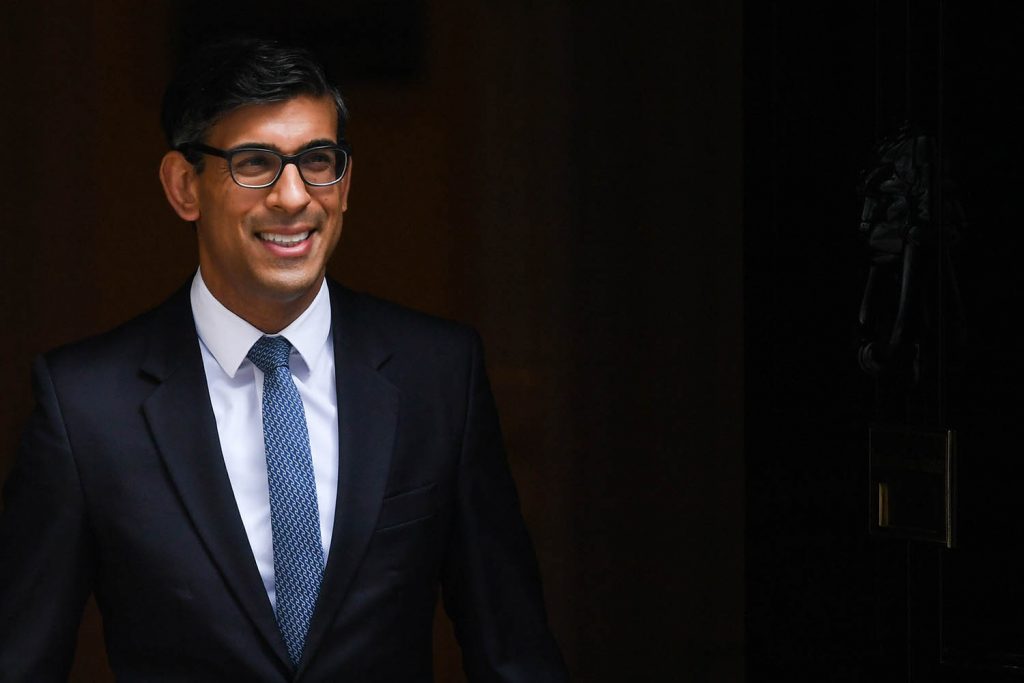
Yesterday Rishi Sunak spent two hours answering questions from a parliamentary committee on Ukraine, China, Russia, the budget, health and many other topics in a detailed, measured and slightly dull way.
So what? Sensible is back. Six and a half years after the EU referendum and three and a half since Theresa May’s miserable surrender to Boris Johnson, a new idea is abroad in British politics: to be normal. It’s partly performative and it masks a continuing ideological obsession with small-boat refugees, but it may be working. Sunak has
- narrowed Labour’s still-formidable poll lead by nearly a third since taking office;
- seen off a rebellion over his plan to fix the Northern Ireland Protocol; and
- relegated Johnson’s comeback efforts to the fringe – for now.
Johnson’s histrionics in front of the privileges committee last week and Sunak’s performance yesterday were like night and day. He avoided partisan language. Except on childcare costs on which he seems to have a blindspot, he showed he was across his brief. There are still cracks in his party that could widen and swallow him up (see below), but for now he bestrides them.
Part of his strategy was to avoid making news. He nearly succeeded, but not quite.
On Rwanda he appeared to confirm that the Home Office hasn’t signed off on the policy of transferring asylum seekers to Rwanda as value for money. He denied there had been any promise of transfer flights this summer, despite multiple frontpage stories covering his home secretary’s claim on precisely this point during a recent trip to Kigali.
On Northern Ireland, where the terror threat was raised to severe following the attempted murder of a senior police officer last month, he said his new Brexit deal had “ broad support” across communities. With one eye on next month’s anniversary of the Good Friday Agreement, he noted efforts were in place to restore power-sharing at Stormont.

On HS2 he tried to bury rumours (encouraged by his Levelling-Up Secretary, Michael Gove) that the wildly over-budget high speed rail line will never quite make it to Euston. It will, he said. “It shouldn’t be ambiguous.”
So far, so emollient.
And yet, the divisions within the Conservatives aren’t going anywhere. A glance round the table at the Conservative MPs questioning Sunak gave a glimpse of his ongoing party management challenges. They included
- Caroline Nokes, a centrist former immigration minister who has refused to vote for Sunak’s small boats plan on the grounds it’s inhumane (the plan makes deportation mandatory for anyone crossing the channel illegally);
- arch Eurosceptic Bill Cash, who says the Windsor Framework would leave Northern Ireland “perpetually locked into subjugation to EU law”.
- Steve Brine, the former health minister, who is under investigation for alleged breaches of paid advocacy rules; and
- Sir Bernard Jenkin, who is on the privileges committee still investigating Johnson.
It helps Sunak that divisions within Labour also keep bubbling to the surface, as demonstrated this week when Jeremy Corbyn hinted he might run as an independent at the next election having been barred from standing for Labour. But a divided opposition never comes under as much scrutiny or pressure as a divided governing party.
Johnson is down, but not yet out. Between paid speaking engagements, he found time this week for a constituency visit to one of his most ardent supporters, Brendan Clarke-Smith, in Lincolnshire. The hard hat and high-vis vest were standard dress code for political manoeuvres.
Sunak is trying to show he is a serious man for serious times. To ensure his survival, what he has to be most serious about is ending Johnson’s leadership threat. That is a work in progress.
Belt and braces
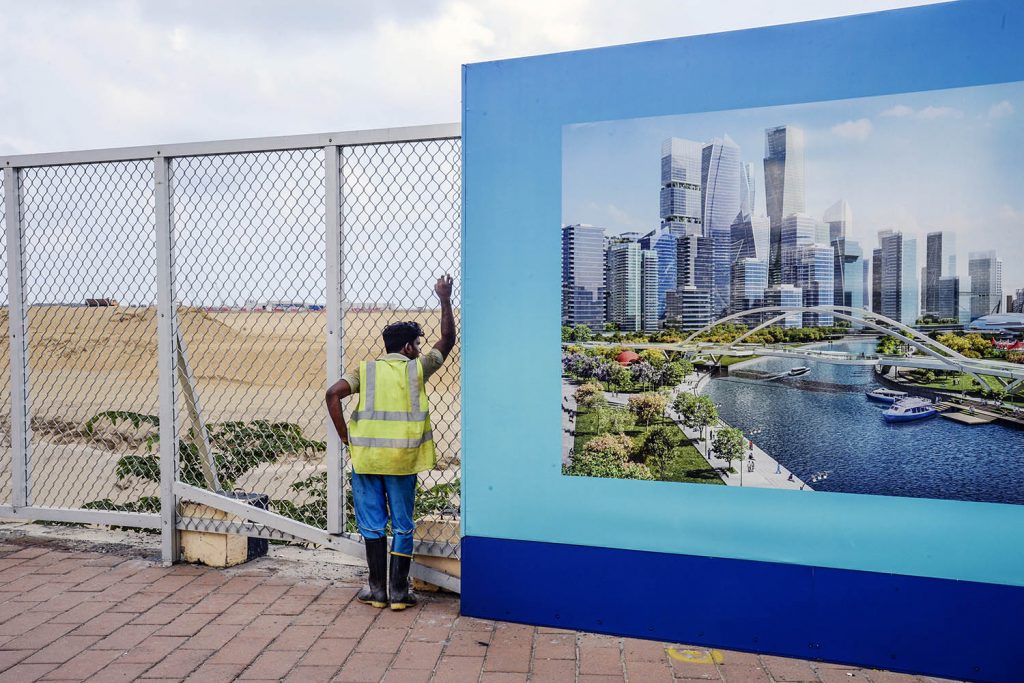
It’s time to start thinking of China’s Belt and Road Initiative (BRI) less as loans for highways in developing countries and more as a direct challenge to a US-based world financial order that has endured for nearly 80 years. China issued more rescue loans between 2019 and 2021 than in the previous two decades, a study by the World Bank and others found. These loans were worth $104 billion, equivalent to 40 per cent of IMF rescue funding in the same period. BNI bailout loans to debtor countries – a separate category – were worth even more: $240 billion in 2020 and 2021 alone. All this lending is problematic for three reasons: it’s opaque (China reveals little about its due diligence or wider agenda); it’s uncoordinated with western lending (so there are no orderly queues of creditors when things go wrong); and it’s expensive. Chinese loans cost roughly 5 per cent a year compared with 2 for IMF funding.
AI interviews
Big employers are using AI not just to wade through CVs but to interview job seekers via zoom. So applicants might as well get comfortable talking to bots. The Washington Post has a how-to, much but not all of which could have been cut and pasted from a primer for preparing for interviews with humans – dress to impress, do your research, don’t waffle. But there’s advice for the new age too, including: check your setup (including lighting, camera angle and privacy; “kick out your roommates”), and talk to the camera. The latter is of course the 2023 equivalent of making eye contact, made easier, one expert says, by sticking a picture of a friend next to the lens.

Video game addiction
When does enjoying video games go too far? Since 2018 the World Health Organization has classified “gaming disorder” as a mental health condition in which gaming “takes precedence” over daily activities and interests, potentially leading to violent behaviour. It’s a global phenomenon, especially as team player games across timezones make it a 24-hour accessible activity, and the market is booming. Teenage boys are particularly vulnerable. Is it treatable? In the UK, an NHS gaming disorder clinic is looking for answers. The Times reports that since opening in 2019 the clinic has treated 745 patients including gamers with an average age of 17 and their family members. The clinic’s founder, Professor Henrietta Bowden-Jones is calling on gaming companies to install self-exclusion mechanisms in their games and for teachers and GPs to be trained to spot signs of addiction.
Tanks ahoy
The first of dozens of western tanks pledged to Ukraine have finally arrived there, slower than promised and fewer than needed. Three Portuguese and 18 German Leopard 2s have been delivered, along with the first of 14 Challenger 2 tanks promised by the UK. For its spring counteroffensive, Ukraine is counting on at least 80 tanks from allies but it also needs a million rounds of ammunition, which the EU has said it will send within a year. Estonia is pushing other countries to do more, while raising eyebrows with a €134 million reimbursement claim for old weapons it has already donated to Ukraine. That is more than double the next-biggest claimant (Latvia), but arguably justified in view of its shared border with Russia.
Macron relieved
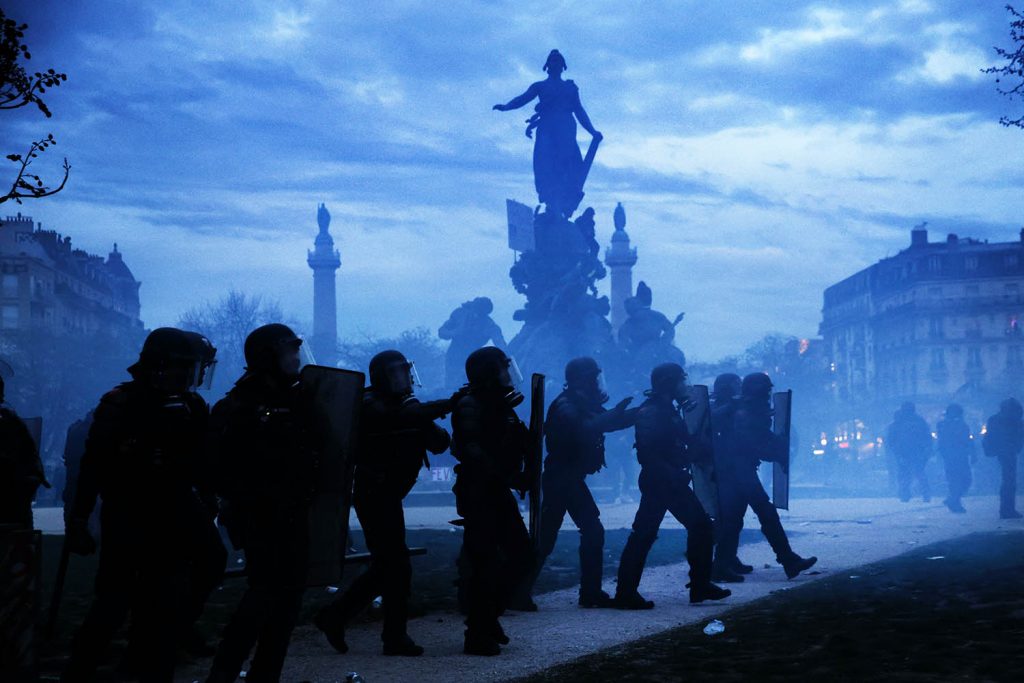
In most countries protests attracting nearly three-quarters of a million people and a strike leaving thousands of tonnes of rubbish on the streets of the capital would be cause for alarm. In France yesterday they were grounds for relief for President Macron’s government, because 730,000 protesters is fewer than the 1.09 million counted by the Interior Ministry last Thursday, and workers say they will pick up the rubbish at last. Team Macron is also pleased that only 8 per cent of teachers downed tools for yesterday’s general strike, compared with 25 per cent last week. The government has pulled no punches in policing the protests: hurled debris has been met with tear gas. Its narrative – that the worst troublemakers are ultra-leftists – is oddly reminiscent of Trump, but more plausible. This is France, after all, and Macron still hopes a quiet majority that doesn’t mind working to 64 is on his side.
Thanks for reading. Please tell your friends to sign up, send us ideas and let us know what you think. Email sensemaker@tortoisemedia.com.
Catherine Neilan
@CatNeilan
Additional reporting by Giles Whittell, Nina Kuyrata and Phoebe Davis.
Photographs Getty Images


