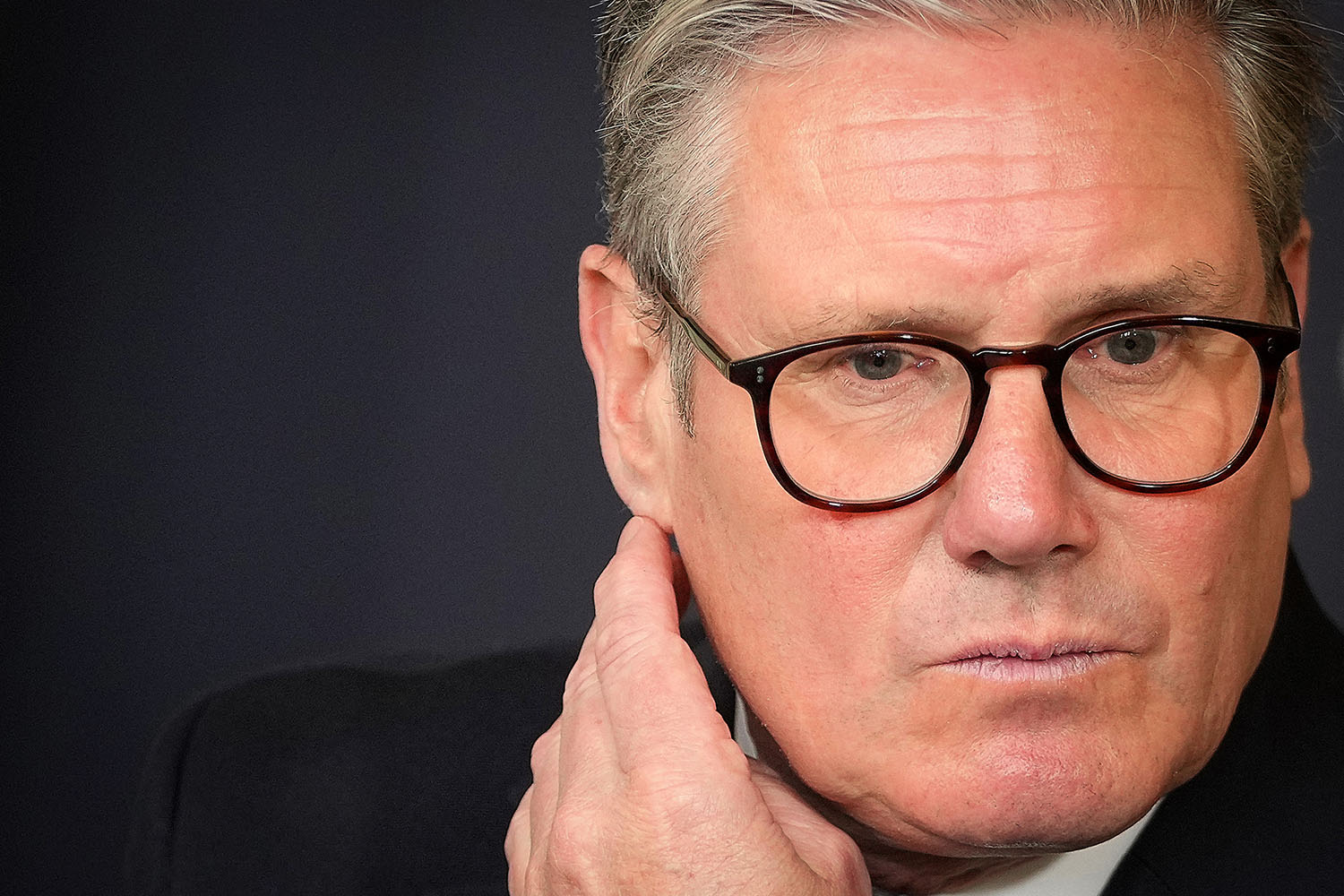
Rupert Murdoch is one of a substantial group of ageing business patriarchs who may not be as indispensable as they and their board directors seem to think.
- Meta said it was moving 100 London-based Instagram employees to New York.
- A new report of a “serious criminal offence” was passed to police investigating sexual misconduct claims at the UK’s CBI.
- Kendall Roy’s New York penthouse in the HBO series Succession went on sale for $29 million.
Fox News had to choose this week between spending nearly $800 million settling the Dominion defamation suit and letting a 92 year-old Rupert Murdoch take the stand. He would have been cross-examined on subjects on which the judge had already made clear he believed Murdoch and his company had knowingly spread lies.
Fox spent the money.
So what? The lawsuit and the brinkmanship followed years of increasing frailty for Murdoch and a widening gap between reality and what publicists were saying about him. And for someone used to being the exception, he’s remarkably on trend.
- Marathon men (and they are usually men – see below) include Bernard Arnault (LVMH, 74); Sir Martin Sorrell (S4 Capital, 78), reported this month to have undergone cancer surgery in February; Michael Bloomberg (Bloomberg, 81); Warren Buffett (Berkshire Hathaway, 92) and Charlie Munger (Berkshire Hathaway, 98).
Joe Biden, US President at 80, and Diane Feinstein, senator at 89, get honourable mentions because their determination to defy age and be seen to stay in control at any cost fits a pattern that straddles politics and business.
- Blurred lines. It’s a pattern that leaves board directors unclear on their responsibilities for CEO succession planning, even though the rules on their own tenures are usually quite clear.
- Not quite fair. Titans of business may assert their right to decide when they quit the stage, but that doesn’t necessarily make it right for shareholders or fair for their employees – who can’t.
Guide rails
The UK’s corporate governance code recommends a maximum nine-year tenure for board chairs and annual re-election for directors but has little to say about succession planning for CEOs. Hence for example the recent resignation of two board directors at Liontrust, the asset manager, over the chair’s 12-year board tenure, while the CEO has been in post since 2010.
The US Age Discrimination in Employment Act of 1978 outlawed forced retirement for private sector employees before 70 except for CEOs and other senior executives whom boards were empowered to remove at 65. Companies use that power when it’s helpful – and don’t when it isn’t.
Commanding heights. Disney, Target, Caterpillar and Boeing all recently waived internal mandatory retirement ages to lure back or keep on ageing leaders, all of them white men. The Spencer Stuart 2022 CEO Transitions Report found that 86 per cent of S&P 500 CEOs who stood down did so of their own volition. Only 7 per cent resigned “under pressure” (and only 7 per cent of all S&P 500 CEOs were women).
Coy boys. The more senior and powerful these executives are, the more reluctant they tend to be to talk about succession or disclose anything that hints at flagging vim.
- Sorrell was relatively open with investors about his February surgery, but the reason for it wasn’t publicly reported for two months.
- Bloomberg, founder of Bloomberg LP and builder of a $94 billion fortune, has succession plans but “has never discussed them with anyone,” a source tells this weekend’s FT.
- Arnault, the world’s richest person, hardly ever talks about who’ll succeed him, but said in January his retirement age “has been extended”.
- Murdoch’s public appearances have been carefully managed since the first of two bad falls left him “almost dying” with heart arrhythmia and a broken back on his son’s yacht five years ago, according to Gabriel Sherman’s recent Vanity Fair profile.
The same profile quotes courtiers saying Murdoch had “lost the plot” when separating from his third wife, Jerry Hall, last year; and that his later handling of an aborted merger plan and the Dominion case suggested he’d lost something far more valuable – his edge.
That would be a sound reason to keep him off the stand. The lesson for boards is to grasp the succession nettle before the cost of inaction runs to nine figures.