
What just happened
- Juan Guaidó fled Venezuela only to be expelled from Colombia after failing to dislodge Nicolás Maduro from power.
- Court papers showed Prince William secretly settled a phone-hacking case for a “huge sum” with Rupert Murdoch’s News Group in 2020.
- The editor of Die Aktuelle was sacked after publishing an AI generated interview with former F1 champion Michael Schumacher.
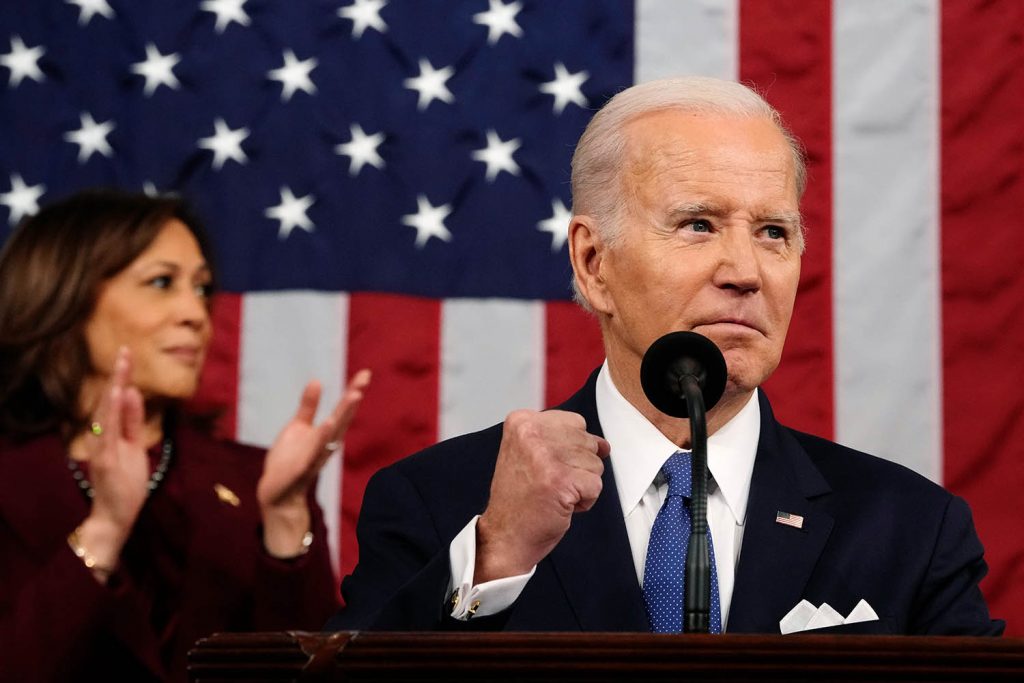
Joe Biden announced he will run for re-election.
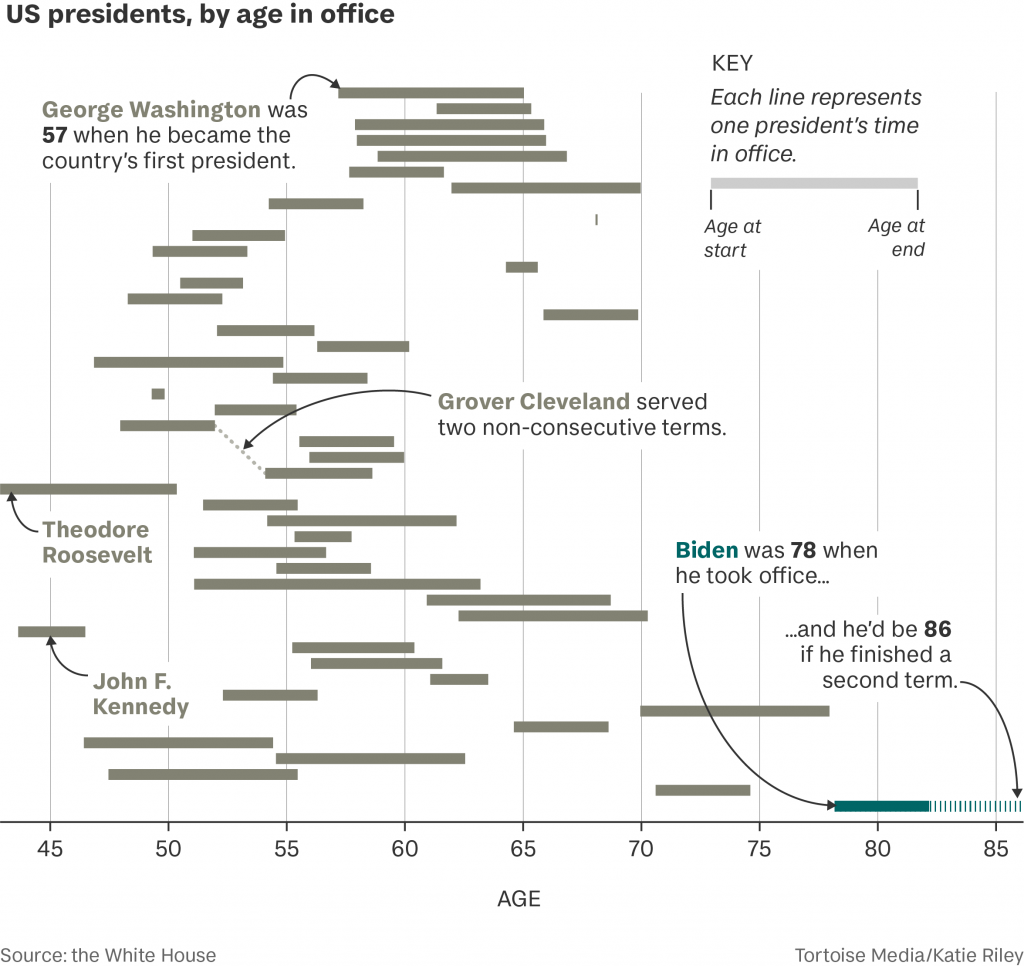
So what? In a country of 330 million people, after eight years of near record-low presidential approval, despite the lure of fame, power and Air Force One, in a political system awash with opportunity and money, US voters are likely to face a choice next year that only 5 per cent of them relish between two white men with a combined age of 159 – a Trump-Biden rematch.
So much for American democracy as a forcing house for talent.
Two caveats: Biden is 80 and could stumble, literally, in which case at least 10 potential contenders could bid for the Democratic nomination (see below). And Trump’s shadow, Ron DeSantis, is flatlining in polls but not out of the race. His numbers are no worse than Barack Obama’s at the same time in the 2008 cycle.
In the meantime the way the pre-primary stage of the 2024 election cycle is shaking out, it will serve to show
- how tightly the Democratic National Committee has kept control of the nomination process;
- how totally Trump has captured the imagination of the Republican right wing; and
- how confident Team Biden is that however exhausted and unsteady its candidate may seem, he can’t fare worse than Trump in another battle for the centre ground.
High risk. Sometimes presidential history provides a precedential safety net. Not now. No White House candidate has ever been this old, with approval ratings this low (around 34 per cent), or with enthusiasm for his run this tepid. Seventy per cent of voters don’t want him to run again, including 51 per cent of Democrats.
Plausible reward. Yet there’s a logic to the Biden re-up that reflects the strangeness of his times.
- Smooth glide. Biden has beaten Trump before and the Democrats’ overwhelming need to beat him again is helping with party discipline. Rivals are paying more attention to 2028. Biden will likely have a smooth run to next year’s convention with no primary infighting or outlay.
- Small map. The national race will in practice be confined to an unusually small handful of swing states – Pennsylvania, Michigan, Arizona and Wisconsin chief among them – and last year’s midterms suggest they could be more winnable than in 2020, not less, thanks partly to…
- Big issues. The Supreme Court unleashed a political tiger last year by overturning Roe v Wade. Women (mainly) voting for abortion rights helped keep the midwestern blue wall (mainly) blue last year and landed an abortion rights advocate on the Wisconsin supreme court this month with a stunning 11-point win. But gun control could move the dial too: the political scientist Lara Brown says the tragic drumbeat of mass shootings has, at last, brought the US to a turning point, mobilising young voters in particular.
- Decent record. Biden wants 2024 to be a choice between common sense and “MAGA extremists”, who loom large in his launch video. But any reelection bid is also a referendum on the incumbent and Biden has a record for which he’s not yet banked much credit. He’s halved inflation, driven unemployment to record lows and used nearly $1 trillion of federal pump-priming to trigger a wave of investment in tech and clean energy.
Outside the bubble. Trump trashed Biden preemptively on Monday from Mar-a-Lago, saying he’d done more damage to the US than the next five worst presidents combined. An AI-generated Republican video imagined a world at war over Taiwan and a US economy in free-fall in the event of a second Biden win. The WaPo put Pete Buttigieg and Vice President Kamala Harris at the top of its list of non-Biden alternative Dem nominees, but neither has plans to run and Harris stays on the Biden ticket anyway.
Further viewing. Biden may not have inspired voters, but Leslie Knope adores him and he’s not bad as a sitcom cameo.
First Republic, last gasp
2023’s Big Bank Wobble isn’t over; not by any means. The San Francisco-based First Republic Bank was supposed to have been stabilised last month by a $30 billion deposit from a consortium of bigger banks led by JP Morgan Chase, but its share price fell by half yesterday when first-quarter results showed other depositors have withdrawn $100 billion since January – much more than expected. The bank’s stock has fallen 90 per cent since March. Another west coast bank, PacWest Bancorp, has lost 60 per cent of its market value since last month and the east coast titans are starting to worry about exposure to the wobblers. One analyst tells the WSJ First Republic needs to pull off “the mother of all pivots” to survive, having focused to its cost on growth rather than profit. Sounds like a bank that wishes it was a tech bro.
Sperm bots
Two baby girls born recently in the US are thought to be the first conceived by robot-assisted IVF. The technology was devised in Barcelona, shipped to New York and reassembled and operated there by a non-specialist using a PlayStation 5 console, the MIT Technology Review reports. When humans rather than bots inject sperm into harvested eggs those humans have to be highly trained and the process can cost $20,000 per cycle of treatment, with no guarantee of success. The hope of companies like Overture Life is lower costs, more hope of conceiving for people with less money, and more babies. About 500,000 are born through IVF each year, but millions of parents can’t afford it.


