
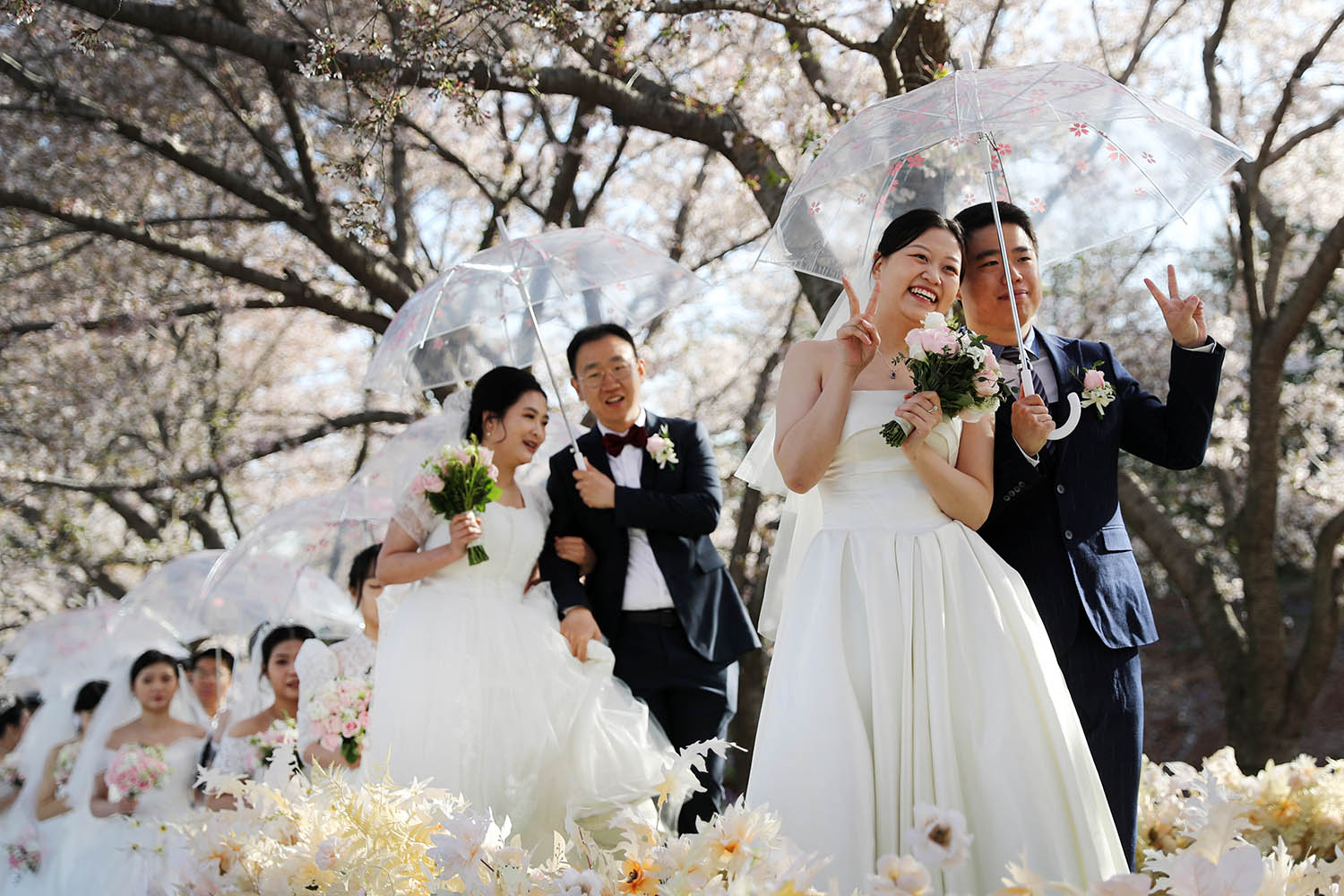
Half a billion Chinese women are being encouraged to have more children, but they don’t show much appetite for social engineering.
- Biden cancelled a trip to Papua New Guinea for debt ceiling talks in Washington.
- The UK’s Labour party said it would give English councils more powers to build houses on green belt land.
- An Italian police dog found three tons of cocaine in a banana shipment from Ecuador.
China has launched a scheme to encourage women in 20 of its biggest cities to get married and have children. The idea is to boost fertility and slow the population decline that threatens China’s ability to fund its pensioners, fill its factories and sustain its economic miracle.
So what? It probably won’t work. When China does demography the rest of the world pays attention – its one-child policy was the most dramatic and fateful piece of social engineering of the past half-century. But the plans announced this week look like seagulls in the wake of a supertanker on a predetermined course.
- Nothing Beijing has tried so far has revived a birth rate that’s been falling for seven years.
- Since 2021 China’s population has been falling too, limiting its capacity for growth and raising the cost to working-age people of caring for the elderly.
- Knock-on effects will include labour shortages, (global) inflationary pressures and a rising cost of capital.
The proposal. The “new-era marriage and child-bearing culture”, announced this week by the China Family Planning Association, will consist among other things of tax and housing benefits for married couples, promises of free education for third children and public education campaigns against exorbitant “bride prices” and extravagant weddings.
The goal is to “help foster childbearing-friendly atmospheres and [thereby] contribute to advancing Chinese modernisation,” an association vice president told the state-run Global Times. The problem for Beijing is that millions of Chinese women want no part of it, not least because having children is so expensive.
The context. China’s fertility rate fell from 2.6 in the late 1980s to 1.15 in 2021, when its overall population fell for the first time since the Cultural Revolution, by 850,000. Urbanisation has slowed too.
- This year the country’s four biggest cities – Beijing, Shanghai, Guangzhou and Shenzhen – all recorded their first population declines in decades.
- Since the abolition of the one-child policy in 2016 the Family Planning Association has moved to two- and three-child policies, to no avail.
- In an online survey of professional Chinese women last year, only 0.8 per cent said they wanted three children.
At stake are China’s economic model and the way half a billion women live their lives. What once seemed a limitless supply of cheap labour moving from rural areas to coastal cities has all but dried up, and demographic trends combined with rising incomes have transformed women’s expectations.
“The state telling them to have more children is unlikely to appeal to enough women of a generation that has grown up with no siblings, no aunts or uncles and no cousins, and is now responsible for the care of the older generation,” says Isabel Hilton, who runs the China Dialogue think tank.
Nor is there much evidence of Beijing putting real money behind its marriage push. “The announced measures do not contain generous terms or indicate that the party will do anything more than talk and propaganda,” says Professor Minxin Pei of Claremont McKenna University. “What’s holding back marriage and birth rates is high housing prices, high education costs, and stingy benefits for married women. Addressing them requires real money, which the party is unwilling to spend.”
The upshot. The world has to plan for a shrinking Chinese population, which will mean
- for China – a focus on land, resources and education to compensate for an end to the “demographic dividend” on which economic planners have counted since the 1980s; and
- for its customers – steadily rising prices for Chinese goods.
A silver lining? Fewer children could mean greater resistance to the idea of letting them go to war over Taiwan.