Sensemaker Daily


1.5 degrees of warming would be too much for more than half a billion people, says a new plan to keep Earth’s life support systems working.
- The FSB accused the US of hacking thousands of Russian iPhones.
- Andy Burnham called for the UK’s Labour party to adopt proportional representation.
- Dev Shah, 14, won the US Scripps National Spelling bee by spelling “psammophile”.
Dozens of the world’s top scientists have proposed eight new limits to what the planet can endure, and humanity has already blown through seven of them.
So what? It turns out 1.5 degrees of warming is far too much.
Much more of Earth’s surface needs to be maintained intact. And 25 Mississippis’ worth of water is needed to refill depleted aquifers.
Unlike the vast output of the Intergovernmental Panel on Climate Change, the new limits, known as Earth System Boundaries (ESBs), are presented in a single paper published this week in Nature which isn’t just about global warming. Rather…
- It’s based on the premise that you can’t tackle climate change without tackling everything else that ails the biosphere at the same time.
- It prioritises people alongside ecology.
- In that spirit it quantifies “safe and just” limits in relation to the use and abuse of air, water, fertiliser and land.
Those ESBs are intended as yardsticks by which to measure how close the planet and its apex-predator have come to using up their nature-based credit. The goal is to map “the space we can survive in”, and that space needs to be
- cooler than the 1.5 degrees above pre-industrial temperatures set as a limit in the 2015 Paris Agreement, because that would expose half a billion people to long-term sea level rises and 200 million to unliveable temperatures (the commission sets a new target limit of 1 degree of warming which has already been surpassed by the current average of 1.2);
- wilder – 50-60 per cent of the Earth’s land area needs to be left to function as support systems circulating the fresh water, carbon and nutrients on which life depends, compared with the 45-50 per cent of ecosystems that are intact now;
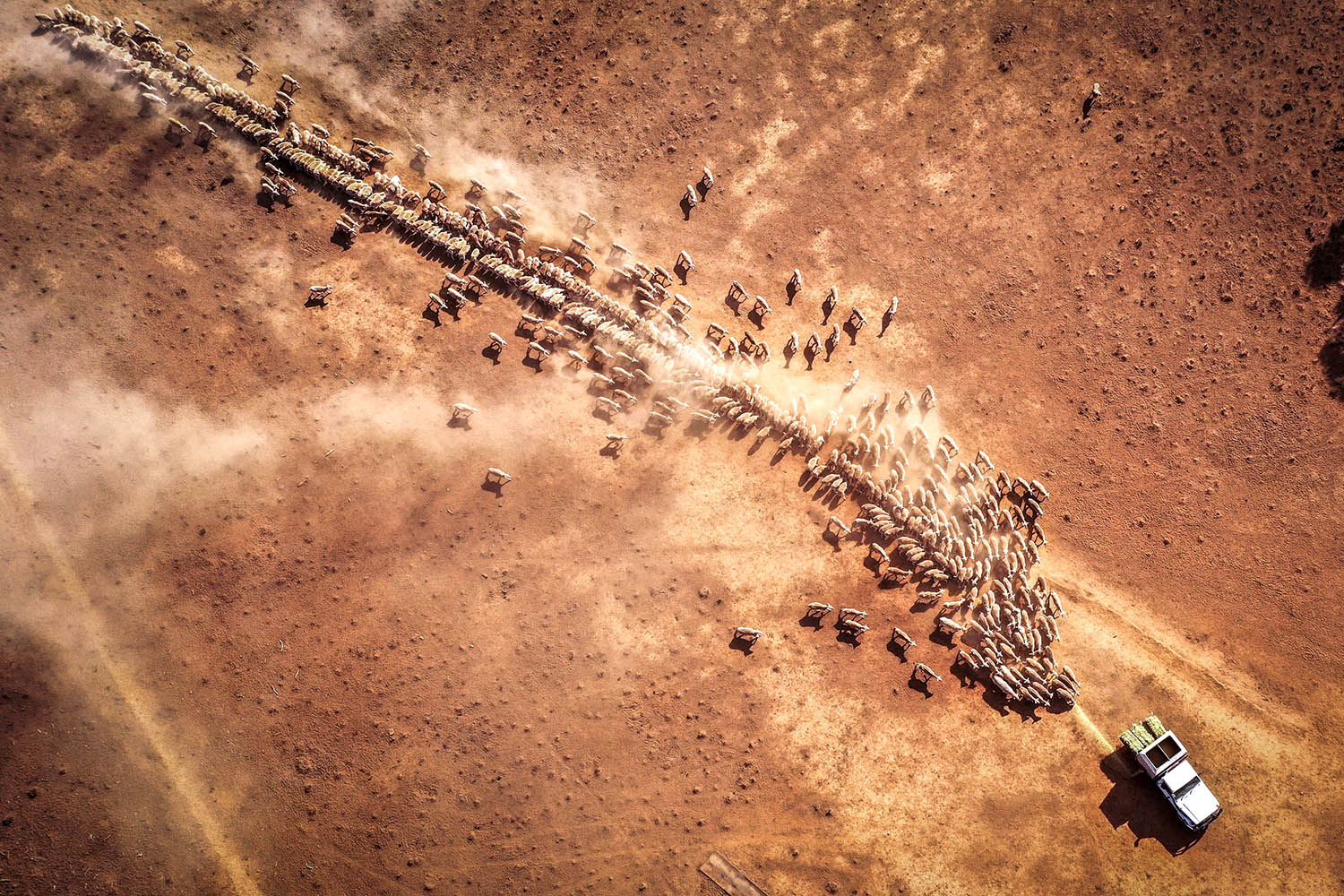
- wetter – 16,000 cubic kilometres of water a year are needed to replenish the aquifers on which much of humanity relies but more groundwater is being extracted than returned in nearly half of all river catchment areas, and the natural flow of more than a third of streams and rivers has been interfered with by humans;
- clearer – aerosol pollution is killing 9 million people a year, while a widening gap between aerosol levels in the northern and southern hemispheres may be driving precipitation up in the former and down in the latter.
The paper also calculates that roughly twice as much nitrogen and phosphorus as the world’s agricultural land can tolerate is being spread on it each year as fertiliser.
The people behind the project include Johan Rockström of the Potsdam Institute for Climate Impact Research and Xeumei Bai of the Australian National University. Both are also affiliated with the Earth Commission, which calls itself the first attempt “to establish scientific guardrails for Earth’s life support systems”. They believe those systems can be saved.
How? Partly by appealing to the self-interest of cities and businesses. “They not only have a large impact on these critical earth systems, but also… [the] capacity to take really nimble actions before regulatory frameworks are introduced,” Bai says. “Actions below the national level will be really key.”
When? As soon as possible. Some harms being inflicted on Earth’s systems are reversible but the commission says 17 tipping points are approaching beyond which they won’t be any more. Nine of these are in the cryosphere – the world’s cold places – where carbon sinks like permafrost are poised to become carbon sources.
There are reasons to be hopeful. Record snows will help refill California’s aquifers this year. The Netherlands has grasped the need to limit fertiliser use. But ESBs are being broken even as they are being born.
Word of the day: Stinknormal – used in Germany to describe the down-to-earth manner of defence minister Boris Pistorius, a keen supporter of arming Ukraine